

Tailor-made safaris. Since 1991



Khwai: where the Okavango Delta's wild edge begins
Khwai at a glance:
Location: Northeast Okavango Delta, between Moremi Game Reserve and Chobe National Park | Total area: ~230,000 hectares across both concessions |
Access: Fly into Maun International Airport; light aircraft transfer to bush airstrips | Best time to visit: May–October (dry season); summer for birding and green-season photography |
Activities: Game drives, night drives, guided walks, mokoro safaris, skybed sleepouts and underground photographic hides | Wildlife highlights: African wild dog, leopard, lion, cheetah, elephant, buffalo, hippo, crocodile, roan, sable |
Currency: Botswana Pula (BWP); USD and major credit cards accepted at most lodges | Night drives permitted: Yes — not available in neighbouring national parks |
Why visit Khwai?
At the north-eastern fringe of the Okavango Delta, where the Khwai River threads between Moremi Game Reserve and Chobe National Park, lies one of the most wildlife-rich corridors in Africa. No fences interrupt the flow of animals across this frontier. Lions, leopards, wild dogs, and elephants move freely between protected areas, resulting in a density and diversity of wildlife that seasoned safari-goers consistently rank among the most remarkable in southern Africa.
Khwai comprises two distinct but connected concessions: the Khwai Private Reserve (NG18), covering about 200,000 hectares to the north and west, and the smaller Khwai Community Concession (NG19) covering about 30,000 hectares, to the south along the Khwai River. Together, they cover about 230,000 hectares of riverine forest, seasonal floodplains, open mopane woodland, and winding water channels. The distinction between the two areas matters and is worth understanding before booking.
What makes Khwai particularly compelling is the flexibility of experience on offer. A morning mokoro glide through the reed beds at water level, kingfishers flashing colour over the surface, gives way in the afternoon to the intensity of a game drive following a wild dog pack on a hunt at full speed. Few places in Africa allow that range within a single day. The concessions also permit night drives and off-road driving, activities restricted in the neighbouring national parks, opening up a world of leopards, servals, aardwolves, and honey badgers.
Khwai is also a story of community ownership. The Khwai Community Concession is owned and managed by the local Khwai village, whose residents have chosen to dedicate their land to wildlife and tourism, a decision that generates lease income directly for families who live without fences between themselves and the animals they protect. That story is one of the most powerful in Botswana conservation.
5 Reasons We Love Khwai
Wild dog capital of the Okavango: Khwai is one of the most reliable destinations in Africa to see African wild dogs, also known as "painted wolves". Several packs call the area home year-round, and many breed here.
Two concessions, one remarkable corridor: The Khwai Private Reserve and Khwai Community Concession offer different experiences within the same ecosystem. Expect exclusive lodge-only access in the private reserve and more accessible, community-owned tourism to the south along the Khwai River.
Night drives and off-road access: Unlike the neighbouring national parks, Khwai concessions permit night drives and off-road driving, revealing servals, honey badgers, aardwolves, and leopards.
Mokoro on elephant paths: The traditional dugout canoe, guided by polers along ancient elephant and hippo trails through reed beds and lily channels, offers a silent, water-level encounter with the Delta that no game-drive vehicle can replicate.
Community ownership, directly felt: The Khwai Community Concession is owned by Khwai village. Visiting here puts lease revenue directly into the hands of families who live alongside wildlife, in huts with no fences, and have chosen conservation over other land uses.
Our favourite Khwai safari ideas
All you need to know about Khwai
About Khwai, Botswana
Khwai occupies the north-eastern fringe of the Okavango Delta in northern Botswana, sandwiched between two of Africa's most celebrated wildlife areas: Moremi Game Reserve to the west and south, and Chobe National Park to the east. No fences restrict animal movement between these areas, making Khwai a natural crossroads for wildlife following seasonal water and grazing. The Khwai River forms the southern boundary of the area and the primary hub for riverine game viewing and mokoro activities when water levels permit.
The total Khwai area — combining both concessions — covers about 230,000 hectares. The Khwai Private Reserve (NG18) extends across 200,000 hectares of open grassland, mopane hinterland, and waterways to the north; access is restricted to guests of a small number of luxury lodges. The Khwai Community Concession (NG19), about 30,000 hectares, lies to the south along the river and is community-owned, with more lodges and camps, and access for self-drive and mobile safari operators. Seasonal Angolan floodwaters enter the Okavango system during the dry (no rain) season, raising the Khwai River's levels and enabling mokoro safaris on its channels.
Things to do in Khwai
Game drives and night drives: Morning and evening drives across the floodplains and along the river. Night drives, not permitted in Moremi or Chobe, reveal leopards hunting along the channels, servals picking through the grass, honey badgers in the spotlight, and the elusive aardwolf near termite mounds.
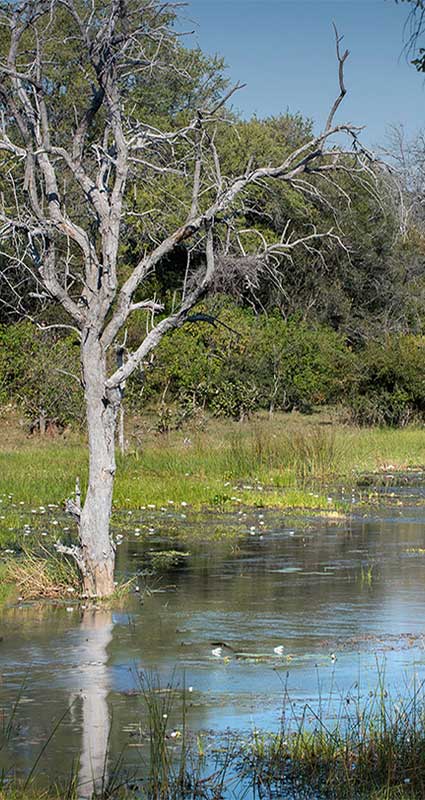
Mokoro safaris: Guided by local polers in traditional dugout canoes, following paths carved by generations of hippos and elephants through the reed beds and lily channels. The experience is slow, quiet, and intimate. Expect kingfishers and frogs at eye level and the occasional elephant appearing through the reeds. Water levels permitting, typically at their best during the dry season months.
Guided walking safaris: On foot with an armed guide through the mopane woodland and floodplain margins, tracking, identifying plants, reading the story of the night in the morning's sand. Walking safaris are permitted because Khwai falls outside the national park boundaries.
Underground photographic hides: Khwai Private Reserve hosts underground hides, positioned at waterholes on the drier eastern side of the reserve near Chobe, that place photographers at ground level with wildlife coming to drink.
Community village visits: In the Khwai Community Concession, guests can walk through Khwai village, a small settlement of a few huts with no protective fencing, and engage directly with the families whose decision to dedicate their land to conservation underpins the entire area.
What animals will I see in Khwai?
Big cats & wild dogs: Predators are plentiful, with excellent lion, leopard, hyena, and wild dog sightings, whilst cheetahs are seen regularly on the open plains, as are servals at night. Khwai is among the most reliable destinations in the Okavango region for wild dogs. Packs regularly den in the area during the dry winter months, and encounters are a defining Khwai experience.
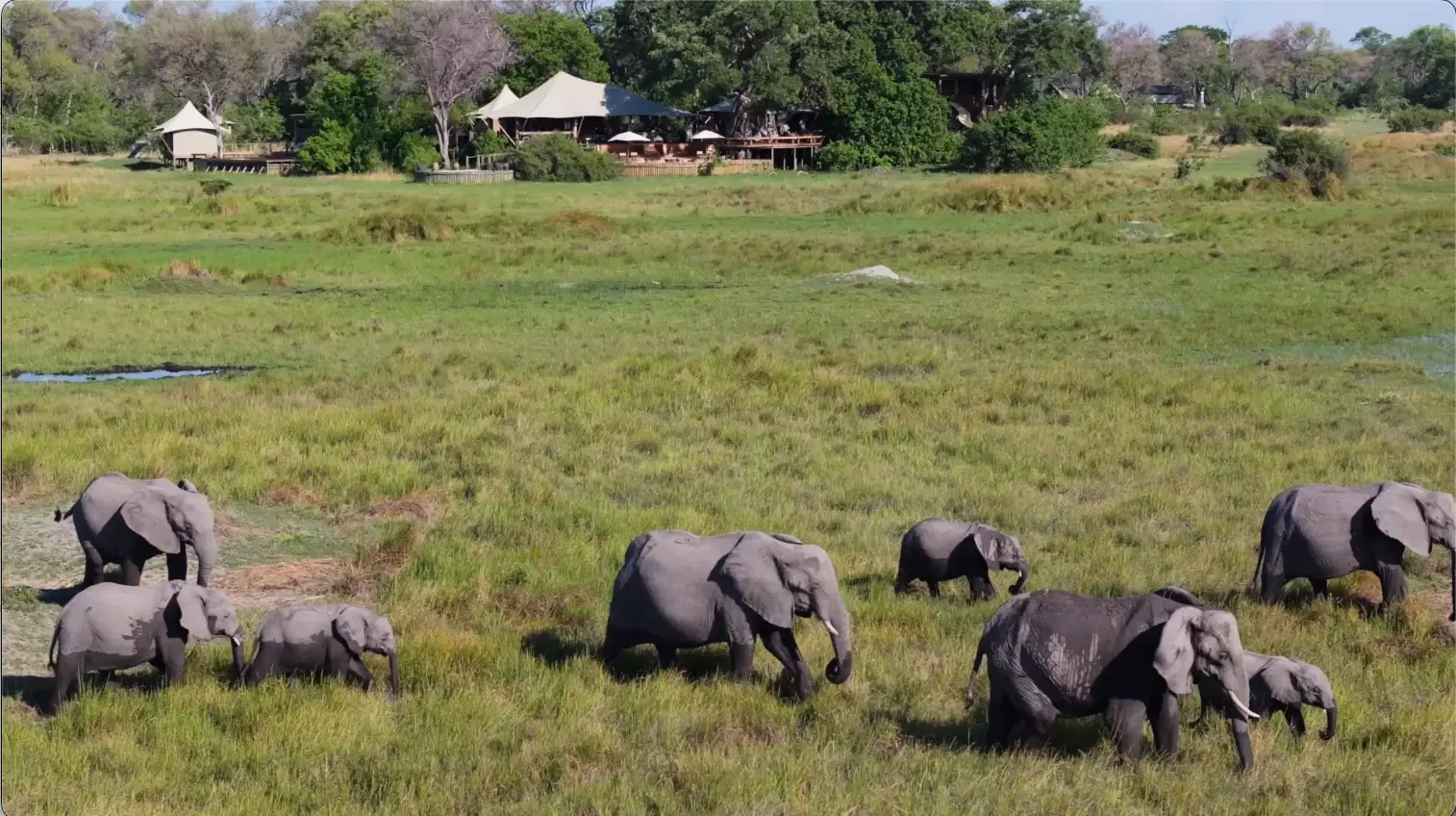
Large herds of buffalo and elephants regularly stream through the waters on their way to fresh grazing grounds, often followed by lions, and there is an elephant around every corner.
Hippos, and crocodiles: Hippos inhabit the permanent waterways and wander through the lodges at night while massive crocodiles move silently through the deeper channels.
Rare antelope: Roan and sable antelope emerge from the surrounding mopane to drink. Red lechwe and waterbuck dot the floodplains.
Nocturnal species: Night drives reveal serval, honey badger, porcupine, spring hare, and the seldom-seen aardwolf near termite mounds.
Birding: Over 500 bird species recorded. Highlights include the African skimmer, slaty egret, African finfoot, pygmy goose, rock pratincole, pennant-winged nightjar, collared palm-thrush, brown firefinch, and western banded snake-eagle. The summer months bring migratory species and lower visitor numbers.
Where to stay in Khwai
Understanding the difference between the two concessions is essential before choosing where to stay in Khwai — they offer totally different experiences within the same ecosystem.
Khwai Private Reserve (NG18) is a massive concession (200,000 ha) with only a few lodges. No self-drivers or day visitors are permitted, ensuring that game viewing is shared with very few other vehicles. Lodges offer the full range of specialist activities, including night drives, off-road driving, walking safaris, mokoro, and access to underground photographic hides.
Khwai Community Concession (NG19) is smaller, at about 30,000ha, and has far more lodges and camps. It is owned and managed by Khwai village, with revenue from lodge lease fees flowing directly to the community. A wider range of accommodation is available, from luxury lodges to campsites suited to mobile safari circuits and self-drivers. The community ownership model is part of the appeal; staying here puts money directly into the hands of families who live without fences alongside the wildlife they protect.
Both areas permit night drives and off-road driving, a significant advantage over the national parks, where these activities are not allowed.
Check out our Khwai safari ideas above to see some of the lodges with proven track records that we regularly send our guests to.
Trusted by thousands of ecstatic travellers
✔️ 5-Star Trustpilot Rating ✔️ Condé Nast Travel Specialist Award Winner
✔️ Accredited by SATSA ✔️ 5,000+ Exceptional Safaris Since 1991
Why choose Africa Geographic to plan your safari?

"We had the best sightings I have ever had of leopards and wild dogs in Khwai. We saw them every day, interacting at times, which was very exciting. We also saw lions every day as well as a couple of honey badgers, and a first for me, side striped jackals... This is the 3rd trip that I have done with Africa Geographic and I highly recommend them. Every trip has been good value for money and impeccably organised. I will be back!"

"My husband and I have just returned from a magical 5 day safari trip with Africa Geographic. We stayed at the Khwai private game reserve, Little Sable, the Skybeds and Hyena Pan ... If you are looking for a tour operator that will guarantee a vast knowledge of the bush ... comfortable accommodation, then look no further than the AG team. We highly recommend them!"

"Africa Geographic was amazing to work with. They tailored a trip specifically for us based on our wants and needs. They take the time to listen to you and understand what you are looking for from this sometimes once in a lifetime experience. They are professional, courteous, friendly and with you every step of the way. Their job does not end until you are home. If I could give them more than 5 stars I would!"
Wish you were here?
Frequently asked questions
Khwai's position at the unfenced junction of Moremi Game Reserve and Chobe National Park means animal movement is unrestricted; wildlife flows across this frontier year-round. Night drives and off-road driving are permitted, whereas they are not in the national parks. On offer are a range of activities: mokoro and walking safaris, and underground photographic hides. Khwai is also one of the Okavango region's most reliably productive areas for African wild dog, with resident packs and regular den sightings during the dry winter months.
The Khwai Private Reserve (NG18) covers 200,000 hectares and is accessible only to guests staying at one of a small number of luxury lodges; no self-drivers, day visitors, or mobile camping is permitted. This exclusivity ensures very limited vehicles at any sighting. The Khwai Community Concession (NG19) is smaller, at about 30,000 ha, and lies to the south along the Khwai River. It is community-owned and managed by Khwai village, with lease revenue flowing directly to local families. The community concession offers more accommodation options and permits mobile camping and self-drivers. Both areas offer night drives and off-road access. The choice depends on the level of exclusivity desired and the type of experience being sought.
The dry season (approximately May to October) is the primary game-viewing season, when vegetation thins, wildlife concentrates around permanent water, and wild dogs typically den in known sites. June to September offers the most comfortable temperatures and the most reliable predator sightings. October builds toward the dramatic heat of "suicide month", named for the oppressive temperatures ahead of the first rains, but also produces extraordinary concentrations of elephants and predators at the last remaining water sources. The green season (November to April) brings lush scenery, migrant birds, newborn wildlife, fewer visitors, and lower rates; a rewarding alternative for photographers and birders who prefer a different character of experience.
The Khwai area offers one of the broadest wildlife profiles in Botswana: African wild dog, leopard, lion, cheetah, elephant, buffalo, hippo, and crocodile are all resident. Night drives reveal serval, honey badger, aardwolf, porcupine, and springhare. Rare antelope species including roan and sable emerge from the mopane to drink. More than 500 bird species have been recorded, with highlights including the African skimmer, slaty egret, African finfoot, pygmy goose, and the pennant-winged nightjar.
The Khwai area sits within a corridor used by multiple wild dog packs moving between the Okavango, Moremi, and Chobe ecosystems. During the dry winter months, packs establish dens at known locations in the Khwai area and can be reliably found day after day. The terrain, open floodplains and mopane glades, makes tracking and viewing easier than in denser forest habitats. Africa Geographic's own safari accounts document encounters with the same pack on multiple consecutive days, including hunting sequences and extended resting periods.
Yes. Night drives are permitted in both the Khwai Private Reserve and the Khwai Community Concession. This is a significant difference from Botswana's national parks, including Moremi Game Reserve and Chobe National Park, where spotlight drives are not allowed. Night drives in Khwai open access to leopard hunting along the channels, serval in the grassland margins, honey badger, porcupine, and the rarely seen aardwolf. These sessions are guided and typically run after the evening game drive returns.
A mokoro (plural: mekoro) is a traditional dugout canoe used by communities throughout the Okavango Delta region for centuries. In Khwai, mokoro safaris follow ancient paths carved by generations of elephants and hippos through the reed beds and lily channels of the Delta's north-eastern fingers. Guided by local polers who navigate silently with a long pole, guests experience the water at eye level, malachite kingfishers, frogs, dragonflies, and the occasional elephant looming from a neighbouring bank. Mokoro safaris are water-level dependent and are typically available when the Angolan floodwaters have raised the Khwai River during the dry season.
The Khwai Community Concession (NG19) is a wildlife concession owned and managed by the residents of Khwai village, a small community living adjacent to the concession boundary, with no protective fencing between them and the wildlife. The community decided to dedicate its land to wildlife conservation and tourism, earning income through lease fees paid by lodges and campsites operating within the concession. This model, community land generating community revenue, is one of the most direct examples of conservation-linked income in Botswana. Guests staying in or visiting the community concession can take guided walks through the village itself.
Most guests arrive at Maun International Airport, which receives regional flights from Johannesburg and other major hubs. From Maun, a short light-aircraft transfer (typically 15–20 minutes) to one of the bush airstrips in or near the Khwai area is the standard route for lodge-based guests. Some guests access Khwai by vehicle from Maun, subject to road conditions. Transfer logistics vary by lodge and operator; Africa Geographic's team handles all routing as part of any booked itinerary.
Yes — and this is one of the most natural multi-destination combinations in Botswana. Khwai pairs well with the Okavango Delta (for a deeper water safari), Chobe National Park (for river-based elephant and buffalo viewing), and the Makgadikgadi Pans (for a stark landscape contrast). A Botswana circuit of three to four destinations in seven to ten days is a common and deeply rewarding itinerary. Africa Geographic designs these combinations regularly, using light aircraft to connect camps efficiently across northern Botswana.
September and October are considered prime photography months; the landscape is at its most stark and dramatic, wildlife concentrates at waterholes, producing extraordinary visual access, and the light of the late dry season is particularly warm and clear. The underground photographic hides on the eastern side of the Khwai Private Reserve produce ground-level, eye-contact images unavailable from a vehicle. The green season (November to April) offers lush colour, dramatic storm light, and excellent opportunities to capture behaviour and newborn wildlife; a compelling yet underrated choice for serious photographers.
Safaris in the Khwai Private Reserve typically cost from US$700 per person per night, all-inclusive of accommodation, meals, game drives, activities, and transfers, with 24/7 support from Africa Geographic's team. Costs vary by lodge, season, and activity inclusions. The Khwai Community Concession offers a wider range of price points. Peak dry season (June–October) requires advance booking; green season offers better availability and rates. Contact our team for a tailored, no-obligation itinerary.
Yes — in two ways. The Khwai Community Concession is community-owned, meaning lodge lease fees flow directly to Khwai village — supporting families who live alongside wildlife and have chosen conservation over alternative land uses. By booking through Africa Geographic, you additionally support our conservation publishing work and the ground-level conservation projects funded through a portion of every safari sold.
Click here to schedule a no-obligation call with one of our Safari Experts or fill in our 2-minute form with your questions. Our team of experts are here to help! Whether you’re curious about the best time to travel, want to hear first-hand about an experience or need help planning your safari.
Explore more African destinations
Start planning your dream safari
Our travel experts will craft a no-obligation itinerary just for you. We have crafted over 5,000 safaris since 1991. Your personal details are protected; we only use this information to contact you.
Why book your safari with us?

Deep Experience & Knowledge
Handcrafted experiential safaris since 1991.
Travel in Africa is about knowing when and where to go, and with whom. A few weeks too early/late or a few kilometres off course, and you could miss the greatest show on Earth. And wouldn’t that be a pity?

Trust & Safety

Make A Difference
We donate a portion of the revenue from every safari sold to carefully selected conservation projects that make a significant difference at ground level.
YOUR safari choice does make a difference - thank you!