

Tailor-made safaris. Since 1991



Udzungwa Mountains: Tanzania's ancient forest with no roads
Udzungwa Mountains National Park at a glance:
Location: South-central Tanzania, Southern Circuit (Morogoro and Iringa regions) | Size: 199,000 hectares |
Access: ~380 km from Dar es Salaam; approximately 5–6 hours by road; a one-hour drive from Mikumi National Park | Nearest airport: Julius Nyerere International Airport, Dar es Salaam (DAR) |
Best time to visit: June–October (dry season; safest trail conditions) | Roads inside the park: None. You walk every trail with a guide. |
Minimum recommended stay: 2–3 nights in nearby Mikumi, with a day trip to Udzungwa Mountains | Malaria risk: Yes. Prophylaxis recommended. |
Why visit Udzungwa Mountains National Park?
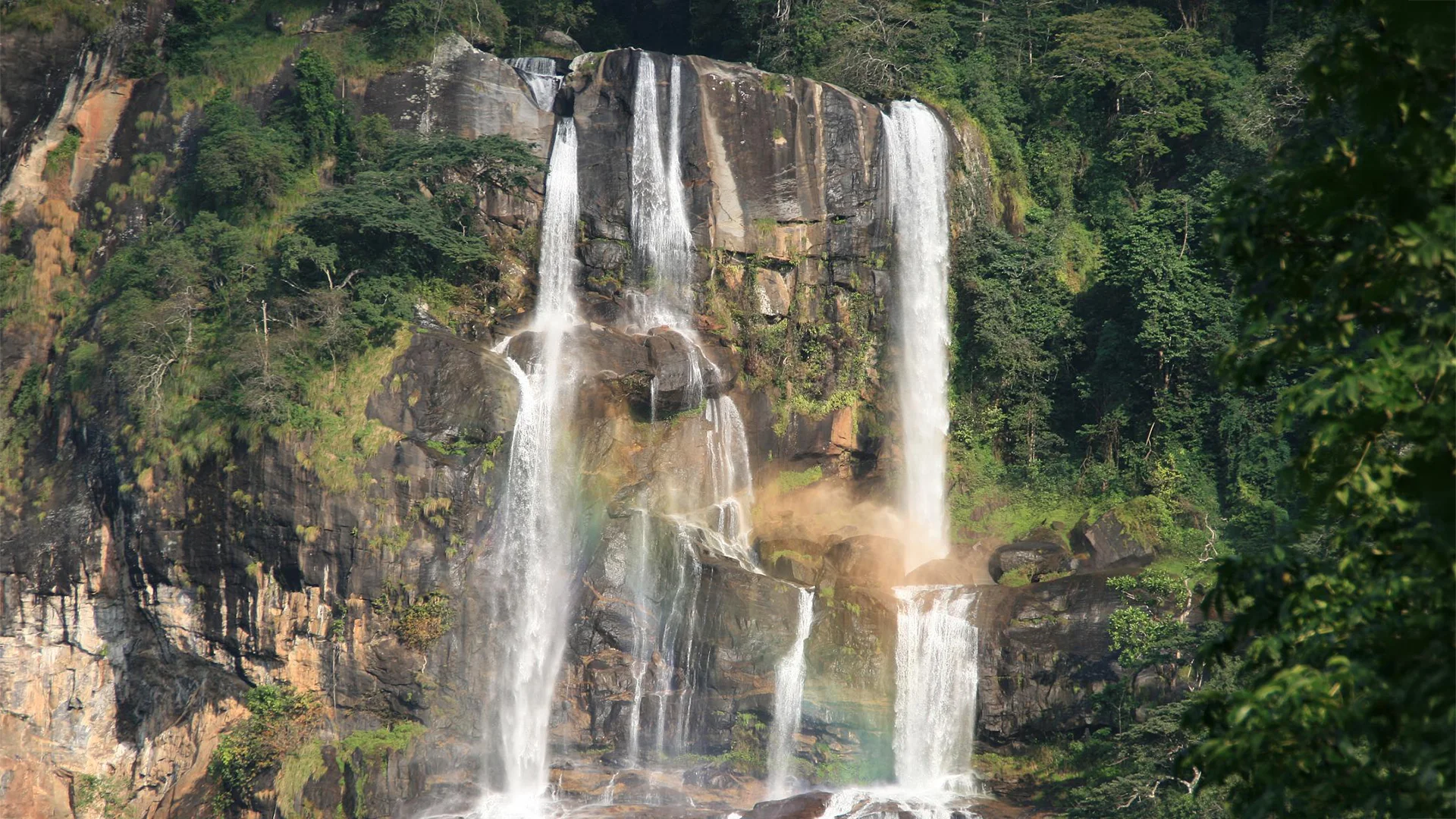
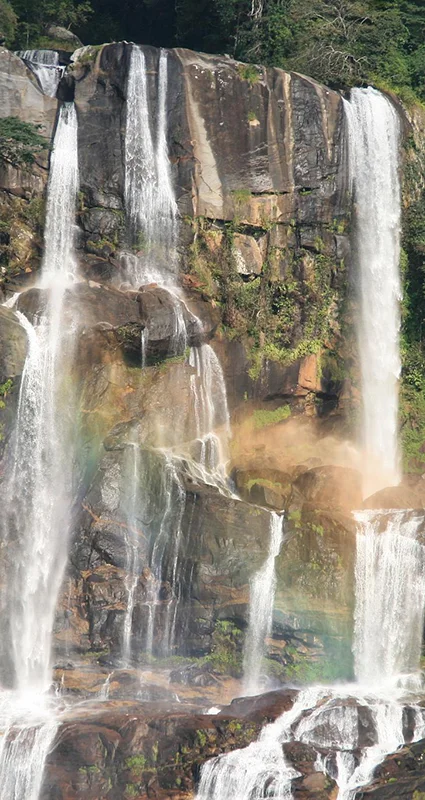
Tanzania's most celebrated safari destinations are experienced by vehicle. Udzungwa has no roads, so your experience focuses on hiking, a more down-to-earth experience. You reach every experience by walking through ancient forest with a trained guide, at a pace that suits you. The Sanje Waterfalls descend approximately 170 metres in three tiers through the canopy, with a swimmable plunge pool at the top and the Kilombero Valley far below.
The Udzungwa Mountains form part of the Eastern Arc, classified as one of the world's 36 biodiversity hotspots. These forests were growing long before the Rift Valley existed; their isolation over millions of years has produced endemic life found nowhere else on the continent. Roughly a quarter of the park's 2,500 plant species occur only here. Two of its primates exist nowhere else on Earth. The Sanje crested mangabey and the Udzungwa red colobus are rare and found nowhere else on Earth.
TANAPA manages the park, and the traditions of the Kihehe people protect it in part; their name for these mountains, Wadzungwa, gives Udzungwa its identity.
5 reasons we love Udzungwa Mountains National Park
Two primates found nowhere else on Earth: The Sanje crested mangabey and Udzungwa red colobus exist only within these mountains, encountered on foot in their only habitat on the planet.
The Sanje Waterfalls: Three tiers of falling water descending approximately 170 metres through ancient rainforest, with a cold, swimmable plunge pool at the top and the Kilombero Valley spread below.
The African Galápagos: The Eastern Arc's long isolation has created one of Africa's most biodiverse landscapes: over 400 bird species, 2,500 plants and endemism at every level of the ecosystem.
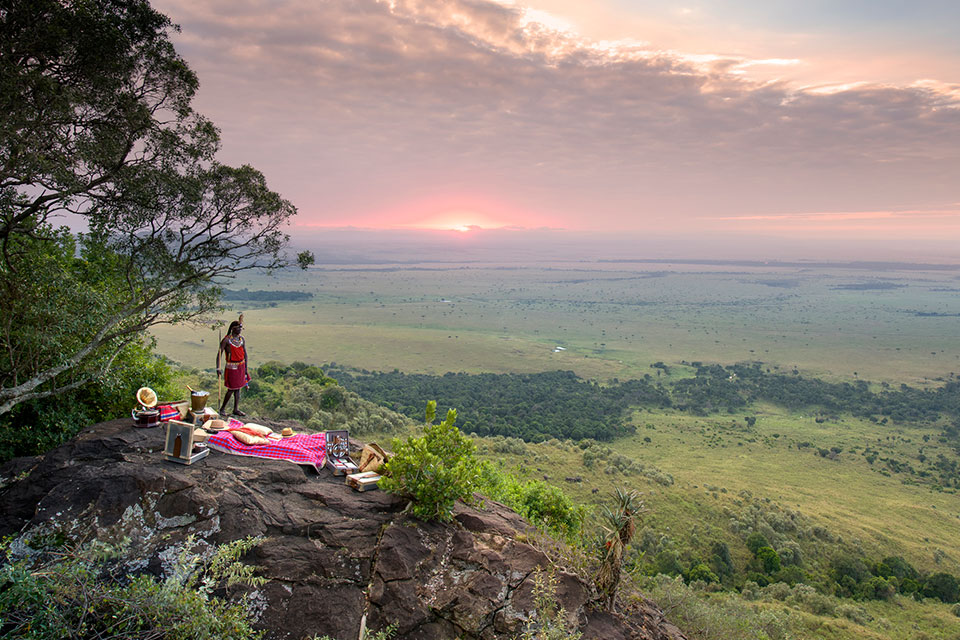
The Kilombero Valley viewpoint: Two-thirds up the Sanje trail, the forest opens onto a rock shelf with the entire Kilombero Valley below: rice fields, the winding river, the distant escarpment.
An excellent day trip from Mikumi National Park: Swap the savannah wildlife of Mikumi for forest primates and birds of nearby Udzungwa forests.
All you need to know about Udzungwa Mountains
About Udzungwa Mountains National Park
The Udzungwa Mountains rise above the Kilombero Valley in south-central Tanzania, on the Southern Circuit, straddling the Morogoro and Iringa regions. They form part of the Eastern Arc, an ancient highland chain that predates the Rift Valley and was once connected to the forests of the Congo Basin and West Africa. The Eastern Arc covers less than two percent of Tanzania's land area but holds an estimated 30–40% of the country's plant and mammal species.
Gazetted in 1992 from forest reserves established in the 1950s, Udzungwa covers 199,000 hectares and rises from 250 metres to 2,576 metres at Lohomero Peak. No interior roads exist; every trail is walked with a trained TANAPA guide, an arrangement that protects the forest and defines the character of every visit. Large areas remained pristine long before formal protection, preserved by the cultural beliefs and taboos of local communities whose relationship with this landscape is ancient and continuing.
Things to do in Udzungwa Mountains National Park
Hike to the Sanje Waterfalls: A 4–6 hour return walk through layered rainforest gains 450 metres before reaching a three-tiered waterfall of about 170 metres and a cold, swimmable plunge pool above the Kilombero plain.
Track endemic primates on foot: TANAPA guides lead walks for the Sanje crested mangabey and Udzungwa red colobus, two species found in no other forest on Earth.
Tackle the Mwanihana Peak trek: A three-day ascent through lowland rainforest to montane heath and open grassland at altitude, with sweeping Kilombero Valley views from the escarpment edge.
Spend a night above the falls: The two-day Sanje camping version brings you the waterfalls at first light and a forest alive with tree hyrax and nightjars long after dark.
Birdwatch in Eastern Arc forest: Over 400 species, including Eastern Arc endemics found nowhere else in Tanzania.
Explore the Kilombero Valley by dugout canoe: Beyond the park boundary, the Kilombero River offers canoe trips past waterbirds, hippos, and crocodiles.
What wildlife can I see in the Udzungwa Mountains?
Sanje crested mangabey: Unknown to science until 1979, this large social monkey lives nowhere else on Earth; groups of 30–50 move through the Sanje River forest and are regularly encountered on the trail.
Udzungwa red colobus: One of Africa's rarest primates, found only in these mountains; its red-and-black colouring and crashing passage through the high canopy make it one of Tanzania's most striking primates.
Other primates on the trail: Black-and-white colobus, blue monkeys, vervet monkeys and yellow baboons are all regularly seen in the forest layers and margins along the main hiking routes.
Smaller forest mammals: Grey-faced sengis bolt through the leaf litter before most walkers register what moved; red duiker cross the path on the lower trail sections; bushbuck browse the lowland margins.
Endemic chameleons: Udzungwa has numerous species endemic to the park or Eastern Arc mountains, including Magombera, Udzungwa, Moyer’s pygmy and Coleman’s pygmy chameleons.
Over 400 bird species. A priority destination for Eastern Arc endemics found nowhere else in Tanzania. Most sought-after species include Udzungwa forest-partridge and rufous-winged sunbird (both endemic to Udzungwa), Mrs Moreau's warbler, Iringa akalat, dapple-throat, spot-throat, Moreau’s sunbird, Kipengere seedeater, Swynnerton’s robin, white-winged apalis, Usambara weaver, olive-flanked robin-chat, dark batis, green-headed oriole and white-chested alethe.
Where to stay near Udzungwa Mountains National Park
We recommend our guests stay overnight in Mikumi National Park and visit the Udzungwa Mountains on a day trip. Our preferred Mikumi accommodation:
Stanley's Kopje sits on a rocky outcrop on the Mkata floodplain, the only elevated camp position in Mikumi National Park. Views sweep 360 degrees across the surrounding wilderness, with the Mwanamboga waterhole drawing a procession of wildlife that you can watch from the veranda, the pool, or the open-sided thatched dining area. Twelve tented rooms, named after explorers and tribal chiefs, are arranged around the hillside on raised wooden decks with large verandas and en suite bathrooms. Stanley's Kopje opens from June through February; the March–May rains close the camp each year.
Vuma Hills Tented Camp offers a markedly different atmosphere. Situated 6 km from the Mikumi park entrance in the forested Vuma Mountains, 16 rooms sit tucked into the trees on raised wooden decks, enclosed by forest rather than open to the plain. The setting comes into its own after dark: honey badgers, civets, genets, porcupines, bushbabies and marsh mongooses visit camp regularly, making Vuma Hills one of Tanzania's most reliable locations for nocturnal species. Unlike Stanley's Kopje, Vuma Hills is open all year.
Both camps run Udzungwa day excursions: an hour's drive south to the park gate at Mang'ula, where the forest trails and endemic primates begin.
Trusted by thousands of ecstatic travellers
✔️ 5-Star Trustpilot Rating ✔️ Condé Nast Travel Specialist Award Winner
✔️ Accredited by SATSA ✔️ 5,000+ Exceptional Safaris Since 1991
Why choose Africa Geographic to plan your safari?

"Beautifully organized tanzania trip! ...seamless integration of the tour while taking care of the minutest of the details. Our guide...was well experienced in his line of work, knowledgable and thoroughly ethical. After a week together we parted as friends, carrying great memories with a promise to return. I would not hesitate to recommend Africa Geographic to any one..."
"I cannot imagine a better way to customize a trip to Africa than with Africa Geographic...listened to what we hoped to accomplish and patiently went back and forth with suggestions and itineraries until it was perfect. Our trip to Tanzania...exceeded all of our expectations. The transfers all went smoothly and our guides were exceptional. I wish I could give 10 stars."
"We booked our honeymoon safari with Africa Geographic, and it turned out to be one of the most memorable trips of our lives...he recommended Tanzania, and the itinerary he built for us was beautifully balanced and perfectly aligned with what we wanted...We would recommend Africa Geographic without hesitation to anyone looking for a safari that is personal, well‑designed, and truly special."
Wish you were here?
Frequently asked questions
It is the only national park in Tanzania with no interior roads, so every experience is reached on foot. Two endemic primates live here and nowhere else on Earth, and the Eastern Arc forest is classified as one of the world's 36 biodiversity hotspots, on Tanzania's Southern Circuit.
Two species: the Sanje crested mangabey, a large social monkey unknown to science until 1979, whose groups of 30–50 animals live only in the Sanje River area; and the Udzungwa red colobus, one of Africa's rarest primates, restricted entirely to these mountains.
Moderate overall, with one harder section on the final ascent to the upper falls. The trail gains 450 metres over roughly 4.5 km each way and takes 4–6 hours return. Footwear with good grip and trekking poles for the descent are strongly recommended.
Yes. Udzungwa is one of the few Tanzanian national parks where swimming is permitted. The cold plunge pool beneath the upper tier is the main swimming spot; a larger, warmer pool sits at the base of the lower falls. Guides advise when conditions are unsafe.
June to October is the recommended window: trails are dry and safe, forest visibility is good and primate groups are easier to track. January and February offer a quieter alternative with accessible conditions. March to May brings heavy rains that make the steeper trail sections genuinely hazardous.
The most common route is by road from Dar es Salaam, approximately 380 km and 5–6 hours via Morogoro and Mikumi. The TAZARA railway from Dar es Salaam stops at Mang'ula on scheduled services (confirm the current timetable before travel). Charter flights serve Kilombero airstrip, 24 km from the park gate. Our preferred lodges in Mikumi National Park offer day trips to Udzungwa Mountains.
The park has no tented camp-style lodges. Mikumi National Park, about an hour's drive north on the Southern Circuit, is the standard base; Stanley's Kopje and Vuma Hills Tented Camp both offer day excursions to Udzungwa.
Yes. A licensed TANAPA guide is mandatory on every trail, with no self-guided option. Guides are assigned at the park headquarters in Mang'ula when you register and pay. The fee is approximately US$20 per group per day, with a maximum of six people per guide.
The park holds over 400 species, including Eastern Arc endemics found nowhere else in Tanzania. The Udzungwa partridge, rufous-winged sunbird and Mrs Moreau's warbler are the headline targets. The Kilombero wetlands in the surrounding valley add herons, kingfishers and the endemic Kilombero Weaver to the list.
Yes. This is the most natural Southern Circuit pairing: the two parks are approximately 65 km apart. A trip combining Udzungwa forest hiking and primate tracking with Mikumi wildlife drives is well established, with Stanley's Kopje and Vuma Hills Tented Camp serving as the base for both.
An ancient chain of highlands running through Tanzania and Kenya, classified as one of the world's 36 biodiversity hotspots. Although covering less than two percent of Tanzania's land area, the Eastern Arc holds an estimated 30–40% of the country's plant and mammal species, with extraordinary levels of endemism.
The lower Sanje trail (2–3 hours return) suits children aged approximately eight and above who are comfortable with sustained walking. The full circuit, with its steeper upper section and longer duration, is better suited to children twelve and older. The experience is entirely on foot in heat and forest humidity.
Non-resident adults pay US$30 plus 18% VAT (approximately US$35.40) per 24 hours. Children aged 5–15 pay US$10. A compulsory guide fee of approximately US$20 applies per group per day. Confirm current rates with us before travel.
A safari in nearby Mikumi National Park typically costs from US$285 per person, per night, depending on the accommodation comfort level, time of year and activities. This price usually includes accommodation, all meals, game drives, experienced guides, and 24/7 support from our team.
Click here to schedule a no-obligation call with one of our Safari Experts or fill in our 2-minute form with your questions. Our team of experts are here to help! Whether you’re curious about the best time to travel, want to hear first-hand about an experience or need help planning your safari.
Explore more African destinations
Start planning your dream safari
Our travel experts will craft a no-obligation itinerary just for you. We have crafted over 5,000 safaris since 1991. Your personal details are protected; we only use this information to contact you.
Why book your safari with us?

Deep Experience & Knowledge
Handcrafted experiential safaris since 1991.
Travel in Africa is about knowing when and where to go, and with whom. A few weeks too early/late or a few kilometres off course, and you could miss the greatest show on Earth. And wouldn’t that be a pity?

Trust & Safety

Make A Difference
We donate a portion of the revenue from every safari sold to carefully selected conservation projects that make a significant difference at ground level.
YOUR safari choice does make a difference - thank you!