

Tailor-made safaris. Since 1991



Saadani National Park: Where the bush meets the Indian Ocean
Saadani National Park at a glance:
Location: Tanzanian coast, approximately 170 km north of Dar es Salaam; Zanzibar is directly opposite. | Best time to visit: June–October (dry season; best wildlife viewing and calmest seas); January–February (driest months; excellent birdwatching) |
Access: Own airstrip. Approximately 20–30 minutes by air from Dar es Salaam or Zanzibar; approximately 3.5–4.5 hours by road from Dar es Salaam via Chalinze | Malaria: Present throughout the park and surrounding region. Antimalarial medication is strongly recommended; consult your doctor before travel |
Park size and status: 1,062 km² (106,200 hectares); gazetted as a national park in 2005 | Recommended stay: 2–4 nights; naturally combined with Zanzibar or Dar es Salaam, both reachable within 30 minutes by air |
Getting there by boat: Drive to Bagamoyo (about 70 km from Dar es Salaam), then take a speedboat to the park. Approximately 1.5–2 hours, tide and weather dependent | Health and safety: Comprehensive travel and medical evacuation insurance is essential. Armed ranger patrol operates 24 hours at Saadani Safari Lodge |
Why visit Saadani National Park?
Saadani occupies a position that no other national park in East Africa can claim: a wildlife reserve whose western boundary opens onto savannah and acacia woodland and whose eastern edge dissolves into the Indian Ocean. To stand at the water's edge after a morning in the bush, watching a pod of hippos in the Wami River give way to an open, tourist-free beach stretching in either direction, is to understand what makes this park genuinely different.
Tanzania's only coastal national park was gazetted in 2005, but its conservation history runs back to the late 1960s. Since formal protection, wildlife populations have been recovering. Lion numbers are rebuilding, elephants are increasingly sighted, and the park carries a Lion Conservation Unit designation reflecting its significance to the species across the East African coast. The habitats supporting this recovery span open grassland, acacia woodland, Zaraninge Forest (one of the last fragments of coastal forest in the country), mangrove corridors along the Wami River and fifty kilometres of Indian Ocean shore, a convergence of ecosystems found nowhere else in Tanzania in such proximity.
For the right traveller, Saadani's relative obscurity is central to its appeal. Wildlife encounters here are rarer than in the more well-known parks, but feel personal rather than managed. It pairs naturally with Zanzibar, Dar es Salaam and Tanzania's Southern Circuit, within thirty minutes by air of the coast.
5 reasons we love Saadani National Park
The only safari with its own ocean: Walking safaris that begin in the savannah and end at the edge of the Indian Ocean, an experience that exists at no other national park in East Africa.
The Wami River at its most atmospheric: Drifting upstream past hippo pods and basking Nile crocodiles, with flamingos picking through the shallows and mangroves lining a river that flows almost to the sea.
Wildlife encounters without the crowds: Four of the Big Five in a park that sees a fraction of the visitor numbers of Tanzania's northern circuit, making each sighting feel unhurried in a way that few parks can offer.
Rare coastal species: The shy red duiker inhabits Saadani's coastal scrub, rarely encountered elsewhere in Tanzania. The endangered Roosevelt's sable and beach-nesting green turtles complete a wildlife profile tied to this rare habitat.
Twenty minutes from two different worlds: Saadani sits within a short charter flight of both Zanzibar and Dar es Salaam, the most natural bridge between Tanzania's safari interior and its Swahili Coast.
All you need to know about Saadani National Park
Things to do in Saadani National Park
Morning and afternoon game drives: drives across Saadani's grasslands and acacia thickets, where Masai giraffe, buffalo, reedbuck, and recovering lion prides move through terrain that unexpectedly opens toward the coast.
Walking safaris from bush to beach: Saadani's signature experience: guided walks that set out through the savannah and arrive at the edge of the Indian Ocean, a transition available nowhere else in East Africa.
Wami River boat safaris: Drift upstream in a small boat past resident hippo pods and basking Nile crocodiles, with pelicans along the banks and mangrove forest closing in on either side as the light shifts.
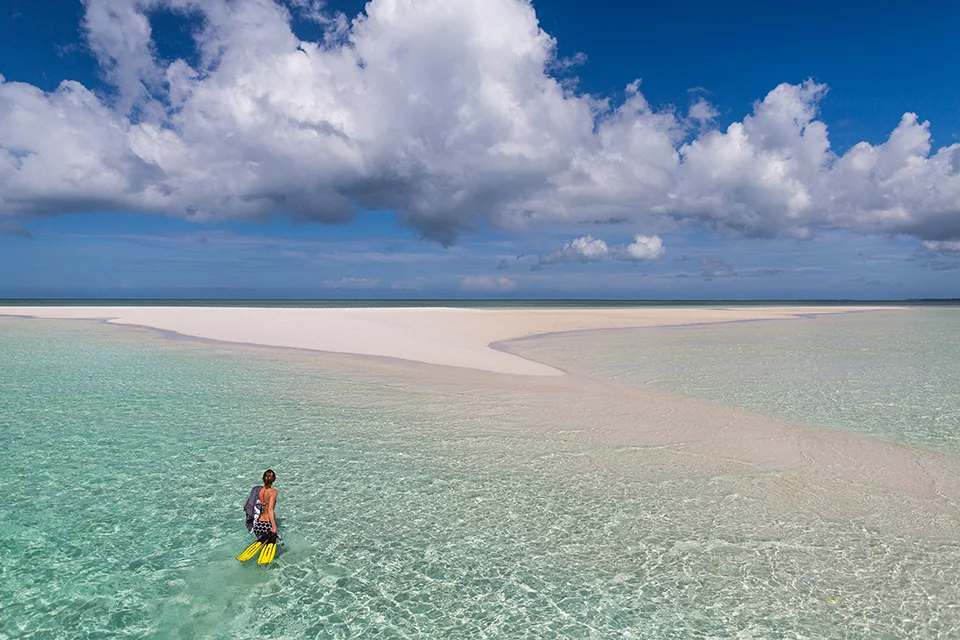
Offshore sandbank excursions: Boat trips to tidal sandbank islands in the Indian Ocean, where green turtles and dolphins are possible encounters; swimming in calm, clear water - at its best between June and September.
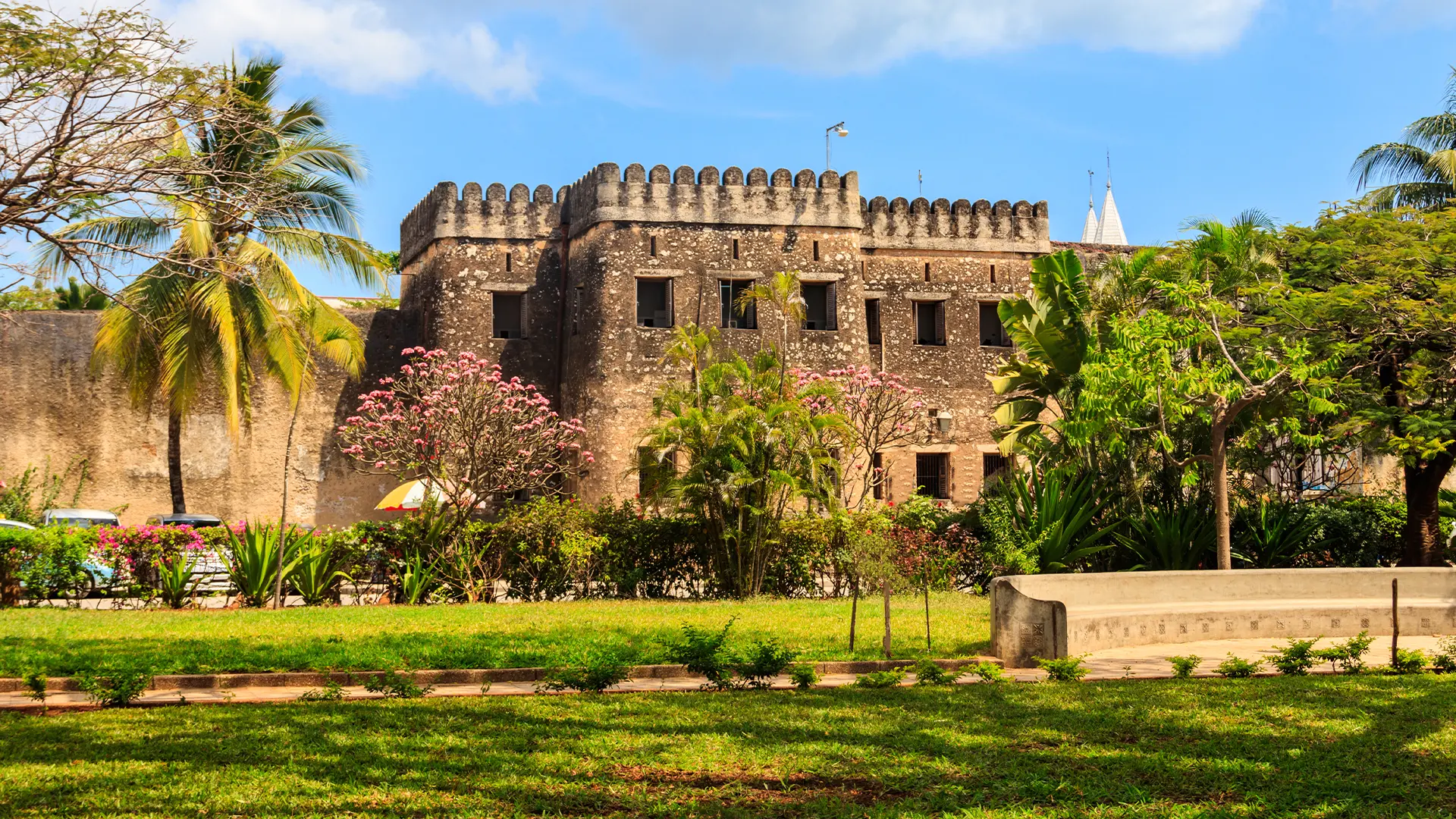
Saadani village tour: A guided walk through the village that gave the park its name, taking in a mosque, school, women's cooperative and the old German Boma, where traces of the Swahili Coast's trade history remain visible.
Birdwatching across converging habitats: The meeting of savannah, riverine forest, mangroves and coast drives extraordinary bird variety, including northern hemisphere migrants arriving from October.
What wildlife can I see in Saadani National Park?
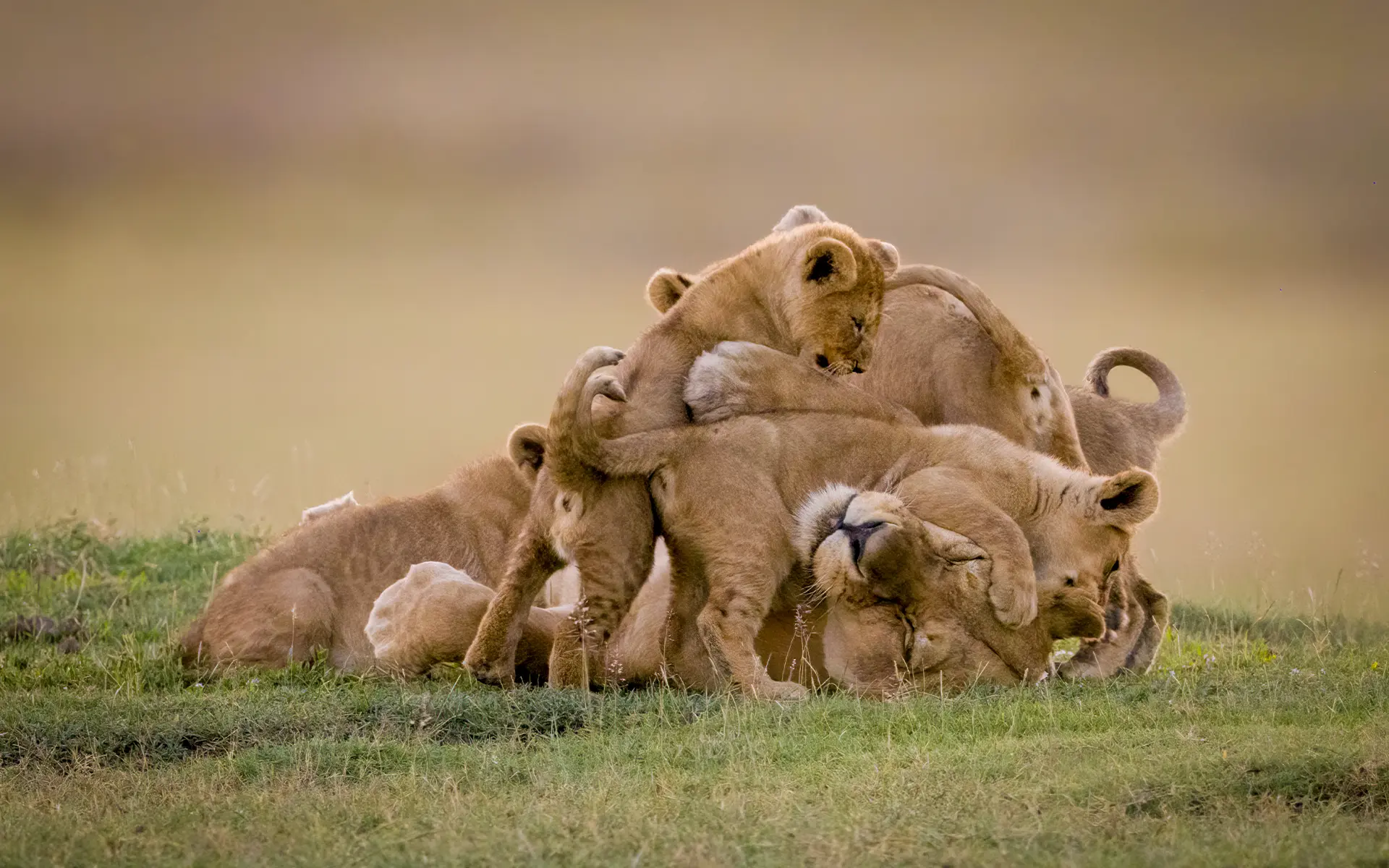
Four of the Big Five - lion, elephant, buffalo and leopard are all present, with populations recovering since gazettement. Elephants are occasionally spotted on the beach itself, an encounter specific to Saadani and found at no other national park in East Africa.
Herbivores: Masai giraffe, waterbuck, bohor reedbuck, Lichtenstein's hartebeest, wildebeest, warthog, yellow baboon, and zebra move through the open grasslands year-round, with giraffe among the most consistently sighted species. Also look out for red duiker and the endangered Roosevelt's sable.
Wami River residents: Hippos and Nile crocodiles inhabit the river in observable numbers year-round; flamingos and pelicans congregate along the banks, making the river corridor one of the park's most reliably rewarding wildlife areas.
Green turtles and marine life: Green turtles nest on Saadani's beaches, with Saadani Safari Lodge running a turtle monitoring and protection project along the coast; dolphins are possible sightings on offshore boat trips, particularly between June and September.
About 400 bird species, including mangrove kingfisher, Pel’s fishing-owl, Sokoke pipit, African fish eagle, lesser and greater flamingos, goliath heron, little bittern, trumpeter hornbill, southern ground-hornbill and palm-nut vulture.
Where to stay in Saadani National Park?
Saadani's low tourism volumes mean only two accommodation options:
Saadani Safari Lodge sits within the national park, on the Indian Ocean shore. Accommodation ranges from nine Classic Bandas, grass-roofed chalets beneath casuarina trees each with a sea-view veranda, Zanzibar-style carved bed and solar-heated shower, to five Maridadi Suites, standalone structures on short stilts above the sand, built from dhow wood and teak with an outdoor courtyard shower and wraparound balcony. Two suites connect as a family option. The restaurant, raised on stilts above the beach, centres on fresh seafood and Indian-influenced dishes, with sunset cocktails around a beach bonfire a fixture of the evening. A treehouse overlooks a private waterhole; an infinity pool faces the open ocean. The lodge runs a turtle monitoring and protection project for the green turtles that nest along this stretch of coast, and sponsors a guided village tour of Saadani that adds genuine cultural depth to the stay.
Simply Saadani Camp (formerly Tent With a View) sits just outside the national park boundary, so park fees apply for game drives, but the beach and resident wildlife are immediately present. It operates on a smaller, simpler scale: permanent wood-framed tents face a driftwood-strewn stretch of Indian Ocean coast. A treehouse provides sunset views across the water; canoe trips through the mangrove corridors are a signature activity. Monkeys, civet cats and bush babies are regularly visible from the dining area, giving the camp a quieter, more intimate wildlife rhythm than the drives and river safaris of its neighbour.
Trusted by thousands of ecstatic travellers
✔️ 5-Star Trustpilot Rating ✔️ Condé Nast Travel Specialist Award Winner
✔️ Accredited by SATSA ✔️ 5,000+ Exceptional Safaris Since 1991
Why choose Africa Geographic to plan your safari?

"...Africa Geographic planned our safari to Tanzania. His on the ground knowledge of Tanzania, professionalism, and responsiveness throughout the process was top notch. The trip went seamlessly. Our guide’s knowledge was excellent...We also appreciate Africa Geographics involvement in conservation efforts. I wouldn’t hesitate to refer...Africa Geographics to others!"
"I cannot imagine a better way to customize a trip to Africa than with Africa Geographic...listened to what we hoped to accomplish and patiently went back and forth with suggestions and itineraries until it was perfect. Our trip to Tanzania...exceeded all of our expectations. The transfers all went smoothly and our guides were exceptional. I wish I could give 10 stars."
"Tanzania was amazing...The 2 drivers were with us every day and were knowledgeable and good communicators. Their many years of experience and also skill in driving thru challenging rough terrain allowed us to get to great viewing spots at the right times. The food was abundant and very good quality...The hospitality was excellent everywhere we went."
Wish you were here?
Frequently asked questions
Saadani is Tanzania's only coastal national park and the only wildlife reserve in East Africa with a beachfront on the Indian Ocean, making it the one place where a savannah safari and a swim in the Indian Ocean can happen on the same morning.
Lion, elephant, buffalo, leopard, Masai giraffe, hippo and Nile crocodile are all present, alongside coastal specialists including the red duiker, the endangered Roosevelt's sable and nesting green turtles. Bird diversity is high across the park's multiple habitats.
No, only four of the Big Five are present: lions, elephants, buffalo and leopards. Rhinos do not occur in the park. Wildlife populations have been recovering since Saadani was gazetted as a national park in 2005.
June to October is the dry season and the most reliable period for wildlife viewing, with the sea at its calmest for boat trips. January and February are particularly good for birdwatching. April and May bring heavy rains and are not recommended.
The park has its own airstrip, approximately 20–30 minutes by air from Dar es Salaam or Zanzibar. By road, the journey from Dar es Salaam takes around 3.5–4.5 hours via Chalinze. A speedboat from Bagamoyo is also possible, taking roughly 1.5–2 hours depending on tides.
Yes. Zanzibar is approximately 15–20 minutes away by charter flight, making Saadani a natural addition to a Zanzibar itinerary. It works equally well as a first stop before the islands or a final one after them.
The Wami River flows through the park toward the Indian Ocean and is one of Saadani's most consistently rewarding wildlife areas. Boat safaris pass hippo pods and Nile crocodiles, with flamingos and pelicans along the mangrove-lined banks.
Two to four nights suits most itineraries, with three nights the recommended minimum for a meaningful combination of game drives, a Wami River boat safari and beach time. Saadani works best as part of a broader Tanzania journey.
Yes. The convergence of savannah, mangroves, riverine forest and coast results in about 400 bird species, including the mangrove kingfisher, Pel’s fishing-owl, Sokoke pipit, southern ground-hornbill and palm-nut vulture.
Green turtles nest on Saadani's beaches, and Saadani Safari Lodge runs a turtle monitoring and protection project along this stretch of coast. Turtles are also possible sightings on offshore boat trips to the park's sandbank islands.
Saadani Safari Lodge is the larger property, located within the park with a full range of accommodation and facilities. Simply Saadani Camp sits just outside the park boundary, operates on a smaller scale, and places a stronger emphasis on the mangrove and driftwood beach setting.
Saadani Safari Lodge welcomes children from three years old and offers a family suite. Children aged five and over may join game drives at the Lodge Manager's discretion. Armed rangers patrol the property around the clock.
Malaria is present throughout the park and surrounding region. Antimalarial medication is strongly recommended, and travellers should consult their doctor before departure. Comprehensive travel and medical evacuation insurance is essential.
Saadani safaris typically cost from US$200 per person per night at Simply Saadani Camp and from US$350 per person per night at Saadani Safari Lodge, depending on accommodation comfort level, time of year, and activities. This price usually includes accommodation, all meals, activities, experienced guides, and 24/7 support from our team.
Click here to schedule a no-obligation call with one of our Safari Experts or fill in our 2-minute form with your questions. Our team of experts are here to help! Whether you’re curious about the best time to travel, want to hear first-hand about an experience or need help planning your safari.
Explore more African destinations
Start planning your dream safari
Our travel experts will craft a no-obligation itinerary just for you. We have crafted over 5,000 safaris since 1991. Your personal details are protected; we only use this information to contact you.
Why book your safari with us?

Deep Experience & Knowledge
Handcrafted experiential safaris since 1991.
Travel in Africa is about knowing when and where to go, and with whom. A few weeks too early/late or a few kilometres off course, and you could miss the greatest show on Earth. And wouldn’t that be a pity?

Trust & Safety

Make A Difference
We donate a portion of the revenue from every safari sold to carefully selected conservation projects that make a significant difference at ground level.
YOUR safari choice does make a difference - thank you!