

Tailor-made safaris. Since 1991

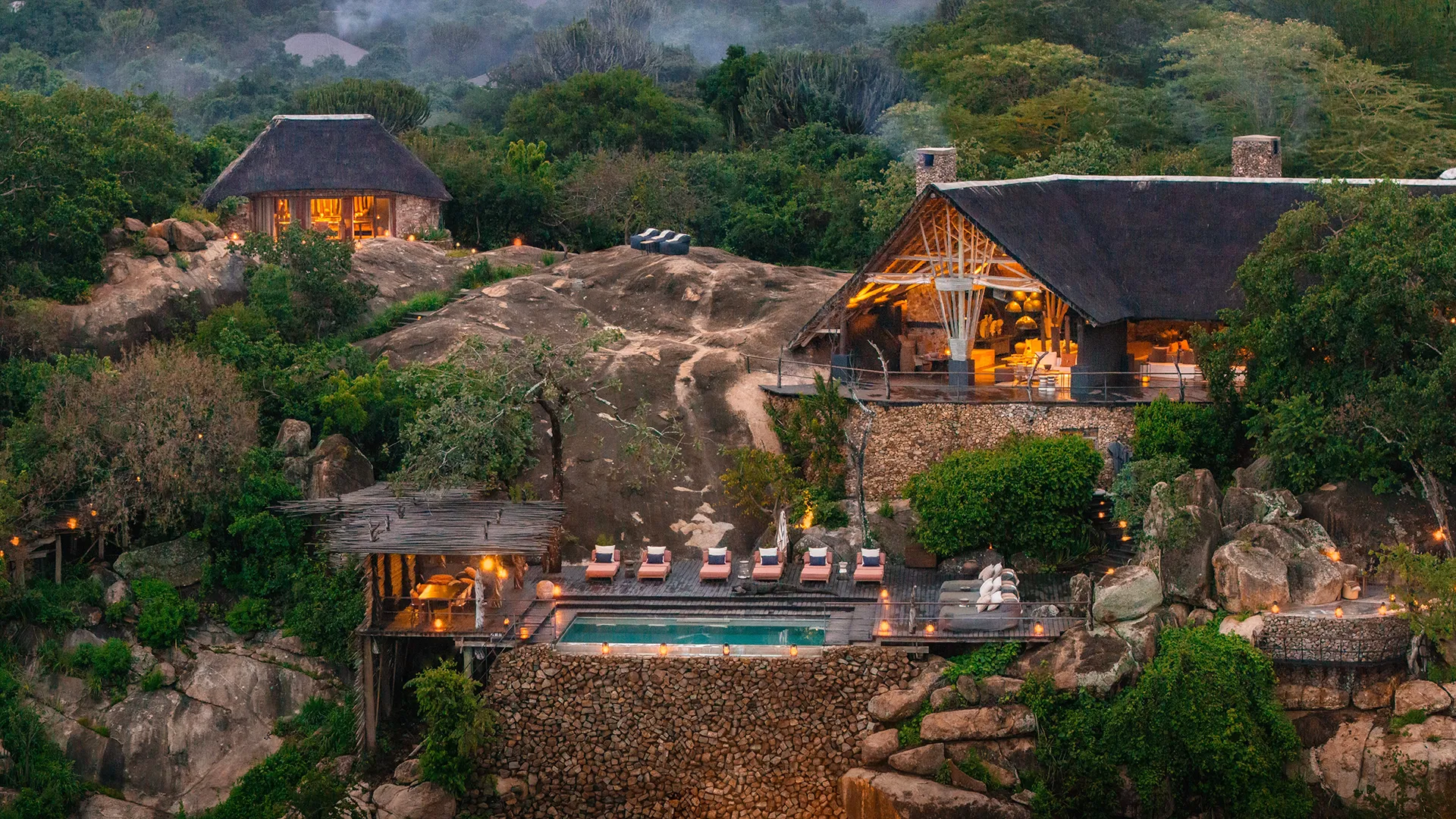


Trust us to find you the rarest animals, the most spectacular wildlife events, the remotest landscapes and deeply meaningful cultural encounters!
Choosing between a lodge, mobile tented camp or fly-in safari in the Serengeti
Deciding where to stay in the Serengeti shapes the whole trip, often more than deciding which region to visit. This area is host to many incredible animal sightings and one of Earth’s greatest natural spectacles: the Great Wildebeest Migration. The Serengeti in Tanzania is one of the largest and most intact natural ecosystems, dominated by open plains, savannah, riverine forests, and scattered woodlands. Across this system there are many varied accommodation styles – fixed lodges provide consistent comfort and stay open year-round, whereas mobile tented camps relocate seasonally to stay close to the wildebeest migration, at the cost of some amenities. Fly-in safaris connect regions by light aircraft, cutting travel time but adding to the budget. Most well-planned Serengeti itineraries combine two of these formats rather than choosing just one.
Three ways to experience the Serengeti
Every Serengeti safari sits somewhere between three basic formats. Understanding what each offers, and what each asks the traveller to give up, makes it easier to build the right itinerary.
Fixed lodges: permanent structures with consistent facilities year-round.
Mobile tented camps: canvas camps that relocate with the migration.
Fly-in safaris: light aircraft transfers between parks and regions.
Road-based safaris: overland transfers that take in more scenery en route.
Lodge, mobile tented camp or fly-in at a glance
Safari style | Best suited to | Comfort level | Cost impact |
Fixed lodge | First-time visitors wanting consistency | High, hotel-style comforts | Premium nightly rate |
Mobile tented camp | Travellers prioritising migration proximity | Comfortable but simpler | Premium rate, sometimes higher |
Fly-in safari | Time-limited, multi-region itineraries | Depends on chosen lodge | Added cost per flight leg |
Road-based safari | Budget-conscious, scenery-focused travellers | Depends on chosen lodge | Lower transfer cost |
3 things we love about the Serengeti
Three qualities set the Serengeti apart from other East African safari destinations: the scale of the Great Migration, the density of resident predators, and the sweep of open plains punctuated by ancient granite kopjes. Together, they explain why this ecosystem remains one of Africa's most compelling wildlife destinations.
The Great Migration: more than a million wildebeest and zebra move through the ecosystem each year, with river crossings drawing predators and drama to the Mara's banks.
Resident big cats: lion, leopard and cheetah are present year-round in strong numbers, not only during migration season, making sightings likely on any visit.
Endless plains and kopjes: granite outcrops rise from grassland that runs to the horizon, giving predators a vantage point and travellers a genuine sense of scale.
Some of our favourite safaris
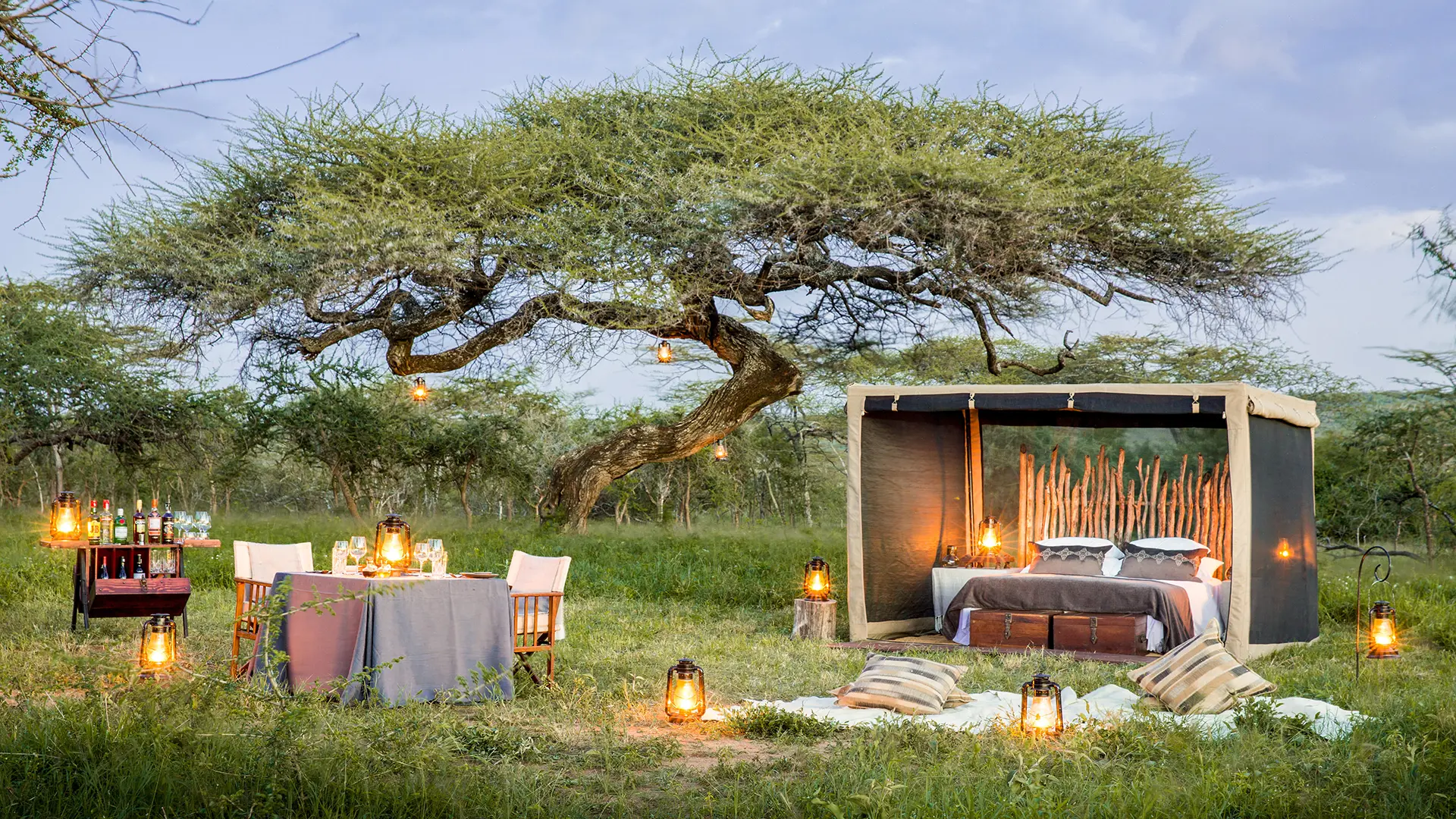
Understanding the different accommodation styles
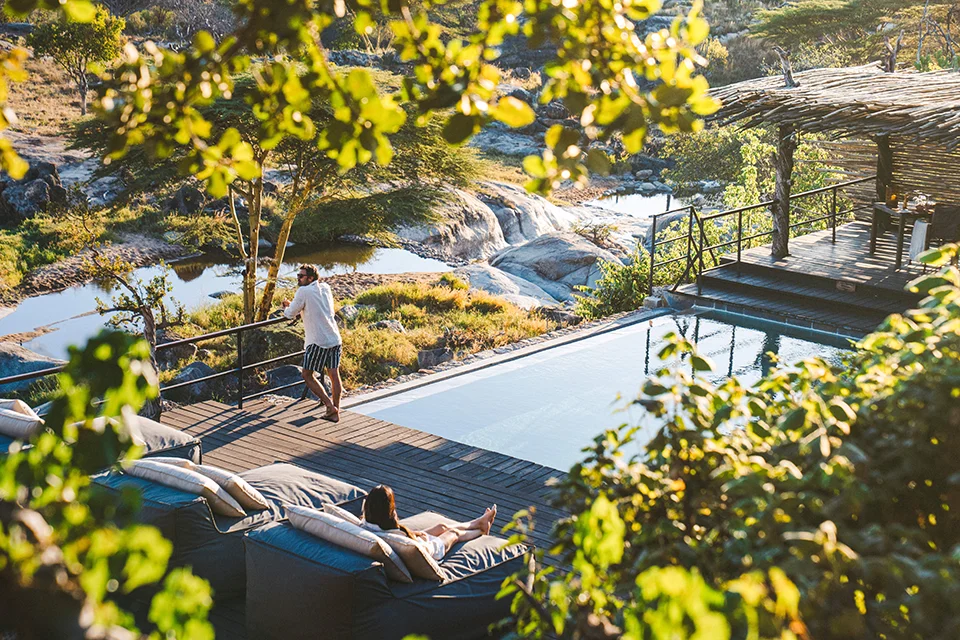
Fixed lodges for comfort and consistency
Fixed lodges are permanent structures built into the landscape, usually with solid walls, swimming pools, spa facilities and full-time chefs. Because they don't move, lodges can invest in infrastructure that a tented camp can't, from temperature-controlled rooms to multiple dining venues. Central Serengeti lodges near Seronera keep this comfort available every month of the year, making them a dependable base regardless of when a trip is booked. Lodges cluster around Seronera in central Serengeti, where wildlife is resident year-round rather than seasonal, and around Ngorongoro's rim for crater access. This makes lodges a strong fit for travellers combining a Serengeti stay with Ngorongoro Crater or Tarangire, since fixed properties simplify logistics across a broader northern Tanzania circuit without depending on migration timing.
Mobile tented camps that follow the migration
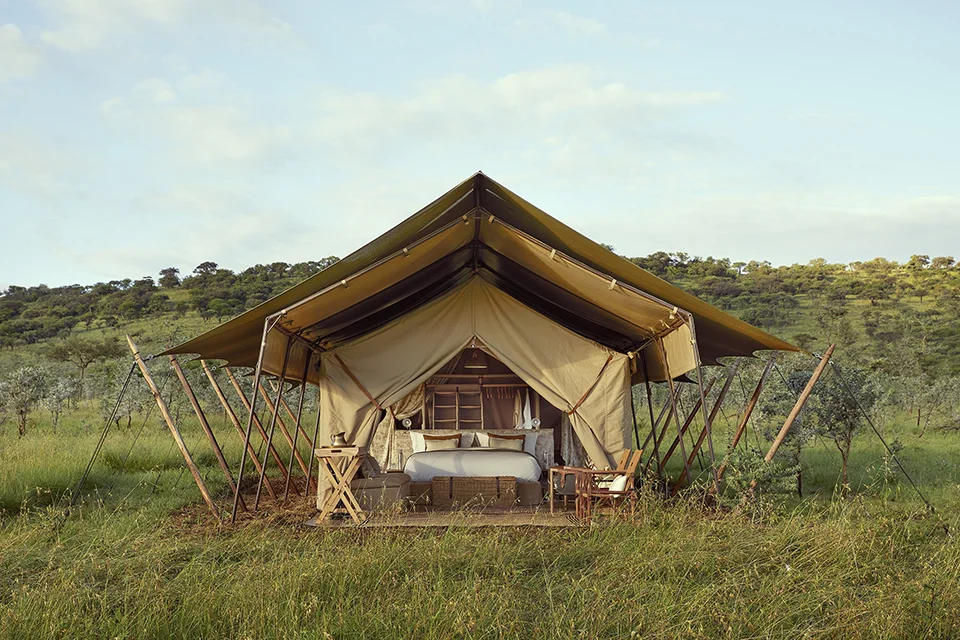
Mobile camps are dismantled and rebuilt two or three times a year, tracking herds from the southern plains during calving season to the northern Mara River corridor for crossings. Canvas tents replace brick walls, and generators or solar power run for limited hours. What guests lose in permanent infrastructure, they gain in proximity, often waking within a few minutes' drive of wherever the migration is currently concentrated. This style suits travellers who prioritise closeness to wildlife over creature comforts, and who are happy to book a specific camp based on where the herds are expected each month. Africa Geographic Tanzania safari expert Stefan Winterboer describes the appeal of staying in a fly camp during the green season: "Exploring the Ngorongoro Crater in the lush green season is extraordinary – fewer visitors, dramatic skies, and abundant wildlife. At Olmara, the fly camp stands out as the most authentic, immersive out-of-Africa safari experience imaginable."
Fly-in safaris for time-limited itineraries
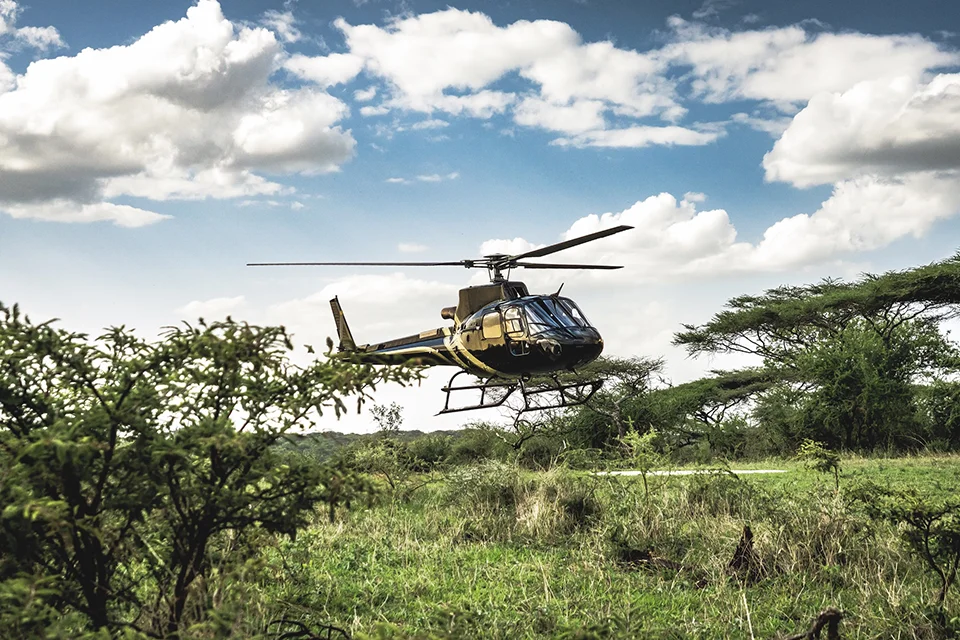
Light aircraft connect Serengeti airstrips to Arusha, Tarangire and Zanzibar in under two hours, compared to a full day of driving between some regions. This suits itineraries covering several parks in a week, or combining Tanzania's northern circuit with a beach extension in Zanzibar without losing days to travel. Fly-in safaris work well for travellers with limited time and a higher budget who want to prioritise time in the bush over time on the road. Africa Geographic Tanzania safari expert Luis Gama sums up the appeal: "Tarangire's elephants, Ngorongoro's vast crater, and the Serengeti migration. The fly-in convenience made travel effortless, letting me fully enjoy incredible wildlife encounters without long drives or lost time."
Frequently asked questions
Both work well, and the better choice depends on priorities. Lodges suit travellers who want consistent comfort, swimming pools and reliable facilities regardless of season, particularly around Seronera in central Serengeti. Mobile camps suit those who want to stay as close as possible to the wildebeest migration, since they relocate two or three times a year to track herds. Many itineraries combine both formats across a single trip.
A fly-in safari uses light aircraft to connect parks and lodges, cutting a full day's drive to under an hour and adding cost per flight leg. A road-based safari uses safari vehicles for transfers, which costs less and allows wildlife viewing along the route, but takes considerably longer between distant regions such as northern Serengeti and Tarangire. Many itineraries mix both, flying the longest legs and driving the shorter ones.
Most mobile camps offer en-suite canvas tents, proper beds, flush toilets, hot bucket or solar showers and full dining service, despite lacking the permanent infrastructure of a lodge. Comfort levels vary, so it's worth checking with us on specifics like power availability, water pressure and bathroom facilities before booking. Our safari experts can match comfort levels to individual expectations and travel dates.
Mobile tented camps positioned near the current migration location typically offer the closest access, since they relocate seasonally to follow the herds. Fixed lodges in northern Serengeti, such as those near the Mara River, also position well for crossing season from around June to October. Timing the booking to the expected migration location matters more than the accommodation type itself.
Fly-in safaris suit travellers with limited time who want to cover several regions, such as combining the Serengeti with Tarangire, Ngorongoro and a Zanzibar beach extension, without losing days to driving. For longer trips focused on one or two regions, road-based transfers often deliver similar wildlife access at a lower overall cost, with more scenery along the way.
Start planning your dream safari
Our travel experts will craft a no-obligation itinerary just for you. We have crafted over 5,000 safaris since 1991. Your personal details are protected; we only use this information to contact you.
Why book your safari with us?

Deep Experience & Knowledge
Handcrafted experiential safaris since 1991.
Travel in Africa is about knowing when and where to go, and with whom. A few weeks too early/late or a few kilometres off course, and you could miss the greatest show on Earth. And wouldn’t that be a pity?

Trust & Safety

Make A Difference
We donate a portion of the revenue from every safari sold to carefully selected conservation projects that make a significant difference at ground level.
YOUR safari choice does make a difference - thank you!