
Tailor-made safaris. Since 1991



The Rift Valley: From UNESCO lakes to Kenya's wildest conservancies
The Rift Valley at a glance:
Location: Kenya's Great Rift Valley, running north to south through central and southern Kenya, from the central highlands of Nakuru County south to the Tanzanian border in Kajiado County | Main access: Road from Nairobi (1.5–2 hrs to Lake Naivasha; 2.5–3 hrs to Lake Nakuru; approximately 4 hrs to the South Rift by 4WD); charter flights from Wilson Airport to Naishi Airstrip (Nakuru), Loldia Airstrip (Naivasha) or Rangers Airstrip (South Rift) |
UNESCO World Heritage Site: The Kenya Lake System in the Great Rift Valley (Lakes Nakuru, Bogoria and Elementaita), inscribed in 2011, covering 32,034 hectares | Best time to visit: Year-round for the central lakes; January–March and June–October for the South Rift (South Rift roads become impassable during heavy rains in April–May and November) |
Currency: Kenyan Shilling (KES); US dollars widely accepted at lodges | Malaria risk: Low in the central highland lakes; present in the South Rift; consult your doctor before travel and take appropriate precautions |
Recommended stay: Minimum 2 nights across the central lakes; 3–4 nights in the South Rift Valley conservancies | Visa: Required for most nationalities; Kenya eVisa available online before departure |
Why visit the Rift Valley?
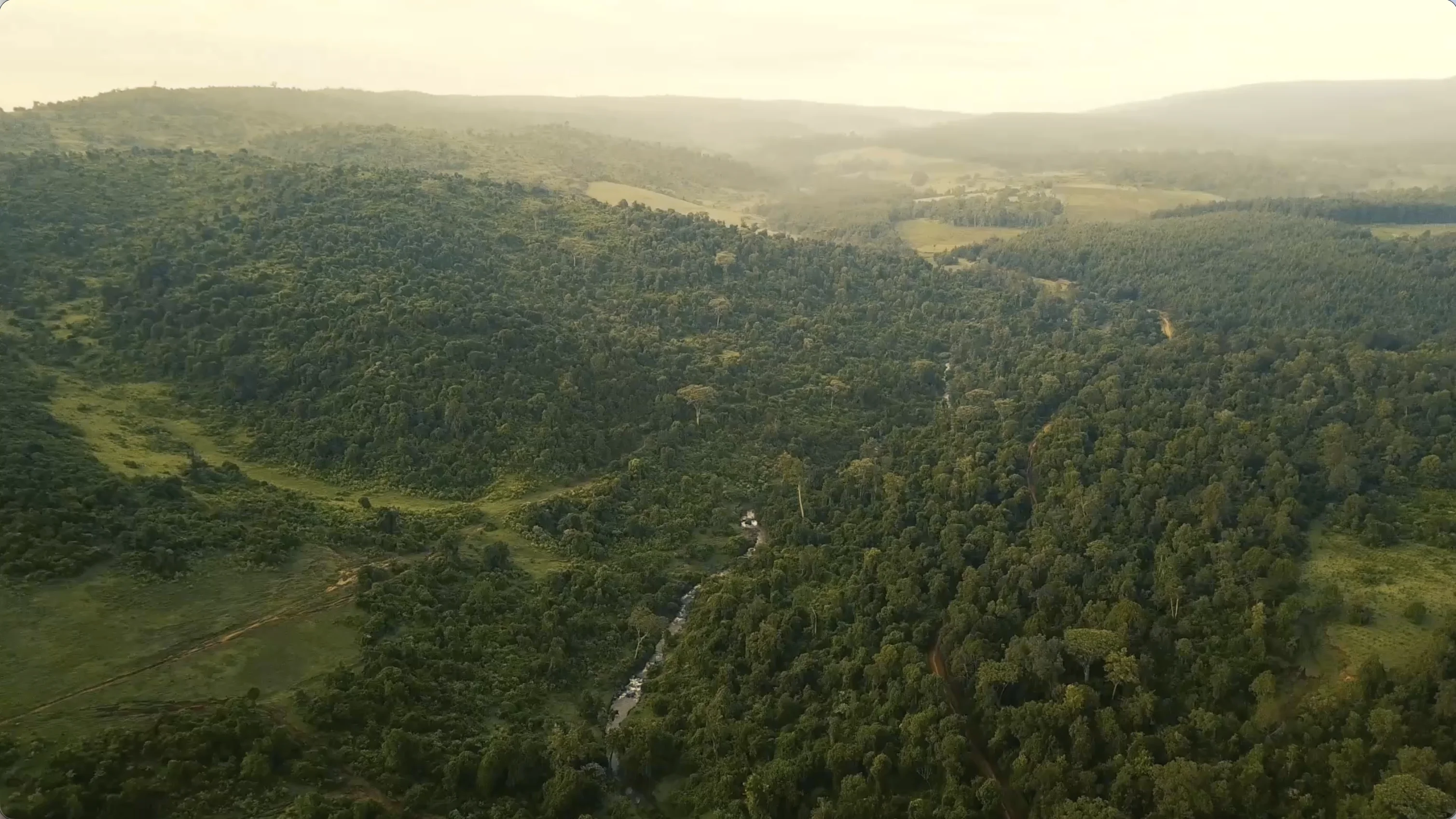
The Great Rift Valley is one of Earth's most consequential geological features, a tectonic scar that runs thousands of kilometres from the Middle East deep into southern Africa, and whose Kenyan expression is among the most dramatic on the continent. Here, ancient volcanic forces threw up escarpments, hollowed out craters and filled a chain of lakes whose chemistry supports some of the most concentrated bird populations anywhere in the world. The valley's floor still moves, its hot springs still steam, and its story of landscape and life is ongoing.
In the central highlands, within easy reach of Nairobi, the lakes of Nakuru and Naivasha each tell a different story. Lake Nakuru is Kenya's most dependable destination for rhinos, its shores part of a UNESCO World Heritage landscape of global ecological importance. Lake Naivasha offers something looser and more varied: open water, hippos, fish eagles and the rare freedom to walk among wildlife on foot. These are accessible Kenya safari destinations that reward two to three days of unhurried attention.
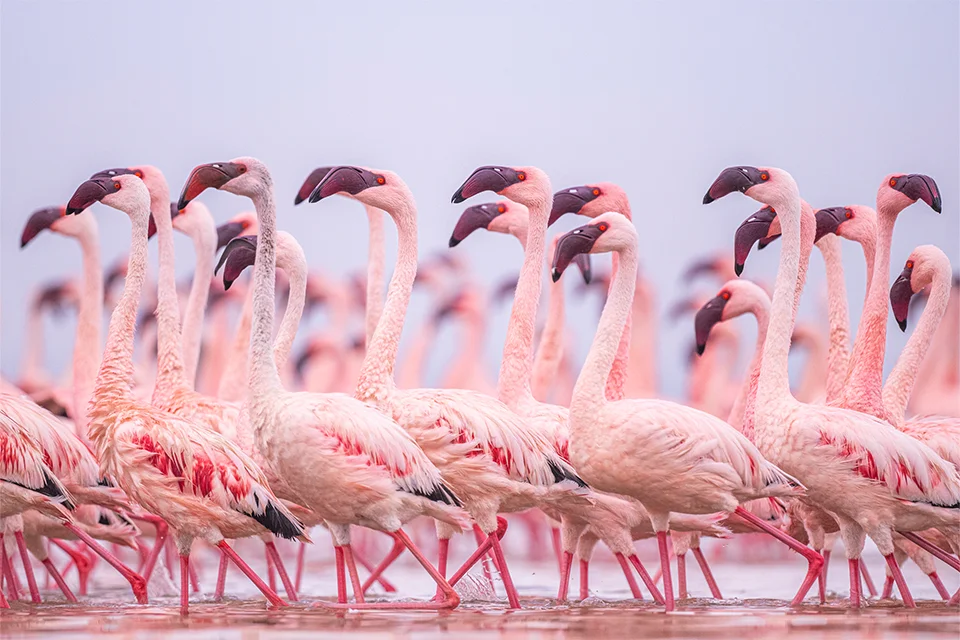
South of Nairobi, the valley tells a different story altogether. In Kajiado County, where the Rift drops toward the Tanzanian border, two Maasai community-owned conservancies protect one of Kenya's least-visited wild landscapes. Night drives cross open volcanic plains in the near-total absence of other vehicles. Ground-level photography hides face the only permanent water for kilometres. And the soda waters of Lake Magadi, stained rose-pink at dawn, draw flamingos in formations that seem almost unreasonable in their beauty.
5 Reasons We Love the Rift Valley
Kenya's most reliable rhino sightings: Lake Nakuru National Park is Kenya's most dependable destination for seeing both black and white rhinos in a single game drive.
A UNESCO World Heritage landscape: Three linked soda lakes carry UNESCO World Heritage status for their bird diversity and global importance as the primary foraging site for the lesser flamingo.
Wild land beyond the main circuit: The South Rift's Maasai conservancies offer night drives on private land, dryland specialists rarely found elsewhere in Kenya, and almost no other vehicles.
Dawn at Lake Magadi: Arrive at Lake Magadi before sunrise and watch flamingos mass as the mineral-stained shallows turn deep rose, one of East Africa's most extraordinary wildlife moments.
Open water, open sky: A boat safari on Lake Naivasha brings you among hippo pods and fish eagles on a freshwater lake whose shores let you walk among giraffe and zebra without a vehicle.
All you need to know about the Rift Valley
Things to do in the Rift Valley
Game drives at Lake Nakuru National Park: Explore acacia woodland, open lakeshore and volcanic escarpment in search of rhinos, lions, leopards and Rothschild's giraffe.
Boat safari on Lake Naivasha: Glide across this calm freshwater lake as hippo pods surface at close range, African fish eagles call from the shore, and pelicans glide across open water.
Cycling and hiking at Hell's Gate: Explore Hell's Gate National Park's volcanic gorges near Lake Naivasha on foot or by bike, making it one of Kenya's few parks open to walkers and cyclists.
Night drives in the South Rift conservancies: Cross Shompole and Olkiramatian conservancies after dark on night drives permitted across community land, a rarity in Kenya, with leopards and striped hyenas lurking.
Photography hides, day and overnight: Settle into ground-level waterhole hides at the South Rift camps and wait as lions, caracal and an exceptional range of dry-country birds come to the only permanent water for kilometres around.
Walking with Maasai guides: Cover the South Rift's volcanic terrain on foot with senior Maasai guides, whose community's land ownership opens walking access, whereas Kenya's national parks do not allow walking.
What wildlife can I see in the Rift Valley?
Predators: Resident lion prides hunt across the South Rift plains and within Lake Nakuru National Park and leopards are most reliably encountered on South Rift night drives along the Ewaso Ng'iro River line after dark. Striped hyenas occur patchily across Kenya’s Rift Valley, with the strongest presence in the southern arid section around Shompole Conservancy and Lake Magadi, where they have been studied and regularly appear on night drives and at waterhole hides.
Black and white rhinos: Lake Nakuru National Park is Kenya's premier rhino sanctuary and the most reliable place in the country to see both species in a single drive, with Kenya Wildlife Service rangers protecting it from poaching.
Hippos and freshwater wildlife: Lake Naivasha supports a large hippo and crocodile population, most easily seen by boat.
Dryland specialists of the South Rift: Gerenuk, fringe-eared oryx, and greater kudu are adapted to the arid volcanic terrain of the South Rift, and are rarely encountered reliably elsewhere in Kenya.
Rothschild's giraffe: One of Africa's most endangered giraffe subspecies was relocated to Lake Nakuru National Park for conservation and now roams the park's open plains and lakeshore freely.
More than 400 bird species, including lesser and greater flamingos, chestnut sparrow, black-faced and chestnut-bellied sandgrouse, kori bustard, secretarybird, grey crowned crane, Von der Decken’s hornbill and African pygmy kingfisher.
Where to stay in the Rift Valley
The Rift Valley's lodges are as varied as the landscape itself: a tented camp balanced on a volcanic cliff above a rhino sanctuary, a craft-rich stone lodge in a private freshwater sanctuary, and two community conservancy camps at opposite ends of the same volcanic terrain. One sits on the river; the other commands the escarpment high above.
We showcase many of them on each regional page linked below.
Explore the Rift Valley's destinations
Lake Nakuru & Lake Naivasha
The central Rift Valley's two most celebrated lakes sit within easy reach of Nairobi and could not offer more different experiences. That contrast is precisely what makes visiting both worthwhile.
Lake Nakuru National Park is Kenya's most dependable destination for rhinos. Its fenced 188 square kilometres of acacia woodland, open grassland, and alkaline lakeshore offer black and white rhinos, lions, leopards, and the endangered Rothschild's giraffe in a single drive. The lake forms part of the Kenya Lake System UNESCO World Heritage Site. When water conditions favour them, flamingos transform the shoreline; at other times, most birds relocate to Lake Bogoria to the north.
Lake Naivasha shifts the mood entirely: a large freshwater lake sitting at around 1,890 metres where the experience is defined by space and variety rather than the focused intensity of a fenced park. Boat safaris move through hippo pods at close range; Crescent Island offers the rare chance to walk among giraffe, zebra and waterbuck without a vehicle; and the volcanic gorges of Hell's Gate are open to cyclists and hikers.
Shompole and Lake Magadi
The South Rift sits at the far end of Kenya's Rift Valley, where the land flattens toward the Tanzanian border and the landscape takes on a heat and stillness that feels genuinely remote. It is not a national park. Two Maasai community-owned conservancies protect this volcanic terrain: Shompole, covering approximately 14,165 hectares, and the adjacent Olkiramatian, covering approximately 25,000 hectares. Together they form one of Kenya's largest community-owned wildlife landscapes. SORALO, the South Rift Association of Land Owners, coordinates conservation and directs tourism revenue back to the communities whose land this has always been.
The wildlife is defined by the arid conditions. Gerenuk, fringe-eared oryx and greater kudu move through open plains and acacia woodland; lions, leopards and striped hyenas are most reliably encountered after dark, when night drives, permitted across both conservancies in a way they are not in Kenya's national parks, bring the bushveld to life. At Lake Magadi, a soda lake whose mineral-stained shallows glow pink in the early morning, lesser and greater flamingos gather at the water's edge at dawn.
For travellers who have exhausted the classic Kenya circuit and want something rawer and less visited, the South Rift answers that question directly.
Trusted by thousands of ecstatic travellers
✔️ 5-Star Trustpilot Rating ✔️ Condé Nast Travel Specialist Award Winner
✔️ Accredited by SATSA ✔️ 5,000+ Exceptional Safaris Since 1991
Why choose Africa Geographic to plan your safari?

"Planning this trip...was a great experience, he was very patient and professional as we worked through options before finalising our 22 night adventure. From there the trip was seemless, with so many amazing experiences including: Lentorre Lodge in the Rift Valley - Kenya, wildlife night photography in their purpose built hide...We highly recommend..."
"We travelled to Kenya in August this year to see the annual Wildebeest migrations...and to hopefully see the flamingos at Lake Bogoria....organised the trip and his whole team was amazing. When there were issues they were addressed and their patience and understanding of booking us a bucket list trip was amazing. We thoroughly recommend this company ."
"...Africa Geographic put together an unforgettable safari in Kenya...for me and my dad. She was able to create an incredible itinerary...handled the logistics, so my dad and I were able to relax and take in the amazing wildlife, culture, and landscapes together; giving us an incredible experience that we look back on fondly (and often!). I highly recommend..."
Wish you were here?
Frequently asked questions
Kenya's Rift Valley is the country's section of the Great Rift Valley, a geological fault system running from the Middle East to Mozambique. It encompasses a chain of lakes, volcanic escarpments and community conservancy land stretching from the central highlands south to the Tanzanian border.
The central lakes can be visited year-round; June to October is best for wildlife viewing, while November to April brings excellent birdlife. The South Rift is best from January to March and June to October; heavy rains in April, May and November can make the South Rift roads impassable.
Yes. Lake Nakuru National Park is Kenya's premier rhino sanctuary and the country's most reliable destination for encountering both black and white rhinos in a single drive. The park is fully enclosed by an electric fence and rhinos are individually monitored and guarded.
Flamingo numbers at Lake Nakuru fluctuate significantly with water levels and the lake's alkalinity, which determines the food supply for the birds. When conditions are right the shoreline turns spectacular pink, but numbers are not guaranteed; Lake Bogoria to the north currently hosts more reliable large flocks.
The Kenya Lake System in the Great Rift Valley was inscribed in 2011, covering 32,034 hectares across three linked soda lakes: Nakuru, Bogoria and Elementaita. It is recognised for exceptional bird diversity, the remarkable alkaline lake ecosystem processes, and its global importance as the primary foraging site for the lesser flamingo.
Lake Naivasha is around 90 kilometres from Nairobi, roughly one and a half hours by road. Lake Nakuru is approximately 160 kilometres, about two and a half hours. Both are accessible by charter flight; Naivasha also has a daily scheduled service from Wilson Airport to Loldia Airstrip.
Lake Naivasha offers boat safaris among hippo pods and waterbirds, guided walking among wildlife on Crescent Island, where the absence of large predators makes on-foot encounters possible, as well as cycling or hiking through the volcanic gorges of Hell's Gate National Park immediately to the south.
Both are Maasai community-owned group ranches in Kajiado County at the southern end of Kenya's Rift Valley. Shompole Conservancy covers approximately 14,165 hectares and Olkiramatian approximately 25,000 hectares; SORALO, the South Rift Association of Land Owners, coordinates conservation and tourism revenue-sharing across both.
The fastest option is a charter flight from Wilson Airport to Rangers Airstrip, approximately 40 to 45 minutes in the air. By road, allow around four hours via the Magadi Road (C58) with a 4WD. No direct roads connect the South Rift to the Masai Mara or Amboseli.
Night drives are not permitted inside Kenya's national parks, but are allowed across both the Shompole and Olkiramatian community conservancies in the South Rift, an unusual freedom in Kenya. Leopards are most reliably encountered along the Ewaso Ng'iro River line after dark.
Gerenuk, fringe-eared oryx and greater kudu are the standout dryland specialists, all well adapted to the arid volcanic terrain and rarely encountered reliably elsewhere in Kenya. Lions, leopards, elephants, giraffes, zebra, impala and caracal are also present, alongside more than 400 recorded bird species.
The South Rift is drier, quieter and far less visited than the Mara. It offers community-owned land, dryland-adapted wildlife not found reliably on the main circuit, and night drives on private conservancy land. It is best suited to experienced safari travellers who have already visited Kenya's headline destinations.
The central lakes pair naturally with Nairobi or the Masai Mara on road or air itineraries. The South Rift connects most logically via Nairobi, as there are no direct roads to the Mara or Amboseli. A minimum of two nights per zone allows for the most rewarding experience.
Our safaris typically cost from US$700 per person, per night, depending on the accommodation comfort level, time of year and activities. This price usually includes accommodation, all meals, game drives, experienced guides, airport transfers, and 24/7 support from our team.
Click here to schedule a no-obligation call with one of our Safari Experts or fill in our 2-minute form with your questions. Our team of experts are here to help! Whether you’re curious about the best time to travel, want to hear first-hand about an experience or need help planning your safari.
Explore more African destinations
Start planning your dream safari
Our travel experts will craft a no-obligation itinerary just for you. We have crafted over 5,000 safaris since 1991. Your personal details are protected; we only use this information to contact you.
Why book your safari with us?

Deep Experience & Knowledge
Handcrafted experiential safaris since 1991.
Travel in Africa is about knowing when and where to go, and with whom. A few weeks too early/late or a few kilometres off course, and you could miss the greatest show on Earth. And wouldn’t that be a pity?

Trust & Safety

Make A Difference
We donate a portion of the revenue from every safari sold to carefully selected conservation projects that make a significant difference at ground level.
YOUR safari choice does make a difference - thank you!