
Tailor-made safaris. Since 1991



Choose your Namibia safari style
Namibia is unusual in Africa: self-driving, a guided road safari and a fly-in safari are all workable ways to see the country. The decision comes down to four questions:
your confidence on gravel roads
how many days you have
who is travelling with you
and what you most want to see.
The single factor that most travellers overlook is land tenure: self-drive routes stay on public roads and inside national parks, while activities such as rhino tracking, night drives and guided walks happen almost entirely on private and communal conservancy land, which requires a lodge vehicle and guide regardless of budget.
Namibia safari styles at a glance
Self-drive: your own 4x4, public roads, national park camps
Guided road safari: a private vehicle and guide, same routes
Fly-in safari: light aircraft between remote private lodges
Hybrid: self-drive the accessible south, fly to the remote north
Each style suits a different traveller. The right one depends on your comfort with gravel roads, your available time, and whether private-land wildlife activities matter to you.
How the three styles compare
Factor | Self-drive | Guided road safari | Fly-in safari |
|---|---|---|---|
Access to national parks | Yes | Yes | Yes, via transfers |
Access to private conservancies | Limited | Yes | Yes |
Night drives and walking safaris | Rarely available | Available at private lodges | Available at private lodges |
Time on the road per day | Long, self-paced | Long, guide-paced | Minimal, by air |
Best suited to | Confident, time-rich travellers | Travellers wanting expertise without driving | Time-poor or first-time Africa travellers |
4 things we love about planning it this way
Beyond the usual pros-and-cons lists, here’s what actually makes the decision worth thinking through properly:
It's genuinely a free choice: Namibia's road network and infrastructure make all three styles safe and workable, unlike most African safari countries.
The hybrid option exists: you are not locked into one style for the whole trip, and most of our best itineraries mix two.
The decision reveals your trip: answering these four questions naturally produces a route, a pace and a budget.
It removes decision fatigue: once you know your style, choosing lodges and routes becomes far more straightforward.
The four questions that decide your style
How confident are you on gravel roads?
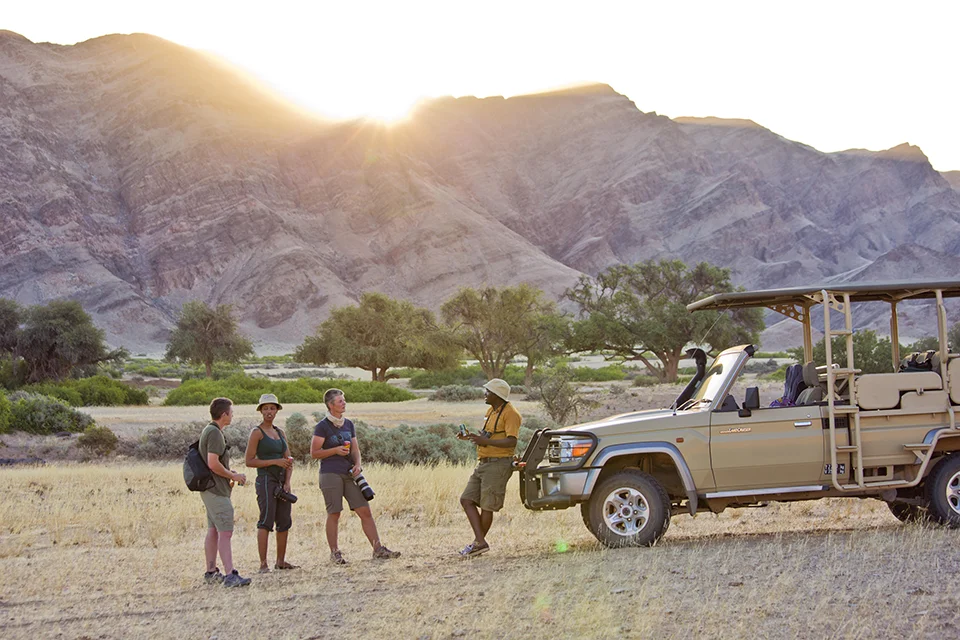
Most of Namibia's scenic routes run on well-maintained gravel rather than tar. Confident, experienced drivers who are comfortable with long, self-paced days find self-drive genuinely rewarding. Travellers who would rather not manage tyre pressure, fuel gaps and corrugated surfaces themselves are better served by a guided road safari, where a professional driver-guide handles those decisions. For full safety guidance on gravel driving, see our Namibia safari planning page.
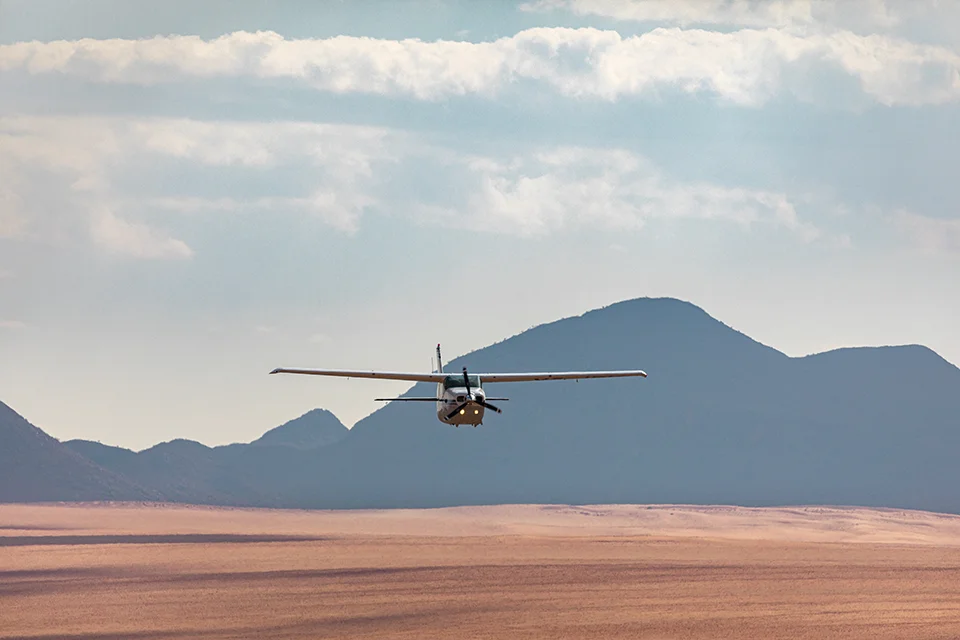
How much time do you actually have?
Namibia is larger than France, and distances between highlights are real - a full day's drive is common between regions. Travellers with 10 days or fewer generally get more from their trip by flying between two or three anchor regions, since road transfers alone can consume several of those days. Travellers with two weeks or more can self-drive comfortably without feeling rushed.
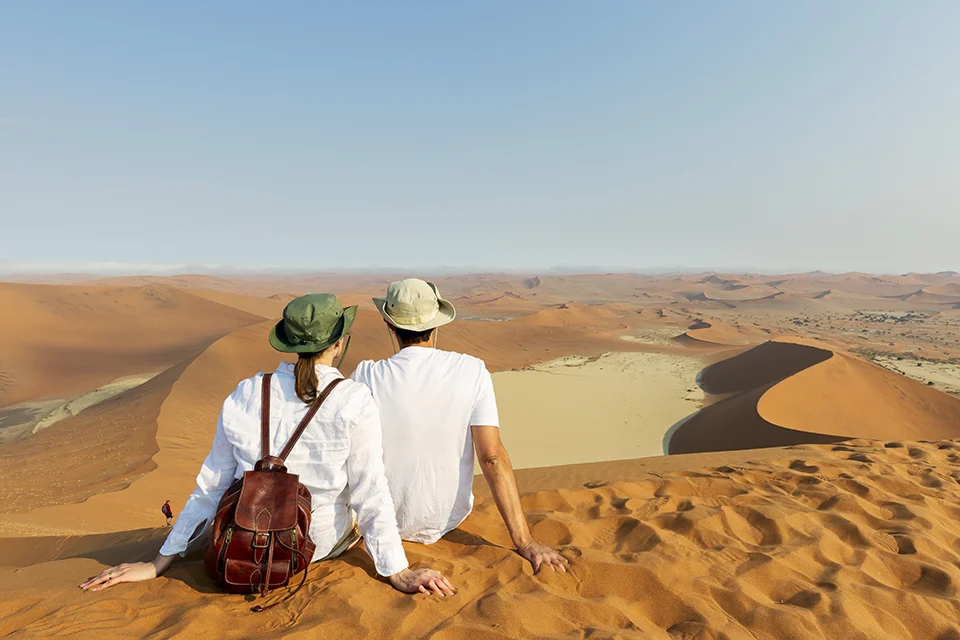
Who’s travelling with you?
Families with children and groups of friends often prefer self-drive for its flexibility - stopping when you want, adjusting the pace daily. Couples and travellers wanting maximum wildlife time with minimum logistics tend to prefer fly-in, particularly for shorter trips. Multigenerational groups frequently choose a guided road safari, which offers flexibility without placing the driving responsibility on one person.
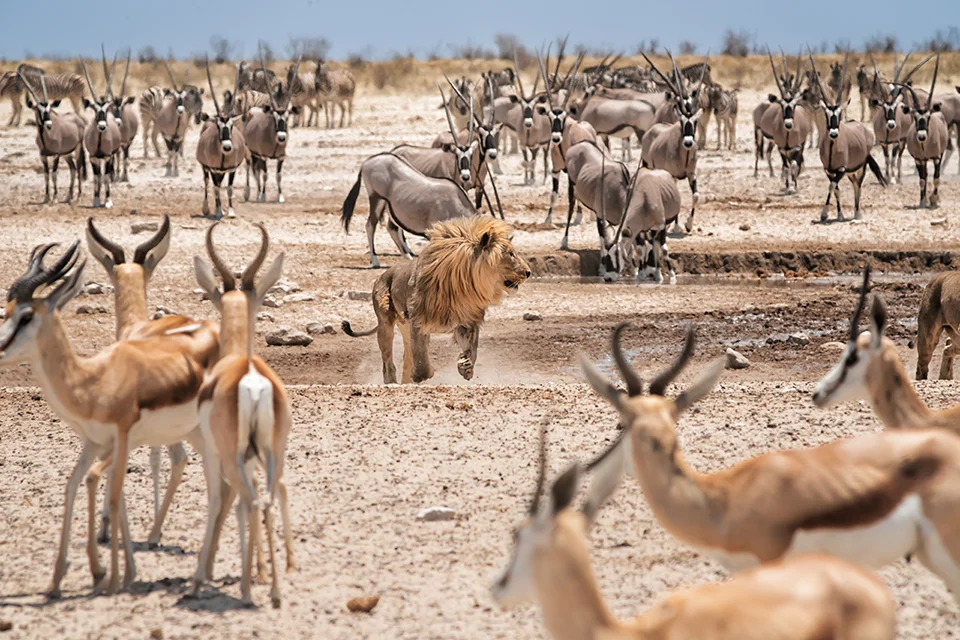
What do you most want to see?
This is the question self-drive itineraries most often get wrong. Etosha's waterholes, Sossusvlei's dunes and Damaraland's rock art are all reachable by self-drive. Rhino tracking on foot, night drives and guided bush walks are a different matter entirely.
Why a hybrid route works so well in Namibia
Different land allows different experiences
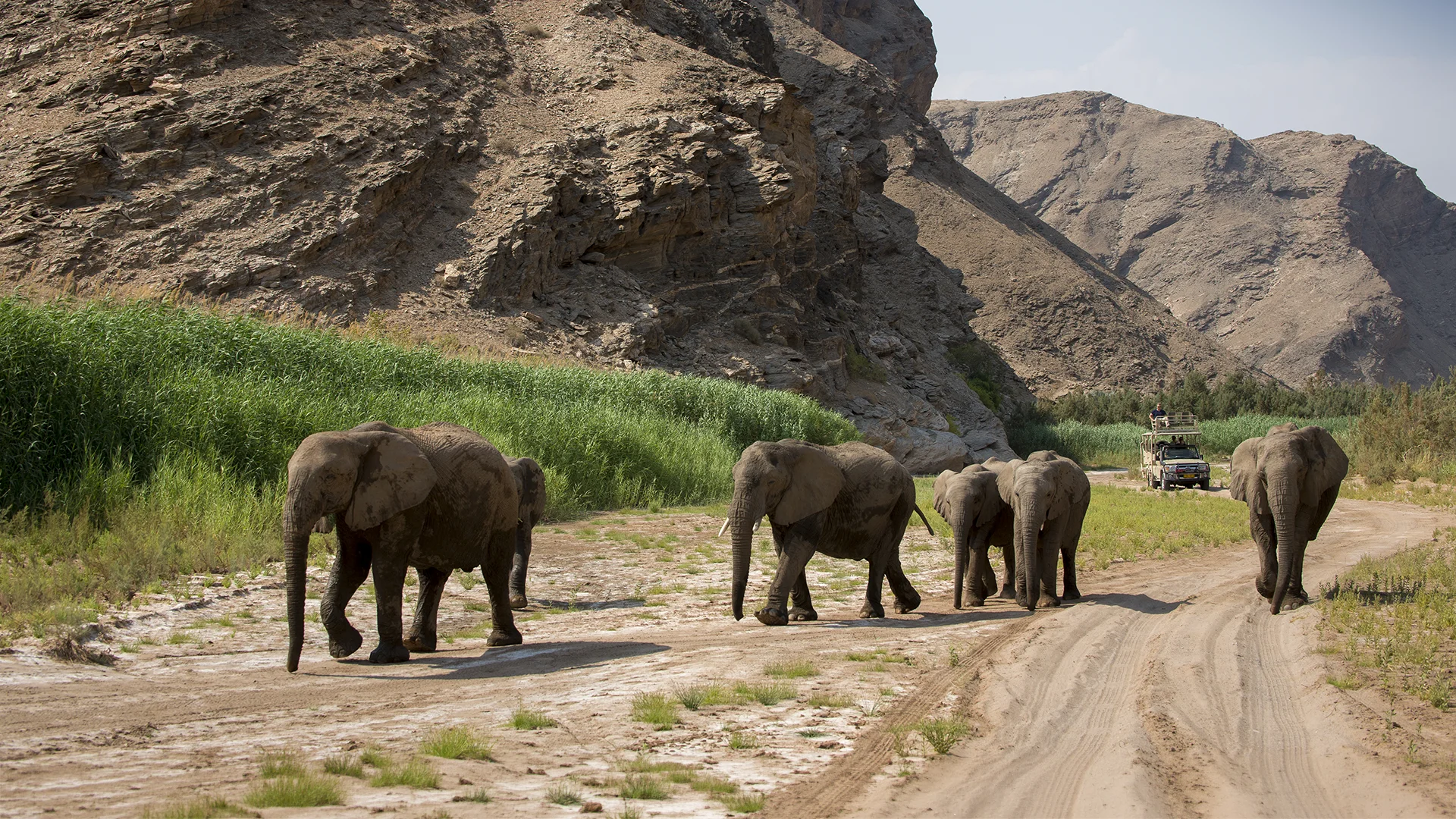
The distinction is not simply between budget and luxury, but between different types of land and the rules that govern them. In national parks such as Etosha, visitors follow designated roads and park opening hours. On private reserves and communal conservancies, lodges may offer activities such as guided walks, night drives and rhino tracking under agreements with the land’s custodians.
This matters when planning the route. A self-drive journey through Namibia’s national parks delivers Etosha’s waterholes, Sossusvlei’s dunes and the freedom of the open road, but some of the country’s most distinctive guided experiences take place on conservancy land in Damaraland and the Kunene. Adding a private lodge stay makes these experiences possible without turning the entire trip into a fully guided safari.
Drive the south and fly into the remote north
Sossusvlei, Swakopmund and the central Namib fit naturally into a road trip. The journey between them is part of the experience, with wide landscapes, small desert towns and long gravel roads unfolding at your own pace.
Farther north, the distances grow and travel becomes more demanding. Flying into Damaraland or the Kunene can replace a long day on the road with extraordinary aerial views and more time in the landscape itself. This combination – self-driving through the accessible south, then flying into the remote north – preserves the independence of a road trip while opening up experiences that are difficult to reach alone.
A traveller’s view from the air
“Flying inland to Hoanib in a small aircraft is quite an adventure. The planes are small, the air can be lively, and you are very aware of both. That said, the views make it worthwhile.”
– Anthony Young, Africa Geographic traveller, after driving through southern Namibia and flying into the remote Hoanib Valley. Read his account.
Frequently asked questions
Yes. Namibia has good roads, low crime affecting tourists and sparse traffic. The main risks are environmental - gravel-road speed and fatigue - rather than criminal. See our full Namibia safety guidance for detailed advice.
Yes, and we book this combination more than any other. Self-drive the accessible south around Sossusvlei, then fly north to Damaraland or the Kunene, where road transfers are long and lodges are more remote.
You will see Etosha's waterhole wildlife and Sossusvlei's dunes without issue. You will generally miss rhino tracking, night drives and guided walks, which happen on private and communal conservancy land under land-access agreements.
It costs more than a bare self-drive rental, but it removes vehicle hire, fuel logistics and route planning, and includes a guide's wildlife knowledge throughout - many travellers find the trade-off worthwhile.
Allow at least 14 days for a comfortable self-drive covering Sossusvlei, Swakopmund and Etosha. Shorter trips are better suited to fly-in or a hybrid route. Our guide on trip length covers three tested route options.
Yes, more than almost anywhere else in sub-Saharan Africa. Good infrastructure, sparse traffic and widely spoken English make it accessible, provided you are comfortable with long driving days and gravel roads.
Start planning your dream safari
Our travel experts will craft a no-obligation itinerary just for you. We have crafted over 5,000 safaris since 1991. Your personal details are protected; we only use this information to contact you.
Why book your safari with us?

Deep Experience & Knowledge
Handcrafted experiential safaris since 1991.
Travel in Africa is about knowing when and where to go, and with whom. A few weeks too early/late or a few kilometres off course, and you could miss the greatest show on Earth. And wouldn’t that be a pity?

Trust & Safety

Make A Difference
We donate a portion of the revenue from every safari sold to carefully selected conservation projects that make a significant difference at ground level.
YOUR safari choice does make a difference - thank you!