

Tailor-made safaris. Since 1991



Which Sossusvlei experience should you choose?
Deadvlei, Dune 45 and Big Daddy are often grouped together under the name Sossusvlei, but they offer three very different mornings in Namibia’s Namib Desert. Deadvlei is a white clay pan explored on foot, Dune 45 is the most accessible dune climb, and Big Daddy is the area’s more demanding ascent. You do not need to fit all three into one visit – choosing according to your fitness, available time and interest in photography usually creates a better experience.
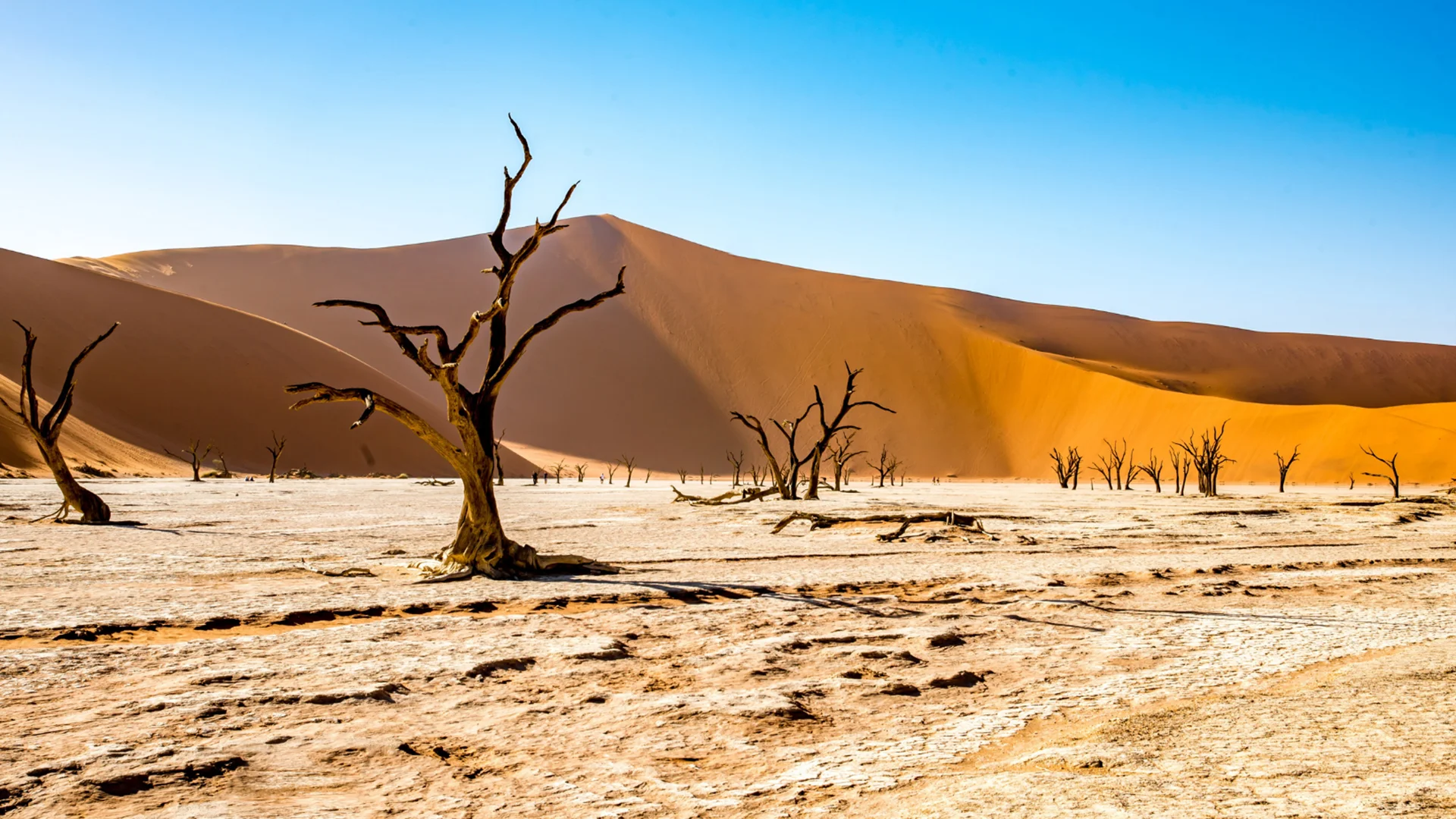
Deadvlei requires no major climb. A sandy walk leads to the pale pan where centuries-old camelthorn skeletons stand beneath immense red dunes. Arrive early, while the trees remain etched against alternating bands of sunlight and shadow, and the scene feels almost stripped of colour except for white clay, black wood and ochre sand.
Dune 45 rises beside the road roughly 45 km from Sesriem and usually takes between 45 minutes and an hour to climb, depending on fitness and sand conditions. Its defined ridge and straightforward access make it the easiest choice for a sunrise ascent.
Big Daddy, towering above Deadvlei, demands considerably more time and effort. The climb can take several hours, but the summit opens onto the wider dune field, followed by an exhilarating descent down the steep sand face towards the pan below.
Choose Deadvlei for landscape photography without a strenuous climb, Dune 45 for an accessible sunrise summit, and Big Daddy for the physical challenge and broadest view. Attempting all three in one morning usually means rushing through the very landscape you came to experience.
Three sites, three different experiences
Deadvlei: flat clay pan, no climbing, striking at any time of day
Dune 45: easy roadside climb, the classic sunrise choice
Big Daddy: serious multi-hour climb, best views of the area
You do not need to attempt all three on the same morning
Each site rewards a different level of fitness and time budget, so choosing deliberately matters more than trying to see everything at once.
Deadvlei, Dune 45 and Big Daddy compared
Site | Climb time | Difficulty | Best light |
|---|---|---|---|
Deadvlei | No climb, flat walk | Easy | Early morning or late afternoon |
Dune 45 | 45 minutes to 1 hour | Moderate | Sunrise |
Big Daddy | 2 to 3 hours up | Demanding | Sunrise start, mid-morning summit |
3 ways Sossusvlei reveals its story
Deadvlei, Dune 45 and Big Daddy are more than three stops on the same route. Together, they reveal how water, wind and time have shaped this corner of the Namib:
Deadvlei preserves a lost river landscape: The camelthorn trees grew when floodwater still reached the pan. Once shifting dunes blocked the Tsauchab River, the clay dried and the trees died – preserved by an arid climate too dry for them to decompose.
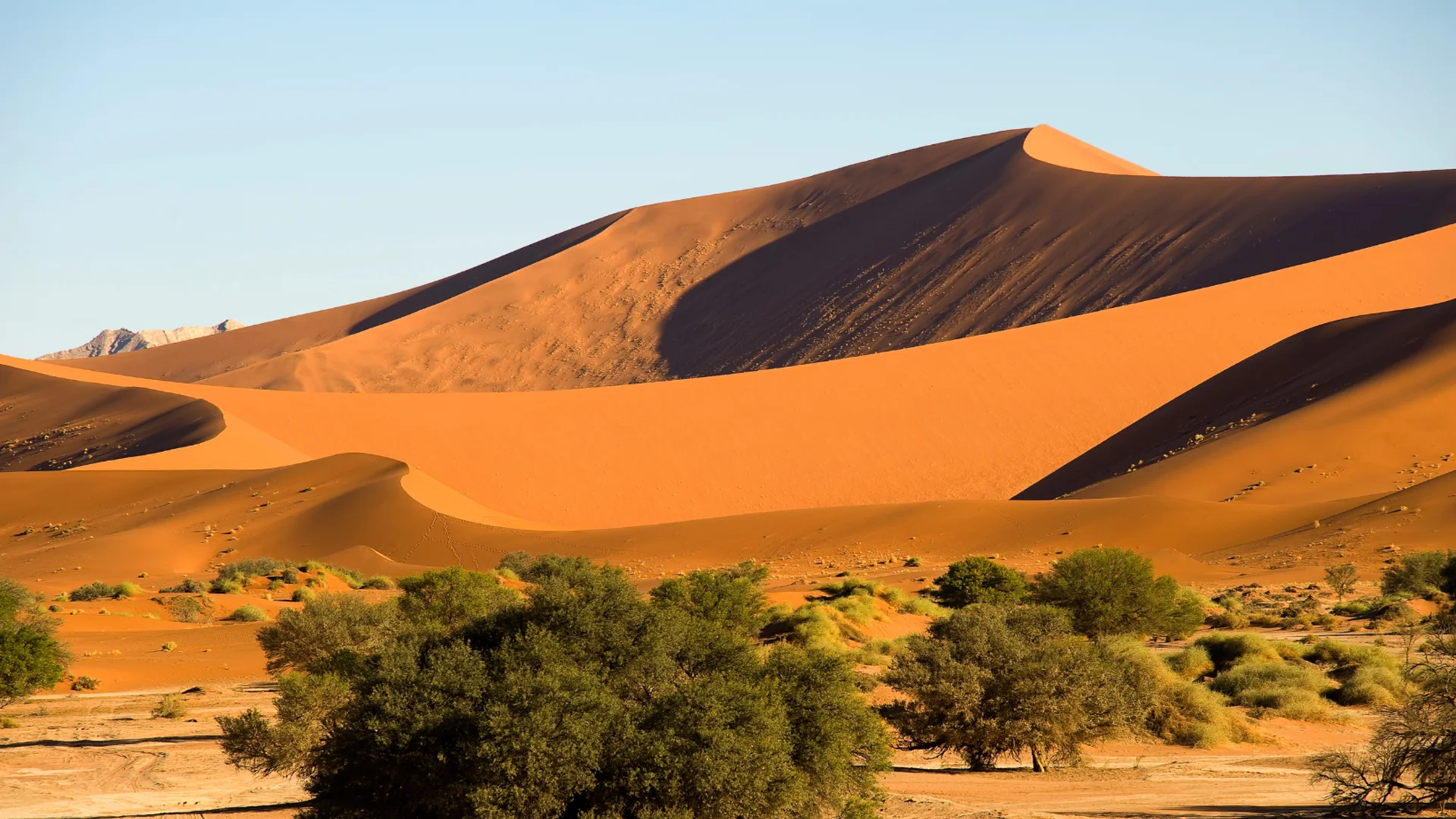
Dune 45 makes the movement of sand visible: Its sweeping ridge has been sculpted by opposing winds, and low sunlight divides its slopes into glowing ochre and deep shadow. From the crest, the dune field no longer looks static but rippled, layered and constantly reshaped.
Big Daddy reveals the scale of the Namib: From the summit, Deadvlei contracts into a white patch far below and the surrounding dunes extend towards the horizon. The long descent into the pan connects the broadest view of the landscape with its most intimate and recognisable scene.
Deadvlei: the flat pan that needs no climb
What makes it distinctive
Deadvlei is a white clay pan studded with the blackened skeletons of camelthorn trees, thought to be several centuries old and preserved by the extreme dryness rather than any conscious effort. Reaching it requires only a walk across sand from the car park, with no dune climb involved at all.
When to visit for the strongest images
Early morning and late afternoon light rake across the pan at a low angle, throwing long shadows from both the trees and the surrounding dunes. Midday light flattens this contrast considerably, so timing matters more here than at almost any other site in the area.
Dune 45: the classic sunrise climb
Why it is so popular
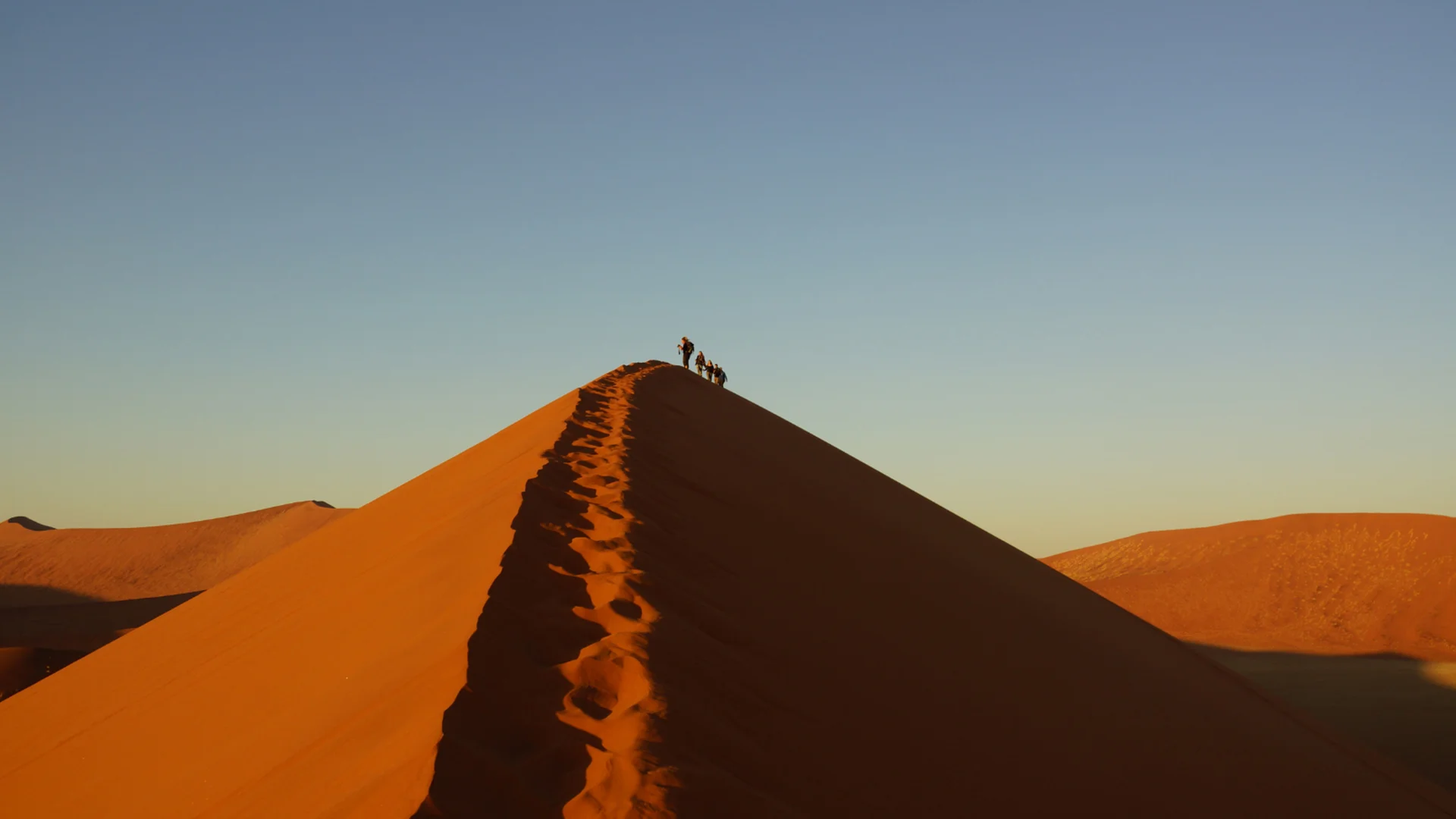
Dune 45 sits directly beside the road, roughly 45 kilometres from Sesriem gate, making it the most accessible climb in the area. A ridge-line ascent takes most travellers between 45 minutes and an hour, manageable for reasonably fit visitors of most ages. Its popularity means you will rarely have the ridge to yourself at sunrise, but the atmosphere of shared anticipation is, for many visitors, part of the experience.
What to expect underfoot
The climbing sand is soft and the ridge narrow in places, so footing takes more effort than the modest height suggests. Starting before sunrise rewards climbers with soft, low light and noticeably cooler conditions than even an hour later.
Big Daddy: the serious ascent
A real commitment
Big Daddy rises among the tallest dunes in the area, and the climb to its summit genuinely takes several hours of sustained effort in soft sand. This is not a casual add-on to a Deadvlei visit - it needs an early start, proper water and a realistic assessment of your own fitness.
The payoff at the top
From the summit, the full scale of Sossusvlei's dune field and Deadvlei's pale pan below become visible at once - a view unmatched anywhere else in the area. Many climbers descend the steep face directly into Deadvlei itself, a fast, sliding descent that is as memorable as the climb.
Wish you were here?
How to sequence your mornings
One morning: Deadvlei and Dune 45
With a single morning, prioritise Deadvlei for its photography and add Dune 45 if time and energy allow, since both are achievable well before the day's heat builds.
A traveller's view from the top
"The dunes are large. Very large. Big Daddy, in particular, rises over 300 metres and dominates the area. The red sand, white clay pans, and clear blue sky make for a strong visual contrast." - Anthony Young, Africa Geographic traveller, on arriving at Sossusvlei.
Two mornings: adding Big Daddy
With a second morning available, attempt Big Daddy while you are still fresh, starting before sunrise to reach the summit before the sand becomes uncomfortably hot underfoot. Save Deadvlei's flat walk, which demands far less physical effort, for whichever morning suits your energy levels best.
Frequently asked questions
Most travellers take 45 minutes to an hour to reach the ridge top, depending on fitness and how many photo stops are made along the way. Starting before sunrise gives the coolest conditions.
Yes, considerably. Big Daddy's ascent takes two to three hours of sustained effort in soft sand, compared with roughly an hour for Dune 45, and requires a genuinely higher level of fitness.
No. Deadvlei itself is a flat clay pan reached by a level walk from the car park, with no climbing required, though many visitors combine it with a climb up nearby Big Daddy.
Early morning or late afternoon, when low-angle light creates strong shadows from the dead trees and surrounding dunes. Midday light is flatter and less dramatic for photography.
Yes. Many climbers descend Big Daddy's steep face directly into Deadvlei below, a fast, sliding descent that is a popular way to combine both sites in one outing.
Dune 45, for its accessibility and moderate climb time, paired with a visit to Deadvlei. Save Big Daddy for a second morning or a subsequent visit once you know your fitness and the conditions.
Start planning your dream safari
Our travel experts will craft a no-obligation itinerary just for you. We have crafted over 5,000 safaris since 1991. Your personal details are protected; we only use this information to contact you.
Why book your safari with us?

Deep Experience & Knowledge
Handcrafted experiential safaris since 1991.
Travel in Africa is about knowing when and where to go, and with whom. A few weeks too early/late or a few kilometres off course, and you could miss the greatest show on Earth. And wouldn’t that be a pity?

Trust & Safety

Make A Difference
We donate a portion of the revenue from every safari sold to carefully selected conservation projects that make a significant difference at ground level.
YOUR safari choice does make a difference - thank you!