
Tailor-made safaris. Since 1991



Best time to visit Namibia
The best time to visit Namibia depends on whether you’re travelling for wildlife, landscapes, photography or solitude. The country’s dry climate keeps most regions accessible year-round, but each season changes the experience.
For a balance of comfortable weather, changing landscapes and fewer visitors, April and May are particularly appealing. Namibia is beautiful in every season – the question is which version of it you want to see.
From May to October, clear skies and dry conditions make road travel easier, while wildlife gathers around Etosha’s waterholes. June to August brings cooler mornings and evenings; by September and October, temperatures rise and the wildlife viewing can be especially rewarding as water becomes scarce. These are also among the most sought-after months, so lodges and camps fill early.
From November to April, rain softens the desert’s muted colours and turns parts of the country unexpectedly green. Migratory birds arrive, newborn animals appear and afternoon storms build dramatically over the plains. Rates are often lower and popular places quieter, although wildlife is more dispersed and heavy rain can temporarily affect gravel roads.
Namibia's seasons at a glance
June to September: peak dry season, waterhole wildlife at its densest
April to May and September to October: shoulder months, fewer vehicles
November to March: green season, birdlife and landscape transformation
Year-round: Sossusvlei's dunes and Damaraland's wildlife remain accessible
Namibia's arid climate means no month closes the country down. The calendar changes what you see, not whether you can travel.
Which window matches your goal
Your goal | Best window | Trade-off |
|---|---|---|
Concentrated wildlife at waterholes | June to September | Higher vehicle numbers in Etosha |
Balance of wildlife and space | April to May, September to October | Slightly less predictable sightings |
Green landscapes and birdlife | November to March | Wildlife more scattered, occasional rain |
Dune photography with clear light | May to October | Cooler early mornings |
3 things we love about Namibia's calendar
Beyond the standard dry-versus-wet framing, Namibia's seasonal pattern offers real planning advantages:
Genuine year-round access: unlike rainforest or delta destinations, poor weather rarely closes Namibia's roads for long.
Two very different Namibias: the green season and dry season feel like separate destinations, worth experiencing on different trips.
Predictable extremes: because rainfall is so low overall, even the wet season rarely disrupts a well-planned itinerary.
Namibia through the seasons
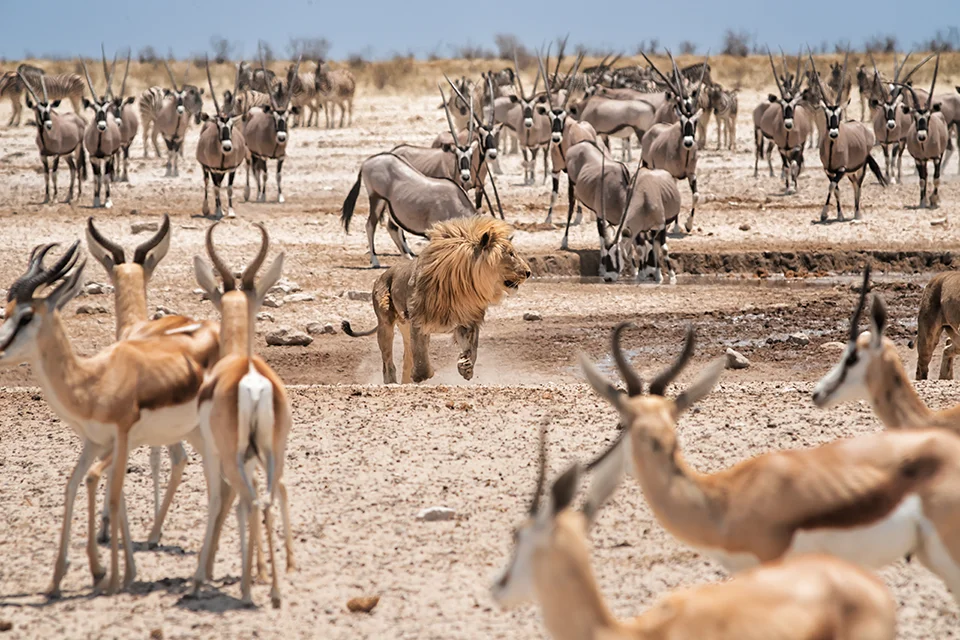
Peak dry season: June to September
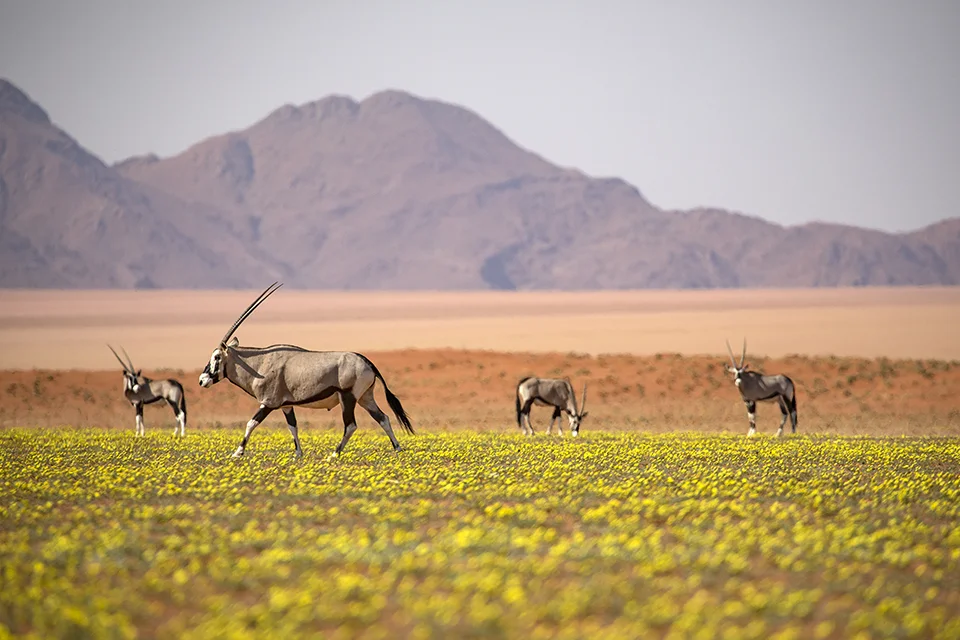
Dry conditions draw wildlife towards Etosha’s waterholes, making sightings more predictable. Clear skies and cool mornings suit wildlife drives and photography, while dust hanging in the late-afternoon light gives Etosha its distinctive atmosphere. This is also one of Namibia’s busiest periods, so preferred lodges should be booked well ahead.
Transition months: April, May, September and October
These months sit on either side of the cooler dry season, but they offer different experiences. April and May bring fresh landscapes, milder temperatures and fewer visitors after the rains. September and October are hotter and drier, with increasingly concentrated wildlife around Etosha’s remaining water sources.
Green season: November to March
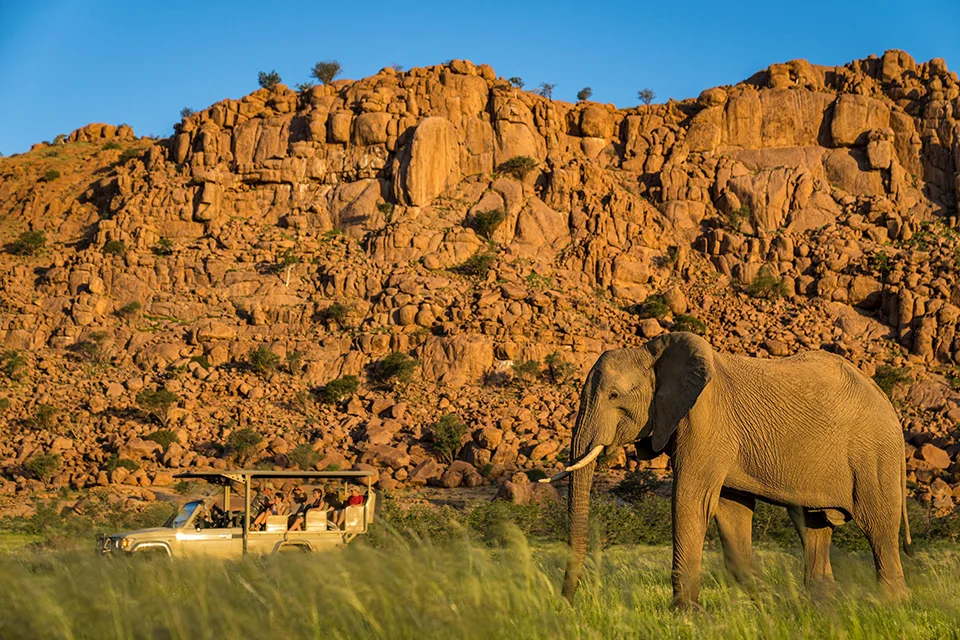
Summer rain changes the mood of the country. Grass returns to plains that appeared bare only weeks earlier, migratory birds arrive and storm clouds gather above the desert. Wildlife spreads beyond permanent waterholes and some gravel roads may be temporarily affected, but lower rates, quieter lodges and dramatic skies reward travellers willing to accept greater unpredictability.
Planning for Namibia’s seasonal extremes
Book early for the dry season
Lodges around Etosha, Sossusvlei and Namibia’s remote northern regions fill quickly during the dry season. For travel between June and September, particularly during school holidays, planning 12–18 months ahead gives you a better choice of properties and room types. Green-season journeys are generally easier to arrange at shorter notice.
Pack for more than one temperature
Even when the days are warm, desert mornings can be surprisingly cold. Temperatures often climb sharply between an early wildlife drive and midday, particularly in Etosha and the Namib. Light layers, a warm jacket and protection from the sun are useful in every season.
Why the rains matter beyond your safari
Rain reshapes the arid west
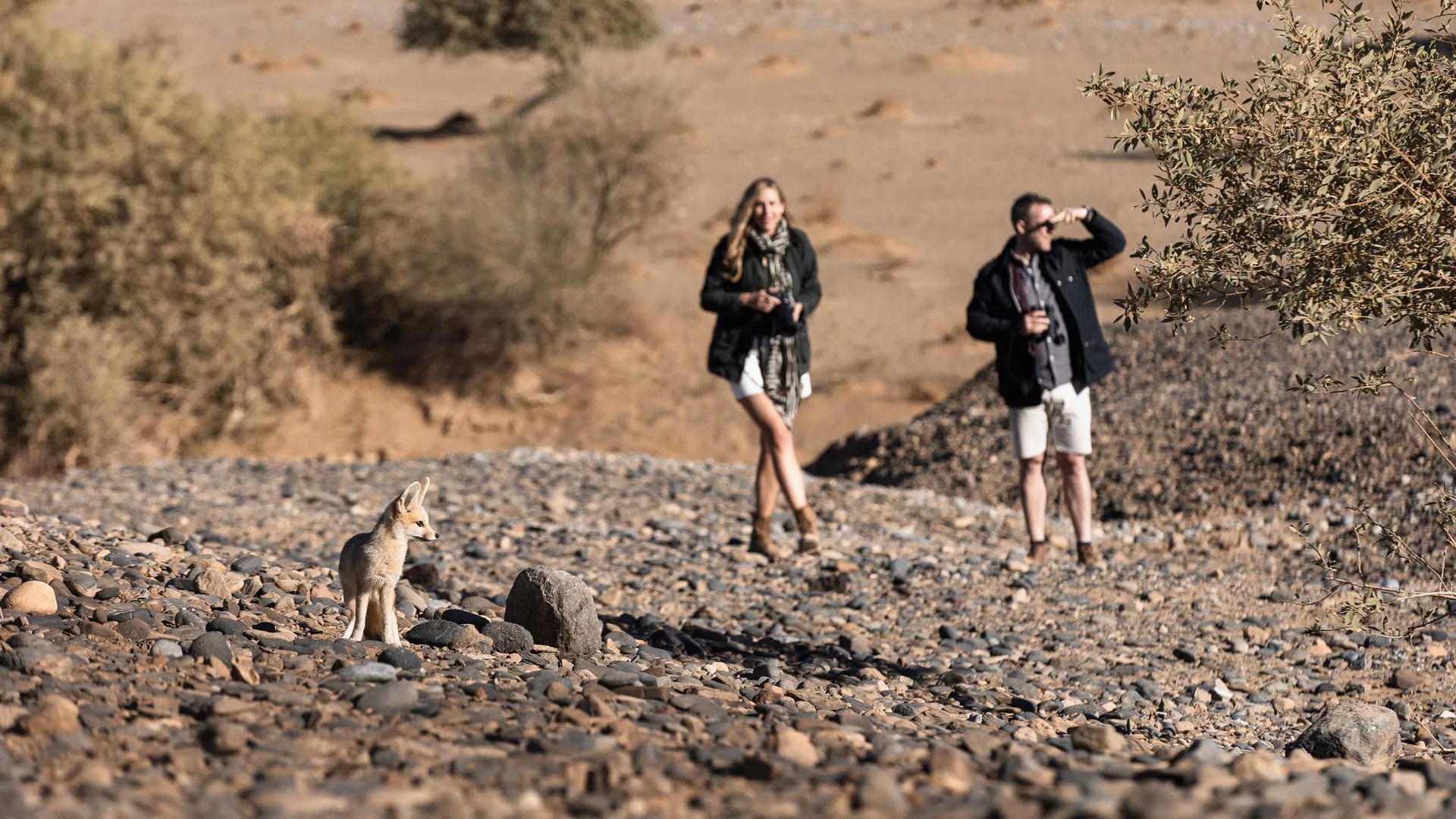
In Damaraland and the Kunene, rainfall affects far more than the colour of the landscape. It determines grazing, water availability and the condition of wildlife populations across communal conservancies. A good rainy season can improve the wildlife experience in the months that follow, while prolonged drought places pressure on animals and the people protecting them.
“The most important thing we can do right now is to support the game guards and their conservancies.”
– Boas Hambo, Kunene Region conservation guide. Read more about Kunene’s recovery.
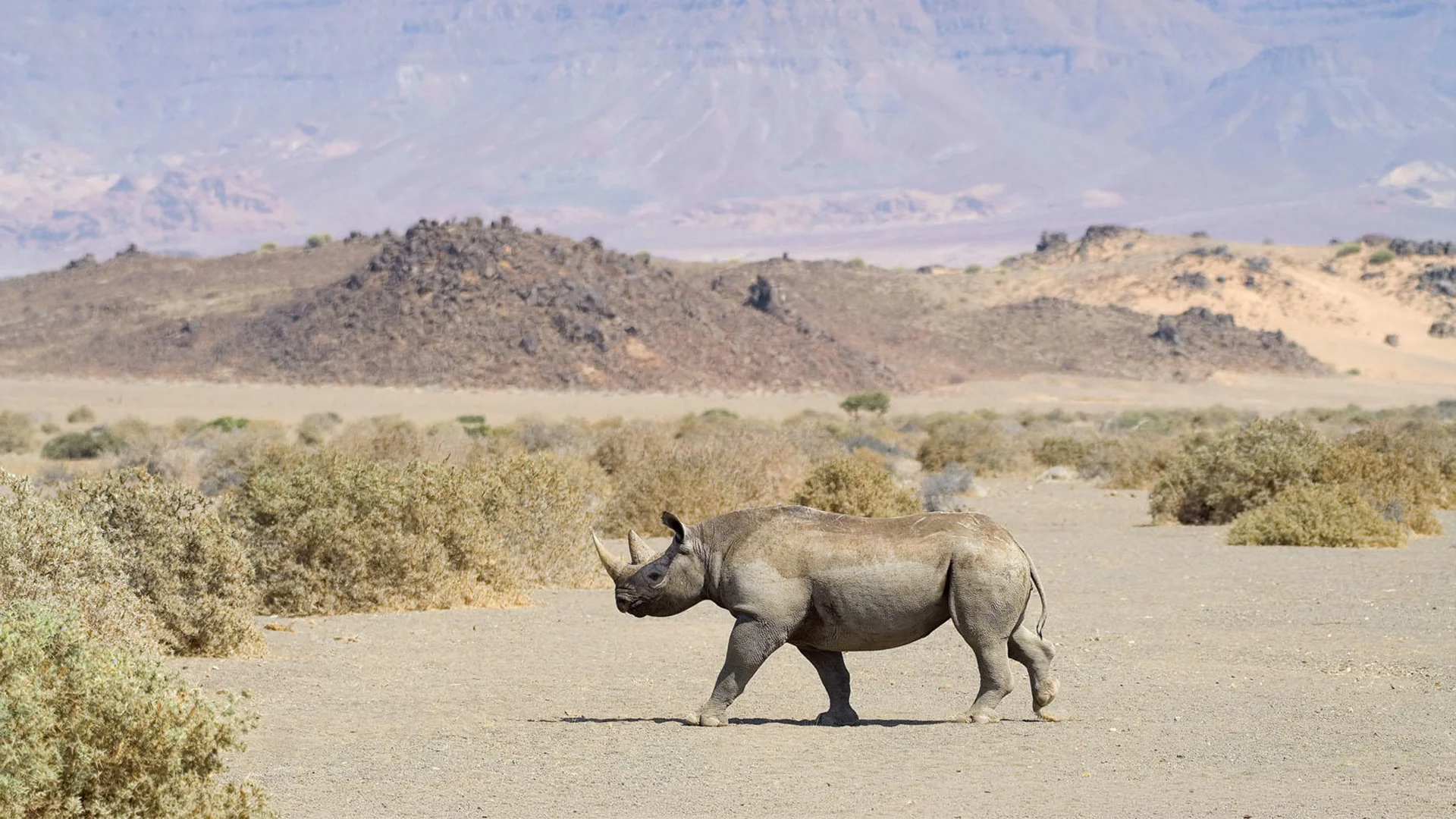
Our safari experts follow conditions in the conservancies when planning routes, particularly for travellers hoping to track desert-adapted elephants or black rhinos.
Wish you were here?
Match the season to the safari you want
For concentrated wildlife viewing
If Etosha’s wildlife is the priority, travel from August to October. As the dry season progresses, animals gather more consistently around the waterholes, although temperatures rise and the most popular viewing areas become busier.
For landscape photography
Photographers interested in Sossusvlei, Damaraland and Namibia’s desert landscapes may prefer April and May or the early green season. Clouds and changing light add depth to the dunes, while rain can bring unexpected colour to normally austere plains.
For quieter travel and better value
The green season suits travellers who are comfortable with occasional rain and less predictable wildlife sightings. In return, lodges are quieter, rates may be lower and the country reveals a softer, less familiar side.
Frequently asked questions
There is no single best month. June to September gives the most concentrated wildlife viewing at waterholes; the shoulder months balance wildlife with fewer vehicles; November to March offers green landscapes and birdlife at lower rates.
No. Namibia is one of Africa's driest countries. Rain falls mainly as short, intense afternoon thunderstorms between November and March and rarely disrupts a well-planned trip for more than a few hours.
Late in the dry season, from around August to October, when surface water elsewhere has dried up and animals depend most heavily on the park's permanent waterholes.
Yes. Dramatic skies, green landscapes and migratory birds offer a very different photographic character to the dry season, though wildlife sightings are less concentrated and predictable.
Book 12 to 18 months ahead for June to September travel. Shoulder and green-season trips can usually be arranged with 6 to 9 months' notice, often with better rates.
Daytime temperatures can be comfortable while mornings are cold, especially in the dry season. The desert climate produces significant swings between sunrise and midday year-round.
Start planning your dream safari
Our travel experts will craft a no-obligation itinerary just for you. We have crafted over 5,000 safaris since 1991. Your personal details are protected; we only use this information to contact you.
Why book your safari with us?

Deep Experience & Knowledge
Handcrafted experiential safaris since 1991.
Travel in Africa is about knowing when and where to go, and with whom. A few weeks too early/late or a few kilometres off course, and you could miss the greatest show on Earth. And wouldn’t that be a pity?

Trust & Safety

Make A Difference
We donate a portion of the revenue from every safari sold to carefully selected conservation projects that make a significant difference at ground level.
YOUR safari choice does make a difference - thank you!