

Tailor-made safaris. Since 1991



Desert elephants and rhino tracking
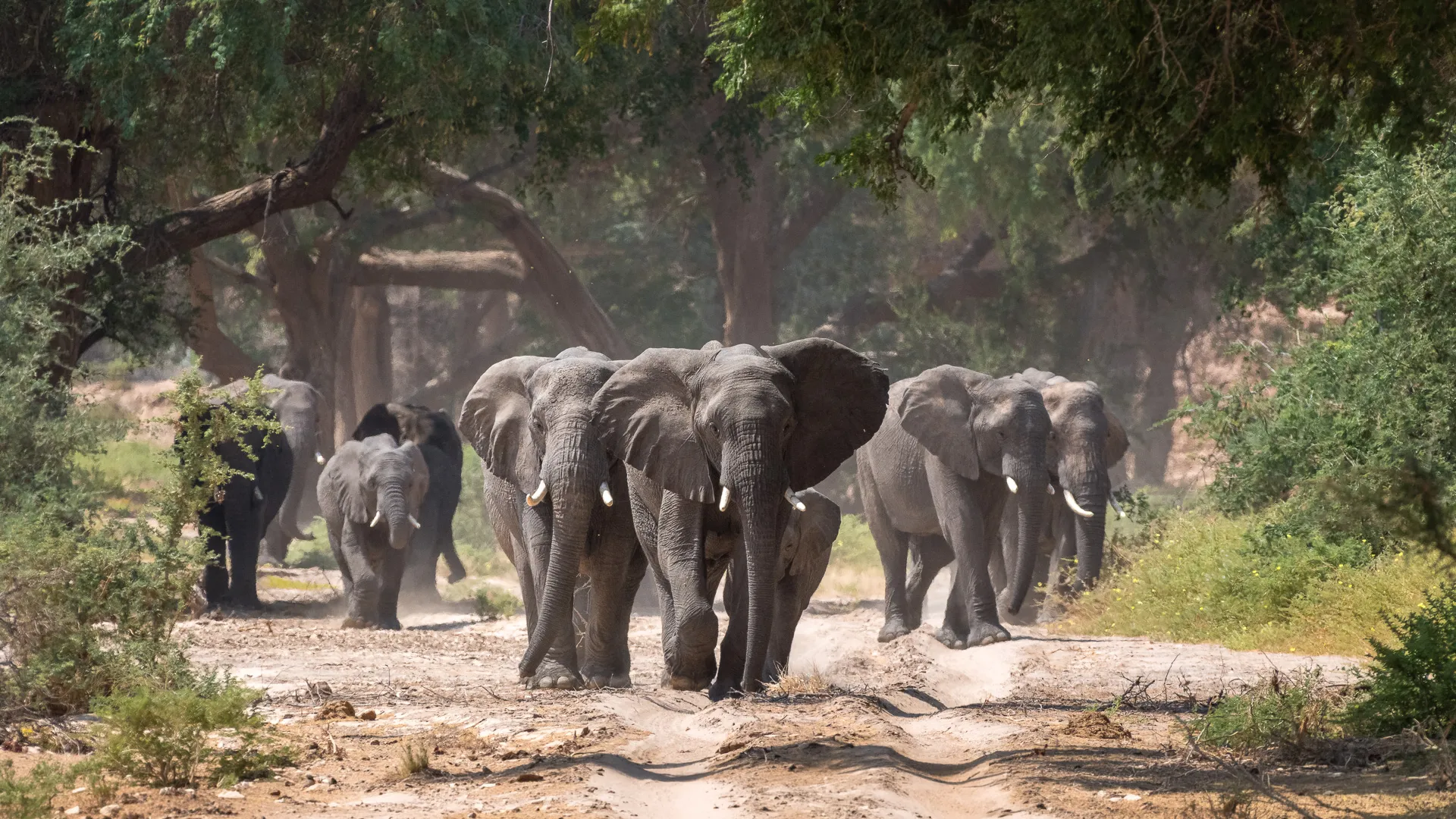
Tracking desert-adapted elephants in Damaraland, Namibia, isn't as simple as arriving at a waterhole and waiting. These animals travel great distances through dry riverbeds, rocky valleys and seemingly waterless plains, following routes shaped by rainfall, memory and the search for food. Finding them can take several hours – and there is no guarantee that they will be found at all.
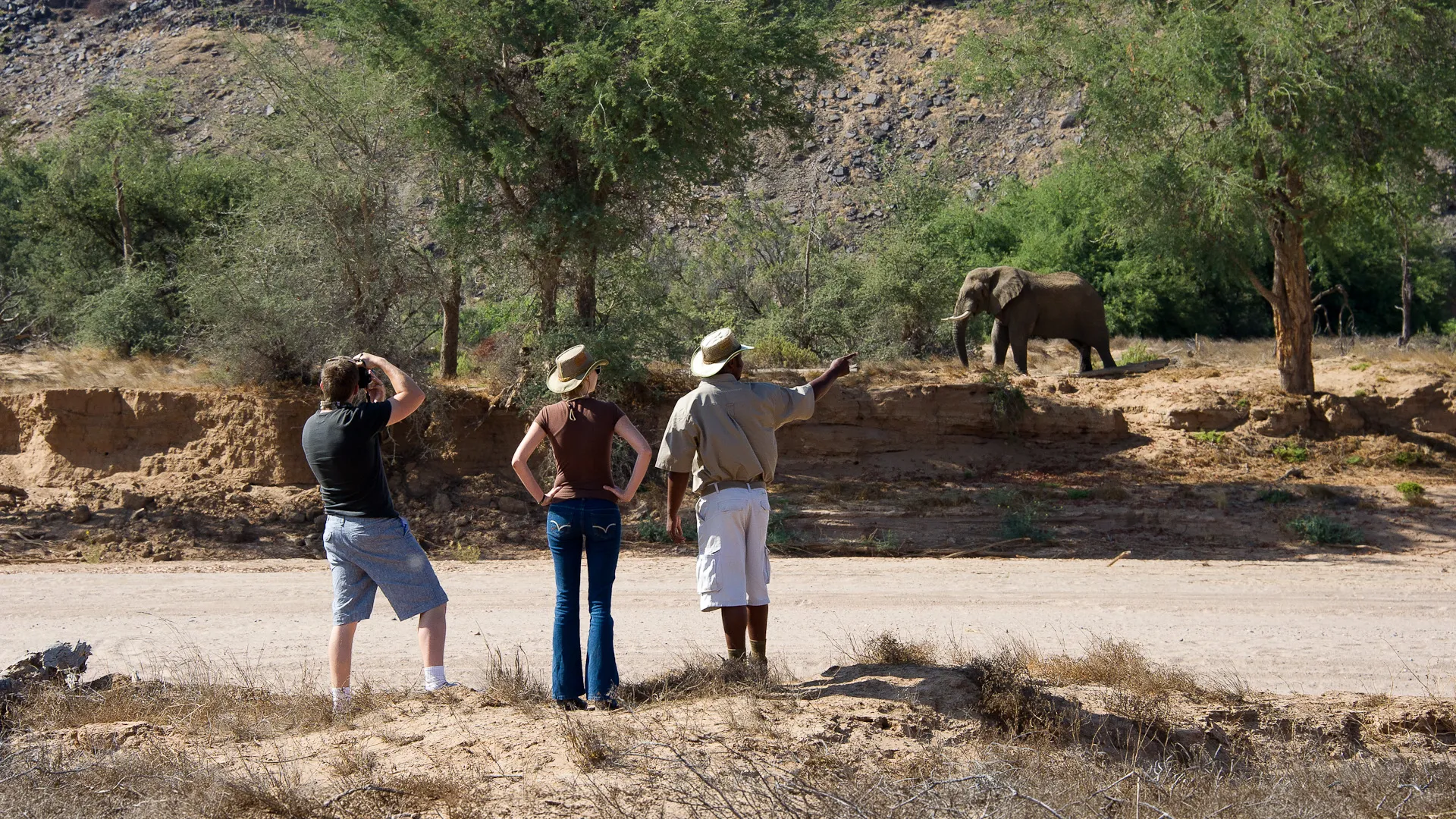
The day often begins in a vehicle, following an ephemeral river such as the Huab or Aba Huab while an experienced local guide reads tracks, dung, broken branches and marks in the sand. Sometimes the elephants appear as a soft grey movement against the ochre rock. On other days, the search itself becomes the story: a journey deeper into one of Namibia’s most austere and beautiful landscapes.
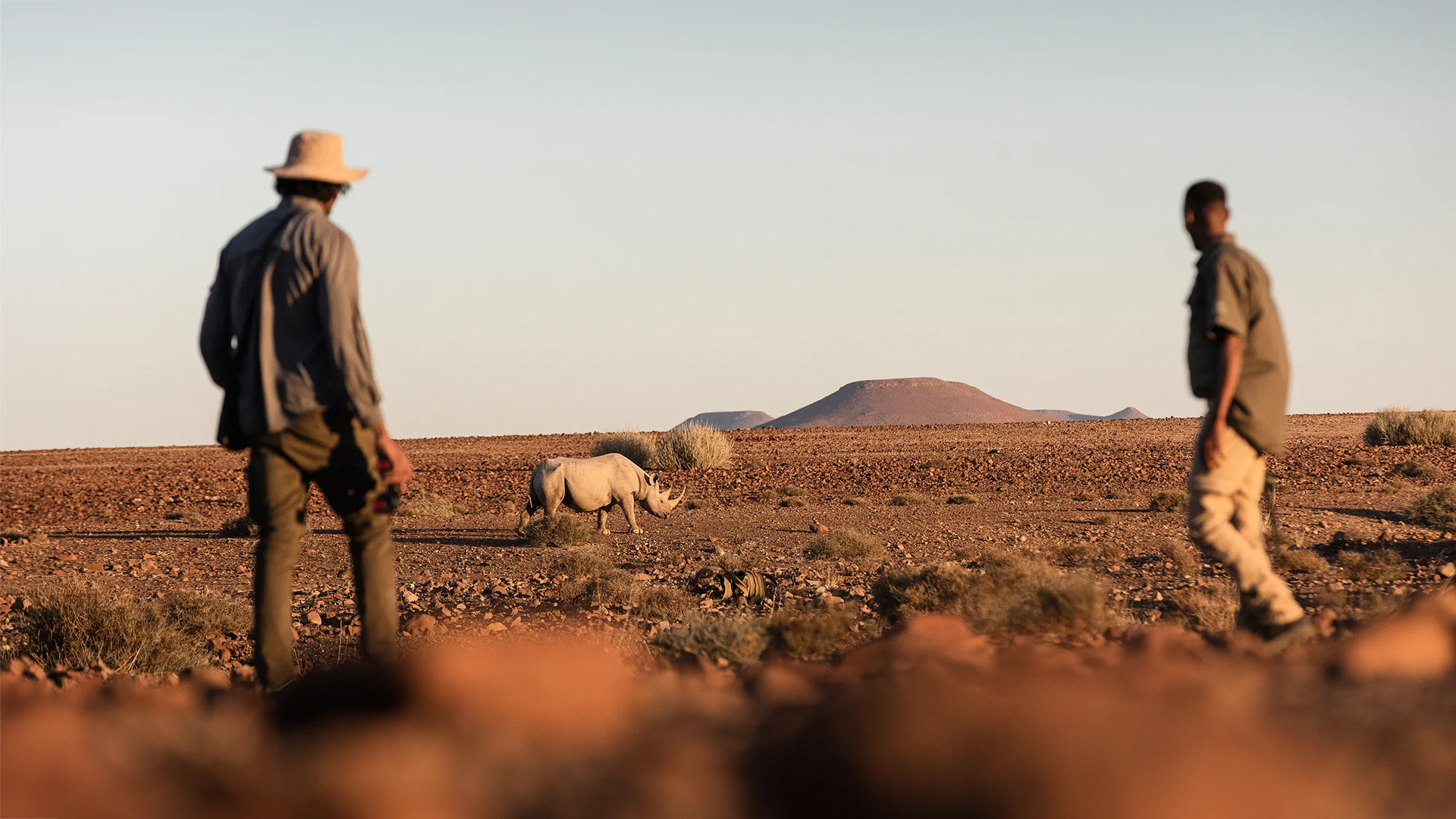
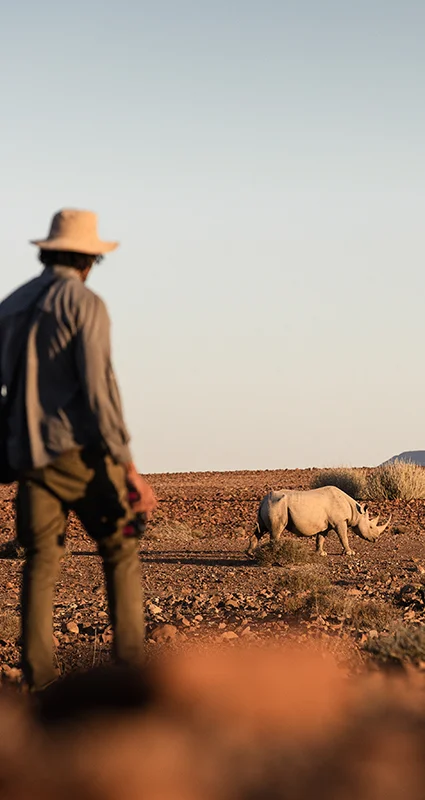
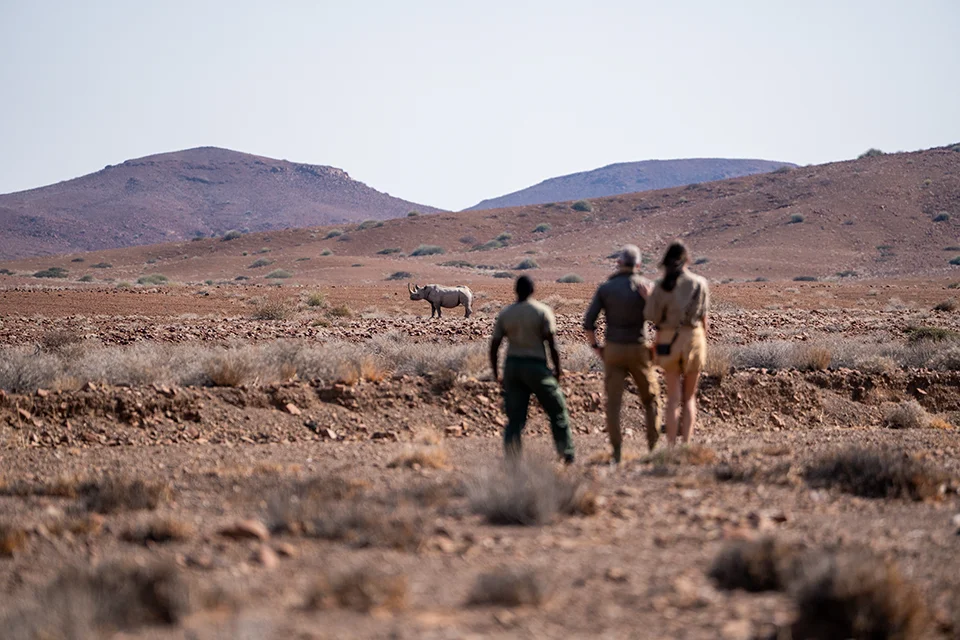
Black rhino tracking is a separate and more tightly controlled experience. Where it is offered, trackers may locate fresh signs by vehicle before leading the final approach on foot, always from a safe distance and in line with strict conservation protocols. Locations are never shared publicly.
Much of this work takes place on communal conservancies and tourism concessions, in partnership with the people who live alongside the wildlife. The quality of the experience therefore depends less on the lodge's price than on the knowledge of its trackers, their relationship with the land, and the time you are willing to give them.
What tracking actually involves
Vehicle hours following dry riverbeds where animals range
A walk-in with experienced trackers once fresh signs are found
No guaranteed sighting, whatever the lodge or price point
Always on communal or private conservancy land, never a park
This is a genuine wildlife tracking experience, closer to fieldwork than a scheduled game drive, and it should be approached with that expectation.
Elephant against rhino tracking
Aspect | Desert elephant tracking | Black rhino tracking |
|---|---|---|
Typical group size tracked | Small breeding herds or bulls | Individual animals |
Range covered | Very wide, along riverbeds | Wide, varies by terrain |
Sighting likelihood | Moderate to good | Lower, more variable |
Location disclosure | General area only | Never published, for safety |
3 things we love about Damaraland tracking
A day spent tracking wildlife in Damaraland reveals more than where elephants or rhinos have travelled. It shows how animals, people and tourism remain connected across one of Namibia’s most demanding landscapes.
The uncertainty is part of the experience: These are free-ranging animals moving across immense, unfenced terrain, so no responsible guide can promise a sighting. Fresh dung, a footprint pressed into the sand or a newly broken branch may be the only clue for hours. When the elephants finally appear against a dry riverbank, the encounter feels discovered rather than delivered.
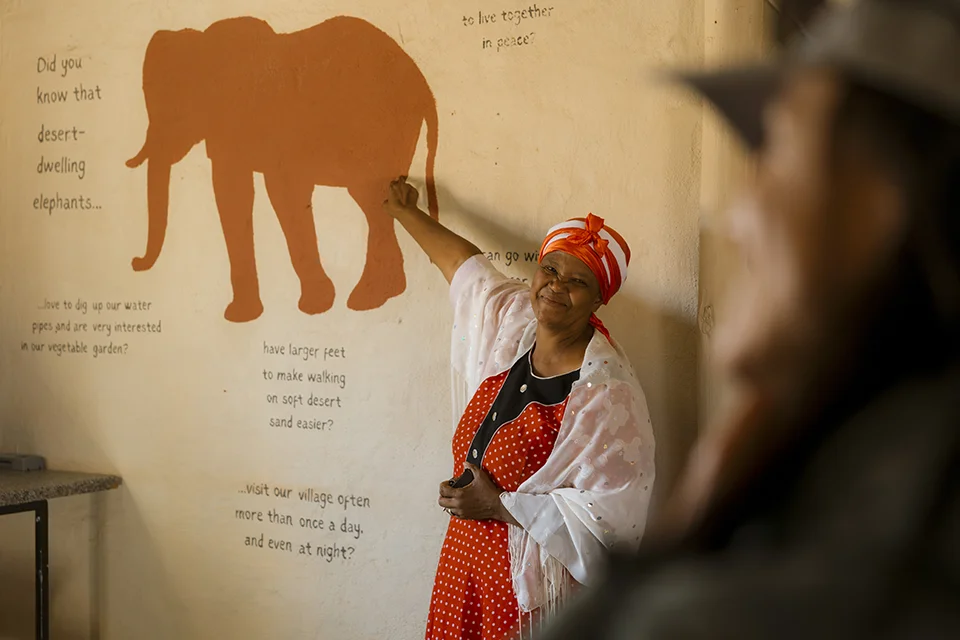
Local knowledge leads the way: Trackers learn to interpret details most visitors would pass without noticing – the age of a spoor, the direction of the wind or the point where a herd left the riverbed. Many tracking experiences operate through partnerships with communal conservancies, creating employment and giving wildlife an economic value to the people living alongside it.
The search changes how you see the landscape: Damaraland can appear empty at first, yet every track tells a story of movement and survival. Following those signs slowly reveals water hidden beneath the sand, feeding routes between valleys and the extraordinary distances desert-adapted animals travel. The search becomes as memorable as the sighting itself.
Why sightings are never guaranteed
Animals built for enormous ranges
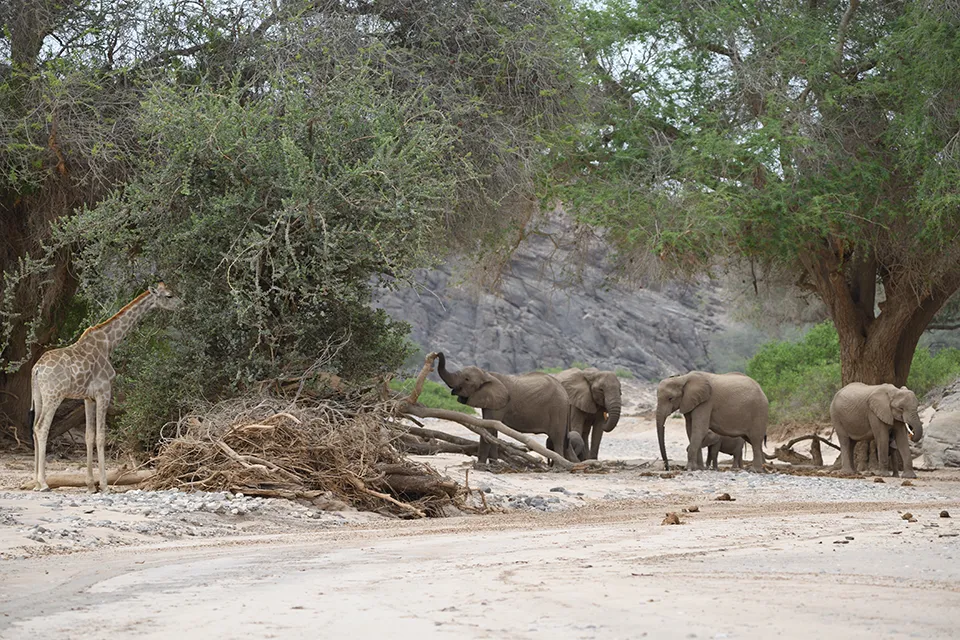
Desert-adapted elephants and black rhino cover far greater distances than their counterparts in wetter regions, moving between widely spaced water sources and feeding areas along dry riverbeds such as the Huab and Hoanib. This natural behaviour, not poor guiding, is why even the best trackers cannot promise a sighting on any given morning, and why a multi-day stay improves your odds far more than a single outing.
Why resident trackers matter more than marketing
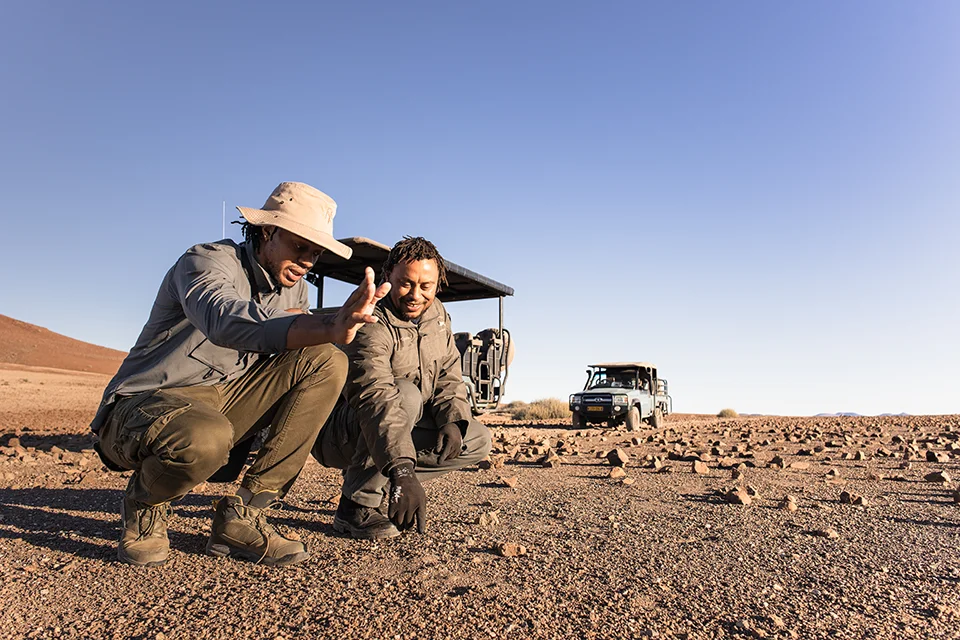
Success depends on trackers who know a specific area's animals, water sources and movement patterns over years, not on a lodge's price tier. Ask any property directly about its tracking team's experience and recent sighting rate before booking, rather than relying on marketing language alone - a good operator will answer this honestly, including telling you when recent sightings have been quiet.
Minimum distances and undisclosed locations
Reputable operators maintain strict minimum approach distances on foot and never publish specific rhino locations, protecting animals that remain a poaching target despite Namibia's conservation successes elsewhere. This is standard practice, not an inconvenience, and any operator dismissive of it, or promising a guaranteed close approach, should raise real concern.
Why land tenure explains everything here
Damaraland contains no national park; its land is entirely communal or private conservancy. This means every tracking experience happens under an agreement between the lodge and the community who legally holds rights over that land and its wildlife. See our article on where your safari money goes for the full explanation of how this funding system works.
What a traveller actually encounters
A close encounter, on the drive in
"On the drive from the airstrip, we encountered a solitary bull elephant almost immediately, scratching itself against a tree and throwing sand over its back. Close enough to feel the grit when the wind picked up." - Anthony Young, Africa Geographic traveller, describing his arrival in Damaraland.
Reading a landscape that looks empty
Trackers reveal a landscape that looks lifeless at first glance but carries constant signs of recent movement - fresh dung, browsed branches, tracks pressed into riverbed sand still holding their shape. This slower, more attentive form of wildlife viewing is, for many travellers, the genuine highlight of an entire Namibia trip, even when the elephants or rhino themselves stay out of sight.
Wish you were here?
How desert adaptation actually works
Not a different species, a different behaviour
Desert-adapted elephants are not a separate species or subspecies from other African bush elephants; they are the same species that has adapted its behaviour to arid conditions. They can go three to four days between drinking, compared with elephants in better-watered regions such as Etosha, which typically drink daily, and they rarely damage trees and vegetation in the way elephants elsewhere often do, likely because resources are too scarce to waste.
Why this matters for tracking
Because these elephants can travel so far between water points, a tracking team's knowledge of which dry riverbed a herd is likely to be following on a given week, built from ongoing local observation, matters far more than it would for wildlife tied to a single permanent water source.
Frequently asked questions
Yes, when conducted by an experienced guide following strict minimum approach distances. Trackers assess wind direction, animal behaviour and terrain constantly, and will not approach if conditions are not right.
Moderate to good over a multi-day stay, since elephants concentrate along dry riverbeds where water and vegetation persist, though no single outing can guarantee a sighting.
Damaraland's land is held as communal and private conservancy rather than state-protected park land, which is also why activities such as tracking, night drives and walking are possible there under conservancy agreements.
No, and this is intentional. Reputable operators never publish specific rhino locations, protecting animals that remain a target for poachers despite Namibia's broader conservation recovery.
They range far more widely than elephants in wetter regions, moving between distant water sources and feeding areas along dry riverbeds, which is part of why they are described as desert-adapted rather than a separate species.
Yes. Tracking experiences take place on communal and private conservancy land, and tracker teams are typically drawn from and employed by the conservancies whose land guests are visiting.
Start planning your dream safari
Our travel experts will craft a no-obligation itinerary just for you. We have crafted over 5,000 safaris since 1991. Your personal details are protected; we only use this information to contact you.
Why book your safari with us?

Deep Experience & Knowledge
Handcrafted experiential safaris since 1991.
Travel in Africa is about knowing when and where to go, and with whom. A few weeks too early/late or a few kilometres off course, and you could miss the greatest show on Earth. And wouldn’t that be a pity?

Trust & Safety

Make A Difference
We donate a portion of the revenue from every safari sold to carefully selected conservation projects that make a significant difference at ground level.
YOUR safari choice does make a difference - thank you!