

Tailor-made safaris. Since 1991



Is it better to stay inside Etosha National Park or outside it on a private reserve?
Staying inside Etosha National Park, Namibia, places you close to its famous waterholes and gives you the freedom to explore the park’s road network at your own pace. A neighbouring private reserve offers a more flexible guided safari, often with off-road tracking, walking safaris and fewer vehicles. For many travellers, the best answer is to combine the two.
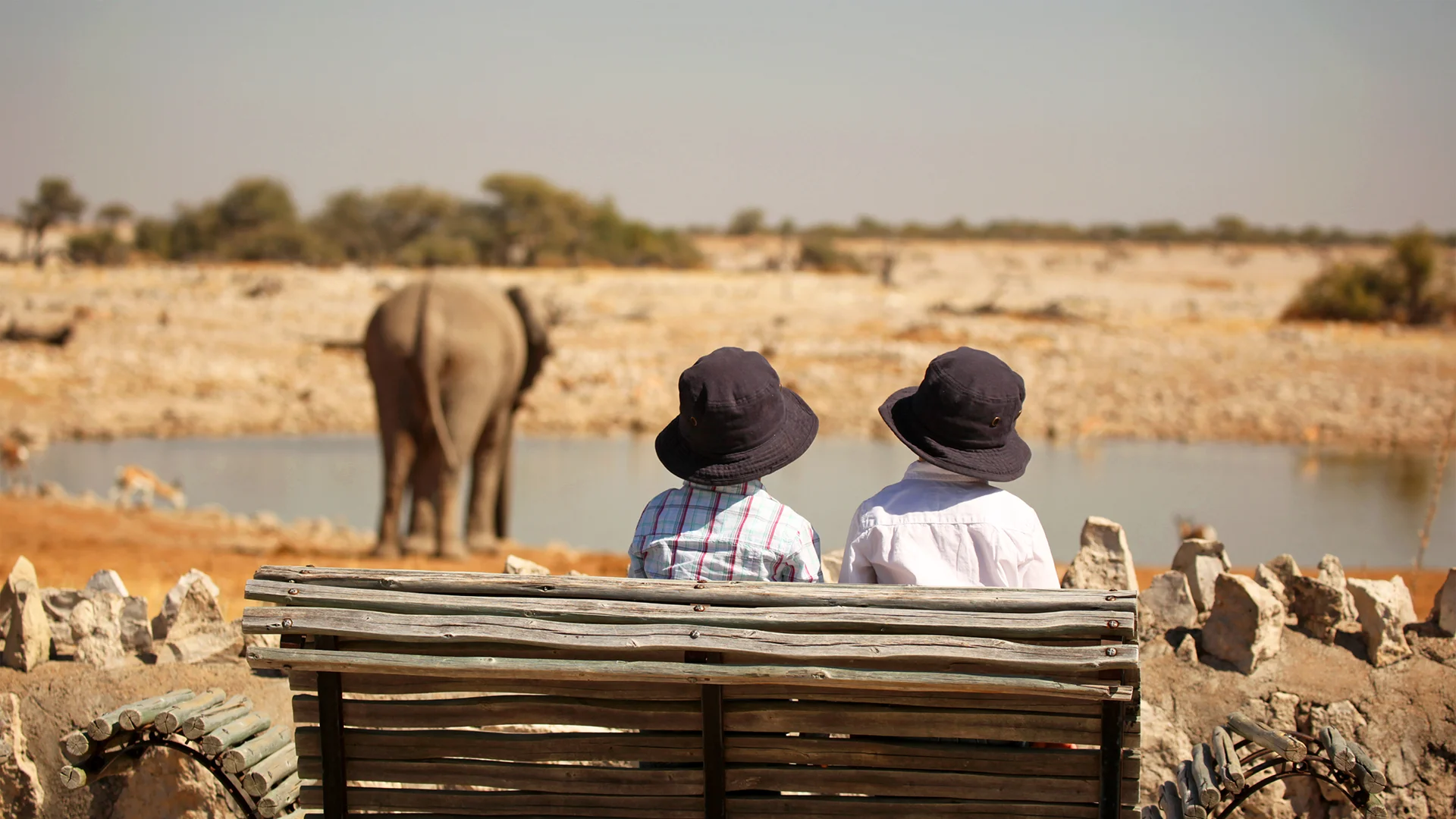
Inside the park, the rhythm of the day follows the gates. You set out along pale gravel roads at first light, moving between waterholes where elephant, lion, rhino and antelope gather against the vast white salt pan. By dusk, self-drivers must be back in camp – but at Etosha’s floodlit waterholes, the wildlife viewing can continue deep into the night. Selected park camps also offer guided drives after dark.
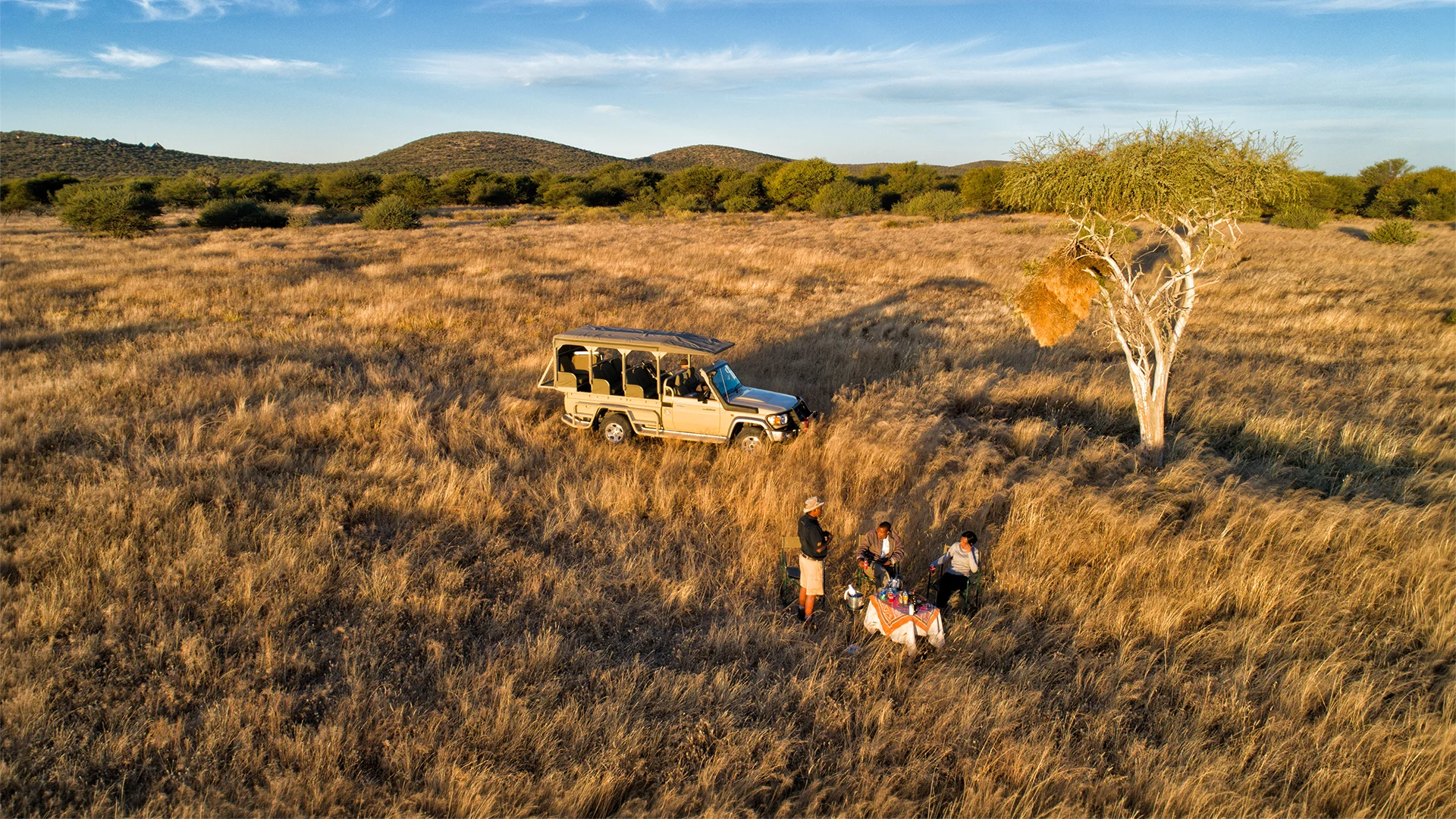
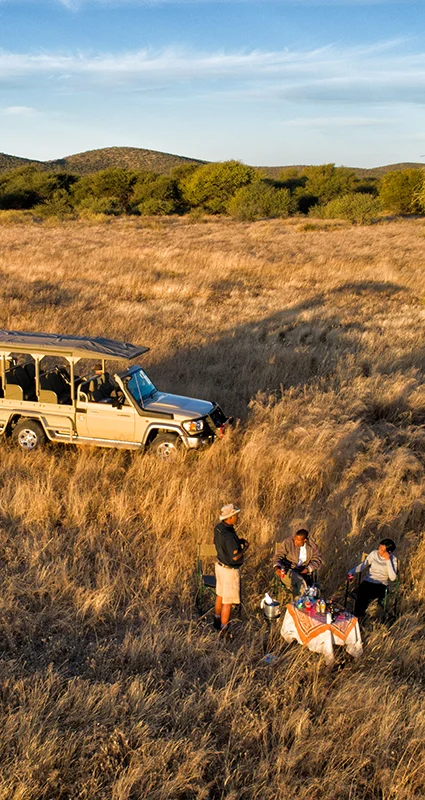
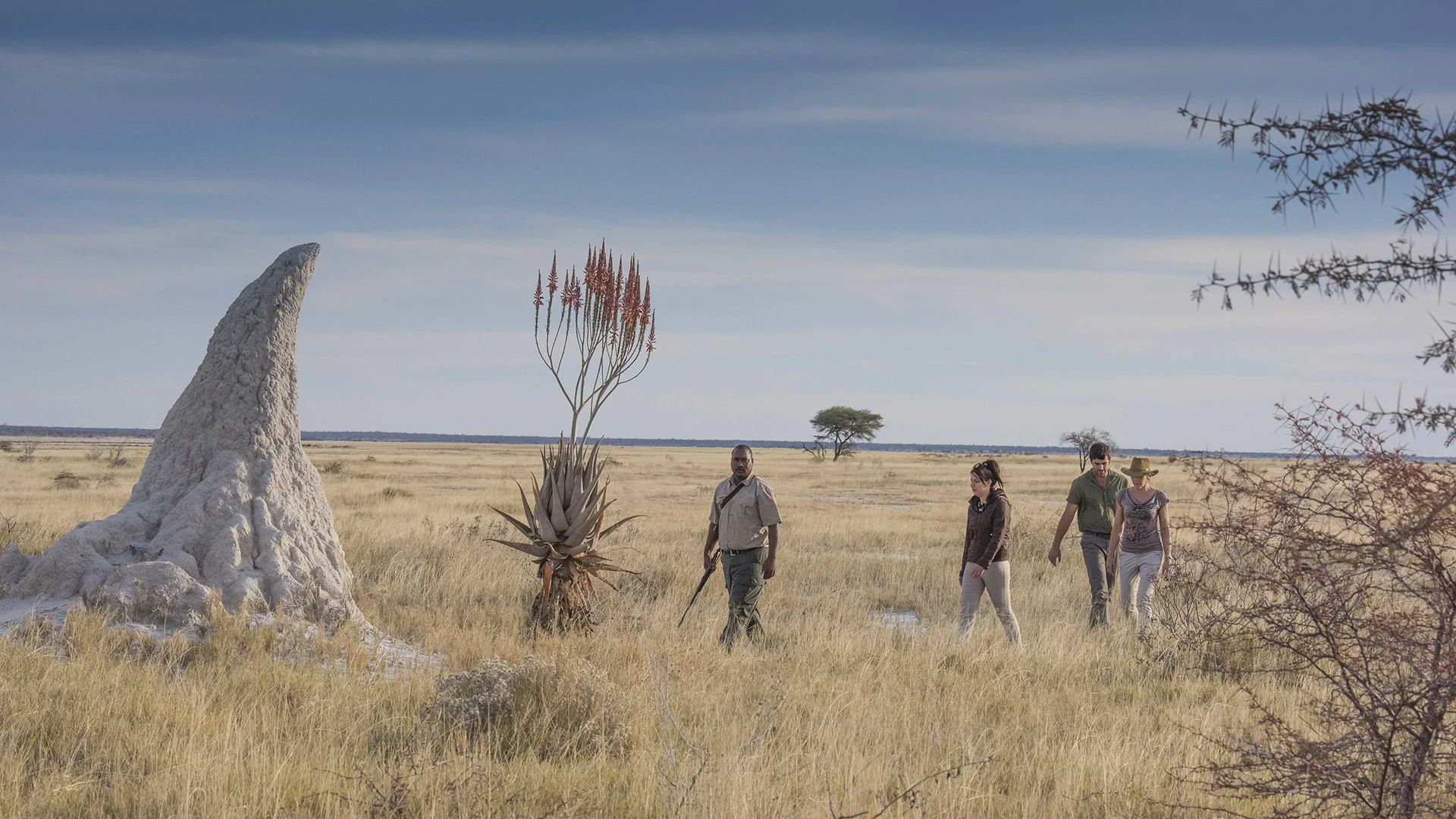
Cross onto a private reserve and the pace changes. Guides may leave the main tracks to follow fresh spoor, linger at a sighting or explore on foot, while lower vehicle numbers create a quieter, more intimate experience.
We usually recommend splitting the stay: one or two nights inside Etosha for its extraordinary waterholes and immense sense of space, followed by a private reserve for flexible guiding and a different way of encountering the landscape.
Inside the park versus bordering it
Inside Etosha: floodlit waterholes, early gate access, lower cost
Private reserves: night drives, walking safaris, fewer vehicles
Both: strong daytime wildlife viewing across the region
Best of both: splitting your stay across two or three nights each
Neither option is simply better - each unlocks activities the other cannot offer, by regulation rather than by price.
Inside the park against private reserves
Attribute | Inside Etosha | Bordering private reserve |
|---|---|---|
Night drives | Not permitted | Permitted |
Off-road driving | Not permitted | Permitted, guide-led |
Walking safaris | Not permitted | Permitted at some properties |
Vehicle density | Higher, especially peak season | Lower, exclusive to guests |
Waterhole access | Floodlit waterholes at rest camps | Private waterholes on some properties |
3 things we love about combining Etosha and a private reserve
A split stay reveals two distinct sides of Etosha, each with its own rhythm:
The freedom of the open road: Inside the national park, you can set your own route between Etosha’s waterholes and stop whenever something catches your eye.
Wildlife after sunset: Return to camp before the gates close, then settle beside a floodlit waterhole as rhino, elephant and other nocturnal visitors emerge from the darkness.
A different way to explore: On a private reserve, experienced guides can interpret tracks, explore beyond the public road network and, where permitted, lead walks or continue driving after dark.
Together, the two stays offer more variety than either could provide alone.
Why the park itself restricts activity
Regulations apply park-wide
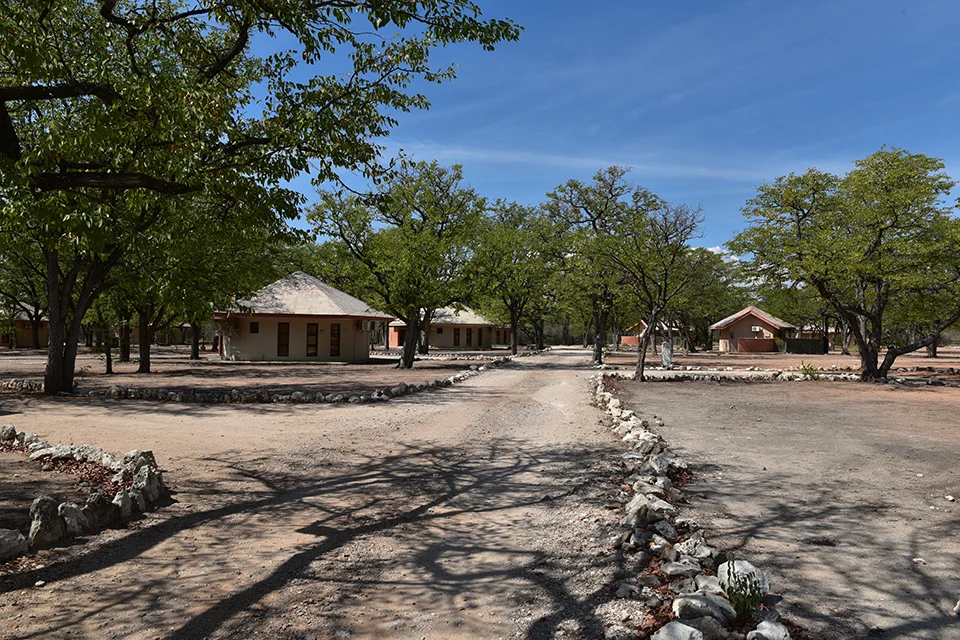
Etosha is managed for self-driving visitors, with fixed roads and prescribed gate times tied to sunrise and sunset. Night drives, off-road driving and walking are prohibited throughout the park for safety and conservation reasons - this applies equally whichever camp or lodge you are staying at inside the boundary, and no amount of extra spending changes it.
The one exception: floodlit waterholes
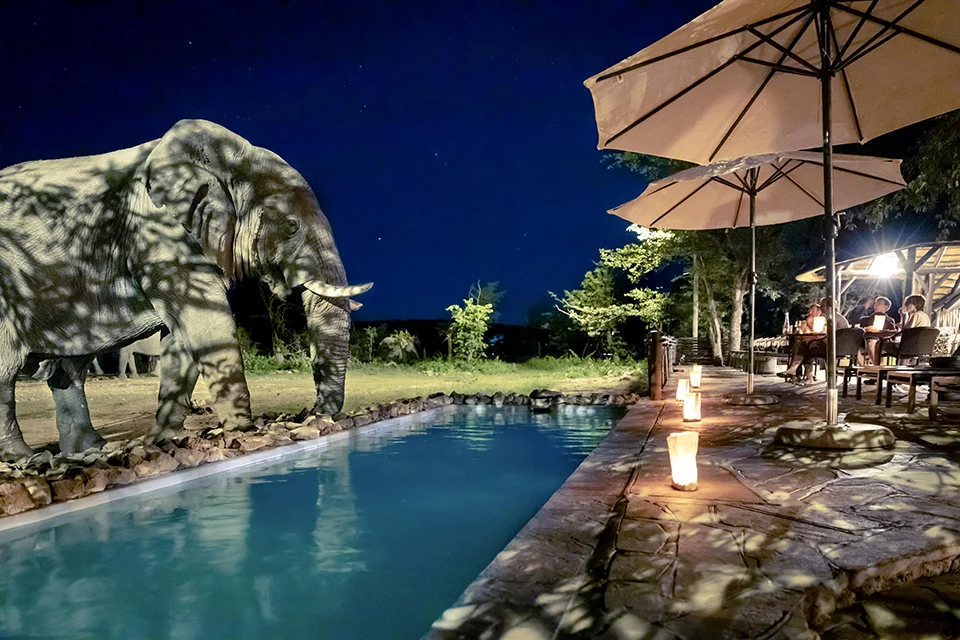
Several of Etosha's state rest camps have floodlit waterholes directly on-site, letting guests watch wildlife after dark without leaving the camp. This is the one meaningful after-dark experience available inside the park, and it is genuinely worth building into an itinerary.
What private land unlocks
Different rules, different land
Reserves bordering Etosha operate under their own management, separate from the national park authority. This is what makes night drives, off-road tracking and guided walks possible there - the land itself carries different rules, funded in part by a conservation levy built into the nightly rate, which typically supports anti-poaching patrols and habitat management specific to that reserve.
Lower vehicle density by design
Private reserves limit guest numbers and vehicles far more tightly than the open-access national park, which becomes especially noticeable during South African and Namibian school holidays, when Etosha's popular waterholes can draw a real queue of vehicles. A private reserve's exclusivity is therefore as much about pacing your own sighting as it is about comfort.
Wish you were here?
A guest's account of choosing both
Why combining wins most itineraries
"This was an epic trip to Namibia over 4 weeks. Every day there were highlights but our favourites included Fish River Canyon, kayaking among seals and driving over dunes near Walvis Bay, rafting in the Kunene River and incredible game viewing in Etosha. Our driver/guide was excellent as were all accommodations." - Gail, Australia, Africa Geographic guest.
How to sequence a split stay
If entering from the west, spend your first nights on a private reserve for night drives and walking, then move into the park for the final stretch to make use of early gate access at first light. If entering from the east, reverse the order so the park's early mornings come first. Either sequence delivers the full range of Etosha experiences without compromise.
Frequently asked questions
No. Night drives are not permitted anywhere inside Etosha National Park under current park regulations. They are available only at private reserves bordering the park, on separately managed land.
Yes, if night drives, walking safaris or lower vehicle density matter to you. These activities are permitted on private land under separate management, regardless of accommodation cost inside the park.
They can be during South African and Namibian school holidays and the peak dry season, June to September, when vehicle numbers at popular waterholes rise noticeably. Shoulder months are markedly quieter.
Yes, and it is the option we recommend most often. It gives you floodlit waterhole viewing inside the park and night drives or walking safaris on bordering private land, without sacrificing either.
Largely yes, since many border the park directly and share the same ecosystem. Some also offer distinct wildlife experiences, including guided walks and off-road tracking not possible inside Etosha itself.
Off-road driving is prohibited throughout Etosha to protect vegetation and reduce disturbance to wildlife. This rule applies park-wide and is unrelated to which camp or lodge a visitor is staying at.
Start planning your dream safari
Our travel experts will craft a no-obligation itinerary just for you. We have crafted over 5,000 safaris since 1991. Your personal details are protected; we only use this information to contact you.
Why book your safari with us?

Deep Experience & Knowledge
Handcrafted experiential safaris since 1991.
Travel in Africa is about knowing when and where to go, and with whom. A few weeks too early/late or a few kilometres off course, and you could miss the greatest show on Earth. And wouldn’t that be a pity?

Trust & Safety

Make A Difference
We donate a portion of the revenue from every safari sold to carefully selected conservation projects that make a significant difference at ground level.
YOUR safari choice does make a difference - thank you!