

Tailor-made safaris. Since 1991



Chief's Island: The Okavango's greatest predator wilderness
Chief's Island at a glance:
Location: Chief's Island, Moremi Game Reserve, Okavango Delta, Botswana | Access: Fly-in only via light aircraft from Maun; private bush airstrips at each camp |
Ecosystem: UNESCO World Heritage Okavango Delta wetland system, within Moremi Game Reserve | Protected status: Moremi Game Reserve |
Best time to visit: May–October (dry season); July–September peak for wildlife | Flood season: June–August, when Delta waters peak and island wildlife concentrations are at their highest |
Safari style: Ultra-exclusive; strictly limited visitor numbers per Botswana's high-value, low-impact model | Activities: Game drives, seasonal mokoro excursions, walking, waterhole hide photography, stargazing |
Why visit Chief's Island?
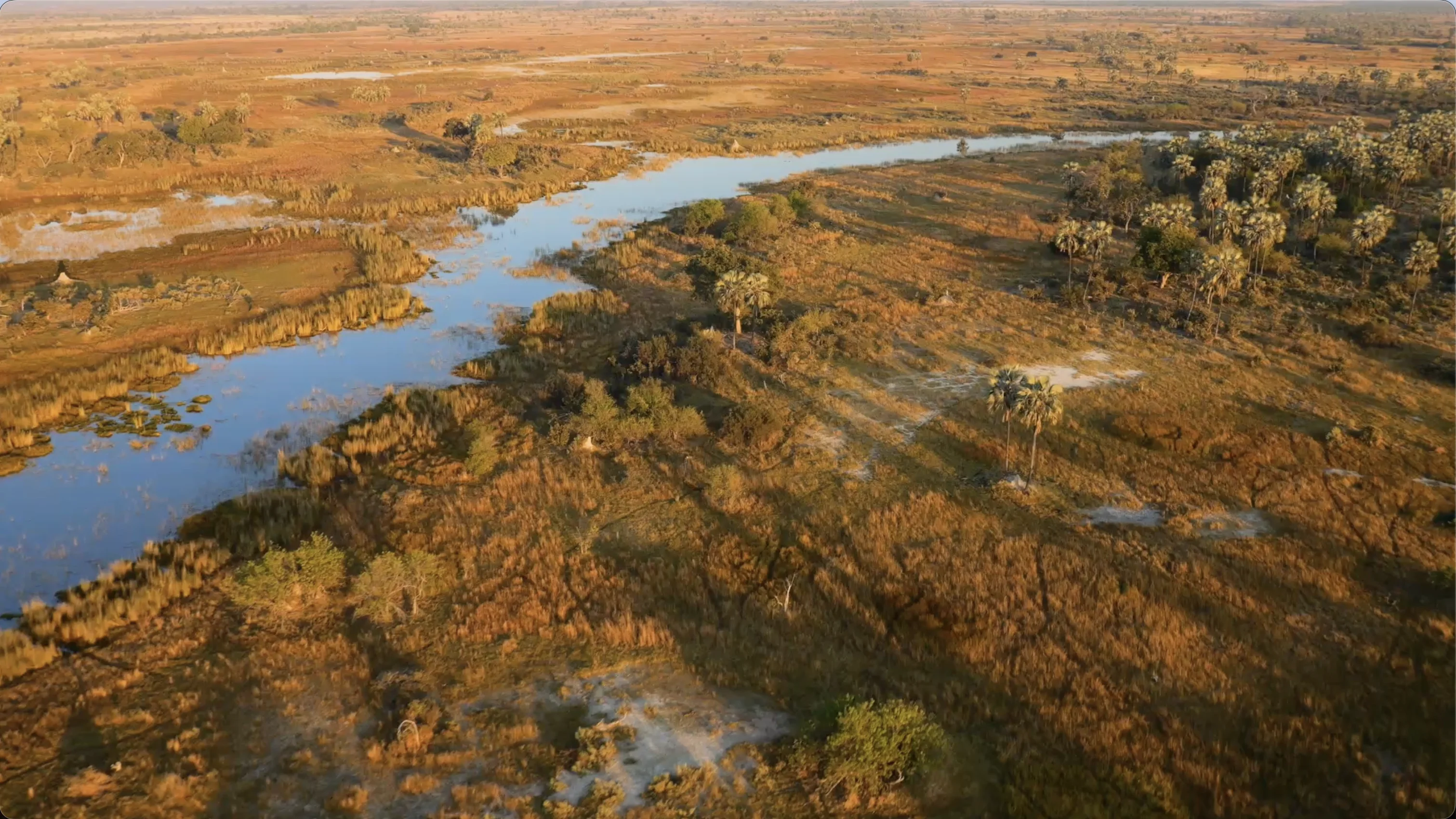
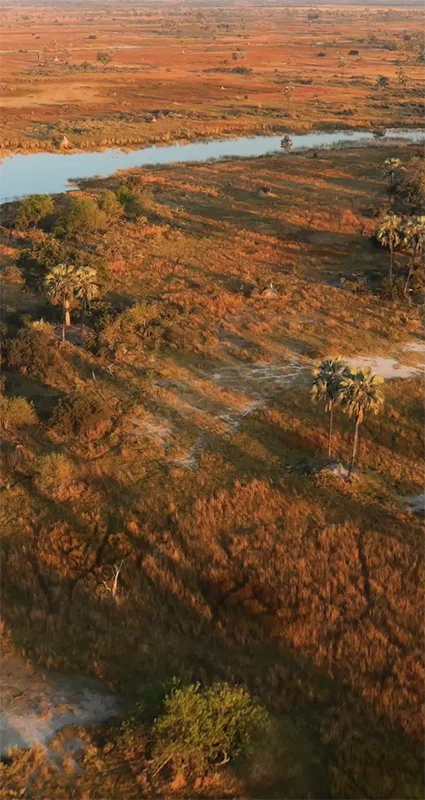
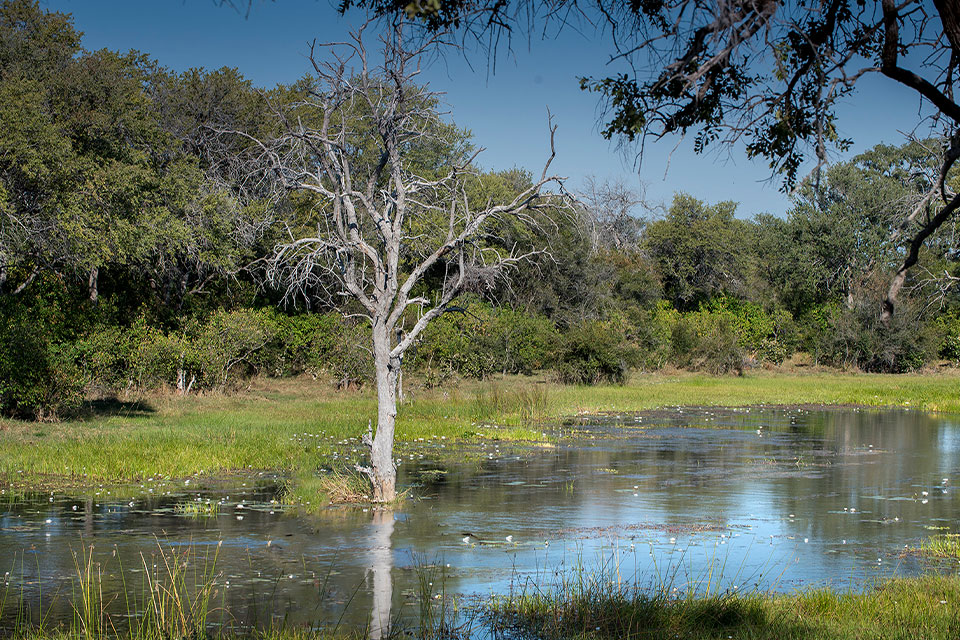
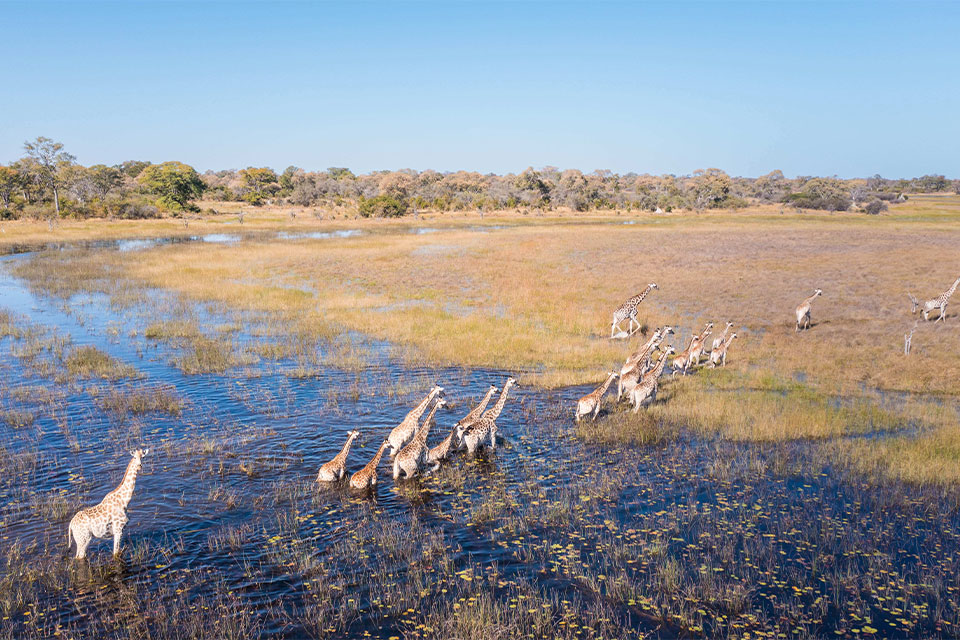
When the Okavango River's floodwaters move south through the Delta each June to August, the surrounding wetlands rise and spread. Chief's Island, the system's largest permanent landmass, stays above the waterline. Wildlife converges on its grasslands and woodland edges in concentrated numbers, and this annual dynamic drives what makes an Okavango Delta safari here exceptional.
What distinguishes the island further is Botswana's deliberate commitment to high-value, low-impact tourism. Visitor numbers are strictly controlled across the Delta, and Chief's Island operates under some of the country's tightest restrictions. Only a small number of camps exist on the entire island. Sightings are unhurried. Encounters with the large resident lion prides, leopards and resident packs of African wild dogs are almost guaranteed.
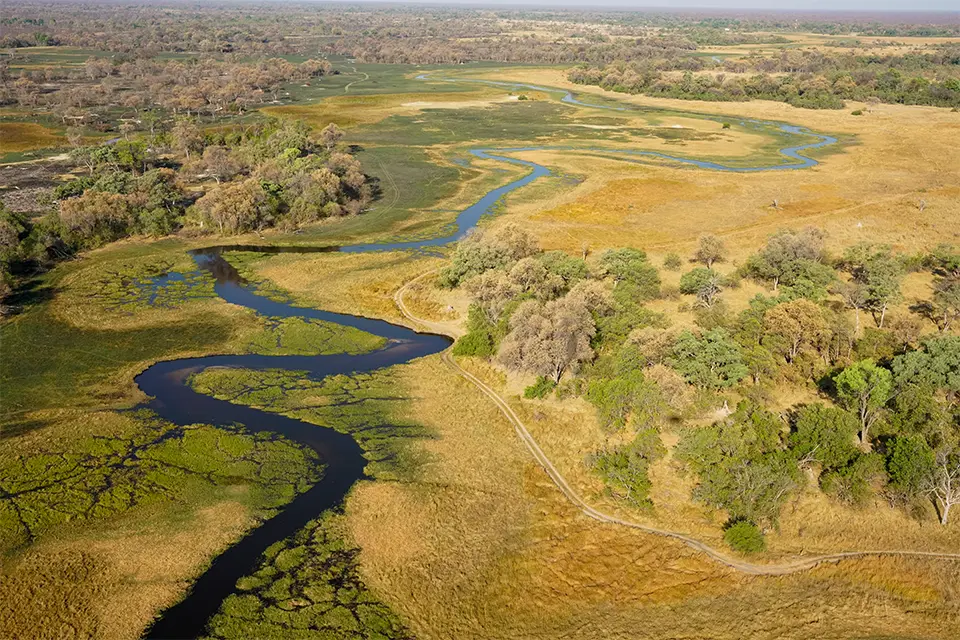
The island's habitat is not uniform. Open floodplains, dense mopane woodland, papyrus-lined water channels and stands of mature acacia and marula trees create a landscape of genuine variety. That variety sustains a wildlife community of corresponding breadth, from vast herds of red lechwe and buffalo to Pel's fishing owls hunting from riverine trees above the channels after dark. Access by light aircraft from Maun is itself a threshold moment: the Delta's scale, seen from above, makes the transfer an aerial highlight.
5 Reasons We Love Chief's Island
Resident packs of African wild dogs: Endangered and elusive across much of the continent, wild dogs have stable resident packs on Chief's Island, making reliable sightings possible in a destination already exceptional for lions, leopards and spotted hyenas.
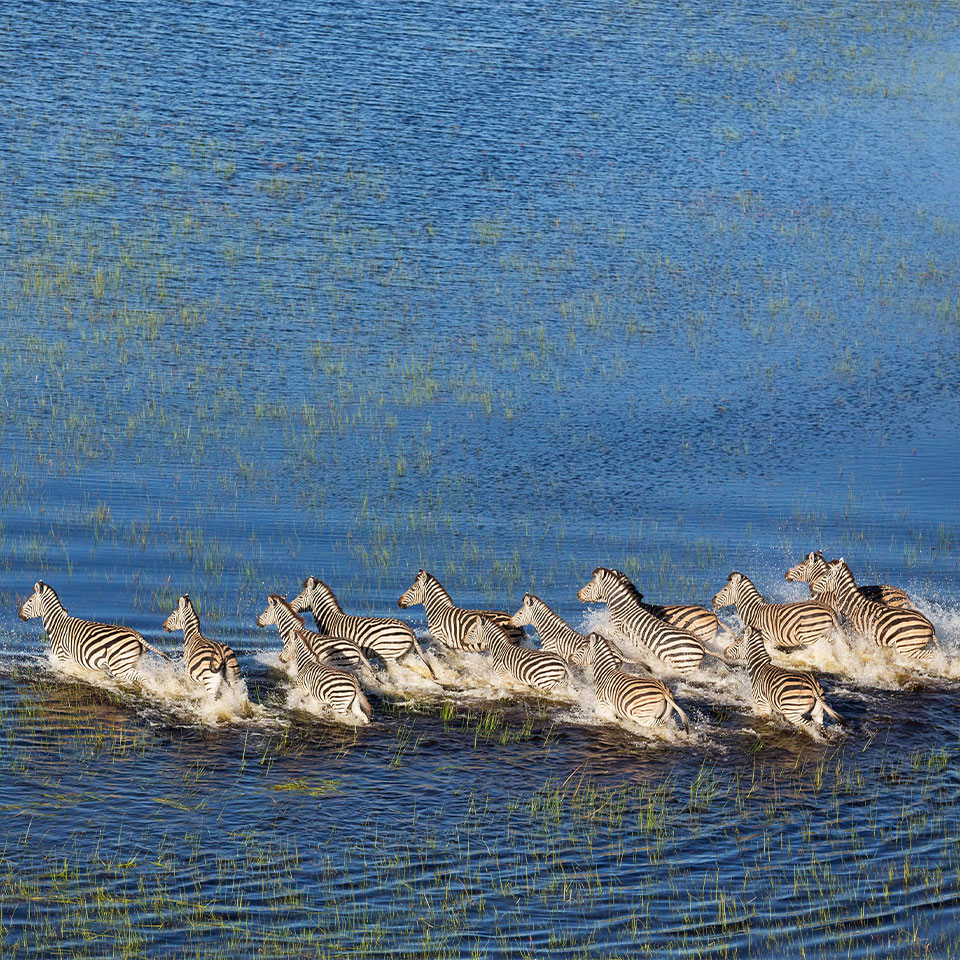
The island-as-ark phenomenon: When the Okavango floods each June to August, Chief's Island stays above the water. Elephant herds, buffalo, red lechwe and plains zebra converge here in numbers concentrated nowhere else in the Delta, and the predators follow.
A mokoro on the flood-season channels: Paddling silently through papyrus-lined waterways in a traditional dugout canoe with fish eagles calling overhead and malachite kingfishers skimming the surface, this is a register of wilderness that no game drive can replicate.
Sightings without the crowds: Botswana's strict visitor limits and the island's small number of camps mean that wildlife encounters on Chief's Island are rarely shared. The land is vast, the vehicles are few, and the stillness between sightings is part of the experience.
Two landscapes in one island: The open floodplains and dense mopane woodland of Chief's Island support entirely different wildlife communities. No two game drives here look the same, which is precisely why travellers who come once tend to return.
All you need to know about Chief's Island
Things to do on Chief's Island
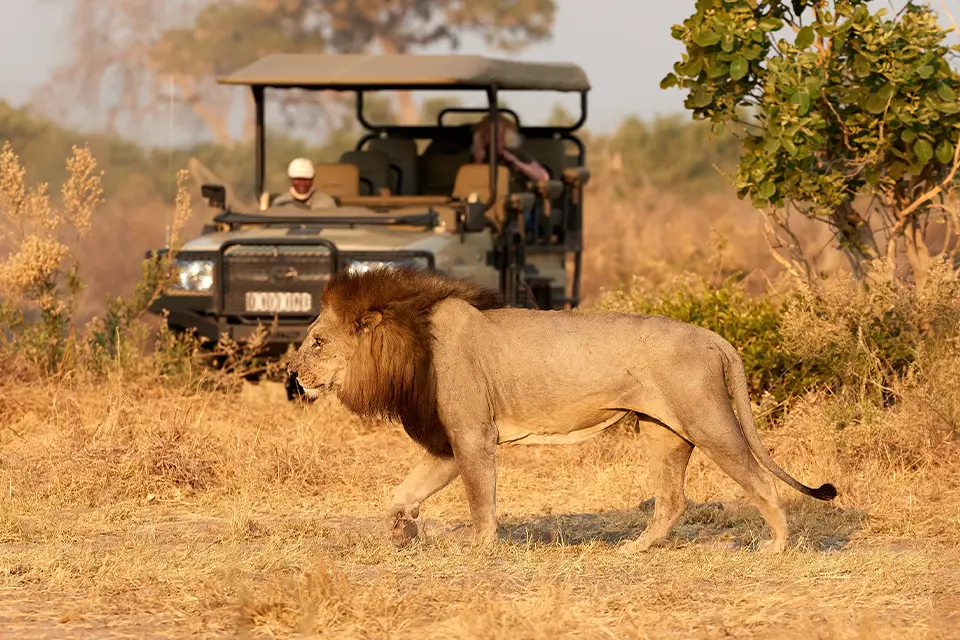
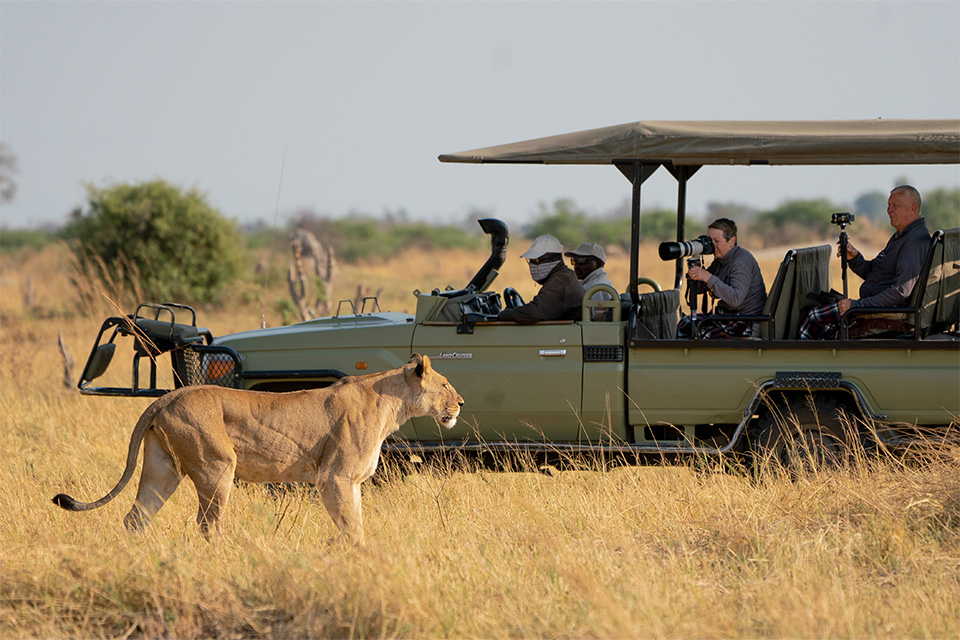
Game drives: Morning and afternoon departures place you in the bushveld at the best light of the day. Within Moremi Game Reserve, drives run from sunrise to sunset: a focused rhythm that consistently delivers close, unhurried encounters with predators, elephant herds, and plains wildlife.
Seasonal mokoro excursions on the Delta channels: When the winter floodwaters peak between June and August, traditional dugout canoes allow silent access to papyrus-lined waterways bordering the island. Moving at water level, with Pel's fishing owls in the canopy and slaty egrets at the channel edges, the experience is unlike anything a vehicle can provide.
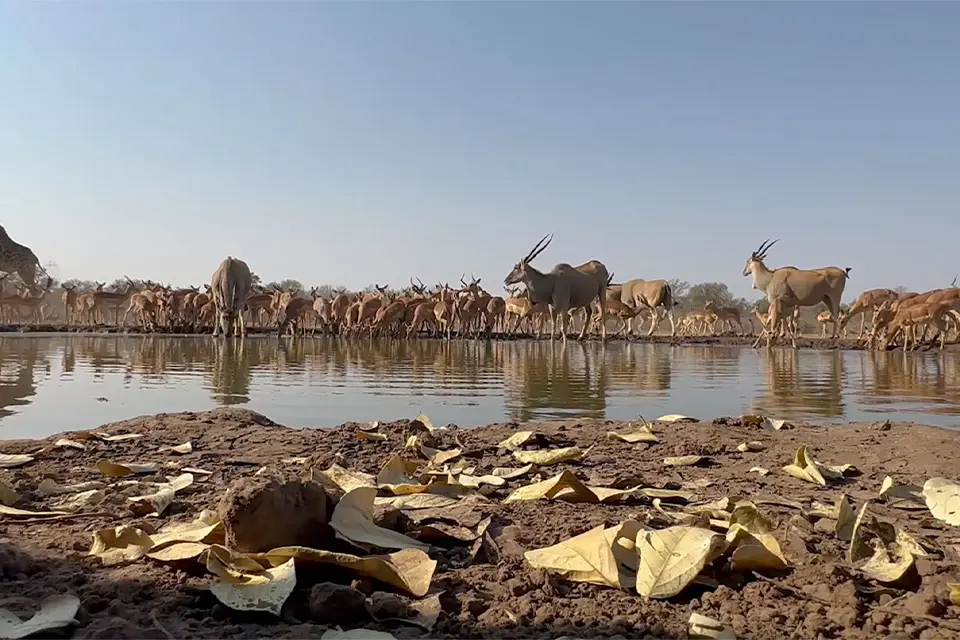
Waterhole hide photography at the Mombo area: Settle into a photographic hide and wait as animals arrive to drink. The proximity and unobstructed sightlines create conditions that reward patience and a camera equally.
Stargazing from deep wilderness: Chief's Island sits far from any light pollution. After the evening meal, the southern sky opens fully, with constellations and the Milky Way spread clearly overhead.
Guided walking in the bush: A walk with an experienced guide brings the smaller details of the ecosystem into focus: tracks, plants and the signs of overnight predator movement, deepening the texture of the safari considerably.
Wildlife tracking and behavioural interpretation: Guides on Chief's Island know individual animals, including specific lion prides, known leopard territories, and wild dog pack movements, turning each drive into an ongoing story of the landscape.
What wildlife can I see on Chief's Island?
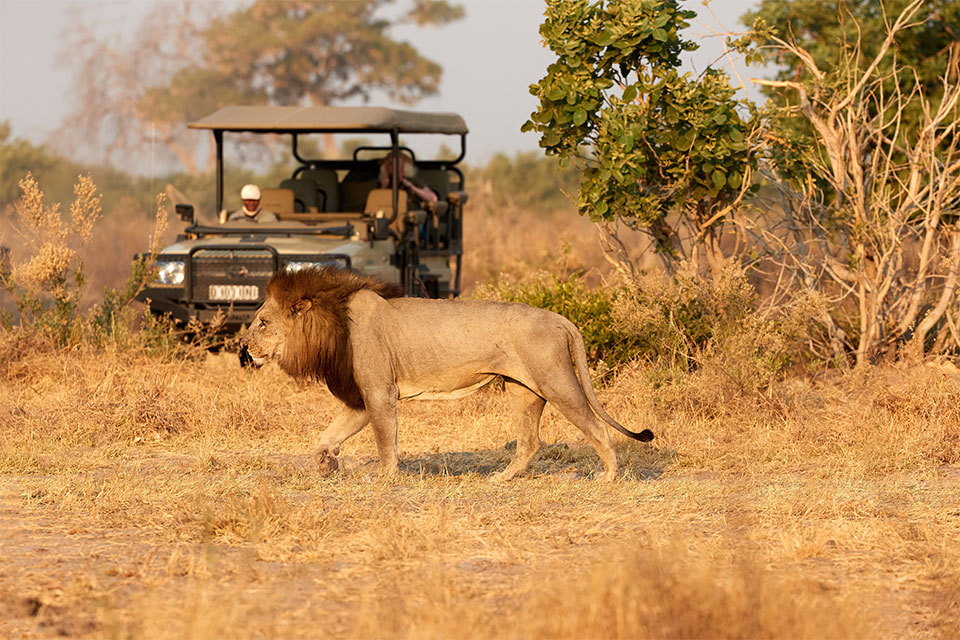
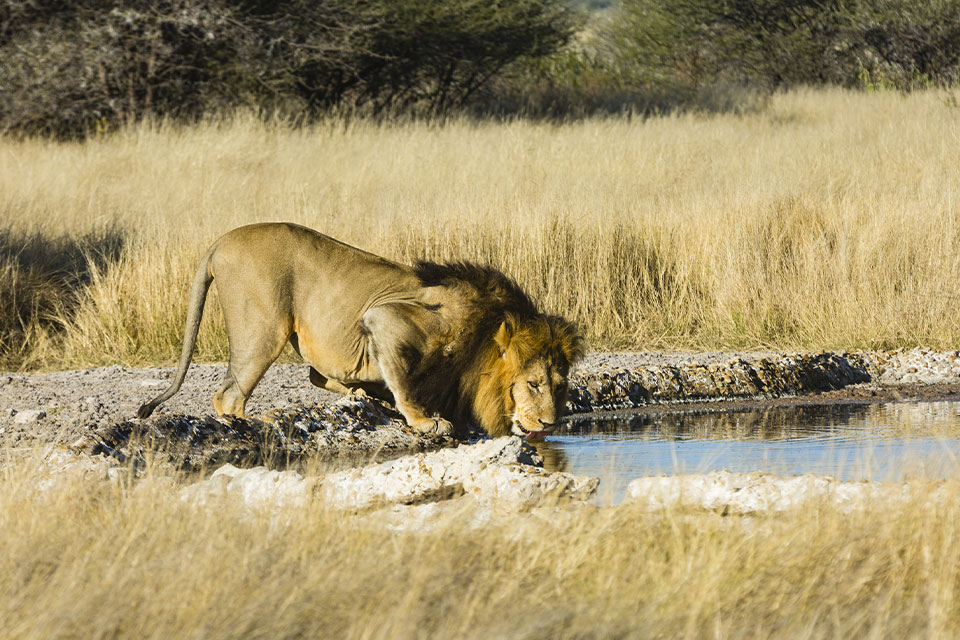
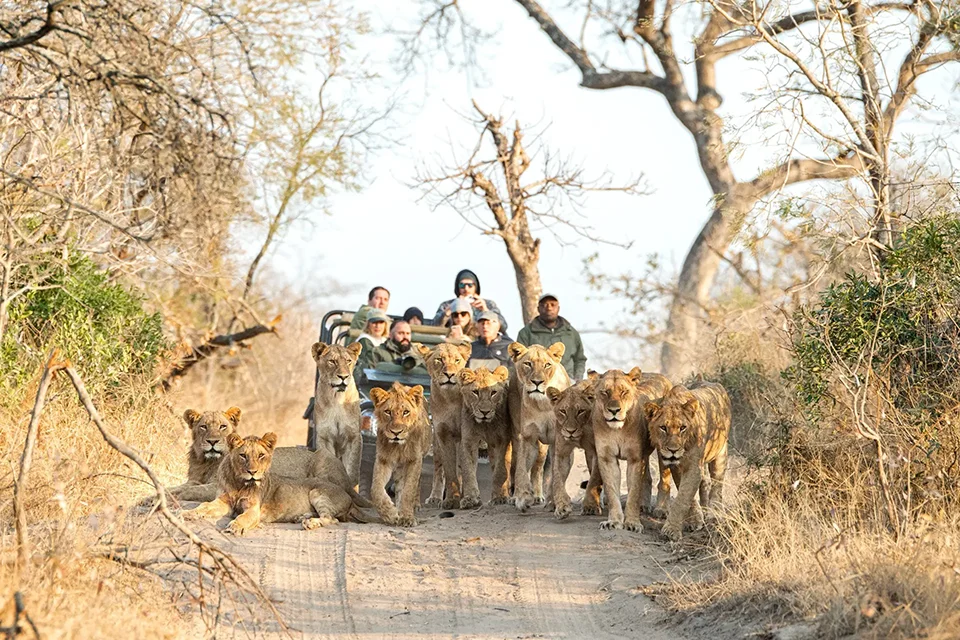
Lion prides in open grassland: Multiple resident prides move through the island's floodplains, often relaxed and unhurried. Chief's Island supports one of the continent's highest lion population densities, underpinned by the exceptional prey base the annual floods concentrate here.
Leopards, cheetahs and spotted hyenas: Leopards are present in high densities, frequently seen resting in tree branches or moving through the bush at dusk. Cheetahs patrol the open plains, while spotted hyenas are a consistent and visible presence across the floodplain landscape.
African wild dogs: a rare encounter made reliable: Endangered across most of their range, African wild dogs (painted wolves) have stable resident packs on Chief's Island, offering a quality and consistency of sighting that few destinations anywhere in Africa can match.
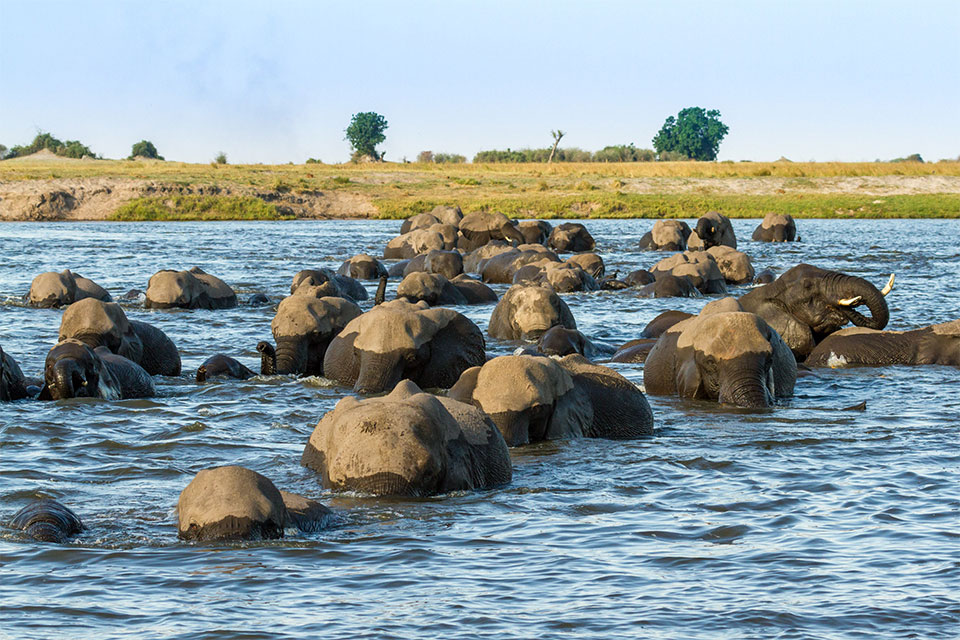
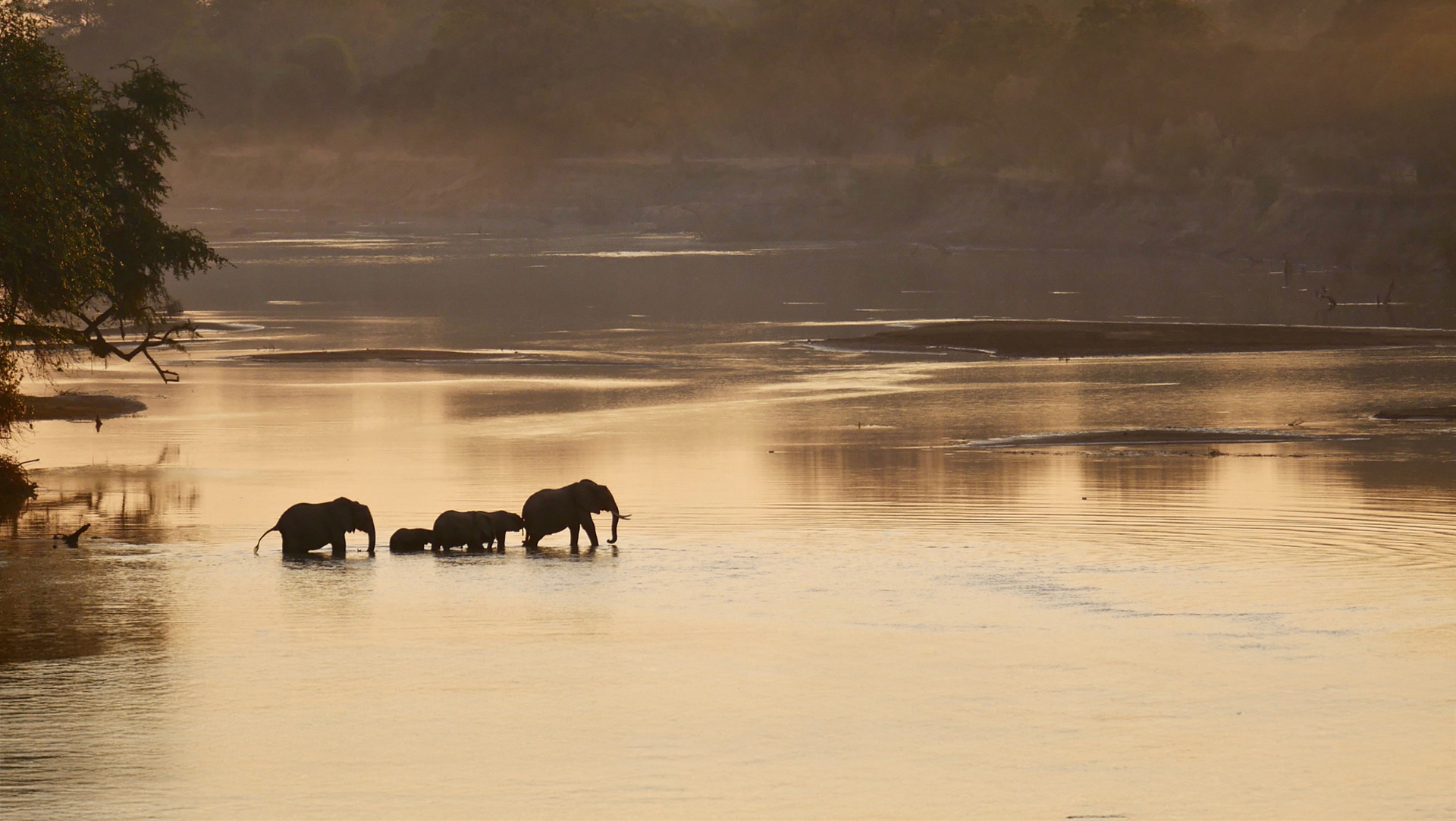
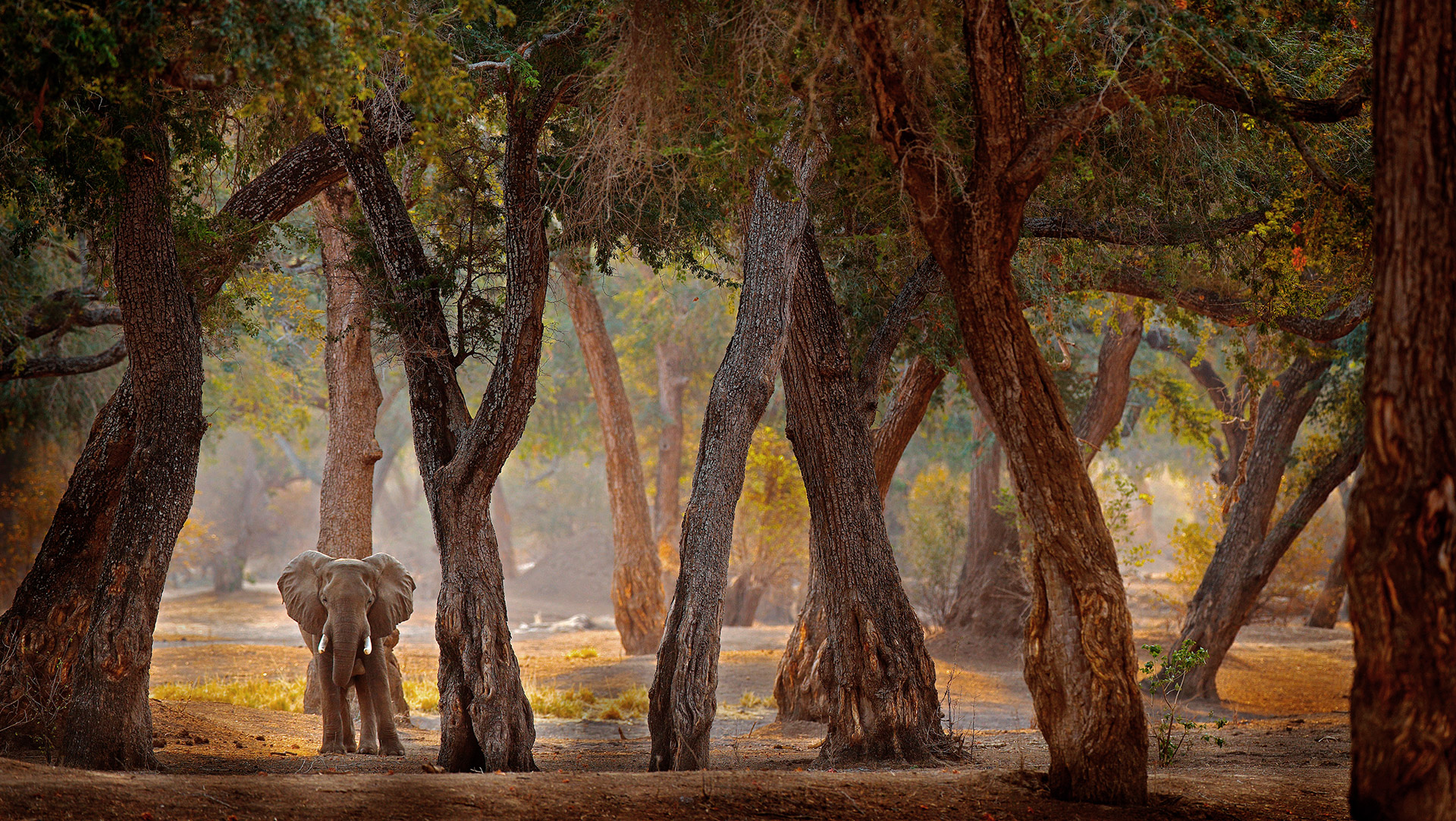
Elephant, buffalo, hippo and crocodile: Large breeding herds of elephants move through the island's mopane and acacia woodland, while buffalo graze the floodplain margins in impressive numbers. The island's lagoons are home to hippos and notably large crocodiles.
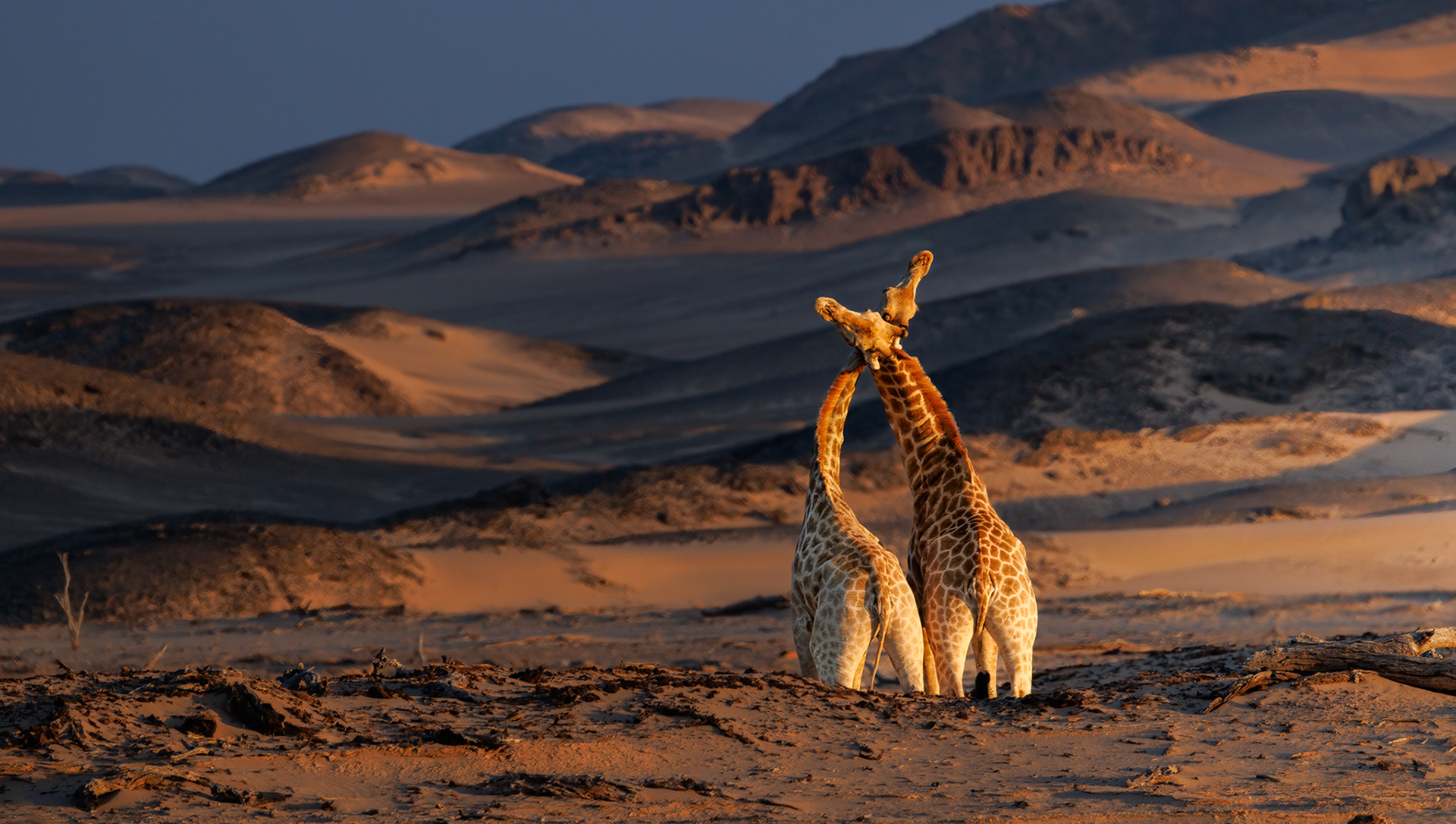
Red lechwe, zebra, impala and giraffe: The high densities of plains wildlife that sustain the predator community are a spectacle in their own right, with vast herds of red lechwe in the shallows, zebra crossing the grasslands, impala beneath the marulas, and giraffe browsing above the treeline.
Almost 500 bird species, including Pel's fishing owl, slaty egret, malachite kingfisher, wattled crane and African fish eagle in the channels and floodplains, while crimson-breasted shrike and pied babbler inhabit the drier mopane and thornveld interior.
A note on rhino: the Mombo Concession has played a historically significant role in rhino reintroduction to the Okavango region. Severe poaching pressure means that rhino sightings on Chief's Island are now extraordinarily rare and should not be expected as part of a visit, though their presence within the ecosystem remains a conservation priority.
Where to stay on Chief's Island
Sanctuary Chief's Camp sits on the main body of the island with views over water channels and open floodplain. It is the property most directly associated with the dual land-and-water experience: year-round game drives through open terrain and traditional mokoro excursions through papyrus-lined channels during the winter flood season, June to August. A pool deck and fire pit provide unhurried moments between departures.
Mombo Camp occupies the Mombo Concession floodplains at the northwest tip of Chief's Island, the ecological epicentre of the island's predator density. One of Africa's most celebrated safari camps, it offers morning and afternoon game drives through territory where lion, leopard, and spotted hyena sightings are exceptionally reliable. Waterhole hide photography and stargazing complement the drives.
Little Mombo, linked to Mombo Camp by a raised walkway, is Chief's Island's most intimate option, with just four safari suites on a raised platform above the floodplains and wildlife moving freely beneath the boardwalk. The camp is fully self-contained, with its own dining room, boma, lounge, pool and The Sanctuary spa. Solar power, above-ground wastewater treatment and direct contributions to lion research and elephant monitoring make Little Mombo the island's strongest conservation choice. For a private group or family wanting total seclusion alongside genuine ecological commitment, it is hard to match.
The Mombo Concession
At the northwest tip of Chief's Island lies Mombo Island, home to the Mombo Concession, a place widely regarded as one of Africa's finest wildlife areas. The relationship between Mombo's geography and its extraordinary wildlife density is direct and specific: the Mombo Concession is the first point on Chief's Island to receive nutrient-rich floodwaters from the Okavango River. Those waters produce lush, mineral-rich grassland. That grassland draws high densities of red lechwe, plains zebra, impala and giraffe. That prey concentration, sustained year-round, supports one of the continent's most formidable lion populations, alongside leopards, spotted hyenas, and wild dogs.
During the high-water flood period, Mombo Island does not simply remain part of Chief's Island. It becomes geographically separated from the mainland, surrounded entirely by floodwaters, an island within an island, and this isolation intensifies the wildlife dynamic still further.
The Mombo Concession plays a primary role in the conservation and biodiversity protection of Moremi Game Reserve, and has historically been a stronghold for the Big Five, including the reintroduction of both black and white rhinos to the region. Mombo Camp and Little Mombo are among the most highly regarded properties in the Okavango Delta.
Trusted by thousands of ecstatic travellers
✔️ 5-Star Trustpilot Rating ✔️ Condé Nast Travel Specialist Award Winner
✔️ Accredited by SATSA ✔️ 5,000+ Exceptional Safaris Since 1991
Why choose Africa Geographic to plan your safari?

"We have just returned from an incredible 3 week safari to Botswana...organised by...Africa Geographic. He understood our particular interests and came up with the perfect itinerary. Everything went according to plan - all flights, pick ups etc were seemless...He was genuinely interested in our experience and very happy for us that everything went well. Major highlight was seeing wild dogs on several occasions including adults and pups in a den."

"Could not recommend Africa Geographic highly enough!...was fantastic at helping me find the perfect safari option to match our time and budget. He was incredibly patient and thorough with providing lots of fantastic options. We decided to go for a mobile camping safari in Botswana and, to date, this has got to be one of our best trips!...went above and beyond at every stage...Thank you so much for helping us have an unbelievably amazing trip!"

"..."Botswana Magic: Desert, Bush and Water" and our trip lived up to this description! His thought and attention to making this a memorable holiday was commendable. Seamless transfers between small camps, no crowds, personal attention without feeling fussed over, meaningful and spiritual experiences only possible in Africa and some excellent sightings - African Wild Dogs, African Skimmers, Hyena den (with pups)...Thank you for a tailor-made safari holiday, AG."
Wish you were here?
Frequently asked questions
Chief's Island is the largest permanent landmass in the Okavango Delta, located within Moremi Game Reserve in Botswana. It is a remote, fly-in-only wilderness destination known for exceptional wildlife density and strictly limited visitor access.
The island sits within Moremi Game Reserve in northwestern Botswana. Its northwest tip, the Mombo Concession on Mombo Island, is the first point to receive the Okavango River's annual floodwaters and is widely regarded as one of Africa's finest wildlife areas.
When the Delta floods each June to August, Chief's Island remains above water and becomes a refuge for large concentrations of wildlife. Nutrient-rich floodwaters reaching Mombo first produce lush grazing, drawing vast herds of plains animals that in turn support exceptional densities of lion, leopard, spotted hyena and wild dogs.
Yes, and more reliably than at almost any other destination on the continent. African wild dogs are endangered and elusive across much of Africa, but Chief's Island supports stable resident packs encountered with surprising consistency, making this one of the destination's most significant wildlife distinctions.
May to October is the most popular period, with July, August and September generally offering the finest wildlife viewing. The Okavango Delta's floodwaters paradoxically peak during these dry winter months, from June to August, when Chief's Island's role as a wildlife refuge is at its most dramatic.
Chief's Island is accessible only by light aircraft. Fly-in safaris depart from Maun, the main gateway to the Okavango Delta, on a short scenic flight over the wetlands to private bush airstrips at each camp. There are no road connections to the island.
Rhino sightings are now extraordinarily rare. The Mombo Concession played an important historical role in the reintroduction of both black and white rhinos to the region, but severe poaching pressure means these animals are highly protected and very seldom encountered. Rhino should not be expected as part of a visit.
The Mombo Concession occupies the northwest tip of Chief's Island on Mombo Island. As the first area to receive the Okavango River's annual floodwaters, it supports some of the Delta's richest grazing and highest predator densities. During high water, Mombo Island becomes geographically separate from the main island. Mombo Camp and Little Mombo are both located here.
A mokoro is a traditional dugout canoe, poled silently through the Delta's papyrus-lined water channels. Mokoro excursions are available at Sanctuary Chief's Camp during the winter flood season, typically June to August, when water levels allow access to the channels bordering the island.
Birding is excellent across the island's varied habitats. Water bird highlights include Pel's fishing owl, slaty egret, malachite kingfisher, wattled crane and African fish eagle. The drier mopane and thornveld interior supports species including crimson-breasted shrike and pied babbler, a rewarding mix for dedicated birders and casual observers alike.
There are three permanent safari camps on Chief's Island: Sanctuary Chief's Camp on the main island, and Mombo Camp and Little Mombo on the Mombo Concession.
Three things set it apart: it is the Delta's largest permanent landmass, staying above the annual floods and concentrating wildlife in a way no other area replicates; its visitor limits are among the strictest in Botswana; and the combination of stable African wild dog packs, exceptional predator density and dual floodplain-woodland habitat gives it a wildlife breadth most Okavango destinations cannot match.
Botswana restricts visitor volumes in its protected wilderness areas, prioritising quality of experience over quantity of visitors. On Chief's Island, this means very few camps, low guest numbers and minimal vehicle pressure on wildlife. The result is a safari that feels unhurried and intimate, with sightings that often unfold without another vehicle in sight.
Safaris to Chief's Island typically start at US$2,400 per person, per night during the low season and rise to US$5,300 during the peak season. These prices usually include accommodation, all meals, game drives, experienced guides, airport transfers, and 24/7 support from our team.
Click here to schedule a no-obligation call with one of our Safari Experts or fill in our 2-minute form with your questions. Our team of experts are here to help! Whether you’re curious about the best time to travel, want to hear first-hand about an experience or need help planning your safari.
Explore more African destinations
Start planning your dream safari
Our travel experts will craft a no-obligation itinerary just for you. We have crafted over 5,000 safaris since 1991. Your personal details are protected; we only use this information to contact you.
Why book your safari with us?

Deep Experience & Knowledge
Handcrafted experiential safaris since 1991.
Travel in Africa is about knowing when and where to go, and with whom. A few weeks too early/late or a few kilometres off course, and you could miss the greatest show on Earth. And wouldn’t that be a pity?

Trust & Safety

Make A Difference
We donate a portion of the revenue from every safari sold to carefully selected conservation projects that make a significant difference at ground level.
YOUR safari choice does make a difference - thank you!