

Tailor-made safaris. Since 1991



Mababe Depression: Botswana's ancient lakebed, alive with predators
Mababe Depression at a glance:
Location: Northern Botswana; between the Okavango Delta (west), Moremi Game Reserve (north), Chobe National Park (northeast) and the greater Kalahari ecosystem (south) | Main access: Maun International Airport; helicopter transfer approximately 40–45 minutes to Mokete Camp |
Ecosystem size: Mababe Depression approximately 3,000 km² (300,000 hectares); Mokete Private Wilderness Area 50,330 hectares | Best time to visit: May–October (dry season); August–October for peak wildlife density; November–March for birdwatching and zebra migrations |
Accommodation: One permanent luxury lodge - Mokete Camp | Activities: Game drives (off-road), night drives, walking safaris, sunken hide, helicopter flights |
Malaria risk: Yes, present year-round; highest risk November–April; preventative medication strongly recommended | Community: Concession community-owned by Mababe village; Mokete Camp staffed entirely by local residents |
Why visit the Mababe Depression?
Most travellers who come to Botswana follow a familiar circuit: the Okavango Delta's waterways, the Linyanti's elephant concentrations, Chobe's river frontage. The Mababe Depression sits apart from all of them, a remote, open grassland wilderness that occupies a different ecological register and delivers a safari experience few more-visited destinations can replicate.
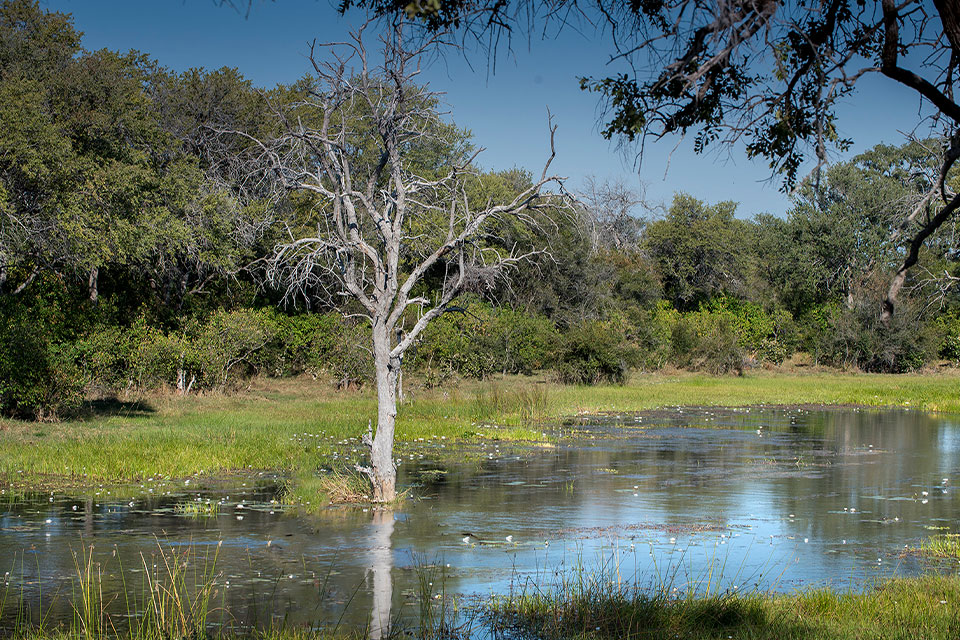
The Depression is the bed of an ancient lake, left behind when tectonic shifts gradually cut it off from the river systems that once fed it. What remains is a vast flat basin of grassland ringed by mopane woodland, with a seasonal marsh at its southern end fed by the Khwai River. The landscape feels closer to the Kalahari than to the Okavango Delta: open, expansive, driven not by water channels but by predator and prey.
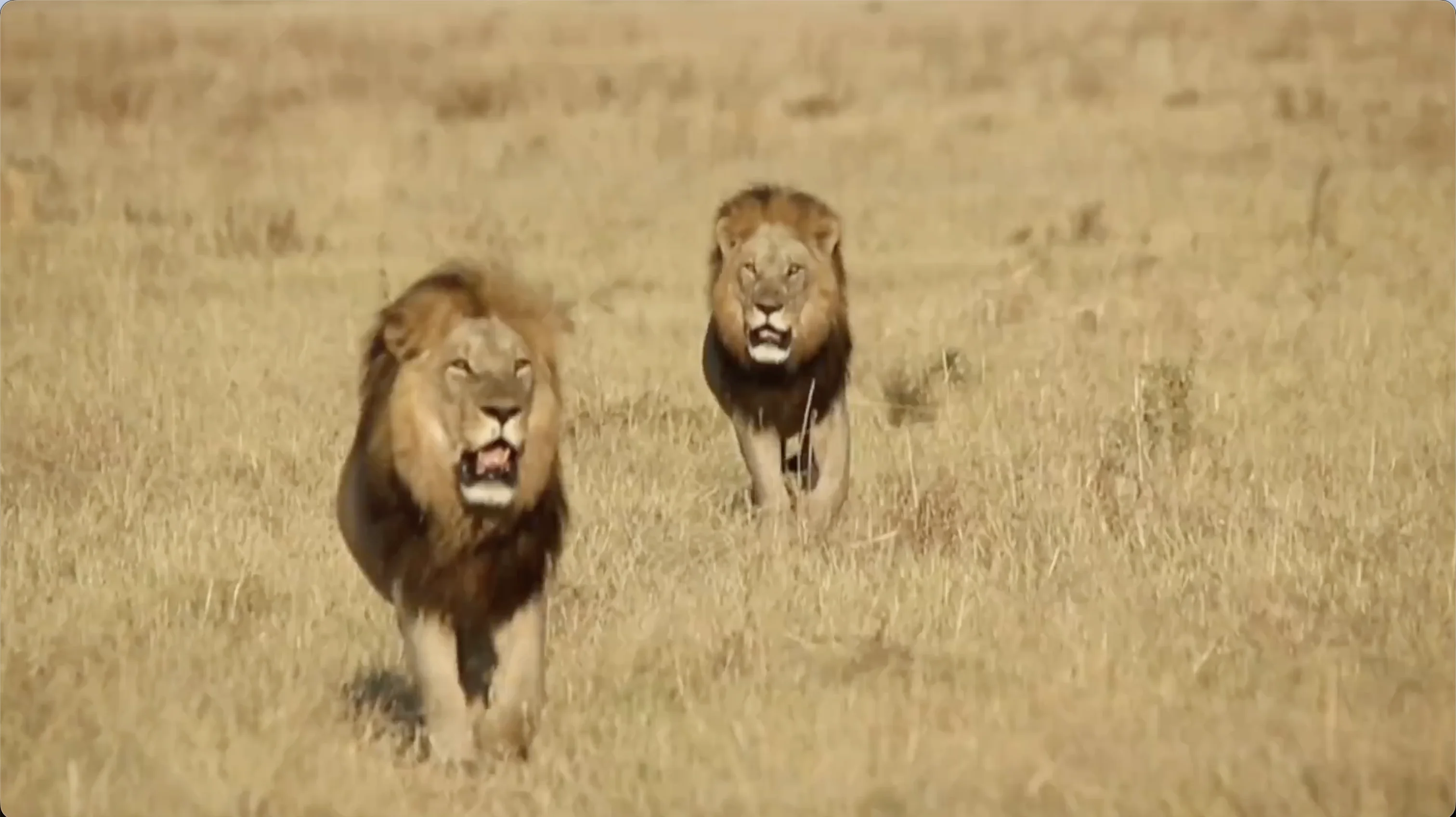
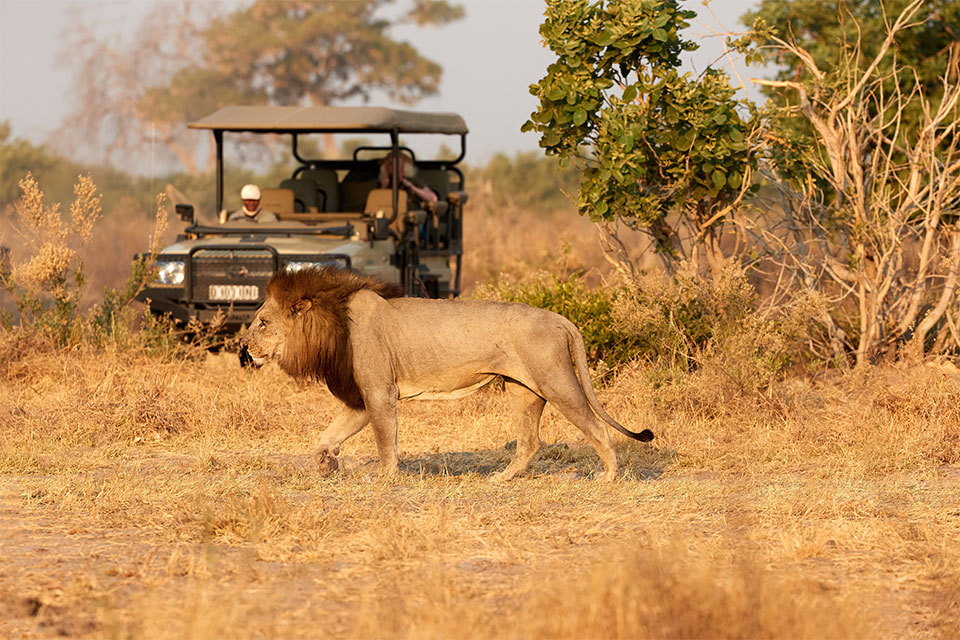
That dynamic defines everything here. The Depression acts as a natural funnel for wildlife moving between four of northern Botswana's major ecosystems, concentrating species in numbers that reward patience and surprise even experienced safari travellers. Lion prides hunt in full daylight across terrain with no cover to hide in. Buffalo aggregations reach a scale few places on the continent can match. Wild dog packs operate openly across sightlines that make them trackable over hours rather than minutes.
The Mababe Concession, known as NG41, is community-owned by Mababe village and managed to serve both conservation and local uplift. The Khwai Development Trust oversees anti-poaching across the concession and ensures that tourism revenue reaches the community directly. Within it, the Mokete Private Wilderness Area encompasses more than 50,000 hectares with a single permanent camp, meaning the land, and everything that moves across it, is shared with no one else.
5 reasons we love the Mababe Depression
Mega-herds at the ancient water's edge: Buffalo herds can exceed 5,000 animals at the Depression's permanent water sources, a visual and sonic scale unlike anything else in Botswana's safari circuit.
Lion hunts in open daylight: Multiple large prides claim the grassland; with no cover to hide in, coordinated hunts play out in full daylight, rarely witnessed with such clarity anywhere in Africa.
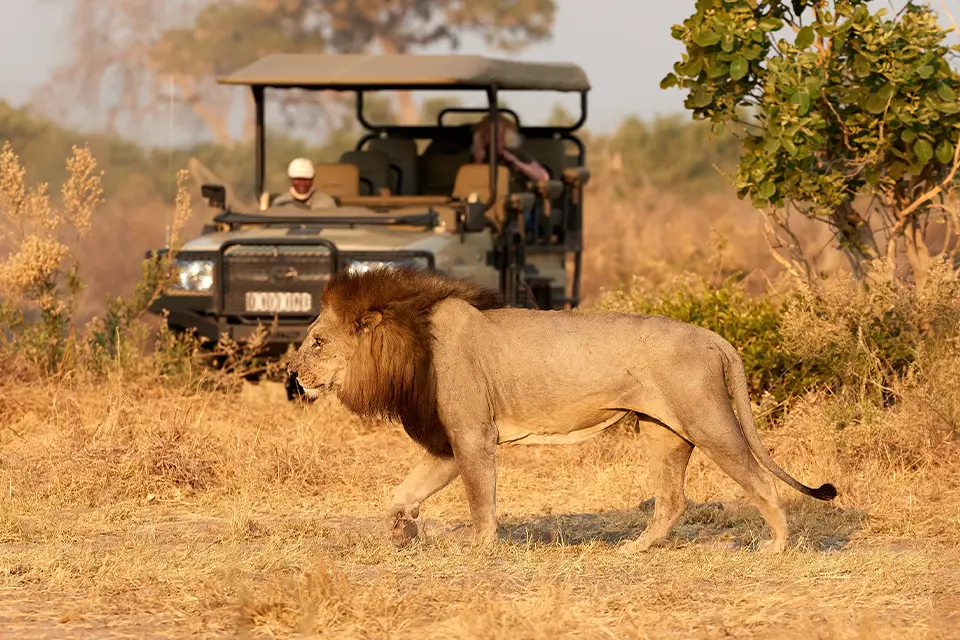
One camp, 50,000 hectares, no other vehicles: The Mokete Private Wilderness Area holds a single permanent camp. Off-road access, unlimited drive times and night drives mean the land responds entirely to what you find.
Wild dogs, reliably found: An established stronghold for critically endangered African wild dogs (painted wolves); during denning season, June to August, packs become predictable enough to visit over consecutive days.
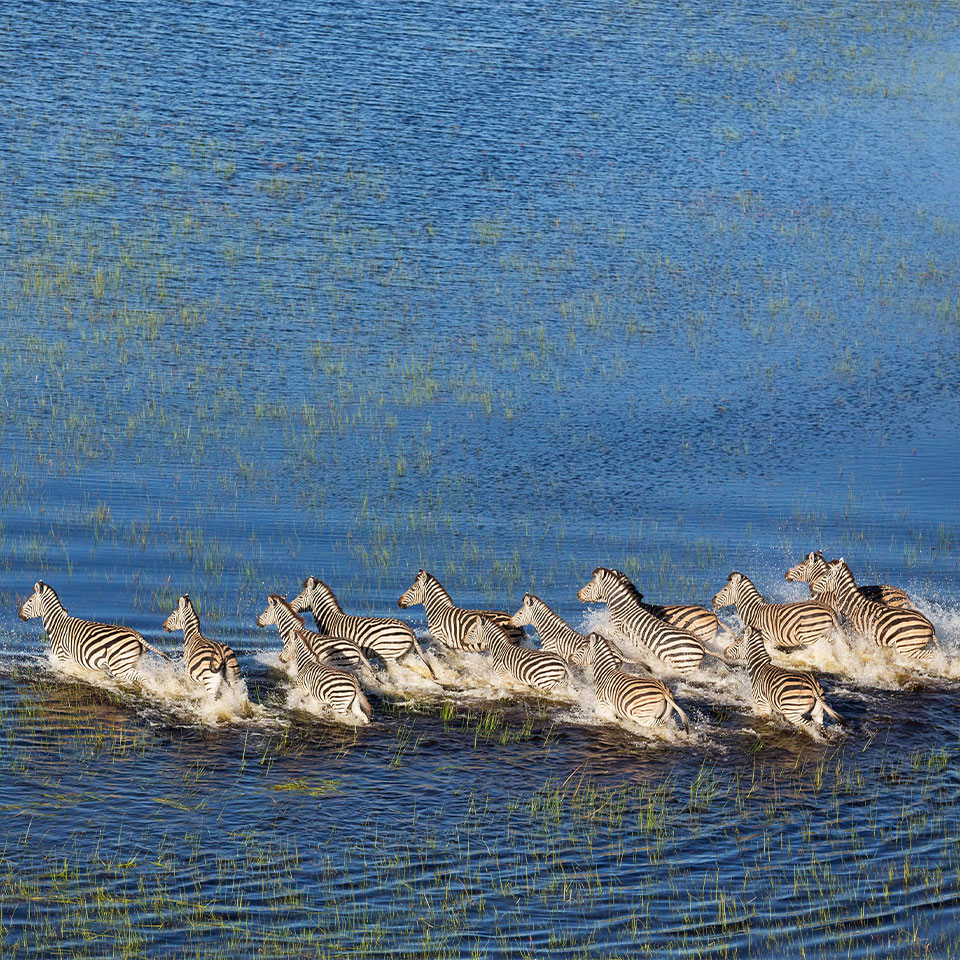
A zebra migration few travellers know exists: Every December and March, vast herds of zebra move through the Depression on their seasonal routes between northern and central Botswana, a spectacle most visitors never encounter.
All you need to know about Mababe
Things to do in the Mababe Depression
Full-day game drives on private land: No fixed routes, no time limits, no other vehicles. Guides follow predator signs across open grassland for as long as a sighting demands, with full-day drives and bush picnics available whenever the wildlife warrants.
Night drives into the Depression: After dark, the flat terrain reveals a nocturnal cast including leopard moving through the mopane, spotted hyena ranging the grassland, serval and African wild cat, and occasionally aardvark or aardwolf crossing the open ground.
Walking safaris on foot: With a guide and tracker, encountering elephants or buffalo at close range is entirely possible. The heightened awareness this demands is its own reward.
Mokete's sunken hide: Set partially below ground, it places visitors eye-level with elephants drinking just metres away, a perspective and a photographic opportunity achievable nowhere else in the region.
Helicopter flights over the Depression: From the air, the Depression's true scale becomes clear: vast herds moving across a flat, open basin, the Mababe Marsh catching light at its southern edge.
Community visits to Mababe village: The community that owns this concession lives at its edge. A visit connects the wildlife experience to the people whose land, and whose conservation commitment, makes it possible.
What wildlife can I see in the Mababe Depression?
Buffalo in numbers that reshape the horizon: From May through the dry season, herds build to staggering concentrations; buffalo aggregations can exceed 5,000 animals at the Depression's permanent water, with lions tracking close behind.
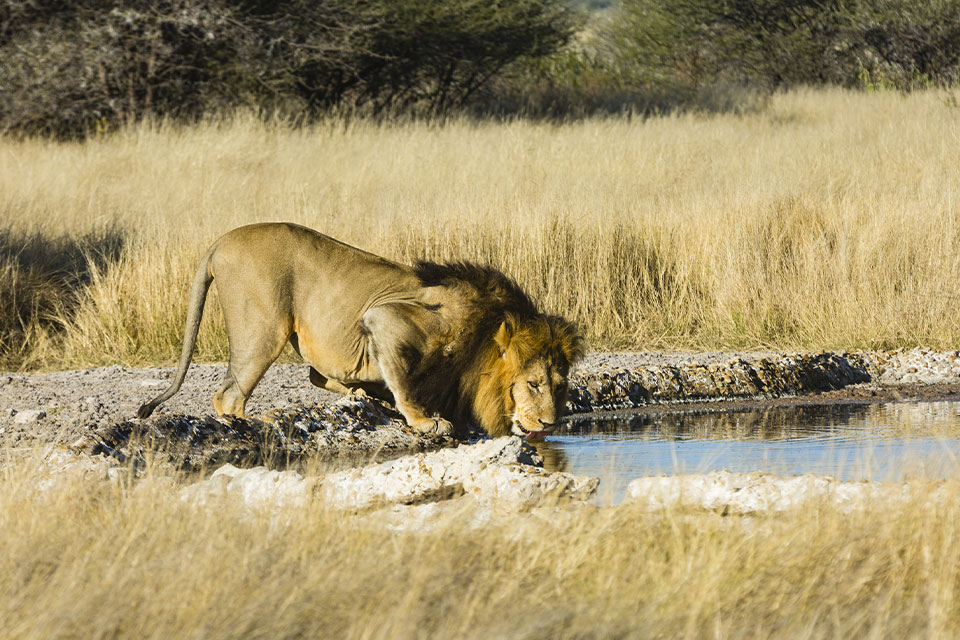
Lions hunting in open daylight: Multiple prides claim the Depression's grassland. The open terrain removes the cover that forces hunts into dawn or dusk elsewhere, making coordinated, broad-daylight hunts a repeatedly witnessed spectacle here.
African wild dogs, an established stronghold: Several packs range across the concession year-round. Between June and August, denning makes packs unusually predictable, allowing guides to locate them over multiple days rather than in a single day.
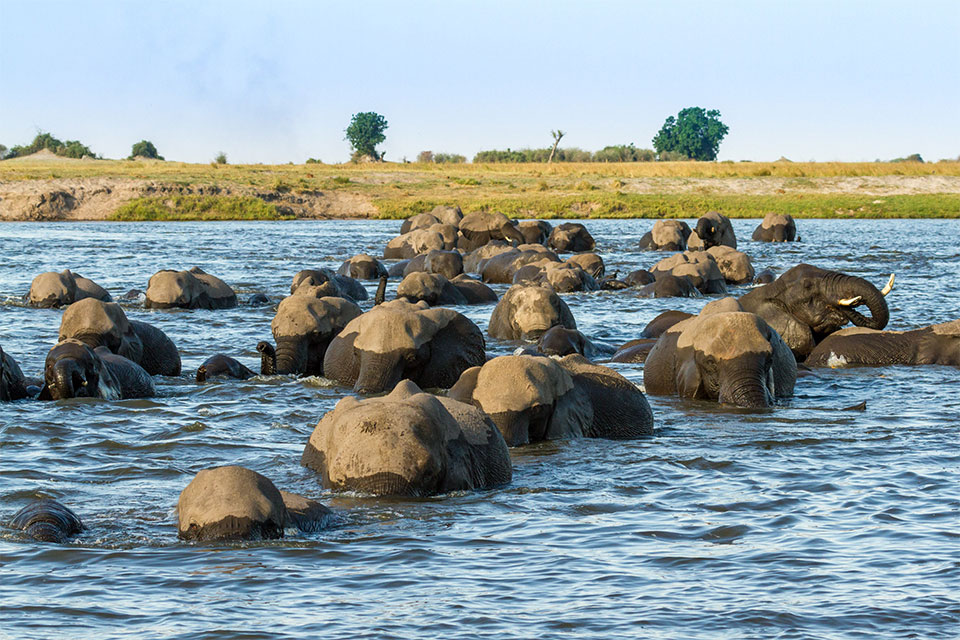
Elephants following ancient pathways: Large seasonal concentrations gather along the Khwai River; hundreds of animals move together, including large-tusked individuals, following pathways generations of elephants have used across the Depression.
Cheetah, leopard and the broader predator community: Cheetahs find the open grassland ideal; leopards are concentrated in the mopane belt and riverine forest; spotted hyena, serval and bat-eared fox complete an exceptional predator cast.
Birdlife across a recognised wilderness area: Designated an Important Bird and Biodiversity Area, the Depression and nearby Khwai River area supports over 400 recorded species, including martial eagle, carmine bee-eater, wattled crane, slaty egret, Pel’s fishing owl, African skimmer, secretarybird, southern ground-hornbill, saddle-billed stork and bateleur
Where to stay in the Mababe Depression
There is one permanent camp in the Mababe Depression, and it makes this corner of northern Botswana accessible to those prepared to travel for something remote and rare.
Mokete Camp lies in the Mokete Private Wilderness Area, 50,330 hectares of community-owned concession with no other structures. Out on the land, there are no other vehicles, no fixed circuits and no other camps on the horizon.
The camp occupies a sandveld ridge with mopane woodland to the east and west, acacia thornveld to the north and floodplains to the south. Nine luxury tented suites accommodate up to 18 guests; the minimum age is 16. Cantilevered canvas roofs slide away entirely at night, the bed opening to the Botswana sky. Solar power runs the camp; inverter air conditioning addresses the heat of the dry season months.
Mokete is staffed entirely by residents of Mababe village, the community that owns the concession. That relationship is not incidental: the employment, revenue, and conservation work it funds are the foundation on which the experience rests. Access is by helicopter from Maun, approximately 40 to 45 minutes away.
Trusted by thousands of ecstatic travellers
✔️ 5-Star Trustpilot Rating ✔️ Condé Nast Travel Specialist Award Winner
✔️ Accredited by SATSA ✔️ 5,000+ Exceptional Safaris Since 1991
Why choose Africa Geographic to plan your safari?

"We have just returned from an incredible 3 week safari to Botswana...organised by...Africa Geographic. He understood our particular interests and came up with the perfect itinerary. Everything went according to plan - all flights, pick ups etc were seemless...He was genuinely interested in our experience and very happy for us that everything went well. Major highlight was seeing wild dogs on several occasions including adults and pups in a den."

"...did an amazing job in arranging our once in a lifetime safari through Botswana...Absolutely everything was perfect!...we could not have been happier! I was concerned about the transfers from one place to another, but everybody was where they were supposed to be when they were supposed to be. After the first 3 days I realized how responsible the transportation guys were and never worried after that that we would miss a connection!"

"Could not recommend Africa Geographic highly enough!...was fantastic at helping me find the perfect safari option to match our time and budget...safari in Botswana and, to date, this has got to be one of our best trips! We saw 70 lions, 14 Hyena, 7 African wild dogs, 5 Leopards (including a cub!), 2 Cheetah and 1 African wild cat - and that's not even beginning on the numbers of...Thank you so much for helping us have an unbelievably amazing trip!"
Wish you were here?
Frequently asked questions
The Mababe Depression is an ancient lakebed in northern Botswana, a roughly 3,000 km² basin of open grassland forming the eastern end of the Okavango system, fed at its southern end by the seasonal Mababe Marsh.
In northern Botswana, between the Okavango Delta to the west, Moremi Game Reserve to the north, Chobe National Park and Savuti to the northeast, and the greater Kalahari ecosystem to the south. Maun is the main access hub, approximately 40 to 45 minutes away by helicopter.
Fly into Maun International Airport, the main gateway for northern Botswana's safari circuit. Mokete Camp is reached by helicopter, approximately 40 to 45 minutes from Maun or seven minutes from Santawani airstrip. The broader Mababe region can also be accessed by road from Maun, Moremi or Chobe.
May to October, the dry season, offers the most concentrated and reliable wildlife viewing, with August to October the peak period. June and July provide excellent conditions with more moderate temperatures. For birdwatching and the zebra migrations, November to March is the most rewarding time to visit.
Buffalo, lions, African wild dogs, elephants, leopards, cheetah, spotted hyena, zebra, tsessebe, roan, sable, kudu, giraffe and over 400 recorded bird species. Rhino are not present, as the region does not hold an established rhino population. The emphasis here is on predator and prey at genuine scale.
Lions, leopards, elephants and buffalo are reliably present and regularly encountered. Rhino are absent from this region. Rather than a checklist approach, Mababe is built around the predator and prey drama of a functioning, unmanaged wilderness, an experience that stands apart from most conventional safari itineraries.
The Delta is defined by water: channels, mokoro journeys, seasonal inundation. Mababe is open grassland, its wildlife dynamic driven by predator and prey rather than water. The two ecosystems are complementary rather than interchangeable, connected by a 30 to 45-minute flight and well suited to combination in a broader Botswana itinerary.
Mokete Camp is the only permanent camp in the 50,330-hectare Mokete Private Wilderness Area, operated by Wilderness since early 2024. Nine tented suites accommodate a maximum of 18 guests. The camp is staffed entirely by residents of Mababe village and is accessible only by helicopter from Maun.
Off-road game drives with no time restrictions, night drives, walking safaris where close wildlife encounters are possible, the sunken hide for eye-level elephant viewing, optional helicopter flights and community visits to Mababe village. These activities are available because Mokete operates as a private concession, outside the restrictions that apply inside national parks.
Yes. Reliable wildlife across a range of habitats, expert guides and a variety of activities make Mababe accessible and rewarding for first-time visitors. Note that Mokete Camp has a minimum age of 16, so it is not suited to families with younger children.
Buffalo are present year-round, but the most dramatic concentrations occur from May through the dry season, peaking August to October when diminishing water sources draw herds together. At the turn of the seasons in December and March, aggregations of thousands have been recorded across the Depression.
Yes. Mababe falls within a malaria zone, with the highest risk during the wet season from November to April. Preventative medication is strongly recommended; consult your doctor well before departure. Insect repellent and long sleeves for evenings are advisable throughout the year.
Easily. Mokete Camp is approximately 30 to 45 minutes by light aircraft from camps in the Okavango Delta, and around 40 minutes from the Linyanti. Three to four nights in Mababe combined with three to four nights in either region gives two ecologically distinct and complementary safari experiences.
Mokete Camp starts at USD 1,150 per person per night, depending on the time of year and activities. This price usually includes accommodation, all meals, game drives, experienced guides, and 24/7 support from our team.
Click here to schedule a no-obligation call with one of our Safari Experts or fill in our 2-minute form with your questions. Our team of experts are here to help! Whether you’re curious about the best time to travel, want to hear first-hand about an experience or need help planning your safari.
Explore more African destinations
Start planning your dream safari
Our travel experts will craft a no-obligation itinerary just for you. We have crafted over 5,000 safaris since 1991. Your personal details are protected; we only use this information to contact you.
Why book your safari with us?

Deep Experience & Knowledge
Handcrafted experiential safaris since 1991.
Travel in Africa is about knowing when and where to go, and with whom. A few weeks too early/late or a few kilometres off course, and you could miss the greatest show on Earth. And wouldn’t that be a pity?

Trust & Safety

Make A Difference
We donate a portion of the revenue from every safari sold to carefully selected conservation projects that make a significant difference at ground level.
YOUR safari choice does make a difference - thank you!