

Tailor-made safaris. Since 1991



Maun: Where the Okavango adventure begins
Maun at a glance:
Location: North-western Botswana, on the Thamalakane River at the southern edge of the Okavango Delta floodplains | Main access: Maun International Airport; direct flights from Johannesburg (~1h 40min), Cape Town (~2h 30min) and Addis Ababa |
Best time to visit: June–October for dry-season wildlife viewing in the Delta and Moremi; May for good-value shoulder season; November–April for birding, lush landscapes and lower rates | Currency: Botswana pula (BWP); US dollars, South African rand, British pounds and euros widely accepted at lodges and most businesses |
Recommended stay: 1–2 nights; long enough to absorb Maun's character, recover from long-haul travel and prepare for the safari ahead | Safari destinations from Maun: Okavango Delta, Moremi Game Reserve, Chobe National Park, Central Kalahari Game Reserve, Makgadikgadi Pans (20–40 min by light aircraft or helicopter) |
Malaria: Present in Maun; antimalarial medication strongly recommended. Consult your doctor well before travel | Role: Botswana's primary safari hub and the gateway to safari lodges; increasingly a destination worth experiencing in its own right |
Why visit Maun?
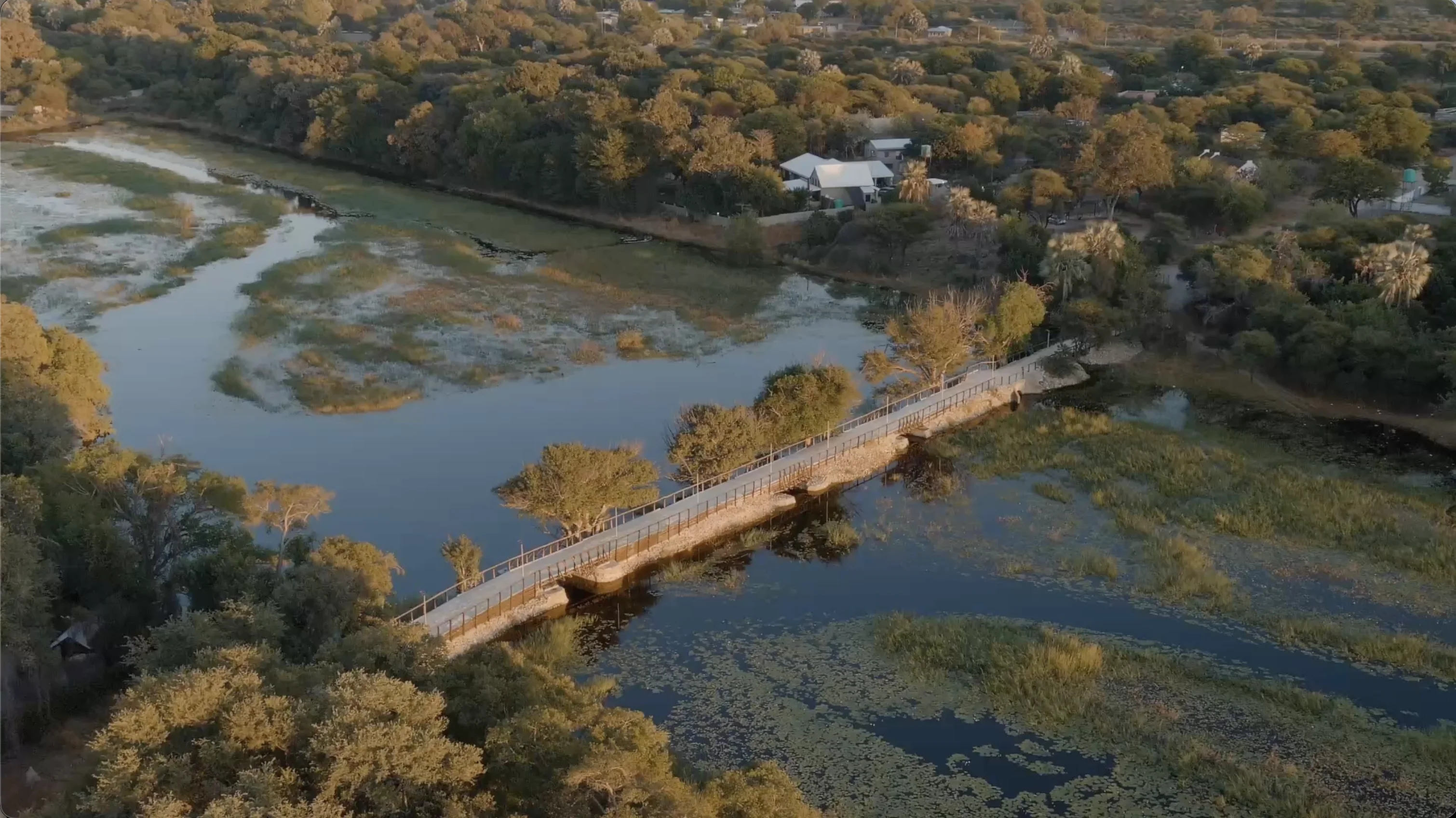
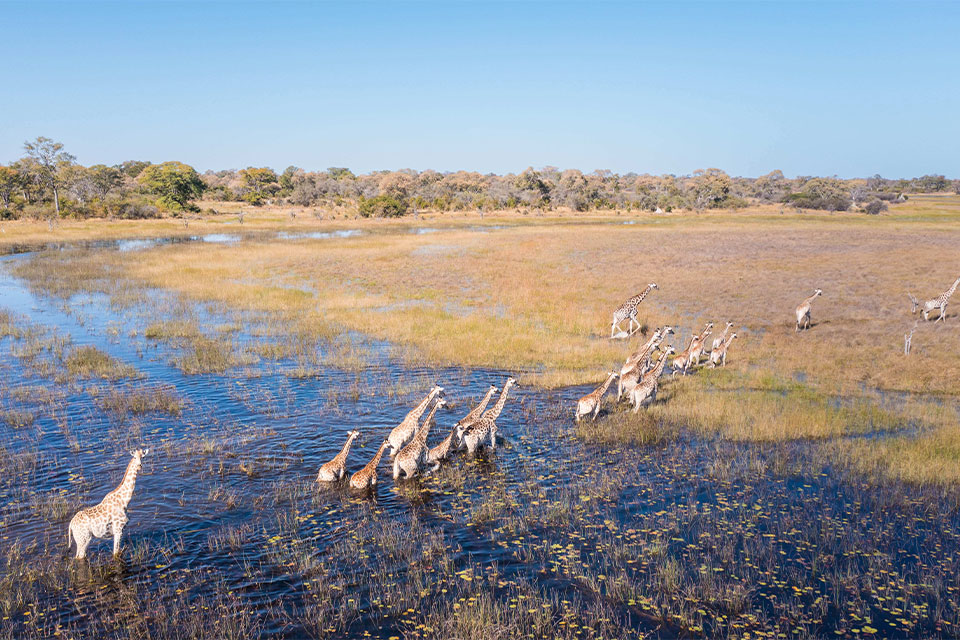
As the plane nears Maun, the landscape below announces what lies ahead. Channels and lagoons catch the light. Islands of vegetation float between waterways that stretch further than the eye can follow, a first glimpse of the Okavango Delta arriving before you have even landed.
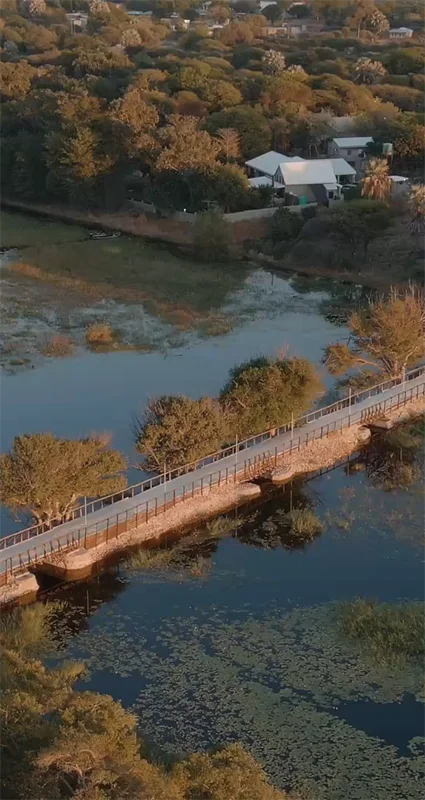
Maun sits at the southern edge of that system, straddling the Thamalakane River in north-western Botswana. It is the country's primary safari hub: the town where most journeys into Northern Botswana begin and end, where bush pilots and conservationists share the same dusty streets with international travellers, and where Botswana's warmth is felt from the moment you arrive.
A day or two here rewards those who take the time. The Nhabe Museum, the Hambukushu and Sexaxa cultural villages, and the Okavango Craft Brewery offer a Botswana that most visitors never slow down enough to see. The giraffe encounter at Thamo Telele's private reserve, a morning on the Thamalakane River, a scenic helicopter flight over the Okavango Delta waterways. Each carries its own weight, not merely filling time between flights.
What Maun also offers, and what is easy to overlook, is value. Scheduled and charter light aircraft flights from the airport reach the Okavango Delta in 20 to 30 minutes, with Chobe, the Central Kalahari and the Makgadikgadi Pans all accessible by air. A night or two here costs considerably less than the remote camps and can make an entire Botswana safari longer, richer and better rested.
5 reasons we love Maun
The first glimpse of the Delta: From the air on the approach to Maun, the Okavango Delta reveals itself. Channels, islands and waterways stretch unbroken to the horizon.
Botswana's most characterful town: Bush pilots, conservationists and local Batswana share the same dusty streets, bringing a frontier energy and cultural character unlike any other safari town. If you have time to kill before a flight, pop into the Duck Cafe Bar across the road from the airport for a light meal, local beer, and a chance to meet the locals.
The best-value base in Botswana: A night in Maun costs considerably less than the remote Delta camps, extending a Botswana trip without compromising what matters most.
Wildlife encounters are on the doorstep, via boat and mokoro outings from town.
A gateway unlike any other: From Maun's airport, the Okavango Delta, Moremi, Chobe, the Central Kalahari and the Makgadikgadi Pans are all within reach via a short flight.
All you need to know about Maun
Things to do in Maun, Botswana
Fly over the Okavango Delta: Fixed-wing and helicopter scenic flights from Maun Airport reveal the Okavango's mosaic of channels, lagoons and islands; nothing on the ground conveys the same sense of scale.
Ride and walk the reserve: Guided horseback trails and walking paths at Thamo Telele wind among giraffe and zebra in a predator-free reserve, with routes suited to all experience levels and ages.
Take to the Thamalakane River: A motorboat or mokoro on the Thamalakane, with birds overhead and hippos audible from the bank, offers a first vivid encounter with the waterway world that defines the Okavango.
Visit Elephant Havens: An hour from Maun, Elephant Havens cares for orphaned elephants with the goal of rewilding, grounding the visit in conservation rather than spectacle.
Explore Maun's cultural life: The Nhabe Museum, Motsana Cultural Centre and village visits with the Hambukushu and Sexaxa communities offer genuine insight into Botswana's creative and cultural life.
Eat and drink your way through town: From light meals and local beers at the Duck Cafe Bar across the road from the airport to the Okavango Craft Brewery's wood-fired pizzas and award-winning beers to the shaded courtyard of Hilary's Coffee Shop and the garden tables at Marc's Eatery, Maun's food scene is one of its most underestimated pleasures.
Where to stay in Maun, Botswana
Thamalakane River Lodge sits on a peaceful stretch of the Thamalakane River, 19 kilometres north-east of Maun. Its 21 stone-and-thatch chalets are set through gardens that slope to the water's edge. Frogs call from the river at night, and hippos make themselves heard from the bank. The open-sided restaurant draws non-residents as well as guests and is among Maun's better dining options; booking ahead is wise. This mid-range accommodation lets the setting do most of the work, and it suits those who want peaceful riverside recovery after a long journey.
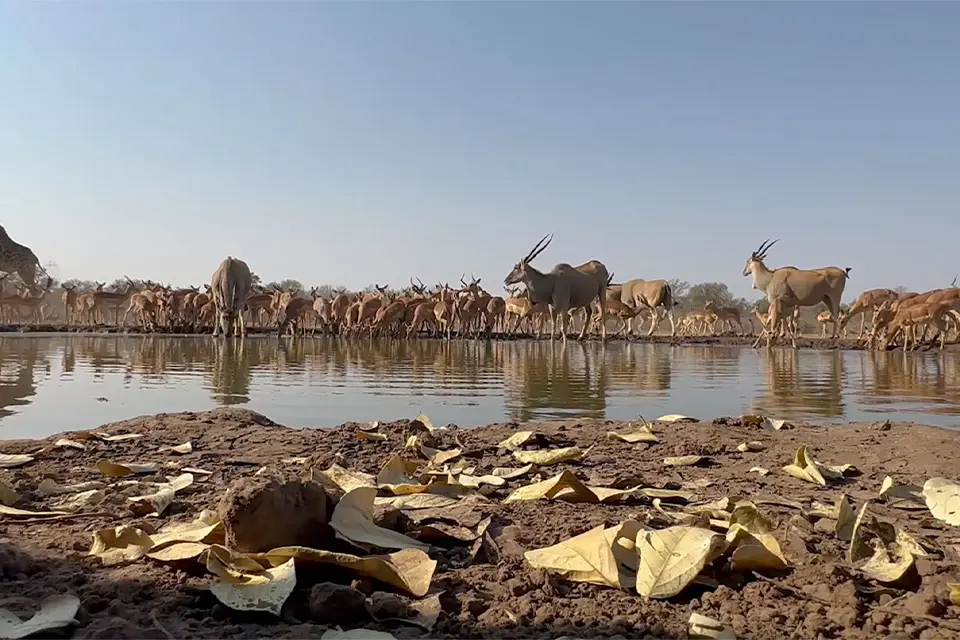
Thamo Telele offers bush immersion without leaving Maun's orbit. Nine Meru-style tents on raised wooden platforms, plus two chalets, are set on a private game reserve where giraffe, zebra and eland move freely. The lodge's connection to the Giraffe Conservation Foundation shapes its signature experience: a waterhole encounter at sundown, with giraffes gathering as the light drops, that guests consistently describe as unexpectedly moving. Horseback trails, self-guided walking paths and wide-tyre cycling explore a predator-free reserve. The feel is warm and personal, more homestead than lodge.
The Sedia Hotel is the closest of the three to the airport. Built in sympathy with its riverine woodland setting, it sustains a rich community of resident bird species year-round, making it a natural choice for birders. A large pool shaded by a jacaranda tree is the social heart of the property, which also offers a restaurant, bar, spa, children's playground and airport shuttle. It suits those who want comfortable, amenity-rich accommodation close to Maun's town centre.
Trusted by thousands of ecstatic travellers
✔️ 5-Star Trustpilot Rating ✔️ Condé Nast Travel Specialist Award Winner
✔️ Accredited by SATSA ✔️ 5,000+ Exceptional Safaris Since 1991
Why choose Africa Geographic to plan your safari?

"What an experience. I worked with...Africa Geographic...helped plan our trip to meet our wishes. The trip was 14 days. Lots of hours on planes and jeeps but well worth it...then flew to Maun and was picked up by Okavango Origins. Stayed 3 nights...All travel was perfectly curated and fun."

"Africa Geographic handled two large high-end safaris for us in Botswana in June 2026...Everything ran very smoothly. They are also highly responsive in real time during the trip answering questions and updating bookings. I would highly recommend booking a safari with them - you are in safe and experienced hands."

"AG arranged the perfect trip to Botswana for my family. The consultant really listened to our brief and arranged an awesome itinerary within our budget...Organising the trip was also easy with good communication and support. I have travelled a lot and this would be one of my greatest travel experiences..."
Wish you were here?
Frequently asked questions
Maun is Botswana's primary safari hub, sitting on the Thamalakane River at the southern edge of the Okavango Delta. It serves as the main gateway to the Delta and the principal base for reaching Moremi, Chobe, the Central Kalahari and the Makgadikgadi Pans.
Direct flights to Maun International Airport operate from Johannesburg (approximately 1 hour 40 minutes), Cape Town (approximately 2 hours 30 minutes) and Addis Ababa. Johannesburg is the primary hub for travellers arriving from Europe, North America and beyond.
Recently modernised, Maun International Airport handles both scheduled commercial flights and a large volume of light aircraft traffic serving Northern Botswana. It accommodates aircraft up to Boeing 737 size and has separate international and domestic terminals. Most Okavango Delta lodge airstrips are reachable in 20 to 30 minutes by light aircraft.
One to two nights suits most travellers: enough time to recover from long-haul travel, adjust to the time zone, explore the town and connect to your safari destination. Those wanting to experience Maun's activities in depth may choose to stay a little longer.
June to October offers dry conditions, cool mornings and excellent wildlife viewing in the nearby Delta and Moremi, with the annual Okavango floods typically peaking in June and July. May is a good-value shoulder month. November to April brings lush landscapes, outstanding birding and lower accommodation rates.
Most camps and lodges in the Okavango Delta are reached by scheduled and charter light-aircraft flights from Maun Airport, a 20- to 30-minute journey depending on the airstrip. Private and shared charters are available, and most lodges arrange transfers as part of your booking. Helicopter transfers are also possible.
From Maun, charter flights reach the Okavango Delta and Moremi Game Reserve in under an hour, Chobe National Park in approximately 60 to 90 minutes, and the Central Kalahari Game Reserve and Makgadikgadi Pans in around 30 to 45 minutes.
Botswana is one of Africa's safest safari destinations, and Maun is welcoming and secure. Standard urban precautions apply: avoid displaying valuables and walking alone at night. Near the Thamalakane River, hippos and crocodiles are present, and driving after dark is inadvisable because wildlife may be on the roads.
Yes. Maun lies within a malarial zone and antimalarial medication is strongly recommended. Consult your doctor well before travel to discuss the most appropriate prophylaxis. Use insect repellent, wear long sleeves at dawn and dusk, and sleep under a mosquito net where one is provided.
Scenic flights over the Okavango Delta, river trips on the Thamalakane, the giraffe encounter at Thamo Telele, a visit to Elephant Havens sanctuary, the Nhabe Museum, Hambukushu and Sexaxa cultural village visits, the Okavango Craft Brewery and guided horseback riding on a private reserve are all available.
Yes. Several operators offer fixed-wing and helicopter flights from Maun Airport, ranging from 30 minutes to half a day. It is one of the most highly recommended experiences associated with a Maun stay and is best booked in advance during peak season.
November to April is lush, warm and considerably less busy than peak season. Birdwatching is at its best, with migratory species arriving in numbers, accommodation rates are lower and the landscapes are vivid. Wildlife viewing in the Delta and Moremi is less predictable as animals disperse into thicker vegetation.
The local currency is the Botswana pula (BWP). US dollars, South African rand, British pounds and euros are widely accepted at lodges and many businesses. Credit cards including Mastercard and Visa are accepted at most properties, and ATMs are available in Maun for local currency.
Maun hotel prices during the low season start at US$100 per room at Sedia Hotel, US$180 per person per night at Thamalakane River Lodge and US$530 per person per night at Thamo Telele.
Click here to schedule a no-obligation call with one of our Safari Experts or fill in our 2-minute form with your questions. Our team of experts are here to help! Whether you’re curious about the best time to travel, want to hear first-hand about an experience or need help planning your safari.
Explore more African destinations
Start planning your dream safari
Our travel experts will craft a no-obligation itinerary just for you. We have crafted over 5,000 safaris since 1991. Your personal details are protected; we only use this information to contact you.
Why book your safari with us?

Deep Experience & Knowledge
Handcrafted experiential safaris since 1991.
Travel in Africa is about knowing when and where to go, and with whom. A few weeks too early/late or a few kilometres off course, and you could miss the greatest show on Earth. And wouldn’t that be a pity?

Trust & Safety

Make A Difference
We donate a portion of the revenue from every safari sold to carefully selected conservation projects that make a significant difference at ground level.
YOUR safari choice does make a difference - thank you!