

Tailor-made safaris. Since 1991



Can a private safari work for a corporate retreat or incentive trip?
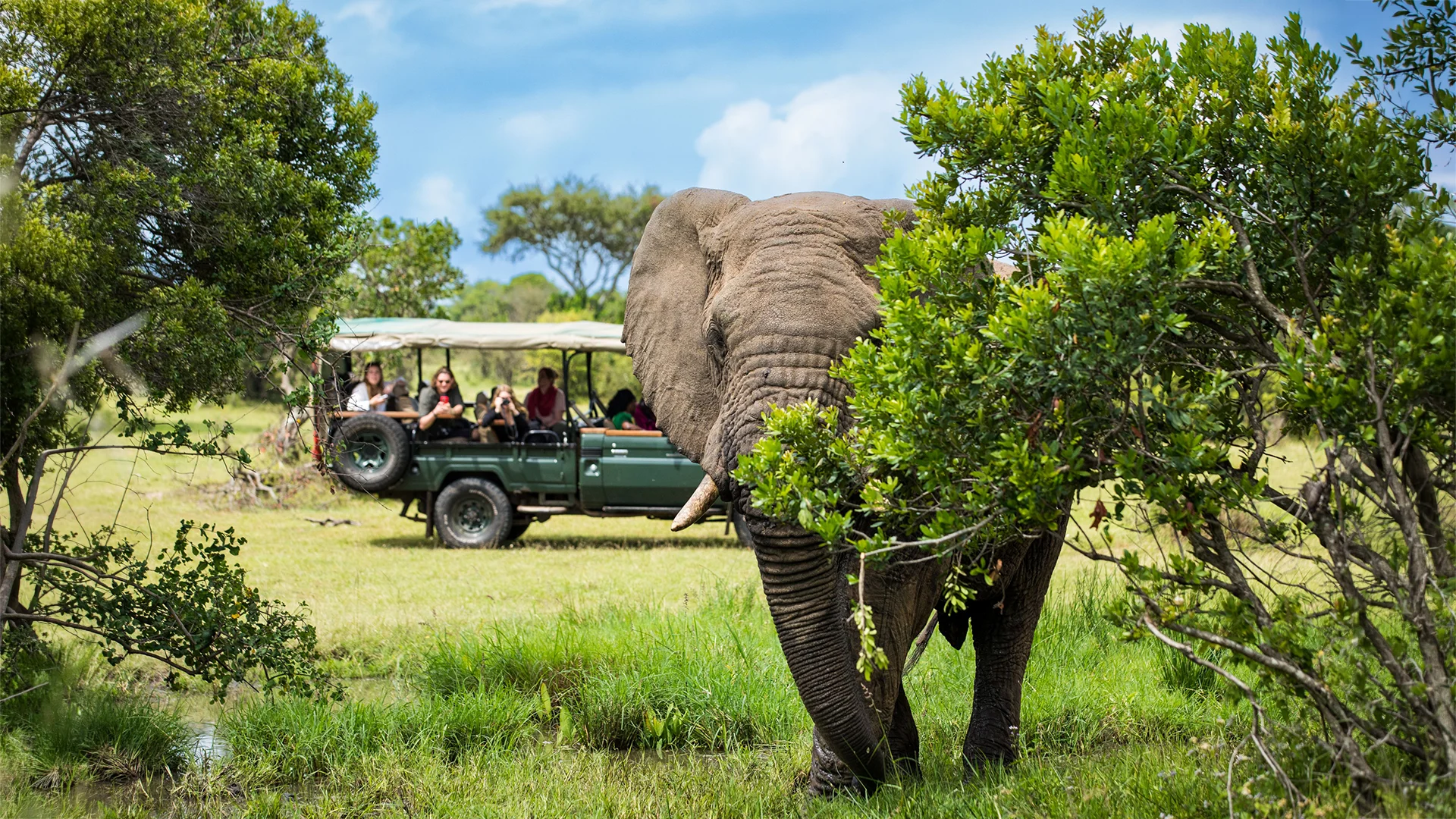
The vehicle pauses on a rise above the Mara River. That morning, the twelve passengers were debating quarterly figures in the lodge lounge; now, they are silent as wildebeest gather at the water’s edge. For a few minutes, job titles and meeting agendas fall away. Everyone is simply watching the same extraordinary moment unfold.
This is what well-planned private group safaris can do. It takes teams beyond the familiar rhythms of a conference room and gives them something immediate to share – whether the purpose is strategic thinking, stronger relationships or recognition for exceptional work. The lodge matters as much as the wildlife: it must suit the group’s objectives, offer privacy and adaptable meeting space, and provide connectivity when it is genuinely needed. Vehicle and guide numbers depend on the size of the group, while sought-after exclusive-use properties may need to be secured 12–18 months ahead for peak-season travel.
Corporate safaris at a glance
Best group size: 6 to 40 travellers, with vehicles split accordingly
Lead time: 12 to 18 months, longer for peak-season exclusive use
Format: a private lodge or exclusive-use takeover, not a shared safari
Daily structure: game drives plus scheduled meeting or call time
Best for: leadership retreats, incentive rewards, donor and client trips
A corporate safari follows the same private-group model as a family or friends trip, but the lodge, schedule and activities are chosen to support meetings and team goals alongside wildlife viewing.
Corporate safari vs leisure group safari
Aspect | Corporate or incentive safari | Leisure private group safari |
Purpose | Reward, team-building or client hosting | Family time, celebration or shared holiday |
Lead time | 12-18 months; earlier for large peak-season groups | 12-18 months depending on season and size |
Property choice | Prioritises connectivity, common areas and exclusivity | Prioritises wildlife area, activities and family fit |
Daily structure | Game drives plus scheduled work or call time | Game drives with no fixed work commitments |
Three things we love about corporate safaris
The wildlife may be the initial draw, but the value of a private group safari extends well beyond the reward of an exceptional trip.
Hierarchy begins to soften. A director and a junior analyst share the same vehicle, follow the same tracks and fall silent at the same sighting. The bush creates a common experience that no seating plan or organised exercise can manufacture.
The group sets its own rhythm. An exclusive-use lodge removes the distractions of other guests, allowing meetings, meals, wildlife drives and downtime to unfold around the team’s priorities.
Conservation adds a deeper purpose. Time with rangers, researchers or community partners can give the trip meaning beyond incentive travel, leaving the group with a shared connection to something larger than the business itself.
Why the safari rhythm works for teams
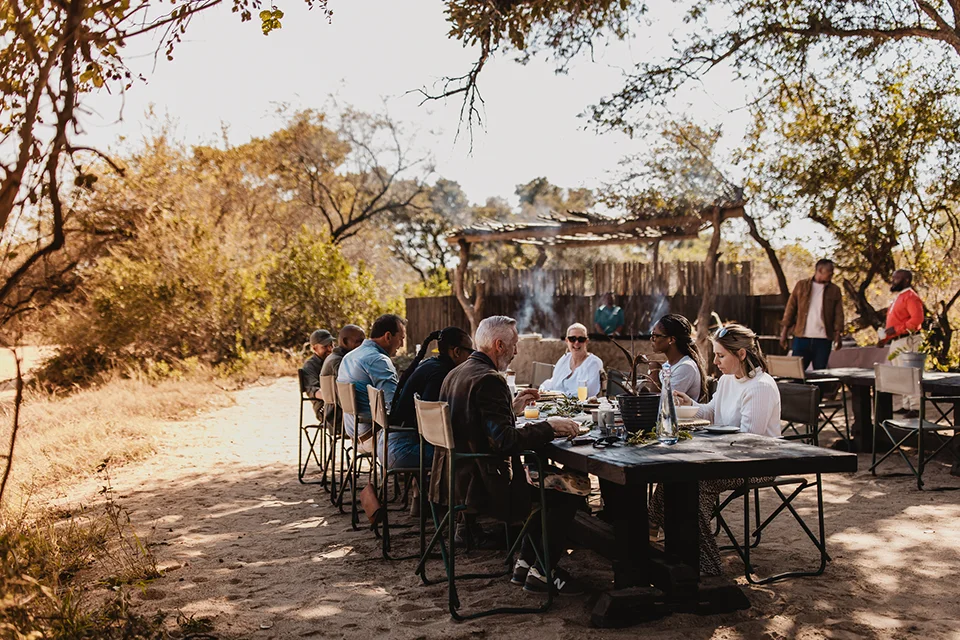
The day creates natural breathing room
A corporate safari does not need to reproduce a full office schedule in the bush. Early drives, shared meals and quiet midday hours create a useful rhythm: focused work when the group is fresh, time apart to think, and unhurried conversation later in the day.
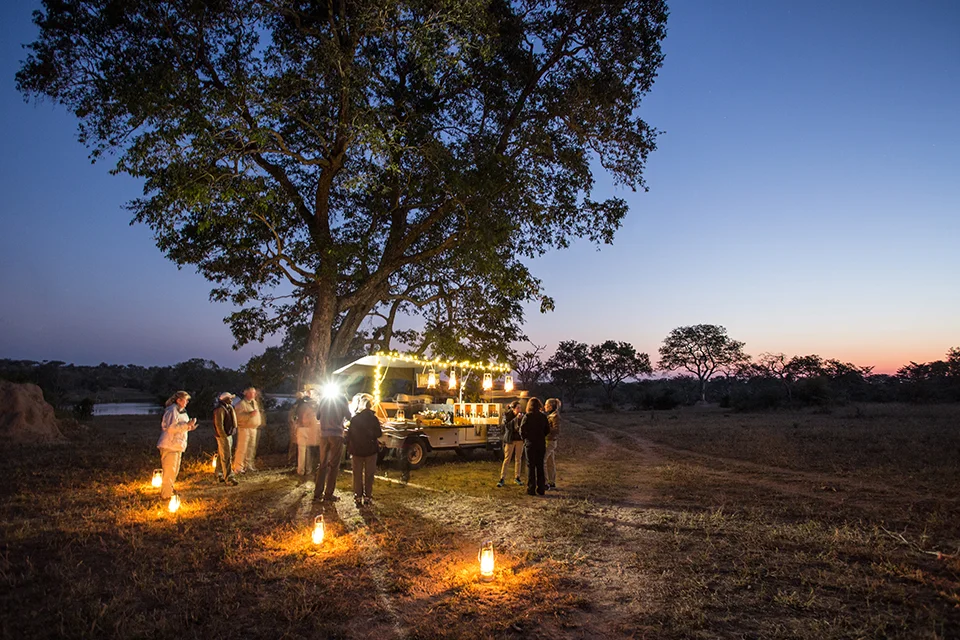
Conversations continue beyond the meeting
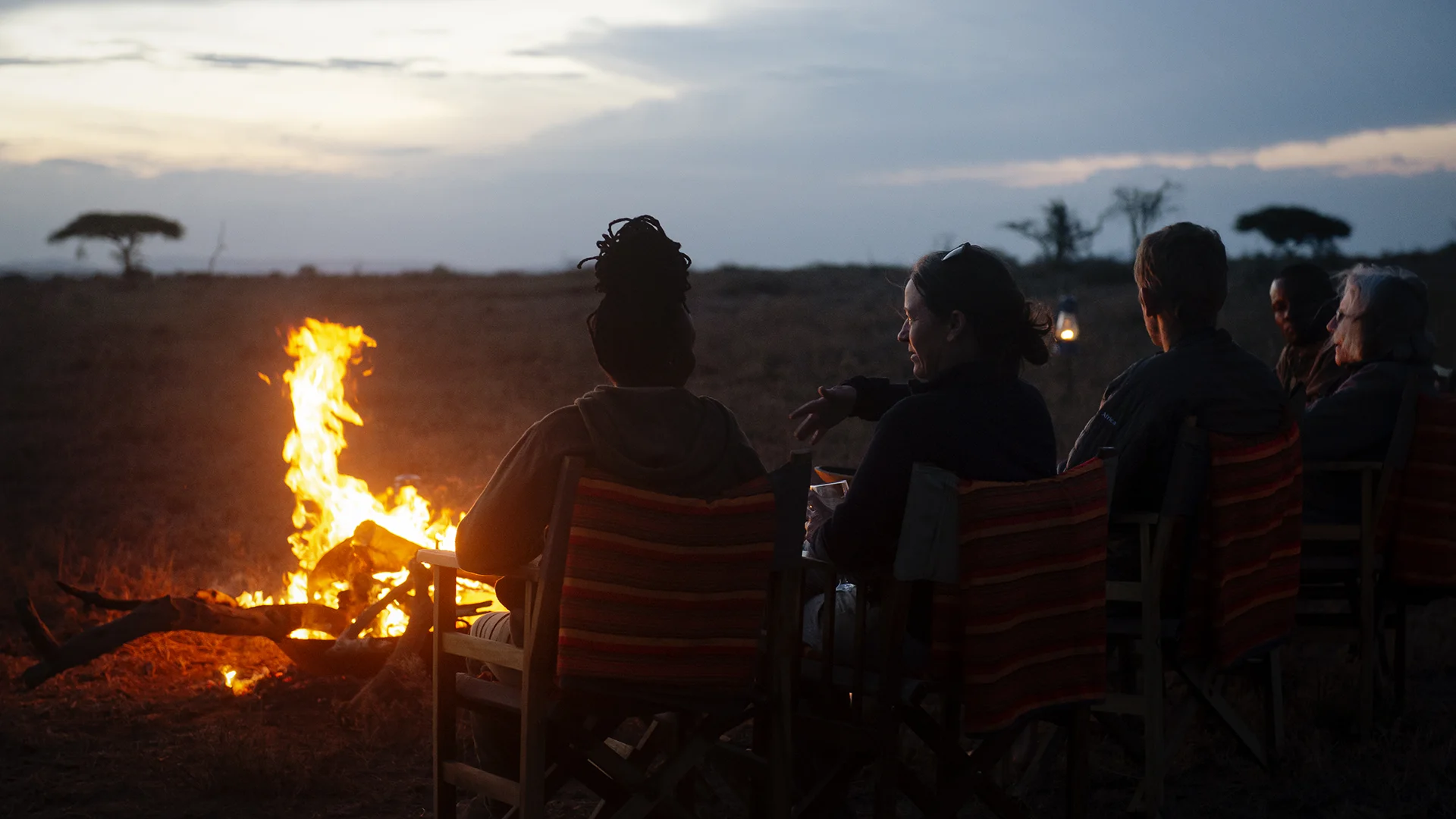
Some of the most useful exchanges happen away from the formal session – over coffee before a drive, during a sundowner stop or around the fire after dinner. The experience gives colleagues time to speak across roles and departments without another agenda item dictating the conversation.
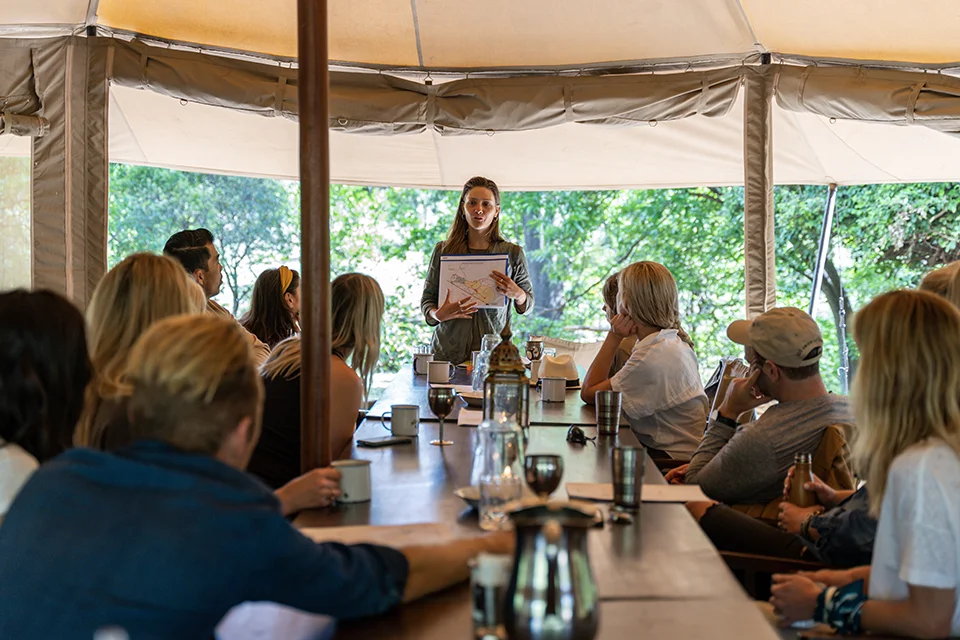
Shared experiences give the group a new reference point
A remarkable sighting, a conservation discussion or a morning spent tracking with a guide becomes part of the team’s shared history. Long after the retreat, these moments remain common ground – often more memorable than anything discussed around a conference table.
Planning a corporate safari around the group
Group size shapes the experience
A small leadership team can often travel in one vehicle with the same guide throughout, creating an intimate experience and allowing the group to settle into an easy rhythm. As numbers increase, additional vehicles and guides become necessary, while the choice of suitable exclusive-use lodges begins to narrow.
The aim is not to keep everyone together at all times. Multiple vehicles can give delegates different options – from a longer drive to a later start – while still bringing the whole group together for meetings, meals and the day’s most important moments.
Let the safari set the rhythm
The most effective itineraries work with the natural pattern of a safari day. An early wildlife drive can be followed by breakfast and a focused morning session, with time to rest, take calls or join another activity before the group meets again later in the day.
This creates space for productive work without making the wildlife feel like an interruption to the agenda. It also leaves room for the informal conversations that often prove as valuable as the scheduled sessions.
Choose the lodge as carefully as the destination
A beautiful setting is only part of the decision. The lodge must be able to accommodate the whole group comfortably, provide a suitable space for presentations or shared meals, and offer enough flexibility for calls, smaller discussions and downtime.
Before booking, confirm:
Whether the entire property can be reserved for the group
How many guests can be accommodated without splitting between lodges
Whether one space can seat everyone together
What connectivity is available and when
Whether additional vehicles and private guiding can be arranged
Whether the lodge team has experience coordinating corporate groups
Budget and book around fixed dates
Corporate safari costs are usually calculated per person per night, with accommodation, meals, wildlife activities, guiding, transfers and park fees commonly included. A per-person figure makes it easier to compare properties and adjust the total as the final headcount becomes clear.
Fixed travel dates require earlier planning than a flexible leisure safari. Exclusive-use lodges during the July–October dry season or the Great Migration months in Kenya and Tanzania may need to be secured 12–18 months ahead.
Wish you were here?
Give the retreat a purpose beyond reward
Meet the people working in conservation
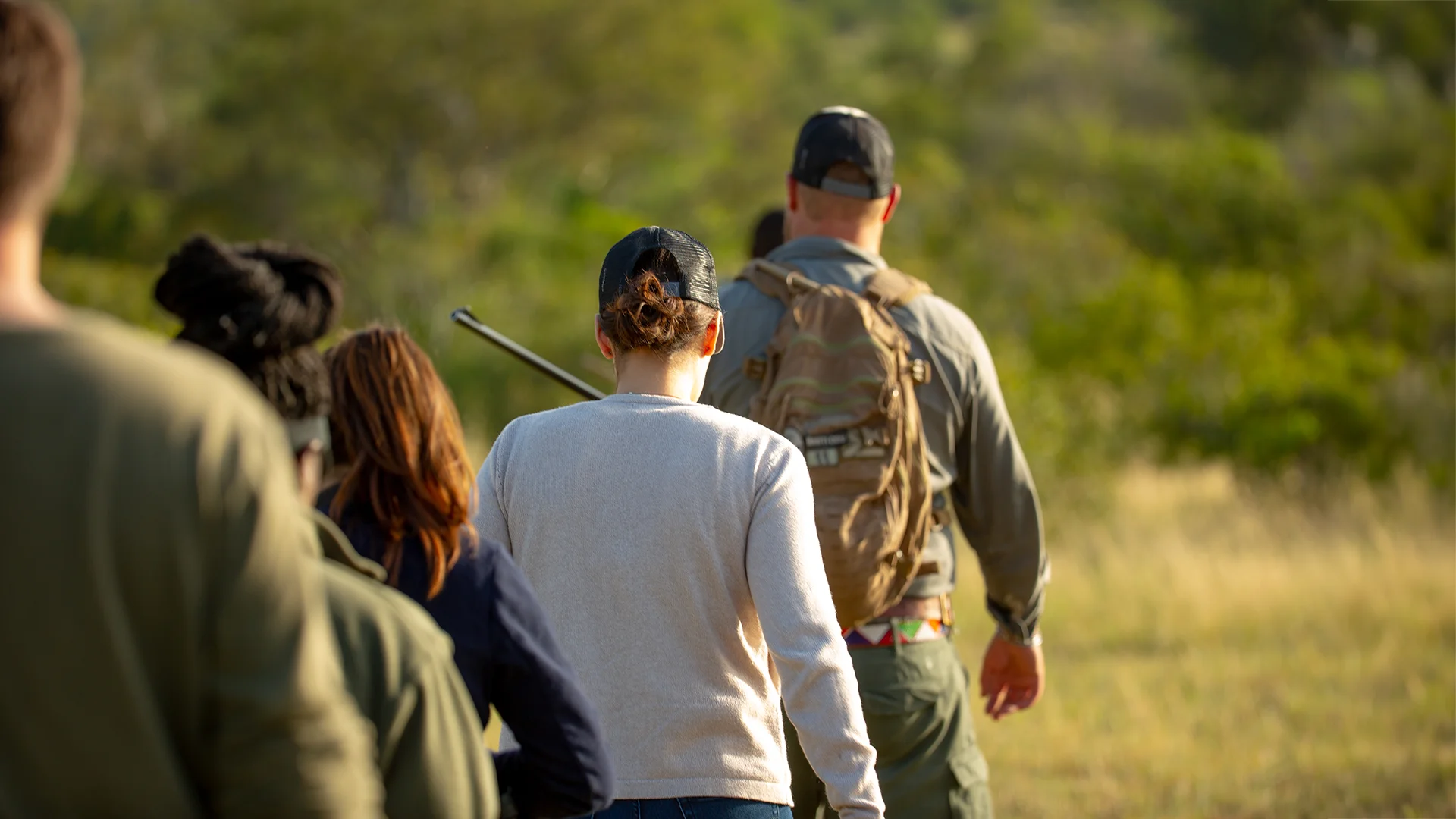
Time with rangers, researchers or conservation teams can turn an abstract commitment into something the group understands firsthand. This might involve learning how patrols are coordinated, tracking with a guide or discussing the practical challenges of protecting a wildlife area.
The value lies in access and context rather than staging a team-building exercise. Colleagues come away with a shared experience rooted in real work and a clearer understanding of the landscape they have been exploring.
Connect the group with a credible project
Where appropriate, the itinerary may include a visit to a conservation or community initiative supported by the lodge or conservancy. The strongest experiences are carefully arranged, transparent about their impact and designed around the needs of the project rather than the expectations of visitors.
Every safari booked through Africa Geographic also contributes to carefully selected conservation projects working on the ground, giving the trip a positive outcome before any additional activity is added.
Frequently asked questions
Yes. A private safari works well as a corporate retreat when the lodge offers exclusive use, a space large enough for meetings, and scheduled connectivity, with game drives and conservation activities providing the shared experiences a hotel conference room cannot replicate.
Most corporate safaris run for six to forty travellers. Groups above twelve usually need two or more vehicles and a full lodge takeover, while larger conferences of thirty or more may require a lodge complex or two linked properties.
Constant high-speed wifi is uncommon in remote bush lodges. Most properties instead offer scheduled satellite connectivity windows or a central wifi area, so confirm connectivity arrangements with our safari experts before booking if calls are essential to your agenda.
Peak-season exclusive-use bookings need 12 to 18 months of lead time, particularly during the July to October dry season. Outside peak season, 6 to 9 months is usually enough to secure a suitable property for your group size.
Corporate safaris are quoted per person per night, covering accommodation, meals, game drives, guiding, transfers and park fees. Pricing scales with group size, lodge exclusivity and season, so ask our safari experts for a per-head quote against your attendee numbers.
A corporate safari prioritises a working venue, meaning connectivity, meeting space and exclusivity, ahead of wildlife area. A leisure group safari prioritises the destination itself. Both follow the same private-group booking model, but corporate trips typically need earlier planning.
Yes. A ranger day, anti-poaching briefing or donor project visit gives a group a shared task with a genuine outcome, often working better as team-building than a facilitated exercise, while connecting the trip to a cause bigger than the office.
Groups of six to ten typically share one vehicle and one guide. Above twelve, expect two or more vehicles, and larger conferences may need a private guide assigned to each smaller breakout group throughout the trip.
Kenya's Maasai Mara conservancies, Botswana's Okavango Delta and South Africa's Sabi Sands all offer exclusive-use lodges with strong infrastructure. Destination choice should follow group size, connectivity needs and whether delegates are travelling from multiple countries.
Start planning your dream safari
Our travel experts will craft a no-obligation itinerary just for you. We have crafted over 5,000 safaris since 1991. Your personal details are protected; we only use this information to contact you.
Why book your safari with us?

Deep Experience & Knowledge
Handcrafted experiential safaris since 1991.
Travel in Africa is about knowing when and where to go, and with whom. A few weeks too early/late or a few kilometres off course, and you could miss the greatest show on Earth. And wouldn’t that be a pity?

Trust & Safety

Make A Difference
We donate a portion of the revenue from every safari sold to carefully selected conservation projects that make a significant difference at ground level.
YOUR safari choice does make a difference - thank you!