
Tailor-made safaris. Since 1991



Trust us to find you the rarest animals, the most spectacular wildlife events, the remotest landscapes and deeply meaningful cultural encounters!
When to visit Victoria Falls (and why)
Like many of the magnificent destinations in Africa, Victoria Falls has no single best month. High water, roughly February to July and peaking in April, delivers the loudest, most dramatic curtain of falling water, but often hides the rock face behind spray and closes Devil's Pool and rafting. Low water, roughly August to January and driest in October and November, clears the view and opens the edge-of-the-falls activities, though the waterfall itself is far less thunderous. Choose your month by the experience you want, not the calendar.
High water or low water - the real choice
High water (Feb-Jul) means thunder and spray, but a hidden rock face
Low water (Aug-Jan) means clear views and open edge-of-falls activities
Devil's Pool and rafting only run once the river drops low enough
Zimbabwe holds water year-round; Zambia's side can run dry by November
Full-moon nights bring the rare lunar rainbow, strongest in high water
There's no single best month for Victoria Falls. The river's flood and its lowest ebb bring two entirely different experiences, and each one closes off part of what the other offers.
3 things we love about Victoria Falls
Beyond the obvious spectacle, here’s what keeps Victoria Falls interesting long after that very first photograph from the bridge has faded away.
A UNESCO World Heritage site shared by two nations, Mosi-oa-Tunya, the smoke that thunders, spans the Zambezi River border between Zambia and Zimbabwe.
One of the very few places on Earth with a reliable lunar rainbow, visible only on the three nights surrounding each month's full moon, weather permitting.
A single KAZA UniVisa lets you cross the bridge between both sides freely for 30 days, so you never have to choose just one view of the mighty Falls.
Our favourite Victoria Falls safari ideas
Signature experiences, by water level
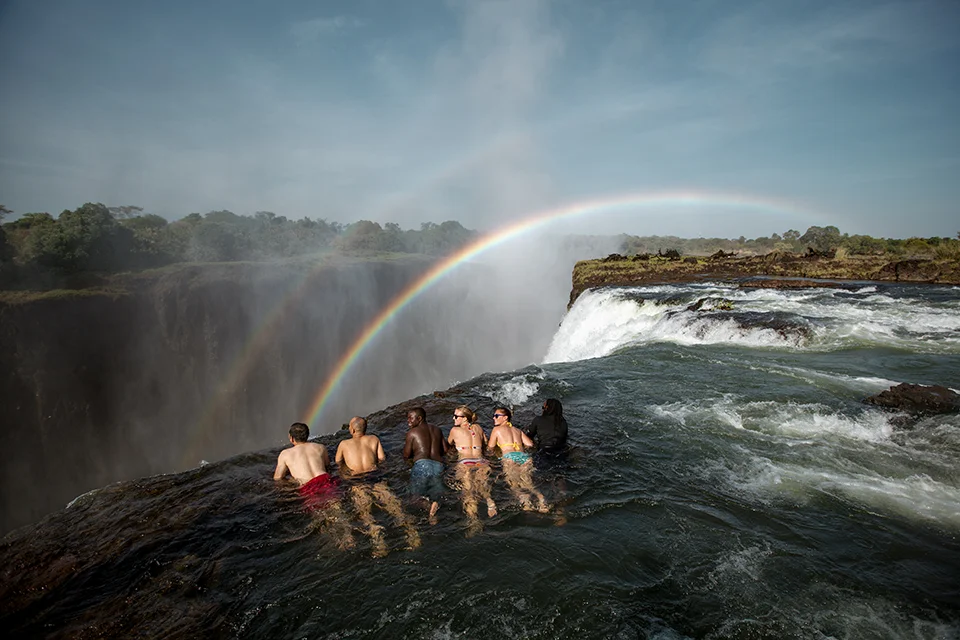
Devil's Pool and Livingstone Island
Perched at the lip of the Falls on the Zambian side, Devil's Pool is only accessible when the river drops low enough to make it safe, roughly mid-August to late December. Livingstone Island, the only way in, is accessible for slightly longer, either side of that window. Exact opening and closing dates shift each year slightly with upstream rainfall, so confirm current access with our safari experts closer to your travel dates.
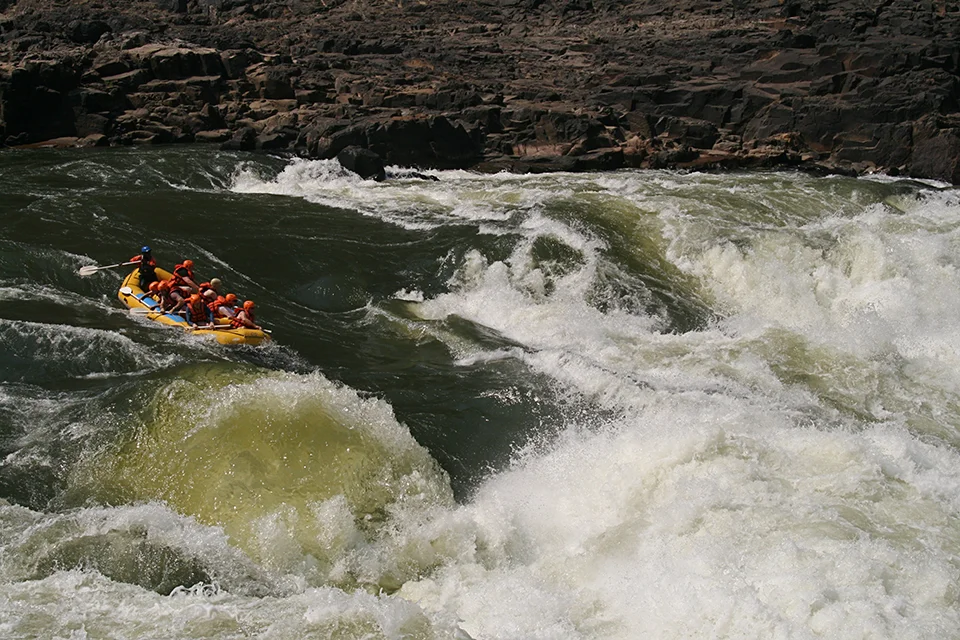
Grade 5 white-water rafting
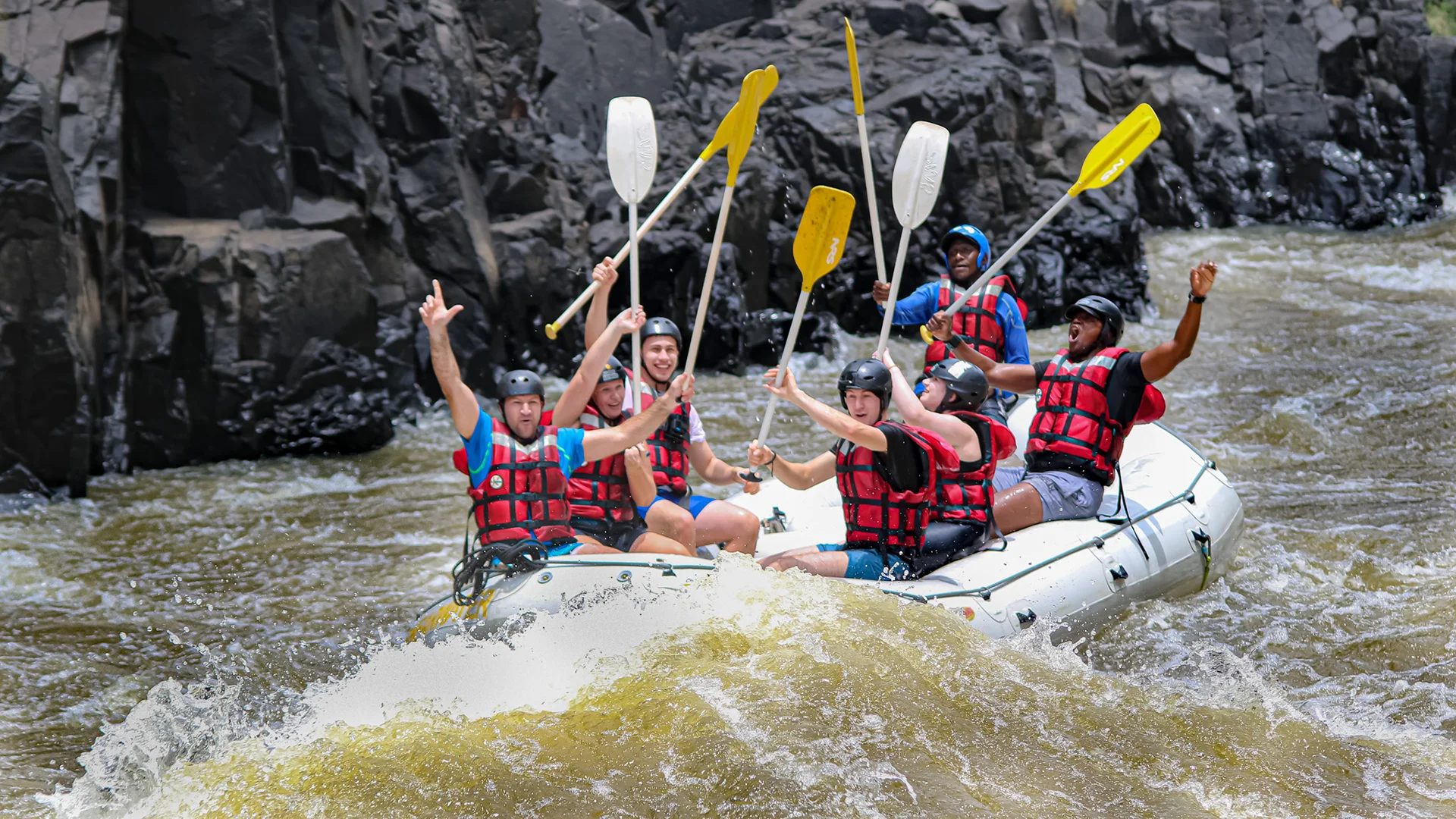
The Zambezi's rapids below the Falls run their full course, roughly Rapid 1 to Rapid 19, only in low water. September and October give the most technical grade 5 white water anywhere in Africa; by April the river is often too high and dangerous to run at all.
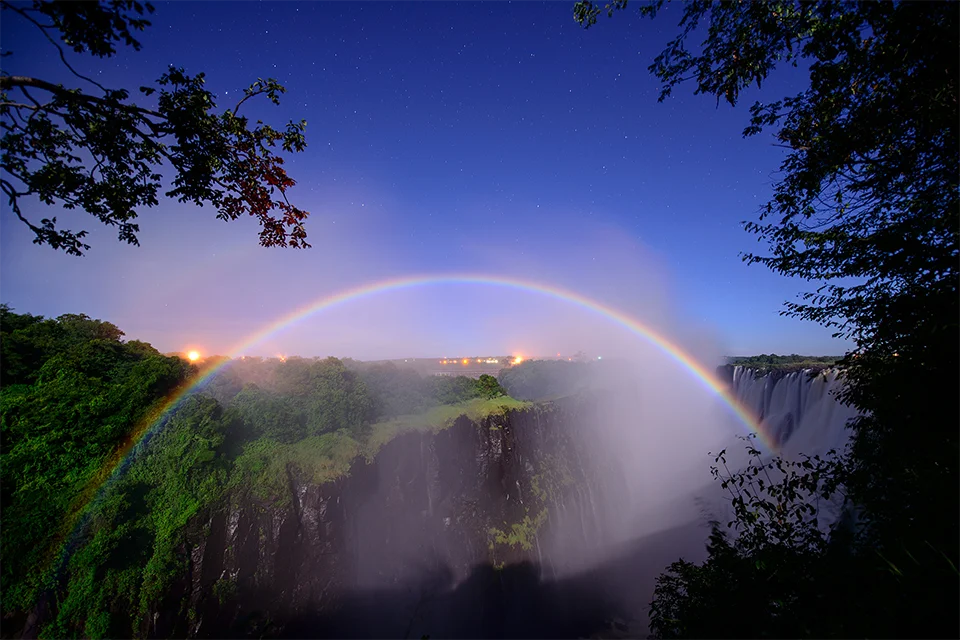
The lunar rainbow
On the three nights around each full moon, moonlight bends through the Falls' spray into a rare night-time rainbow, best photographed on a long exposure. It's strongest in high water, from around February to August, when there's more spray to catch the light.
High water season - February to July
What you'll see and hear
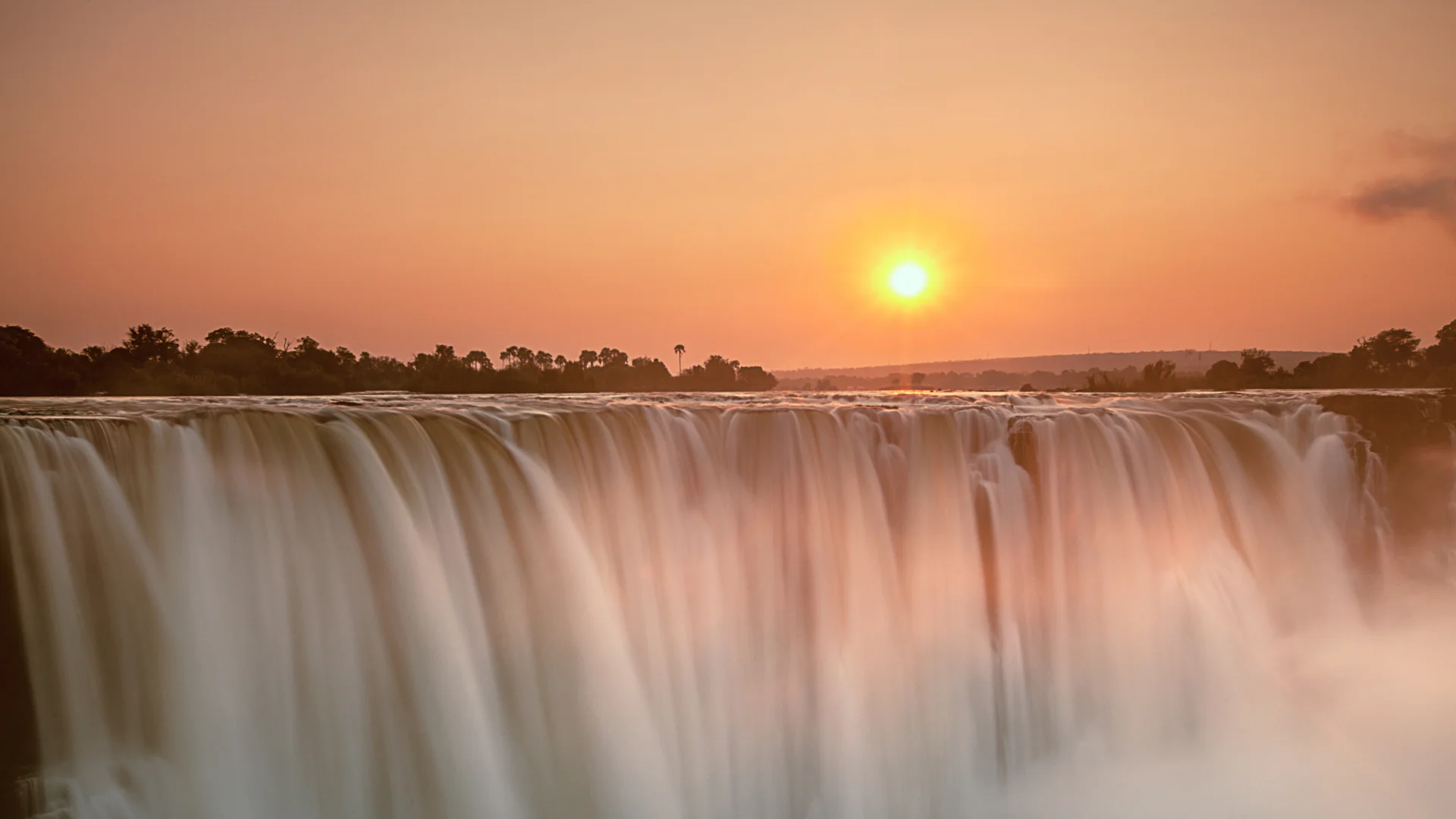
From late February, the Zambezi swells with rain that fell months earlier, hundreds of kilometres upstream, and the Falls build toward their loudest, most physical spectacle. By April, up to 500 million litres of water a minute crash over the 1,708-metre lip, throwing spray more than 400 metres into the air and visible from up to 50km away. The ground vibrates, and raincoats are compulsory on the walking trails.
What's off-limits
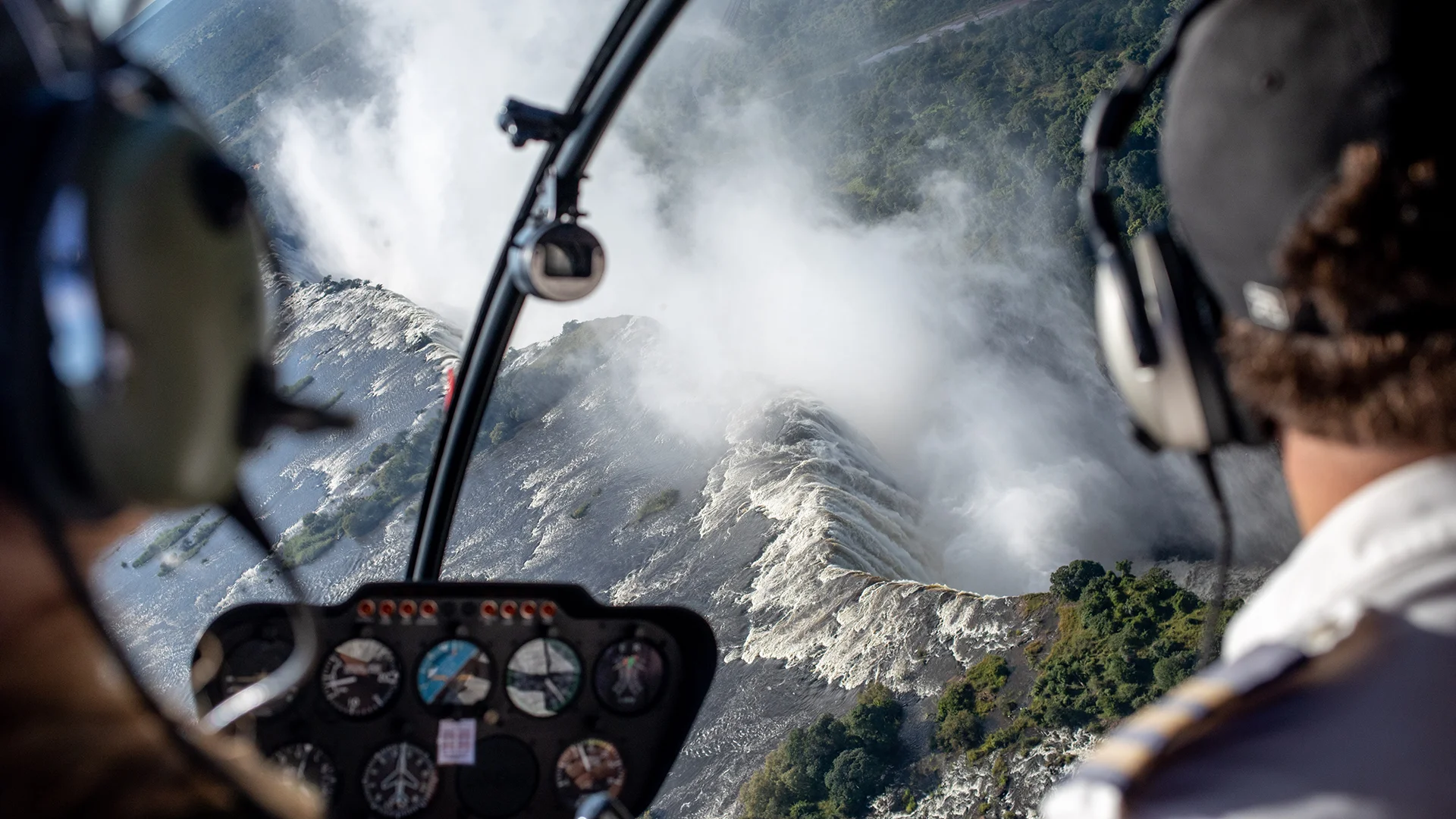
That same volume closes down activities that need calmer water. Devil's Pool and Livingstone Island shut from around mid-January to mid-July (with Devil's Pool only reliably opening again in mid-August), and white-water rafting usually stops entirely through April into May, reopening as a shortened run once levels drop. Ground-level views can also be obscured by spray for weeks, so a helicopter or microlight flight becomes the most reliable way to see the whole 1.7km curtain at once.
How the months differ
February: the rains upstream are still falling, and the water level starts its steady climb toward full flood
March: the spray thickens fast, and some viewpoints along the trail are already misted out
April: peak flow arrives, the roar is at its loudest, and ground-level views are often fully obscured
May: flow stays high, but visibility begins to improve noticeably as levels start to ease off
June: the curtain of mist runs full and clear at once, with cooler, drier air settling in for the season
July: water levels drop steadily as peak safari season begins, and the Falls remain genuinely spectacular
Low water season - August to January
Clarity and the exposed rock face
By August, the flood has passed, and the Zambezi River water levels drop fast. The spray thins, the roar softens, and for the first time you can trace the rock face and the depth of the First Gorge in full. On the Zambian side, the Eastern Cataract can shrink to a scatter of channels and, by October or November, run almost dry over bare black basalt, a genuinely different, starker landscape from April's thundering curtain.
Where the adrenaline lives
This is also when the Falls turn adventurous. Livingstone Island opens mid-July, and Devil's Pool opens mid-August; both are most reliable for a visit from September to November. White-water rafting runs its full course of roughly 19 rapids from the Boiling Pot, with September and October offering the most technical grade 5 water of the year. Bungee jumping, the gorge swing and zip-lining run year-round, set over the gorge below the Falls, rather than the Falls itself.
How the months differ
August: the river clears fast, Devil's Pool starts opening, and peak visitor season gets underway
September: the most technical rafting conditions of the year, with the rock face now fully exposed
October: the hottest month, with the driest views and consistently superb wildlife viewing nearby
November: the lowest water of the year, the Zambian side largely dry, and the first rains arriving
December: green season gets underway, and the tail end of low flow, hot and humid weather
January: Noticeably fewer crowds around, and Devil's Pool typically closes again by the month's end
Wish you were here?
Victoria Falls by season at a glance
Period | Water level | What you'll see | Devil's Pool & rafting |
Feb-Mar | Rising fast | Water spray building, views starting to blur | Closed |
Apr-May | Peak to high | Maximum roar, spray often hides the cliff face | Closed, reopening late May |
Jun-Jul | High, receding | Full curtain of spray, improving clarity | Reopening gradually |
Aug-Sep | Low | Rock face exposed, spray reduced | Open, best rafting begins |
Oct-Nov | Lowest | Zambian side reduced to a trickle | Open, peak rafting |
Dec-Jan | Low, rising late | Reawakening by late December | Closing through January |
Choosing sides through the seasons
It’s hard to choose which side of the Victoria Falls is best. Here’s a quick guide to help you choose.
Zimbabwe's year-round spray curtain
Zimbabwe holds roughly two-thirds of the Falls' total width and keeps water flowing across the Main Falls and Devil's Cataract even at the driest point of the year. It's the more reliable panorama whatever month you travel, and the better base if you want one clear, consistent view of the whole curtain of spray rather than a seasonal gamble on the water level and what it might be doing that week.
Zambia's seasonal intimacy
Zambia sits closer to the action: the Knife-Edge Bridge, the Boiling Pot trail, and the only access points for Devil's Pool and Livingstone Island. It's also the more seasonal side of the two, since the Eastern Cataract can run close to dry by November, so what you actually see here depends heavily on when you arrive. Crossing the bridge on a single multi-entry KAZA visa is the easiest way to see both sides.
How the two sides compare
Zimbabwe: broader panorama, water flows year-round, easier ground access
Zambia: closer, wetter, wilder feel, access to Devil's Pool
High water: Zimbabwe's viewpoints reliably show off the full curtain of spray at its best
Low water: Zambia becomes the activity side, its falls edge exposed
Both sides: a single KAZA UniVisa covers multiple border crossings across 30 days
Photographers: Zambia's dry-season rock face is the more graphic shot
Frequently asked questions
There's no single best month, because Victoria Falls behaves like two different attractions depending on water level. High water, roughly February to July and peaking in April, gives the loudest, most dramatic curtain of falling water, though spray can obscure ground-level views. Low water, roughly August to January and driest around October and November, clears the rock face and opens Devil's Pool and rafting. Choose based on the experience you want rather than a single calendar date.
Neither side is simply better, they show you different things. We unpack this in full in this article, but in essence: Zimbabwe holds around two-thirds of the Falls' width and keeps water flowing year-round, making it the more reliable panoramic view whatever month you travel. Zambia sits closer to the action, with access to the Knife-Edge Bridge, Devil's Pool and the Boiling Pot, but its Eastern Cataract can run close to dry by November. A multi-entry KAZA UniVisa lets you see both sides on one trip.
They describe the Zambezi River's flow, which follows the rainy season upstream rather than local weather at the Falls themselves. High water, roughly February to July and peaking around April, brings maximum volume, spray and roar. Low water, roughly August to January and lowest around October and November, sees the flow drop to a fraction of its peak, exposing the rock face and opening activities that need calmer water, such as Devil's Pool and full-length rafting.
Devil's Pool, on the lip of the Falls on the Zambian side, is only accessible via Livingstone Island once the river has dropped low enough to be safe, typically from around mid-August to mid-January. It's usually closed entirely from mid-January to mid-June, when high water makes the pool too dangerous. September to November is the most reliable window, so confirm current access with our safari experts before booking a fixed date.
Low water gives the best rafting, typically from around August to December, when the river's roughly 19 rapids below the Falls are all runnable in full from the Boiling Pot. September and October offer the most technical grade 5 white water of the entire year. High water usually suspends rafting entirely through April and into May, and even before full closure, only a shortened, lower-rapid run further downstream is possible.
No, though it is a genuinely different experience. By October and November, the waterfall is at its least thunderous, and the Zambian side's Eastern Cataract can shrink right down to bare rock. In exchange, you get clear views of the gorge and rock face, open access to Devil's Pool, the best white-water rafting of the year, and quieter, hotter days with excellent wildlife viewing at nearby Hwange and Chobe.
October and November mark the lowest water of the year. Expect the hottest, driest weather, often 34 degrees Celsius or higher, a visually subdued waterfall with some sections reduced to a trickle on the Zambian side, and the year's best conditions for Devil's Pool and white-water rafting. It's also prime time for wildlife viewing in nearby Hwange and Chobe, as animals concentrate around the last remaining water sources.
Yes. On the three nights around each full moon, moonlight refracts through the Falls' spray into a pale, ghostly arc, best captured with a long-exposure camera on a tripod. Guided night tours run on both the Zambian and Zimbabwean sides. The effect is strongest in high water, roughly February to August, when there's more spray to catch the light, so a full moon between April and June gives the most dramatic version.
Victoria Falls sits on the Zambezi River, straddling the border between Zambia and Zimbabwe, and both countries offer full views and access. Botswana doesn't border the Falls itself, though Chobe National Park lies close enough that many travellers combine both in a single trip, often crossing via the Kazungula Bridge. Namibia's Caprivi Strip also lies nearby, but neither country offers a direct view of the Falls.
Start planning your dream safari
Our travel experts will craft a no-obligation itinerary just for you. We have crafted over 5,000 safaris since 1991. Your personal details are protected; we only use this information to contact you.
Why book your safari with us?

Deep Experience & Knowledge
Handcrafted experiential safaris since 1991.
Travel in Africa is about knowing when and where to go, and with whom. A few weeks too early/late or a few kilometres off course, and you could miss the greatest show on Earth. And wouldn’t that be a pity?

Trust & Safety

Make A Difference
We donate a portion of the revenue from every safari sold to carefully selected conservation projects that make a significant difference at ground level.
YOUR safari choice does make a difference - thank you!