

Tailor-made safaris. Since 1991



Trust us to find you the rarest animals, the most spectacular wildlife events, the remotest landscapes and deeply meaningful cultural encounters!
Trek golden monkeys in Volcanoes National Park
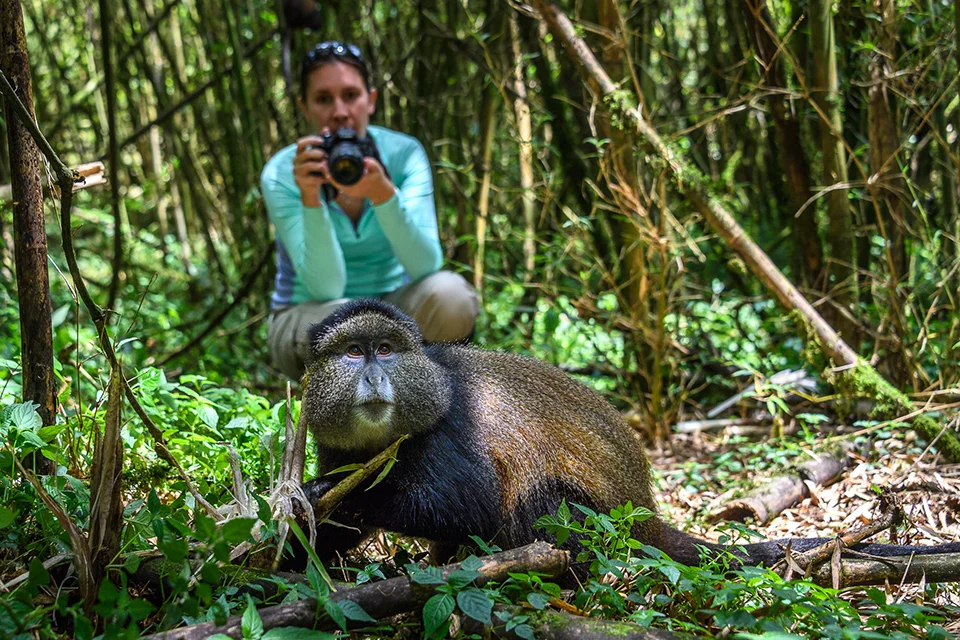
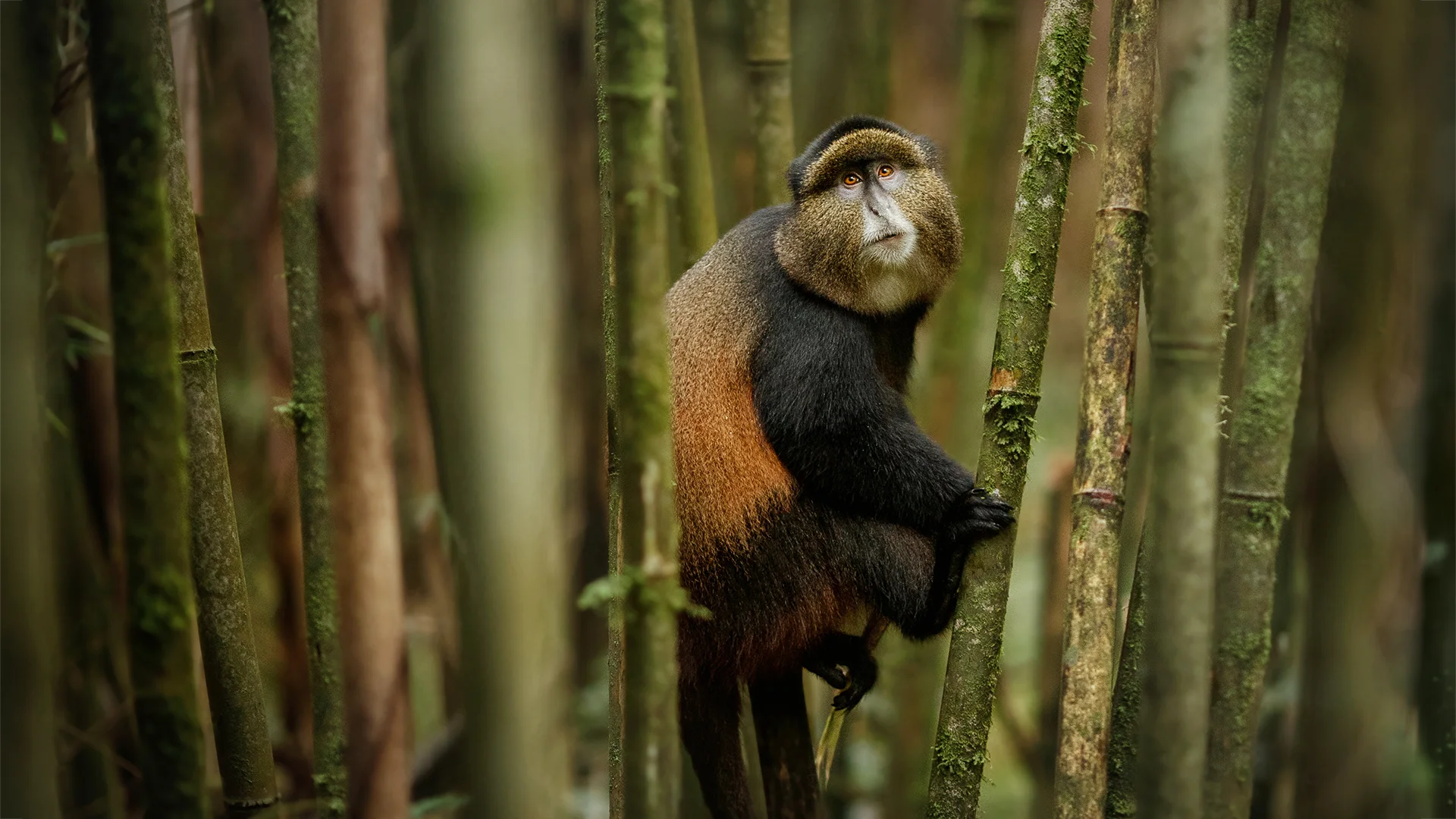
The golden monkey is one of Volcanoes National Park's most engaging residents, a small, sprightly primate found only in the high-altitude forests of the Virunga Mountains. Troops occupy the bamboo zones at the foot of Mount Sabyinyo, where guests spend an hour watching them leap between slender bamboo shoots and tumble across the forest floor. Their reddish-gold backs and black limbs make them instantly recognisable against the pale bamboo, and their constant, energetic movement sets a golden monkey encounter apart from the slower, more settled character of a gorilla trek.
Golden monkeys occur naturally only within the Virunga Mountains, a range shared by the Democratic Republic of Congo, Rwanda and Uganda, with a small additional population in Rwanda's Gishwati Forest. Volcanoes National Park is one of only two places in the world, alongside Uganda's Mgahinga Gorilla National Park, where visitors can trek to see them. The species is classified as Endangered, and two habituated troops live within Volcanoes National Park, one of which numbers more than 80 individuals.
A guided golden monkey trek is a one-hour encounter with one of these habituated troops. The minimum age is 12, three years lower than the gorilla trekking limit, and the trek covers relatively flat, easy terrain compared with most gorilla trekking routes. Most guests combine it with gorilla trekking on a separate day of the same Volcanoes National Park itinerary.
What golden monkey trekking involves
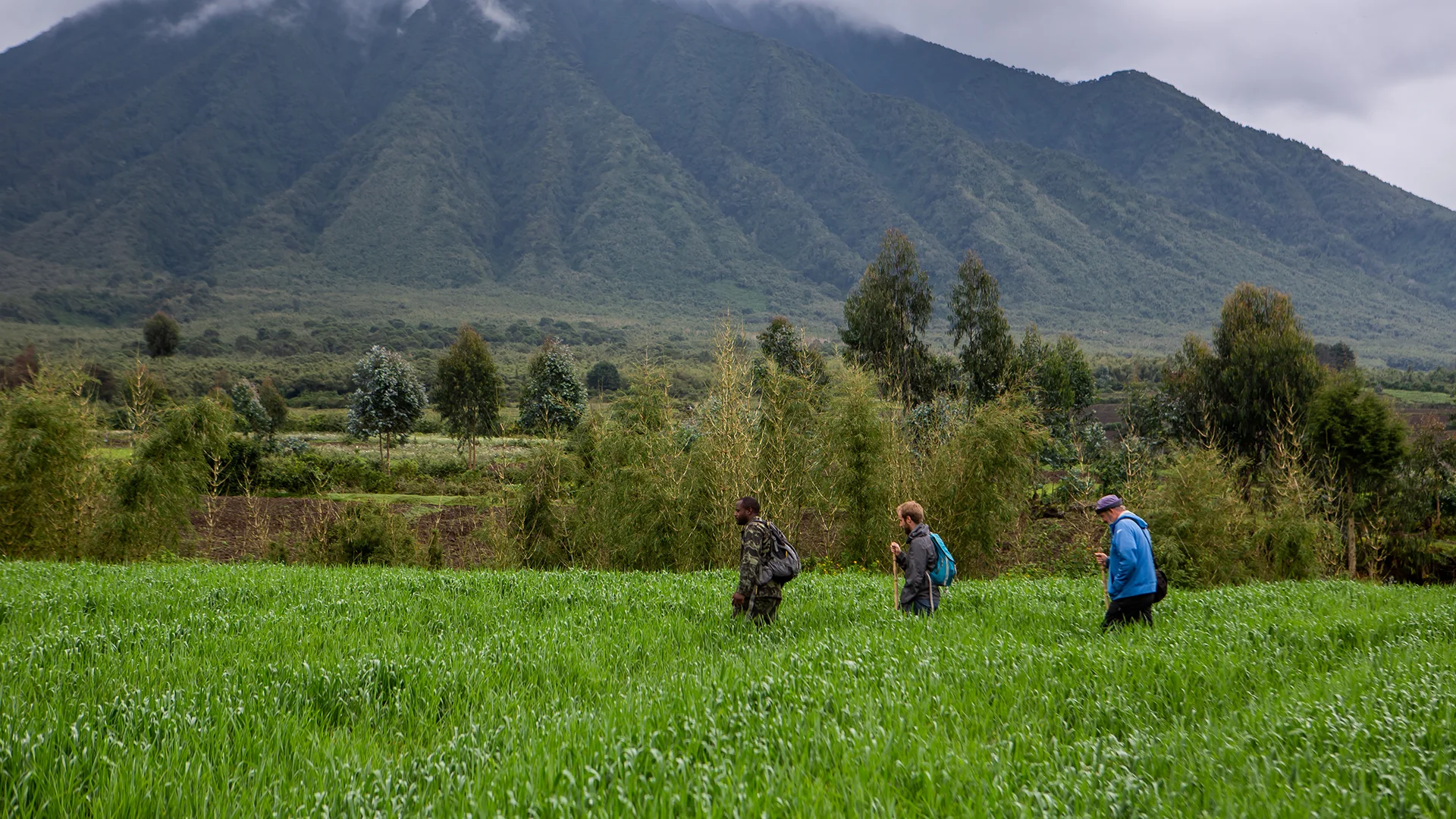
Golden monkey trekking is a guided walk into the bamboo zones on the lower slopes of the Virunga volcanoes to find one of two habituated troops living within Volcanoes National Park. Trackers locate the troop each morning before guests arrive, and a Rwanda Development Board ranger guide leads groups out from Kinigi park headquarters, the same briefing point used each morning for gorilla trekking. Once the troop is found, guests spend one hour observing and photographing them at close range.
Where golden monkeys live in Volcanoes National Park
A rare primate confined to one small region
Golden monkeys (Cercopithecus kandti) occur naturally in only a handful of locations across the Albertine Rift: the Virunga Massif, shared by Rwanda, Uganda and the DRC, and Rwanda's Gishwati Forest. Within Volcanoes National Park, they favour dense bamboo forest on the lower volcanic slopes, feeding on bamboo shoots, leaves, fruit and insects. The species is classified as Endangered, with habitat loss across its narrow range the primary long-term threat to its survival.
Two habituated troops
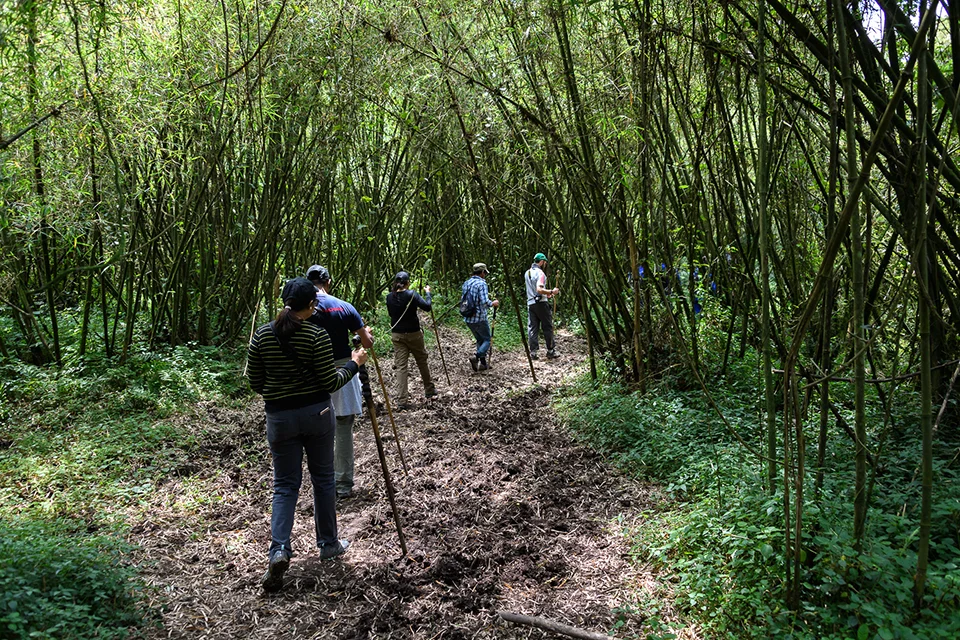
Volcanoes National Park manages two golden monkey troops for tourism, each capped at sixteen visitors a day under Rwanda Development Board rules. Unlike gorilla trekking, where each family is limited to eight trekkers, golden monkey groups are larger and the pace of the encounter noticeably livelier, since the monkeys move quickly through the canopy rather than resting in one spot for long.
Golden monkey trekking permits and cost in 2026
A golden monkey trekking permit costs US$100 per person in 2026, set and regulated by the Rwanda Development Board. The fee covers park entrance, a ranger guide and a one-hour encounter with the troop once located. Unlike gorilla permits, which are issued against a strict daily quota across the park (our Volcanoes National Park guide sets out the full permit picture), golden monkey permits are not sold on the same fixed-quota system. Africa Geographic still recommends securing yours ahead of travel during the June to September and December to February dry seasons, when the park is busiest.
Golden monkey trekking compared with gorilla trekking
The table below sets out how Volcanoes National Park's two primate treks compare, useful when deciding whether to do one or both.
Feature | Golden monkey trekking | Gorilla trekking |
Permit cost (2026) | US$100 per person | US$1,500 per person |
Minimum age | 12 years | 15 years |
Group size limit | 16 people per troop | 8 people per family |
Typical terrain | Lower-altitude bamboo forest, generally shorter walk | Higher-altitude forest, walk length varies by family location |
Time with animals | One hour, active and fast-moving troop | One hour, generally calmer and more settled |
Booking lead time | Not subject to fixed daily quota; still book ahead in peak season | 12 to 18 months ahead for peak season |
Wish you were here?
What to expect once you're in the forest
Terrain and physical demands
Golden monkey trekking generally covers lower-altitude bamboo forest than most gorilla trekking routes, and treks tend to be shorter and less physically demanding, though trails can still be muddy and uneven underfoot. Waterproof hiking boots, long trousers and a rain jacket, the same kit recommended for gorilla trekking, apply equally here, since forest conditions can change quickly regardless of season.
A livelier encounter
Golden monkeys are considerably more active and vocal than gorillas, leaping and feeding through the bamboo canopy rather than resting in one place. Many guests find the pace and energy of a golden monkey trek a lively contrast to the quieter, more contemplative hour typically spent with a gorilla family. Flash photography is not permitted, in keeping with the same wildlife protocols used across Volcanoes National Park.
When to trek golden monkeys
Trekking is possible year-round, since both troops are habituated regardless of season. The dry seasons – June to September and December to February – keep bamboo-forest trails firmer underfoot, matching the best conditions for gorilla trekking across Rwanda. Guests visiting during the March to May or October to November rains should expect muddier trails and pack accordingly, though sightings are not affected by rainfall.
Adding golden monkey trekking to your Rwanda itinerary
Most guests add a golden monkey trek onto a Volcanoes National Park stay built around gorilla trekking, scheduling the two activities on separate mornings. Our guide to trekking gorillas across Rwanda, Uganda and Congo explains how the two experiences differ by country, while our Big Five, chimps and gorillas Rwanda safari shows how golden monkey trekking fits alongside chimpanzee trekking and a Big Five safari within a single, well-paced itinerary.
Families travelling with children aged 12 to 14, too young for gorilla trekking's 15-year minimum, often use golden monkey trekking as their primate encounter of choice, giving younger travellers a genuine Volcanoes National Park highlight of their own.
Planning checklist
Age and group requirements
The minimum age for golden monkey trekking is 12 years, three years below the gorilla trekking limit, making it the more accessible primate trek for families. Groups are capped at sixteen visitors per troop per day, roughly double the gorilla trekking limit of eight per family.
Booking through Africa Geographic
Africa Geographic arranges golden monkey permits as part of any Volcanoes National Park itinerary, alongside gorilla trekking, Dian Fossey hiking permits and volcano-summit hikes. Speak to our safari experts to combine golden monkey trekking with the rest of your Rwanda itinerary, from lodge selection to onward travel.
Frequently asked questions
Golden monkey trekking is a guided one-hour encounter with a habituated troop of golden monkeys, tracked through the bamboo forests on the lower slopes of Volcanoes National Park. A Rwanda Development Board ranger guide leads the trek from Kinigi park headquarters, the same starting point used for gorilla trekking, once trackers have located the troop for the day.
A golden monkey trekking permit costs US$100 per person in 2026, set and regulated by the Rwanda Development Board. The fee covers park entrance, a ranger guide and a one-hour encounter with the troop once located. This is considerably less than the US$1,500 gorilla trekking permit charged in the same park, making golden monkey trekking one of Rwanda's most affordable primate experiences.
Yes. Golden monkey trekking and gorilla trekking require separate permits and take place on different mornings during the same Volcanoes National Park stay. Most guests trek for gorillas on one day and golden monkeys on another, both departing from Kinigi park headquarters. Africa Geographic arranges both permits within a single Rwanda itinerary, alongside lodge bookings and transfers.
The minimum age for golden monkey trekking in Rwanda is 12 years, three years lower than the 15-year minimum for gorilla trekking. This makes golden monkey trekking a practical primate encounter for families travelling with younger teenagers who do not yet qualify for a gorilla trek. Group sizes are capped at sixteen visitors per troop per day.
Golden monkey treks generally cover lower-altitude bamboo forest and are shorter and less physically demanding than most gorilla treks in Volcanoes National Park, though trails can still be muddy and uneven. A reasonable level of fitness, waterproof hiking boots and a rain jacket are recommended, since forest conditions can change quickly at any time of year.
Golden monkeys occur naturally only in the Virunga Massif, shared by Rwanda, Uganda and the DRC, and in Rwanda's Gishwati Forest. Within Volcanoes National Park, two habituated troops live in dense bamboo forest on the lower volcanic slopes, feeding on bamboo shoots, leaves, fruit and insects. The species is classified as Endangered, with habitat loss across its narrow range the primary long-term threat.
Start planning your dream safari
Our travel experts will craft a no-obligation itinerary just for you. We have crafted over 5,000 safaris since 1991. Your personal details are protected; we only use this information to contact you.
Why book your safari with us?

Deep Experience & Knowledge
Handcrafted experiential safaris since 1991.
Travel in Africa is about knowing when and where to go, and with whom. A few weeks too early/late or a few kilometres off course, and you could miss the greatest show on Earth. And wouldn’t that be a pity?

Trust & Safety

Make A Difference
We donate a portion of the revenue from every safari sold to carefully selected conservation projects that make a significant difference at ground level.
YOUR safari choice does make a difference - thank you!