

Safari experts & storytellers. Since 1991



Stone Town: where every alley tells a story
Stone Town at a glance:
Location: northwest coast of Zanzibar Island, Tanzania | Size: approximately 2.5km², walkable in a day |
UNESCO World Heritage status: inscribed in 2000 | Best time to visit: June–October (dry season); avoid April–May (long rains) |
Getting there: Zanzibar International Airport, 6km from Stone Town or ferry from Dar es Salaam, approx. 2 hours | Getting around: on foot; Stone Town's alleys are too narrow for vehicles |
Language: Swahili (Kiswahili); English is widely spoken | Currency: Tanzanian Shilling (TZS); USD widely accepted in tourist areas |
Why visit Stone Town?
Stone Town is the old quarter of Zanzibar City, the capital of the archipelago known historically as the Spice Islands. Its Sultan's Palace and Old Fort harken to a time when this was one of the most important trading posts in the Indian Ocean, a nexus of the slave and ivory trade, a meeting point between the East African interior and the Arab world, and a city shaped by Omani sultans, Indian merchants, Portuguese traders, and British colonists. The physical record of that history has never been erased. It is here, in the coral-stone walls, the brass-studded doors, the Persian hammam, and the cramped underground chambers of the slave market.
Inscribed as a UNESCO World Heritage Site in 2000, Stone Town is not a preserved museum. It is a living city, home to roughly 16,000 people in centuries-old buildings. The narrow, winding alleys, more than 1,700 of them, carry the smell of cloves, cardamom, and the sea. Street cats move with proprietorial confidence along the barazas (stone benches that line the old buildings). The sound of the evening call to prayer drifts across rooftops that have absorbed it for generations.
Stone Town pairs with every corner of Tanzania. A half-day here before or after a Serengeti migration safari gives the bush-and-culture combination that makes East Africa one of the world's most compelling destinations. A full day, unhurried, guided, ending with grilled lobster at the Forodhani night market, is one of those travel experiences that remains vivid long after the trip ends.
5 Reasons We Love Stone Town
Living UNESCO heritage: Stone Town's 2.5km² of coral-stone architecture is not a reconstruction. It is a continuously inhabited old city where little has changed since the height of the Sultanate. That authenticity is rare and remarkable.
The weight of history: The Anglican Cathedral bears witness to one of Africa's most horrific periods. Underneath, view evidence of the largest slave markets in Africa; intact underground slave holding chambers.
The spice island experience: Enjoy a guided plantation visit departing from Stone Town. Cloves, cinnamon, cardamom, nutmeg, and vanilla grow in working farms a short drive from the city, tasted fresh, not read from a label.
The Forodhani night market: Enjoy this evening waterfront outdoor kitchen for grilled lobster, Zanzibar pizza, Urojo soup, and sugarcane juice.
The safari connection: Stone Town is a natural bookend to any East African safari itinerary. Fly into Zanzibar after the Serengeti, Ngorongoro, or Ruaha, and spend time in one of Africa's great cultural cities before or after the wilderness.
Our favourite Stone Town safari ideas
All you need to know about Stone Town
About Stone Town, Zanzibar
Stone Town is the historic quarter of Zanzibar City on the island of Unguja, off the coast of Tanzania, inscribed as a UNESCO World Heritage Site in 2000 for being an outstanding example of a Swahili coastal trading town.
The architecture is a physical layering of cultures: Arab, Indian, Persian, Portuguese, and British influences are all present, often within the same building. The stone used in construction is coral ragstone, cut from local reefs; it is dense, cool, and porous, and it keeps the interiors of buildings noticeably cooler than the outside temperature.
The name of the city refers to this material. More than 500 ornately carved wooden doors survive throughout the old quarter, each encoding meaning through its motifs: chain patterns for protection, brass studs in the South Asian tradition, and fish to signal seafaring wealth. Stone Town is roughly 55–75km by road from the east coast resort areas and covers approximately 2.5km², small enough to walk fully in a single day.
What can I see and do in Stone Town?
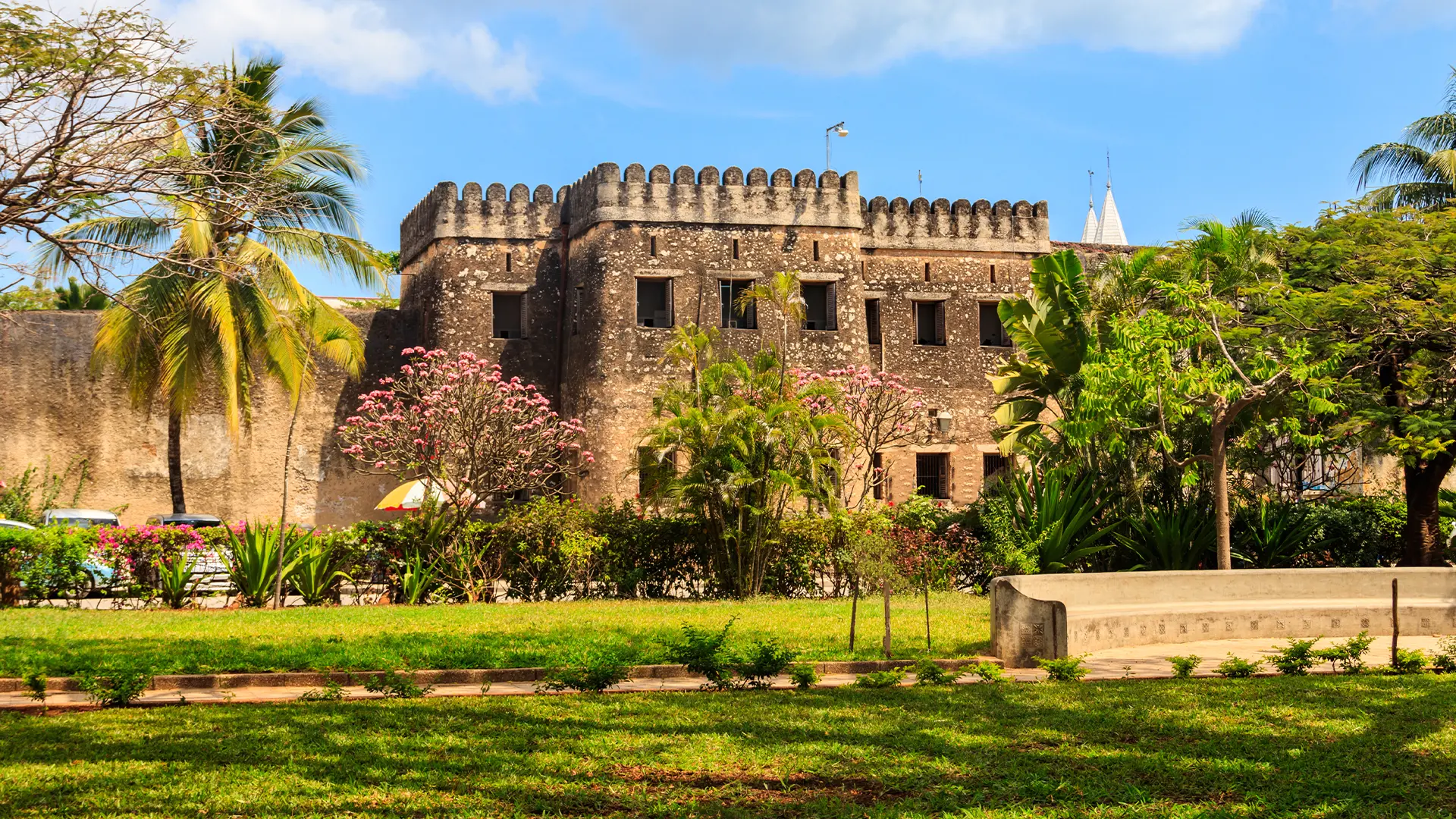
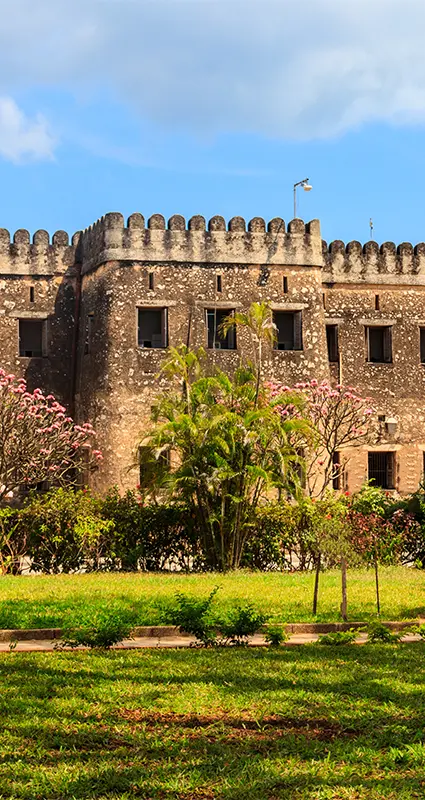
The Old Fort (Ngome Kongwe): Built by Omani Arabs in the 1690s on the foundations of an earlier Portuguese chapel, this is the oldest standing building in Stone Town.
The Anglican Cathedral and Slave Market Memorial: The 1873 cathedral was built on the site of the largest slave-trading market in East Africa, through which an estimated 50,000 enslaved people passed annually. View the underground slave chambers and whipping post.
The Palace Museum (Beit el-Sahel): The former official residence of the Sultans of Zanzibar, with exhibits covering the Sultanate era, the story of Princess Salme, and the Anglo-Zanzibar War of 1896.
The House of Wonders (Beit al-Ajaib): Built in 1883 for Sultan Barghash, this was the first building in East Africa to have electricity and the first in Zanzibar to have a lift, hence the name.
The Hamamni Persian Baths: Built in the 1870s by Sultan Barghash, these were the first public baths in Zanzibar and the only Persian-style hammam constructed in sub-Saharan Africa.
The Forodhani Gardens night market: After hours, enjoy Zanzibar's best informal dining experience. Zanzibar pizza, grilled lobster, and fresh sugarcane juice at the water's edge under the old city's lights.
Spice tours: Half-day guided visits to clove, cinnamon, cardamom, and vanilla plantations, 20–30 minutes from Stone Town, a sensory introduction to Zanzibar's agricultural identity.
Where to stay in Stone Town
Stone Town's accommodation options range from boutique heritage hotels occupying restored Sultanate-era buildings to smaller guesthouses tucked into the old quarter's labyrinthine streets. The most characterful properties are those that have preserved the original architecture, high ceilings, carved shutters, and internal courtyard gardens, while adding considered modern comfort.
A vision of Arabian arches, white-washed walls, and minimalist decor, the Neela Boutique Hotel is a painstakingly restored historical building in the centre of Stone Town. Sip one of Neela's signature cocktails on the rooftop terrace before heading off to the nearby Forodhani Gardens for dinner.
Upendo House, the hippest boutique hotel in Stone Town, has an incredible restaurant and a rooftop bar that plays amazing tunes. This 5-story historical building has an infinity pool overlooking the rooftops, with a view over Stone Town rooftops to the sea.
Most guests arriving on Tanzania's northern safari circuit fly directly from Arusha or the Serengeti airstrips to Zanzibar International Airport, a short transfer from Stone Town.
Trusted by thousands of ecstatic travellers
✔️ 5-Star Trustpilot Rating ✔️ Condé Nast Travel Specialist Award Winner
✔️ Accredited by SATSA ✔️ 5,000+ Exceptional Safaris Since 1991
Why choose Africa Geographic to plan your safari?

"Africa Geographic are the ULTIMATE in African trip planning! Thank you so much for our once in a lifetime experience! It was worth every penny spent!! Every detail about this trip were seamless from each meal to every transfer. We have already recommended Africa Geographic to many folks. God bless you all and thank you again for sharing your incredibly beautiful continent!!"

"We booked our honeymoon safari with Africa Geographic, and it turned out to be one of the most memorable trips of our lives. The experience felt personal and thoughtfully designed ... he recommended Tanzania, and the itinerary was beautifully balanced and perfectly aligned with what we wanted. We would recommend Africa Geographic without hesitation to anyone looking for a safari that is personal, well‑designed, and truly special."

"Africa Geographic was amazing to work with. They tailored a trip specifically for us based on our wants and needs. They take the time to listen to you and understand what you are looking for from this sometimes once in a lifetime experience. They are professional, courteous, friendly and with you every step of the way. Their job does not end until you are home. If I could give them more than 5 stars I would!"
Wish you were here?
Frequently asked questions
Stone Town is the historic old quarter of Zanzibar City, on the island of Unguja off the coast of Tanzania. It has been a UNESCO World Heritage Site since 2000, inscribed for its outstanding example of a Swahili coastal trading town that reflects the cultural fusion of Africa, Arabia, India, and Europe across centuries of Indian Ocean trade. Roughly 16,000 people still live in buildings that are centuries old, making it a continuously inhabited heritage city rather than a preserved monument.
Stone Town can be visited year-round, but June to October is generally the most comfortable period — drier, cooler, and better suited to long hours of walking exploration. December to February is also dry and warm. The long rains run from approximately April to May and can make the cobbled streets slippery and the heat more oppressive. The Zanzibar International Film Festival (ZIFF) takes place at the Old Fort in July, which adds cultural programme to the visit during peak dry season.
A minimum of one full day is recommended to cover the principal sites without rushing — the Anglican Cathedral, Old Fort, Palace Museum, Forodhani market, and a walk through the carved-door quarter. Two nights in Stone Town allows a spice tour in the morning of one day and thorough exploration of the old city on the other, with time to return to the alleys at night when the city changes character completely. Stone Town covers approximately 2.5km² and is best explored on foot.
Yes. Stone Town was inscribed on the UNESCO World Heritage List in 2000 as an outstanding example of a Swahili coastal trading town that embodies the fusion of African, Arab, Indian, and European cultural influences. It is one of only a handful of UNESCO World Heritage Sites in East Africa and represents over a thousand years of continuous habitation and trade.
Stone Town was the seat of the Sultanate of Zanzibar, one of the most powerful political and commercial forces in 19th-century East Africa. It was the main hub of the Indian Ocean slave trade, through which an estimated 50,000 enslaved people passed annually at the trade's peak, and the centre of the global clove and spice trade. The city also witnessed the Anglo-Zanzibar War of 1896 — recorded as the shortest war in history at between 38 and 45 minutes. Freddie Mercury, born Farrokh Bulsara in Stone Town in 1946, is the city's most internationally famous native son.
The Anglican Cathedral and Slave Market Memorial is the most historically significant site, and should not be rushed. The Old Fort is the oldest building and the logical starting point for any walking tour. The Forodhani Gardens night market is the best evening experience. The carved doors along Gizenga Street and around the Aga Khan Mosque reward a slow afternoon walk. The Hamamni Persian Baths, Tippu Tip's former house on Kenyatta Road, and the Palace Museum complete a thorough day's exploration. A half-day spice tour to the plantations outside the city is worth combining with any Stone Town visit.
A spice tour is a guided half-day excursion to working clove, cinnamon, cardamom, nutmeg, and vanilla plantations approximately 20–30 minutes by road from Stone Town. Guides explain the cultivation and harvesting of each spice while allowing visitors to taste ingredients fresh from the plant — including tropical fruits, cocoa, and lemongrass. A traditional lunch is typically included. Spice tours depart from Stone Town in the morning and are one of the most popular day activities in Zanzibar, offering a direct connection to the agricultural history that gave the archipelago its title as the Spice Islands.
The Forodhani Gardens is a small seafront park between the Old Fort and the Palace Museum that transforms into a night market from approximately 6pm every evening. Vendors set up grills and cooking stations offering grilled lobster, prawns, and octopus; Zanzibar pizza (thin dough stuffed with meat, egg, and vegetables, then folded and fried); Urojo mix soup; grilled meat skewers (mishkaki); and fresh sugarcane juice. It is widely regarded as the most enjoyable informal dining experience in Zanzibar. Arrive with cash in small denominations and an empty stomach.
Stone Town has more than 500 intricately carved wooden doors throughout the old city, each encoding meaning through its decorative motifs. Doors with brass studs follow a South Asian tradition, originally designed to withstand elephant charges. Arab-style doors have square tops with geometric patterns; Indian-style doors have rounded tops. Fish motifs signal seafaring wealth; chain patterns along the frame were used as protective symbols. The finest concentration of doors is on Gizenga Street and in the streets around the Aga Khan Mosque. A focused door-walking tour takes two to three hours.
Princess Salme — born into the ruling family of the Sultanate of Zanzibar — became notable for eloping with a German merchant neighbour in 1866 after falling pregnant by him, converting to Christianity, and later writing her memoirs in German. Her autobiography, Memoirs of an Arabian Princess, is considered the first autobiography written by an Arab woman and remains in print. Her story is documented in the Palace Museum in Stone Town and gives a personal dimension to the political history of the Sultanate.
Yes — this is one of the most natural travel combinations in East Africa. Stone Town sits at the natural end point of any northern Tanzania circuit. Fly from Arusha or directly from the Serengeti or Ruaha airstrips to Zanzibar International Airport, a short transfer from Stone Town, and spend two nights in the city before or after the bush. The cultural richness of Stone Town and the wildlife intensity of the Serengeti or Ngorongoro make each experience more vivid for the contrast. Africa Geographic designs these combinations regularly.
The Anglo-Zanzibar War took place on 27 August 1896 and is recorded as the shortest war in history, lasting between 38 and 45 minutes. It began when Sultan Khalid bin Barghash refused to stand down after seizing power without British approval. British naval vessels opened fire on the Sultan's palace and the sultan's forces quickly surrendered. The war is covered in the Palace Museum in Stone Town.
Our safaris typically cost from US$700 per person, per night, depending on the accommodation comfort level, time of year and activities. This price usually includes accommodation, all meals, game drives, experienced guides, airport transfers, and 24/7 support from our team.
You only make your first payment when you book your holiday. Your second (last) payment is about 105 days before you travel.
Peak season bookings require 12–18 months of advance planning. Trips outside of peak season can be arranged 6–9 months ahead, with better rates and availability.
Click here to schedule a no-obligation call with one of our Safari Experts or fill in our 2-minute form with your questions. Our team of experts are here to help! Whether you’re curious about the best time to travel, want to hear first-hand about an experience or need help planning your safari.
Explore more African destinations
Start planning your dream safari
Our travel experts will craft a no-obligation itinerary just for you. We have crafted over 5,000 safaris since 1991. Your personal details are protected; we only use this information to contact you.
Why book your safari with us?

Deep Experience & Knowledge
Handcrafted experiential safaris since 1991.
Travel in Africa is about knowing when and where to go, and with whom. A few weeks too early/late or a few kilometres off course, and you could miss the greatest show on Earth. And wouldn’t that be a pity?

Trust & Safety

Make A Difference
We donate a portion of the revenue from every safari sold to carefully selected conservation projects that make a significant difference at ground level.
YOUR safari choice does make a difference - thank you!