

Tailor-made safaris. Since 1991



Trust us to find you the rarest animals, the most spectacular wildlife events, the remotest landscapes and deeply meaningful cultural encounters!
There’s a particular kind of uncertainty that comes with planning a safari in a wheelchair. The wildlife is rarely the question – elephants gathering at a waterhole, lions stretched out in the morning sun, the bush turning gold at dusk. The uncertainty lies in everything around it. Is there a step into the bathroom? How wide are the pathways? How far is the room from the dining area? Can you get into the safari vehicle comfortably, and what happens if you need medical support?
These details are not minor. They can determine whether a safari feels effortless and liberating or becomes a daily exercise in negotiating obstacles.
Planning a wheelchair-accessible safari therefore comes down to three things: the lodge itself, the logistics of the journey and the safari company arranging it. Accessibility should be checked in specifics, not accepted as a label. That means confirming pathway and doorway widths, bathroom layouts and distances between rooms and communal areas; understanding vehicle access, transfers, power for medical equipment, carer accommodation and proximity to medical support; and knowing how your safari company has verified every claim.
The encouraging part is that these questions have concrete answers. A safari expert who knows a property well should be able to find them – and should be prepared to check rather than guess. What follows is the checklist our safari experts use when planning for travellers with limited mobility, whether or not they use a wheelchair.
What ‘accessible’ should actually mean
Many lodges describe a room as “accessible” when it has only a slightly wider door. Before booking, ask for the specific details below rather than accepting the word alone.
Door and pathway widths that suit your specific wheelchair
Roll-in showers, not just grab rails fitted to a standard bath
A step-free route from your room to the dining area and pool
Ramp gradients gentle enough to use without assistance
Ground surfaces firm enough for a wheelchair, not gravel or sand
Lodge claims versus what to verify
What a lodge may say | What it should mean | What to ask for |
“Accessible room” | A step-free route, wide doorways and an adapted bathroom | Exact door widths in centimetres and photographs of the bathroom |
“Roll-in shower” | No lip or step into the shower area itself | The shower floor dimensions and any threshold height |
“Wheelchair friendly” | Firm, level paths between buildings | The path surface type and the distance in metres |
“Adapted vehicle” | A hoist, ramp or transfer seat fitted to the vehicle | Which system is used, and whether you stay in your own chair |
Three things we love about asking first
Beyond the checklist itself, asking these questions early changes the whole trip. Here’s what stands out when travellers do this properly.
It shifts the guesswork onto us. Once we know your exact needs, our safari experts do the verifying, not you, and not after you have already paid for the trip.
It surfaces genuine deal-breakers early. A five-minute question about door widths can save a wasted flight and a disappointing arrival at a lodge that cannot accommodate you.
It builds a paper trail. Written confirmation from a lodge or safari company becomes useful if anything on arrival does not match what was promised beforehand.
The three areas worth questioning
The lodge itself
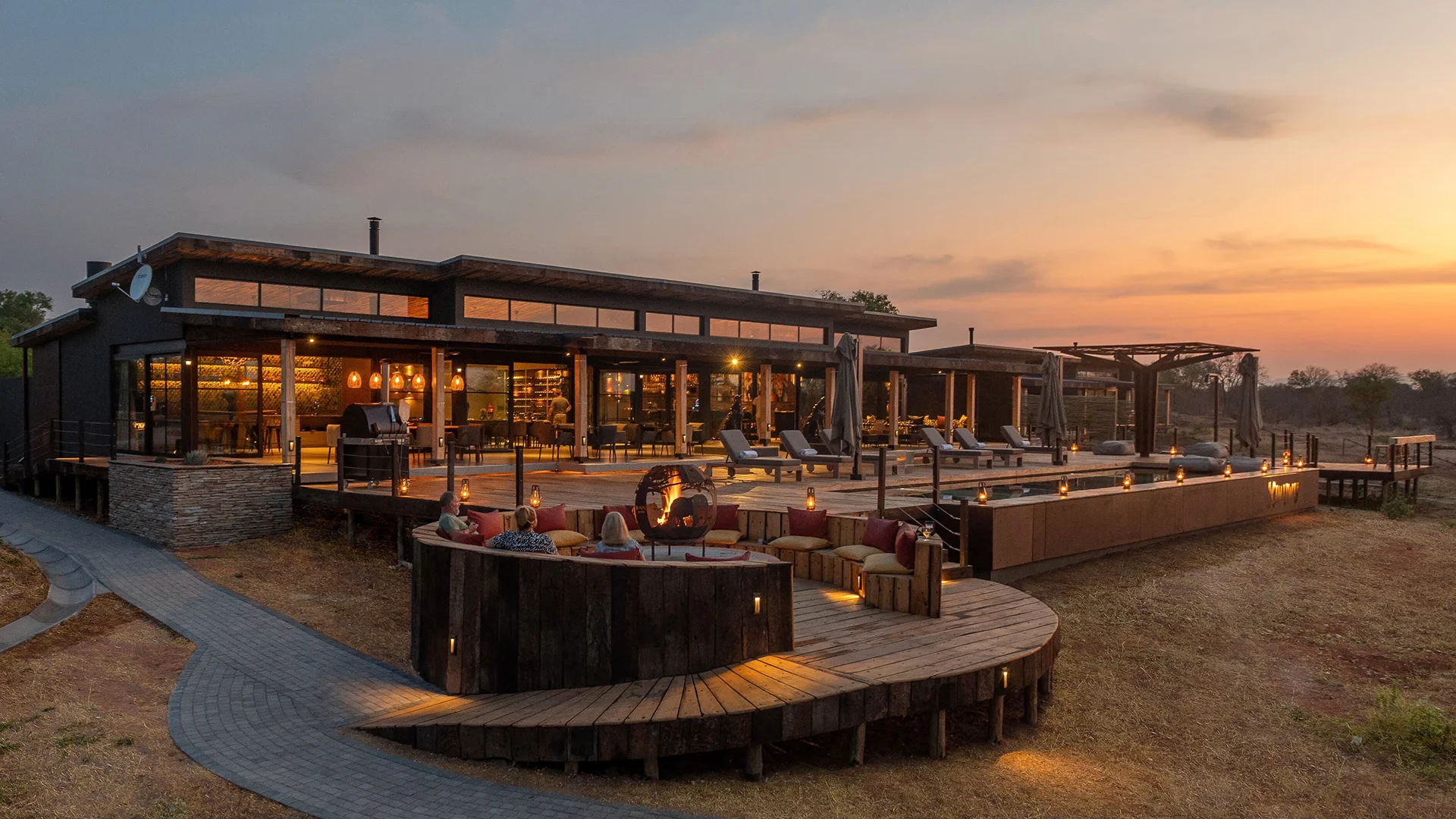
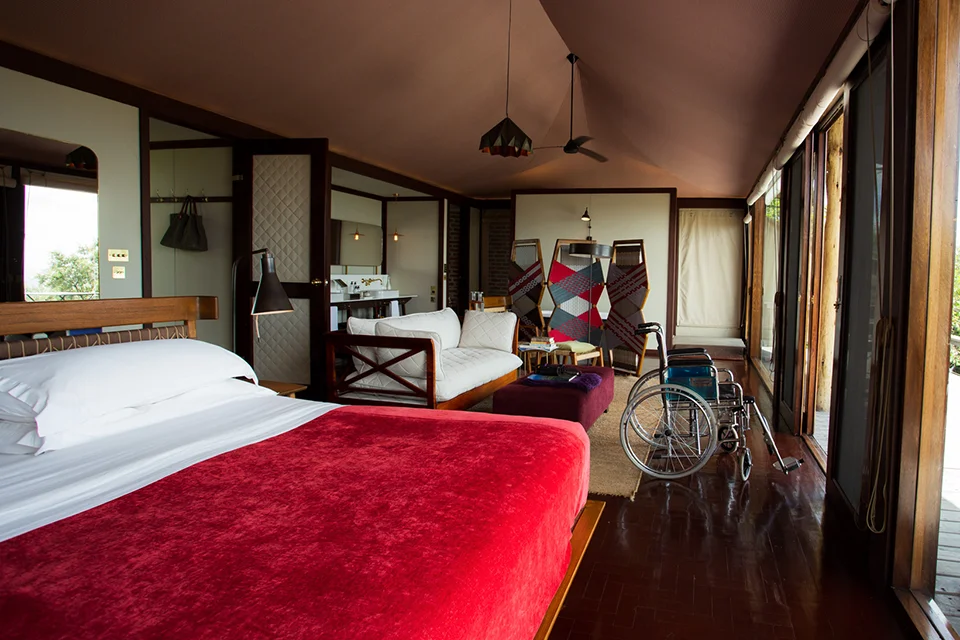
This covers everything physically built: door widths, bathroom fittings, path surfaces and the distance between your room and the areas you will use most, such as the dining area, pool and main lounge.
The journey and medical support
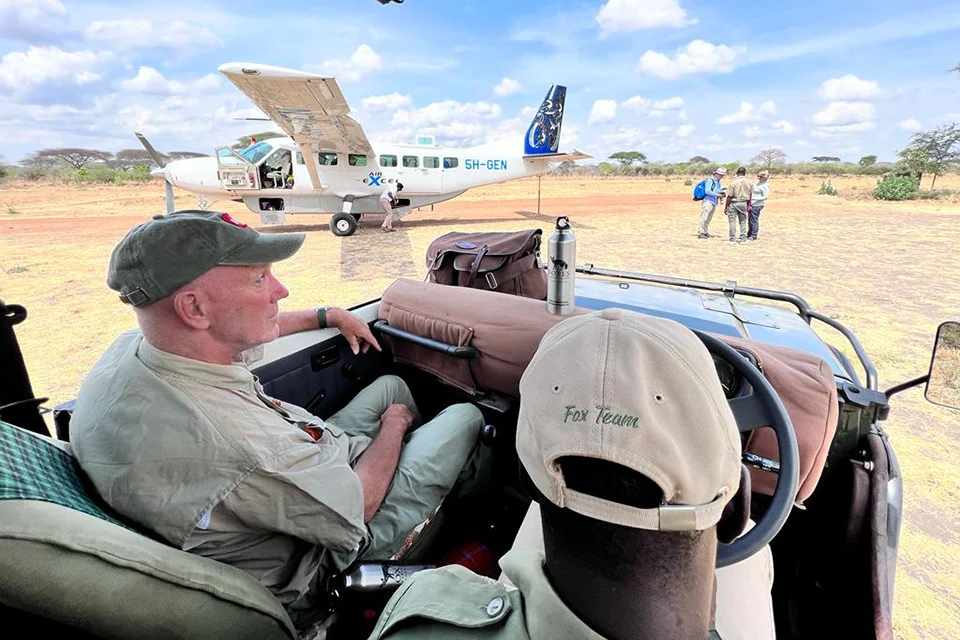
This covers what happens once you are travelling: power for medical equipment at remote lodges, carer or companion arrangements, and how far you would be from medical support if something went wrong.
The safari company behind it
This covers how thoroughly a company has checked a property, whether staff have visited in person, and what recourse exists if a lodge does not match what was described when you booked.
Our favourite safaris for travellers with mobility difficulties
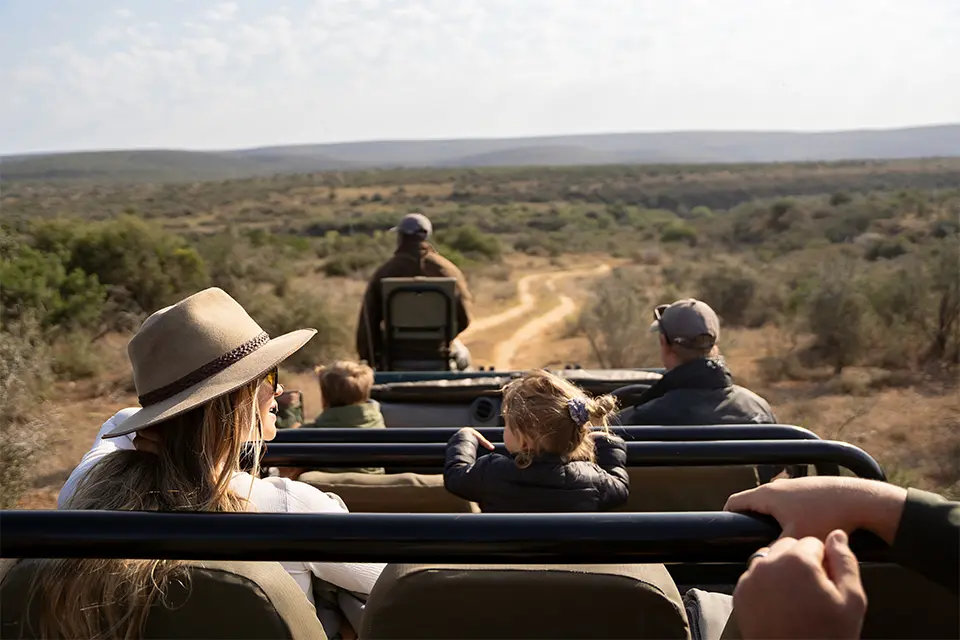
Questions about the lodge
Doors, thresholds and bathrooms
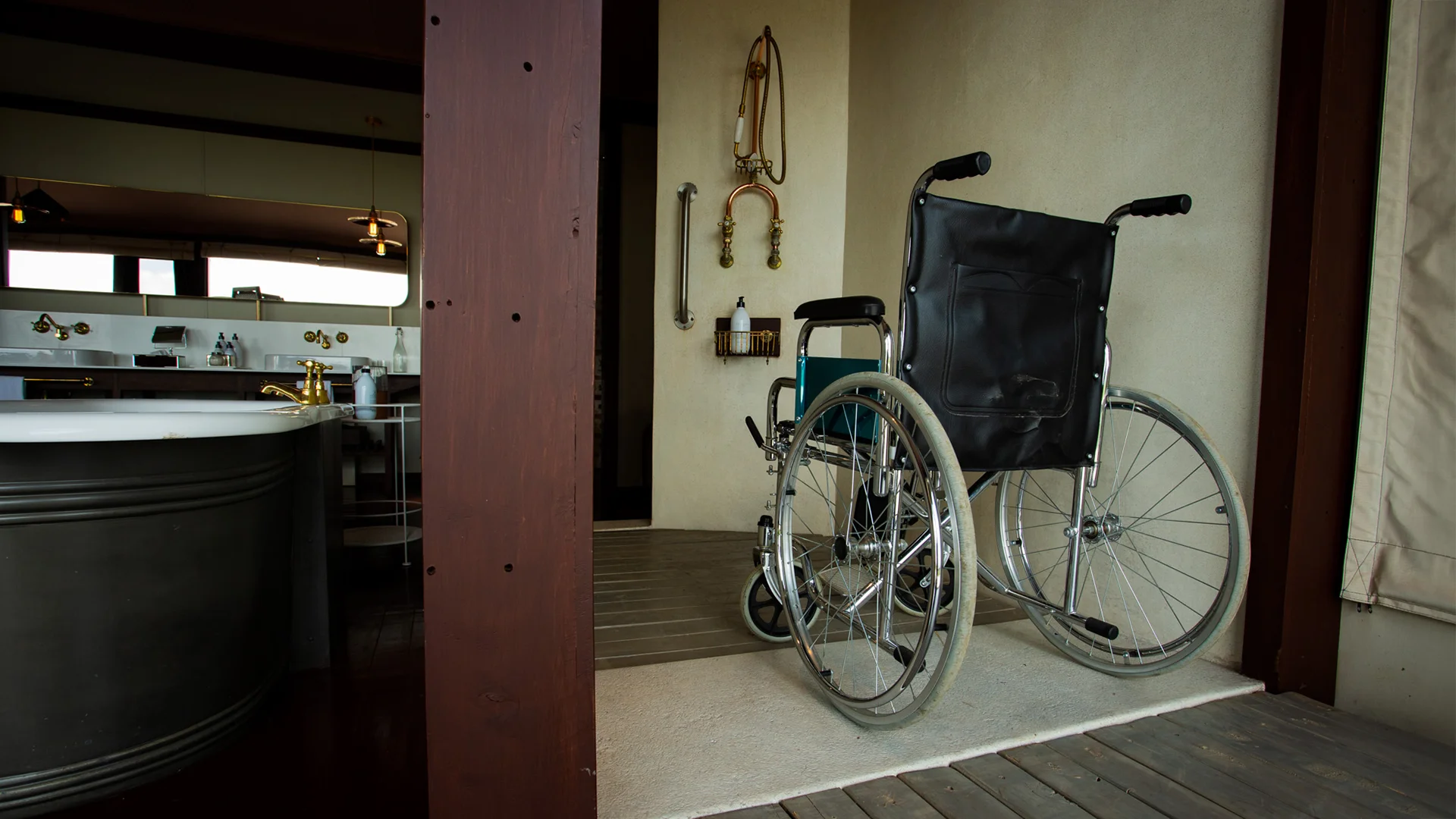
Ask for exact door widths in centimetres, not a general assurance that a room is “spacious”. South Africa’s Tourism Grading Council sets a minimum door opening of 76cm for graded accessible rooms, with at least 90cm of clear turning space in front of the door. Ask specifically whether the bathroom has a roll-in shower with no lip, rather than a standard bath with an added rail, and whether floor surfaces are non-slip when wet.
Distance and ground surfaces
Some of the most beautiful lodges are also the most spread out, with rooms connected by raised wooden walkways or sandy paths that a wheelchair cannot manage unassisted. Ask how far your room is from the dining area and pool, in metres, and what the path surface is made of. A firm, level route matters more than the overall size or luxury of a property.
South Africa’s accessibility grading
South Africa’s Tourism Grading Council runs a Universal Accessibility assessment alongside its familiar star grading, covering mobility, sight and hearing criteria such as ramp gradients, door widths and bedroom layouts. It is a genuinely independent benchmark, since assessors are separate from the property itself. Ask whether a lodge holds current Universal Accessibility recognition, and treat the answer as one part of your research rather than the whole picture, since criteria are reviewed periodically.
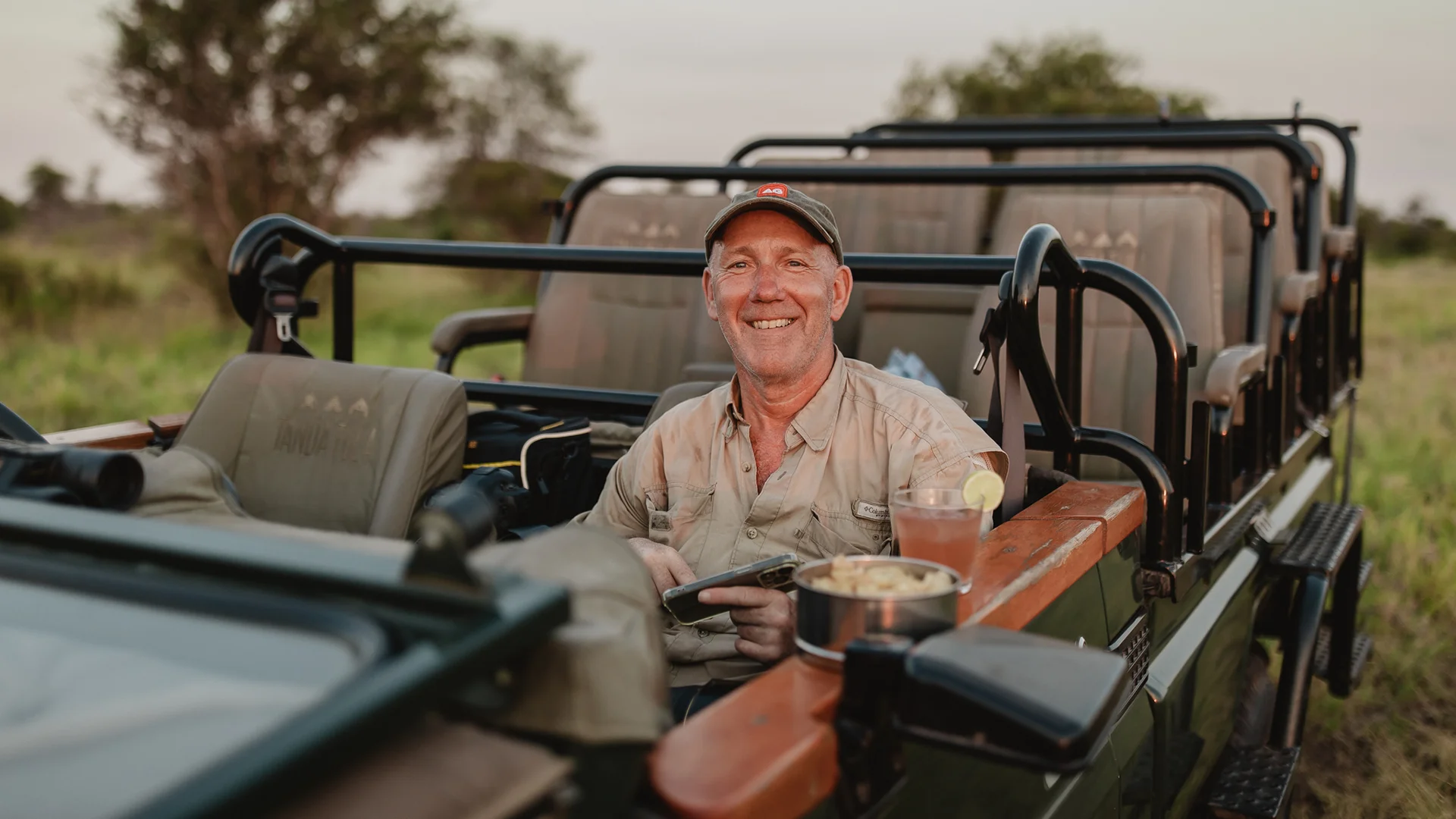
Questions about medical needs and equipment
Power for medical equipment
Many remote lodges run on solar power or generators, with limited sockets and a curfew after which lighting and power may be reduced. If you rely on a CPAP machine, an electric wheelchair or any other powered equipment, ask specifically about socket type, overnight power availability and whether a backup battery or inverter is available. This is one detail worth confirming in writing rather than assuming.
Carer and companion arrangements
If you are travelling with a carer, ask whether a separate room is available nearby, at what cost, and whether local personal care assistance can be arranged if your companion needs a rest day. Some purpose-built accessible lodges include a dedicated companion room as standard; others treat it as an additional booking, so confirm this before you commit to dates.
Proximity to medical support
Ask how far the nearest hospital or clinic is, and whether the lodge or your safari company can arrange medical evacuation cover. This matters more in genuinely remote wilderness areas than in reserves close to towns. It is also worth asking whether evacuation cover excludes pre-existing conditions, since some regional plans do, and whether you need separate international travel insurance alongside it.
Wish you were here?
Questions to ask any safari company
How accessibility is verified
Ask directly whether a member of staff has personally visited the property and assessed it against your specific needs, rather than relying on a lodge’s own marketing description. Accessibility varies enormously between properties advertised as similar, and a company that can describe a room from firsthand knowledge is a good sign.
What happens if something is wrong
John Morris, a power wheelchair user and founder of the accessibility travel site WheelchairTravel.org, writes plainly of his own East Africa research: “No two camps, hotels or resorts in Kenya are the same, and their accessibility varies too.” Ask what your safari company will do if a lodge does not match its description on arrival, before you travel, not after.
How Africa Geographic checks these details
Our safari experts confirm accessibility details directly with each lodge before recommending it to a guest with mobility difficulties, rather than relying on general marketing claims. Every itinerary we build for a wheelchair user or a guest with limited mobility is checked against the specific questions in this article before it is proposed.
Frequently asked questions
Ask about door and pathway widths, roll-in showers and distance to communal areas at the lodge; power for medical equipment and proximity to medical support for the journey; and how the safari company verifies accessibility and handles any mismatch between description and reality.
It is an assessment run by South Africa’s Tourism Grading Council alongside its star grading, covering mobility, sight and hearing criteria such as ramp gradients, door widths and bedroom layouts. It offers an independent benchmark, separate from a property’s own marketing claims.
Yes, and most travellers do. Confirm with your safari company how your chair will be transported between flights, road transfers and the lodge itself, since this varies by aircraft and vehicle type, and ask whether a spare chair is available at the lodge as a backup.
Ask for exact measurements rather than general reassurance: door widths in centimetres, shower floor dimensions and the distance and surface type between your room and shared areas. Photographs help, but written measurements from a company that has visited the property are more reliable.
This should be agreed before you travel. Ask your safari company directly what recourse exists, such as an alternative room, a different property, or a refund, and get the answer in writing as part of your booking confirmation rather than assuming it afterwards.
This depends entirely on your own needs, not on any safari requirement. If you do travel with a carer, ask about a nearby companion room, its cost, and whether local personal care assistance can be arranged for rest days, since arrangements vary between lodges.
Many remote lodges run on solar power or generators with a nighttime curfew. Confirm socket type, overnight power availability and backup options such as an inverter or battery well before travelling, particularly if you rely on a CPAP machine or an electric wheelchair.
Yes. Ask how far the nearest hospital is, whether evacuation cover can be arranged, and whether it excludes pre-existing conditions, which some regional plans do. This cover generally supplements, rather than replaces, full international travel insurance.
Start planning your dream safari
Our travel experts will craft a no-obligation itinerary just for you. We have crafted over 5,000 safaris since 1991. Your personal details are protected; we only use this information to contact you.
Why book your safari with us?

Deep Experience & Knowledge
Handcrafted experiential safaris since 1991.
Travel in Africa is about knowing when and where to go, and with whom. A few weeks too early/late or a few kilometres off course, and you could miss the greatest show on Earth. And wouldn’t that be a pity?

Trust & Safety

Make A Difference
We donate a portion of the revenue from every safari sold to carefully selected conservation projects that make a significant difference at ground level.
YOUR safari choice does make a difference - thank you!