

Tailor-made safaris. Since 1991



Trust us to find you the rarest animals, the most spectacular wildlife events, the remotest landscapes and deeply meaningful cultural encounters!
Should I do a walking safari or a canoe safari in Mana Pools?
Mana Pools National Park in Zimbabwe is one of the only places in Africa where a walking safari and a canoe safari sit side by side as genuine alternatives. Walking puts you on foot among elephants, buffalo and African wild dogs on the Zambezi floodplain. Canoeing drifts you past hippo pods and crocodile-lined banks at water level. Most multi-night stays combine both, typically two to three walks and one or two canoe outings across a four-night stay, guided throughout by Zimbabwean guides licensed for each activity.
"Mana Pools remains, in my books, one of Southern Africa's best parks for exhilarating river and bush activities, great predator sightings, and incredible elephant, buffalo and hippo encounters, from sunrise to sunset," says Christian Boix, luxury safari expert at Africa Geographic.
There is a particular kind of traveller who arrives at Mana Pools undecided, torn between the thrill of tracking a wild dog pack on foot and the quiet pleasure of drifting past a pod of hippos at dawn. The good news is that you rarely need to choose only one. What follows is a direct comparison of both activities, and a recommended way to split your time between them.
Choosing between walking and canoeing
Walking works for travellers wanting close, on-foot wildlife tracking.
Canoeing is best for those wanting calmer, water-level river encounters.
Most guests combine both across one multi-night stay at Mana Pools.
Fitness and comfort near dangerous wildlife matter more than experience.
Neither activity is harder to arrange than the other… The real question is which kind of encounter you want more of, and our safari experts can help you weigh that up before you book.
Walking and canoe safaris compared
Factor | Walking safari | Canoe safari |
Fitness level required | Moderate to good; 2-3 hours on foot | Low; no paddling experience needed |
Typical session length | 2-3 hours, morning only | 2-4 hours, morning or late afternoon |
Signature wildlife | Elephant bulls, African wild dogs | Hippo, Nile crocodile, waterbirds |
Minimum age (typical) | Around 12 years old | Wider range; varies by lodge |
Best suited to | Adventurous, mobile travellers | Families, less mobile travellers |
Guide licence required | Dangerous-game walking licence | Canoe guiding licence |
3 things we love about Mana Pools
Beyond simply choosing between a walking safari and a canoe safari, here is what makes Mana Pools itself worth building your unhurried days around, long after the trip ends:
An unfenced wilderness: elephants, buffalo and wild dogs move freely through unfenced camps, day and night, across 22,000 km² of Zambezi floodplain and mixed woodland.
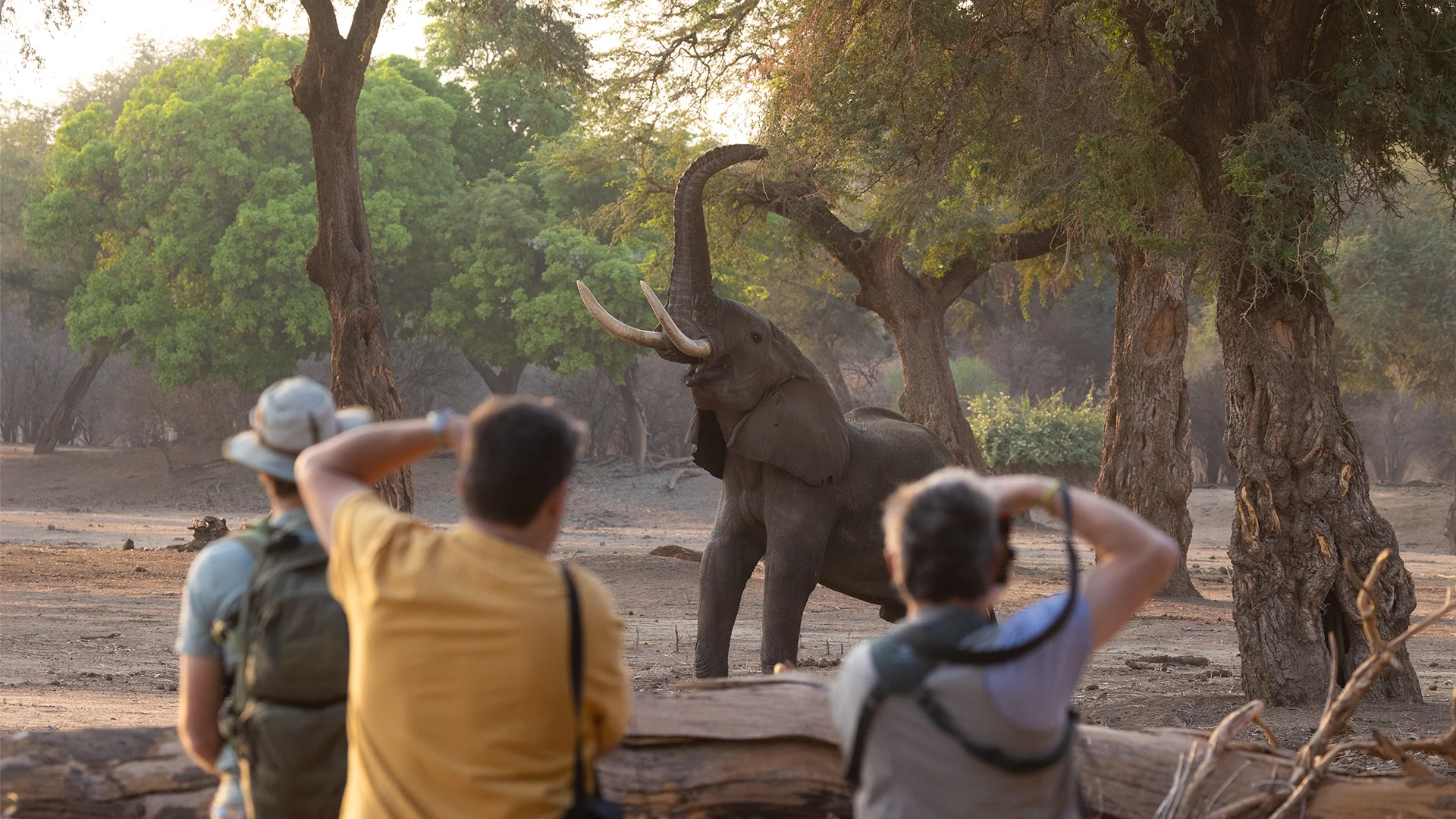
Astonishing elephant behaviour: bull elephants rise onto their hind legs to reach Ana tree seedpods, often within a few respectful metres of walkers on foot.
Guiding of the highest order: Zimbabwe's professional guides rank among the most rigorously trained and dual-licensed anywhere on the African continent.
How the two activities work on the ground
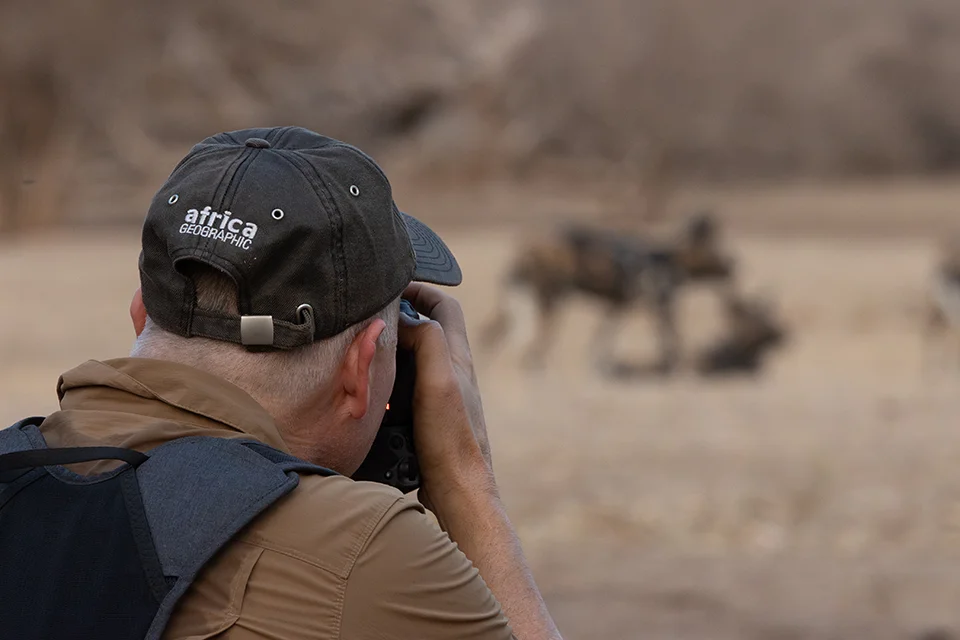
On foot among elephants and wild dogs
Mana Pools is the only national park in Africa with dangerous wildlife where visitors may legally walk unguided. Most travellers still walk with a professional guide, tracking elephant, buffalo and African wild dogs across open floodplain and mixed woodland.
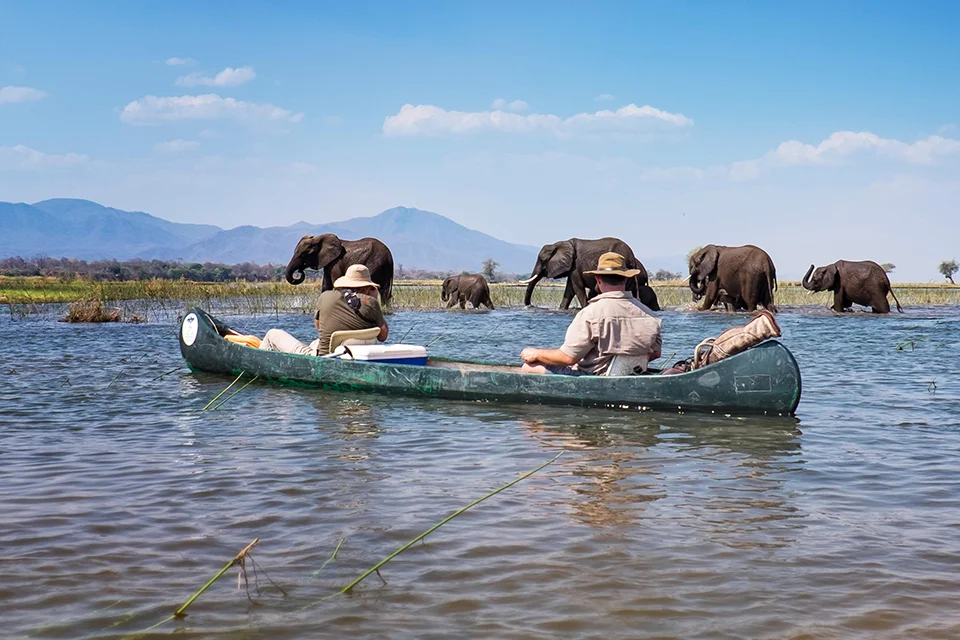
By canoe along the Zambezi's channels
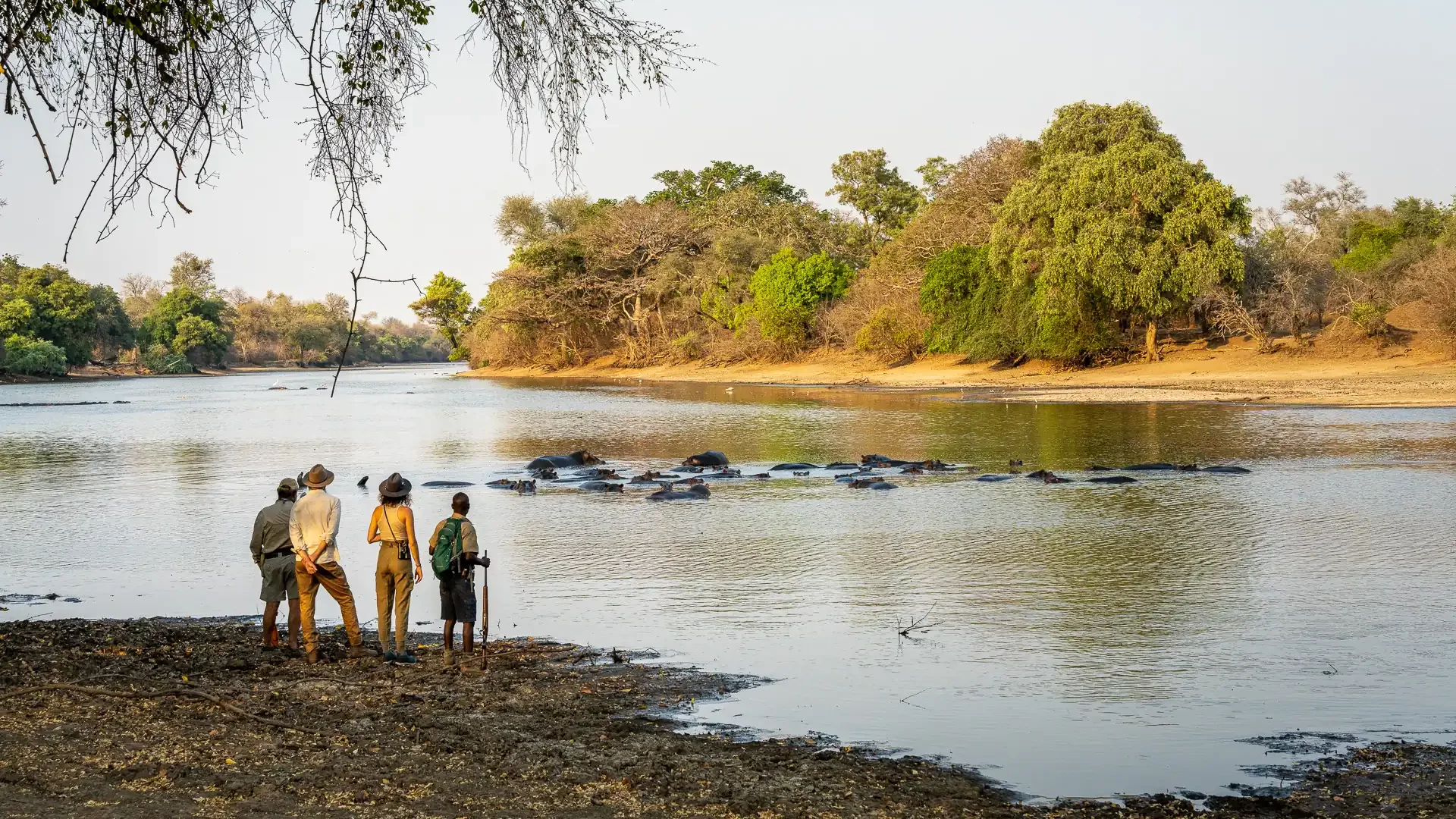
Canoe safaris follow the Zambezi River and its islands and sandbanks, drifting quietly past hippo pods, Nile crocodiles and elephants drinking at the water's edge, with birdlife constant along the banks.
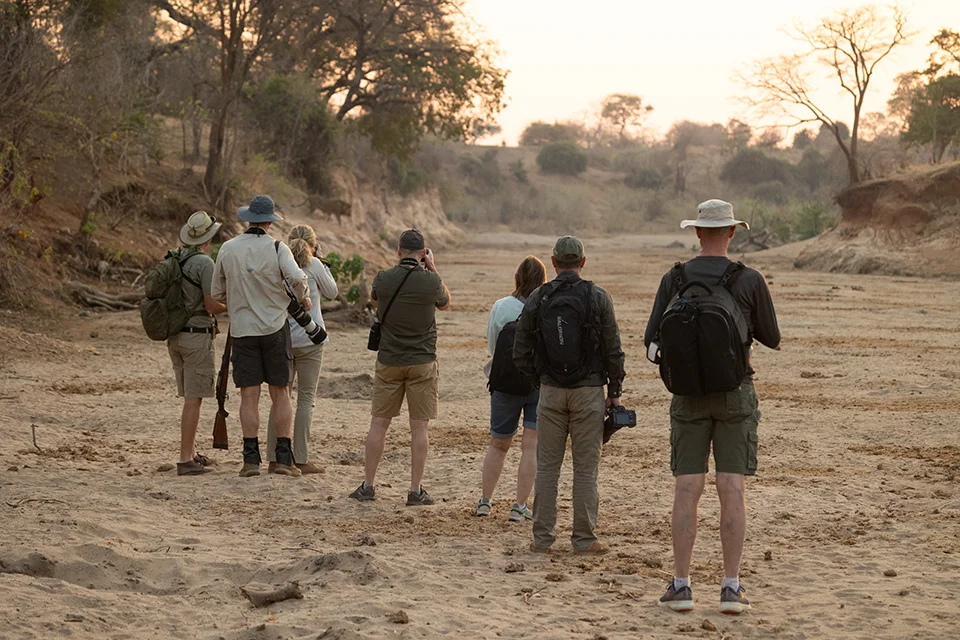
Chitake Springs, a walking-only outpost
Away from the river, at the base of the Zambezi Escarpment, Chitake Springs is reached and explored on foot only. Its dry riverbed draws predators and prey to a single perennial water source, unrelated to any canoe route.
Our favourite Mana Pools safaris
Fitness, thrill and comfort levels
What a walking safari asks of you
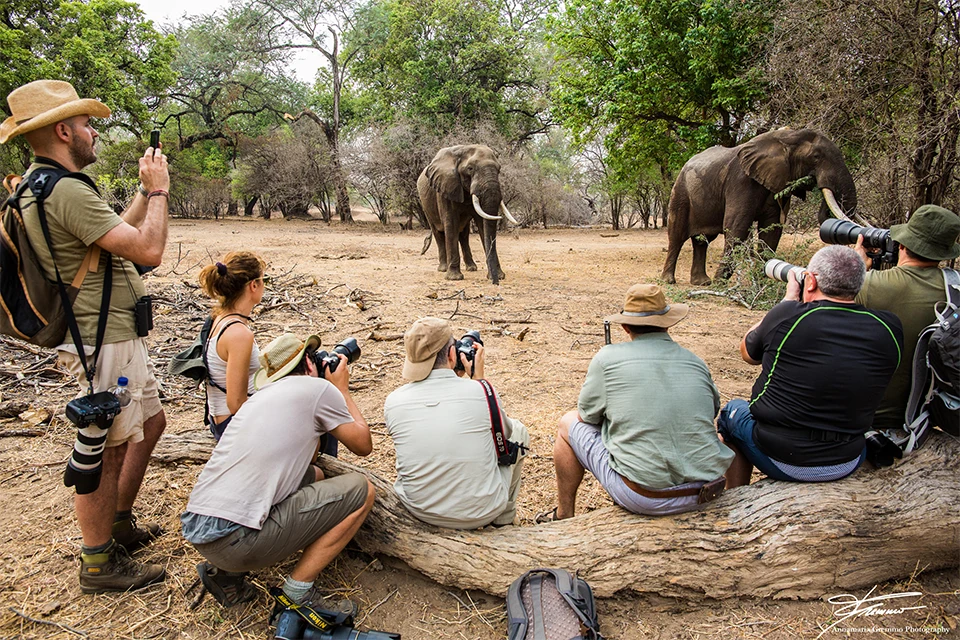
A walking safari demands a reasonable level of fitness, the ability to stay quiet and alert for two to three hours, and comfort with proximity to dangerous wildlife under a guide's direction. Pace is slow and deliberate, dictated by tracks, wind direction and animal movement rather than distance covered. Children are generally only permitted from around 12 years old, and anyone with mobility concerns should discuss this with our safari experts before booking.
What a canoe safari asks of you
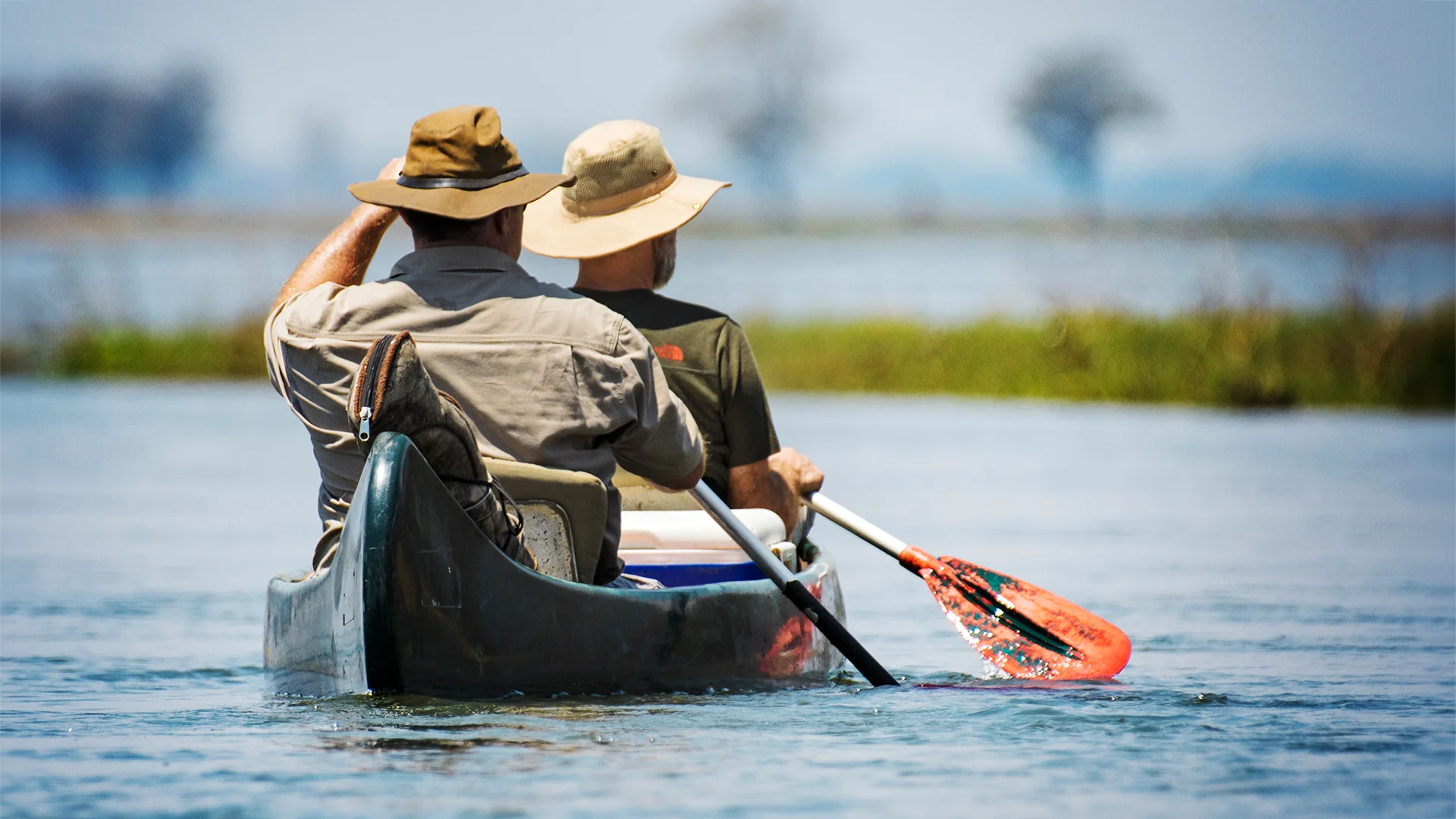
Canoeing is physically gentler than walking and needs no prior paddling experience, though basic swimming ability and comfort on open water both help. Sessions typically run two to four hours, in the cooler morning or late afternoon, with an experienced guide steering or accompanying each canoe closely. It suits a wider age range than walking safaris, and is often preferred by families with children, or guests who are less mobile but still want close, unhurried wildlife encounters.
Wildlife encounters on foot and on water
Sightings you're more likely to get walking
On foot, guides read tracks, dung and wind direction to bring you within a respectful, guided distance of Mana's famously relaxed elephant bulls, and, with luck, a pack of African wild dogs on the move. The sparse floodplain vegetation here makes wild dogs easier to follow on foot than in almost any other African park. Predator sightings on foot also tend to be closer, quieter and considerably more prolonged than anything possible from a game-drive vehicle.
Sightings you're more likely to get by canoe
From a canoe, hippo pods, sunbathing Nile crocodiles and elephants feeding at the water's edge dominate the sightings, alongside some of Mana's 400 recorded bird species, including carmine bee-eaters, African skimmers and the elusive Pel's fishing owl. The low, water-level perspective and near-silent approach also make canoeing an outstanding way to photograph wildlife along the Zambezi without a vehicle anywhere in the frame.
"Most memorable was the buffalo stampeding into the Springs, the build-up as we realised we were between the buffalo and the Springs... closely followed by the back-lit baboons and Lilian's lovebirds drinking, knowing later that the lions were just watching us as we crawled the riverbed," recalls Barenda, a UK guest, of a walking-focused trip to Chitake Springs.
Wish you were here?
Combining both over a multi-night stay
A recommended split for four nights
For a typical four-night stay, we recommend two to three morning walks and one or two canoe outings, leaving an afternoon free for a game drive or simply resting through the heat of the day. Lodges positioned directly on the Zambezi floodplain suit canoe-focused stays, while inland lodges near Chitake Springs favour a walking-led itinerary instead. Many of our longer, multi-lodge itineraries split the stay between both settings, so guests experience Mana Pools from both the land and the water.
Why your guide's licensing matters
Zimbabwe requires separate professional qualifications for walking guides and canoe guides, and the very best Mana Pools guides hold both licences. This detail is not something a DIY booker can easily verify from a lodge website or brochure. Our safari experts vet guiding credentials as part of every itinerary we build, checking qualifications, experience and safety records directly with each lodge, so travellers are never left assessing this alone.
Frequently asked questions
Do both if your itinerary allows it. Walking gets you closest to elephants and African wild dogs on the floodplain, while canoeing offers calm, water-level encounters with hippos, crocodiles and birdlife along the Zambezi. Most guests staying three nights or longer combine the two, with walking usually prioritised in the mornings and canoeing suited to cooler afternoons. Our safari experts can weigh your fitness, interests and travel dates to recommend the right balance for you.
Yes, when led by a professional guide. Mana Pools is the only national park in Africa where dangerous wildlife walking is permitted unguided, but nearly all visitors walk with an experienced, licensed guide for safety and to get more from the experience. Zimbabwean guides undergo some of the most rigorous training and licensing on the continent, and incidents involving guided walkers are extremely rare.
No prior paddling experience is required for a Mana Pools canoe safari. These outings are guided, unhurried and paced for comfort rather than exertion, with an experienced guide steering or accompanying each canoe throughout. Basic swimming ability and comfort on open water are helpful, and guides brief every guest thoroughly on hippo and crocodile safety before setting out onto the Zambezi River each morning.
The dry season, from May to October, suits both activities best. June to August is cooler and pleasant for walking, while September and October are hotter but bring wildlife into tighter concentrations around the remaining water sources. Canoeing depends on adequate river levels, which are usually most reliable earlier in the dry season. The park closes entirely during the rains, from November to around March.
For a typical four-night stay, we recommend two to three guided morning walks and one or two canoe outings, with an afternoon kept free for a game drive or simply resting through the heat of the day. Longer, multi-lodge itineraries allow a deeper split, often dedicating several nights each to a floodplain lodge for canoeing and an inland lodge near Chitake Springs for dedicated walking-focused days on foot.
Most lodges set a minimum age of around 12 years old for guided walking safaris, due to the proximity to dangerous wildlife and the need to stay quiet and alert for extended periods on foot. Canoeing generally suits a much wider age range, though individual lodge policies vary considerably from one property to the next. Confirm exact age requirements with our safari experts when planning a family itinerary to Mana Pools.
Zimbabwe requires separate professional qualifications for walking guides and canoe guides, and the strongest Mana Pools guides hold both licences. This detail is difficult for an independent booker to verify from a lodge website alone, yet it directly affects safety and the quality of your experience. Our safari experts check guiding credentials, experience and safety records directly with each lodge for you.
No, Chitake Springs cannot be reached or explored by canoe safari. It lies inland at the base of the Zambezi Escarpment, well away from the river itself, and is explored on foot only, with guided vehicle transfers to reach it. It remains one of Mana Pools' most rewarding walking-safari settings, where a single perennial water source in an otherwise dry riverbed draws concentrated predator and prey activity late in the dry season.
Start planning your dream safari
Our travel experts will craft a no-obligation itinerary just for you. We have crafted over 5,000 safaris since 1991. Your personal details are protected; we only use this information to contact you.
Why book your safari with us?

Deep Experience & Knowledge
Handcrafted experiential safaris since 1991.
Travel in Africa is about knowing when and where to go, and with whom. A few weeks too early/late or a few kilometres off course, and you could miss the greatest show on Earth. And wouldn’t that be a pity?

Trust & Safety

Make A Difference
We donate a portion of the revenue from every safari sold to carefully selected conservation projects that make a significant difference at ground level.
YOUR safari choice does make a difference - thank you!