
Tailor-made safaris. Since 1991



Trust us to find you the rarest animals, the most spectacular wildlife events, the remotest landscapes and deeply meaningful cultural encounters!
What is the best month to visit Mana Pools National Park?
In Mana Pools, the seasons write themselves onto the land. As the Zambezi's floodwaters recede month by month, the bush dries to dust and bone, sandbanks rise where channels once ran, and a single permanent river becomes the last word in an ever-narrowing story about survival. By October, the heat presses down hard enough that guides speak of it in hushed, half-joking tones, yet this is precisely when elephant, buffalo, lion and wild dog gather in numbers few other parks can match, all drawn to the same dwindling water.
Time your visit to this UNESCO World Heritage Site well, and you're choosing a chapter in that story, from the cool, hushed green of May's reopening to the dust-gold drama of October's peak. Every month shifts the light, the water and the wildlife on show, which is exactly why knowing Mana Pools' calendar matters as much as knowing the park itself.
The best time for a Mana Pools safari is June to October, the core of Zimbabwe's dry season, when shrinking water sources draw wildlife to the Zambezi River and its pools. June and July are cooler and excellent for walking; August sees wildlife concentration build; September and October are hottest, delivering the most reliable sightings but demanding heat tolerance. Mana Pools closes completely from November to April, when seasonal rains flood roads and river crossings.
Mana Pools dry season month by month
May and June: floodwaters recede as the park reopens for the season
July and August: cool mornings, rising wildlife concentration builds
September and October: peak heat, the most reliable sightings of the year
November to April: seasonal rains close most roads and lodges
Mana Pools runs on a single dry season, but conditions shift within it. Water levels, heat and wildlife concentration each move at their own pace, and the difference between a good week and a great one comes down to precise timing.
Mana Pools month by month at a glance
Month(s) | Daytime temperature | Wildlife concentration | Walking & canoe conditions |
|---|---|---|---|
May | Mild, 20-28C | Building, water still fairly widespread | Good, rivers navigable, some roads still wet |
June-July | Cool, 12-25C | Rising steadily as the dry season settles in | Excellent, cool mornings ideal for walking |
August | Warm, 15-30C | High, water sources shrinking fast | Very good, longer walks remain comfortable |
September-October | Hot, 20-40C | Peak, most reliable sightings of the year | Good but demanding, early starts essential |
November-April | Hot & wet, 22-35C | Dispersed, park largely closed to visitors | Not available, park closed for the season |
3 things we love about Mana Pools' dry season
Beyond the month-by-month breakdown above, here is what makes timing your Mana Pools trip around the dry season genuinely worth all the extra planning that goes into it:
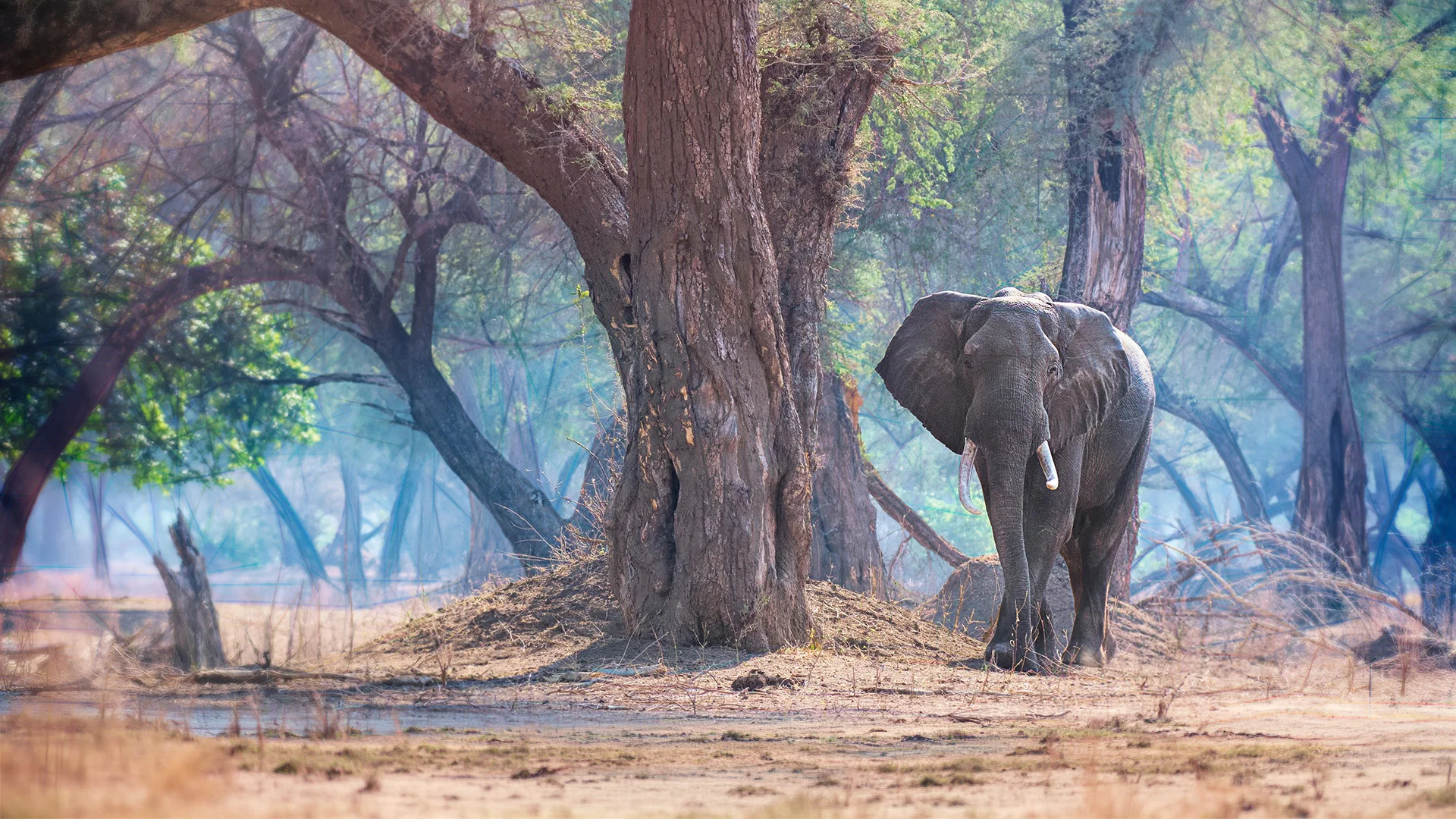
Elephants on their hind legs: as pans dry out through the season, bull elephants stand upright against Ana trees for seedpods, a sight tied directly to the dry months.
Walking safaris at their best: cooler June and July mornings make Mana Pools' unguided walking trails, unique in Africa, most comfortable to explore on foot.
The famous blue light: as the floodplain thins through the dry season, dust and low sun combine to create Mana Pools' signature golden and blue photographic light.
The dry season broken down
May and June: the floodplain reopens
As the rains recede, Mana Pools reopens for the season. Floodwaters are still receding in May, so some inland roads remain soft, but the Zambezi's channels are full and canoe safaris run well. Mornings are cool, walking is comfortable, and visitor numbers stay low.
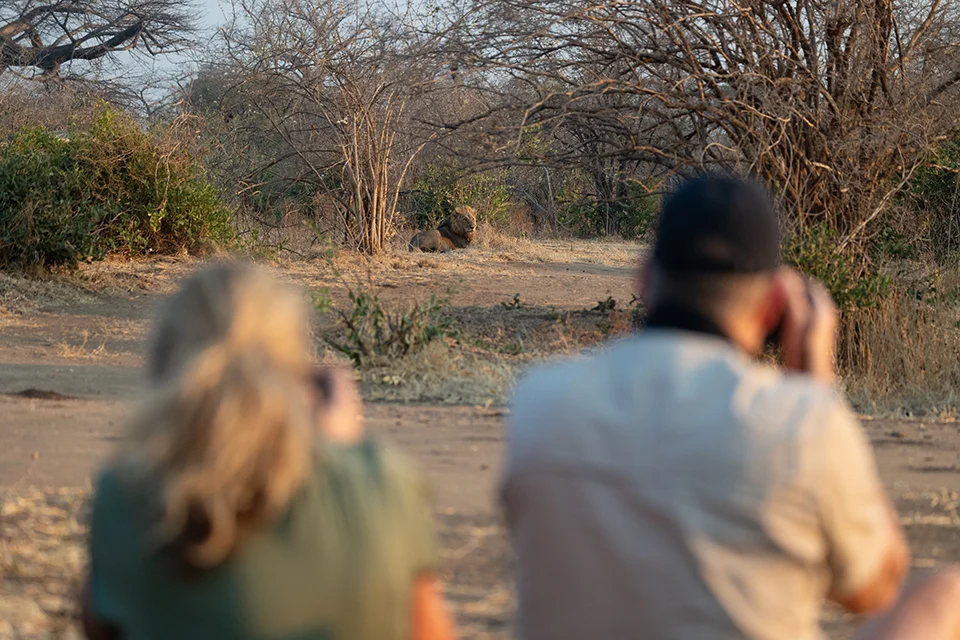
July and August: the sweet spot builds
By July, dry-season conditions are well established. Inland pans begin drying out, pulling wildlife toward the river and Chitake Springs. Cooler temperatures make for long, comfortable walks, and by August, sightings of elephant, buffalo and predators along the floodplain grow more concentrated.
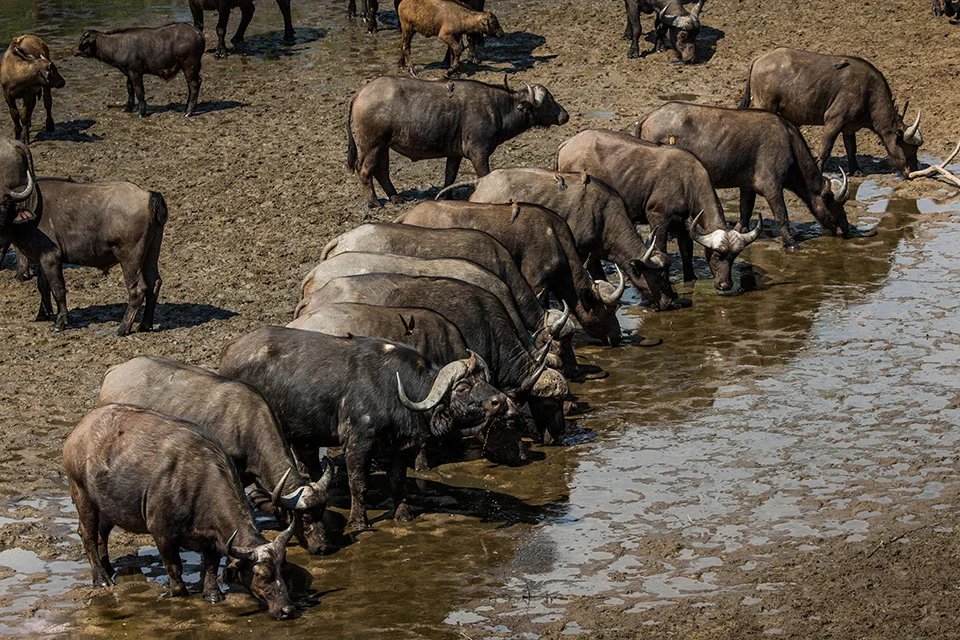
September and October: peak heat, peak wildlife
September and October bring Mana Pools' most reliable wildlife viewing, as nearly all water outside the Zambezi has dried up. Daytime temperatures regularly exceed 35 degrees, and Zimbabwean guides sometimes call October the 'suicide month' for its intensity. Early starts and shaded midday hours are essential.
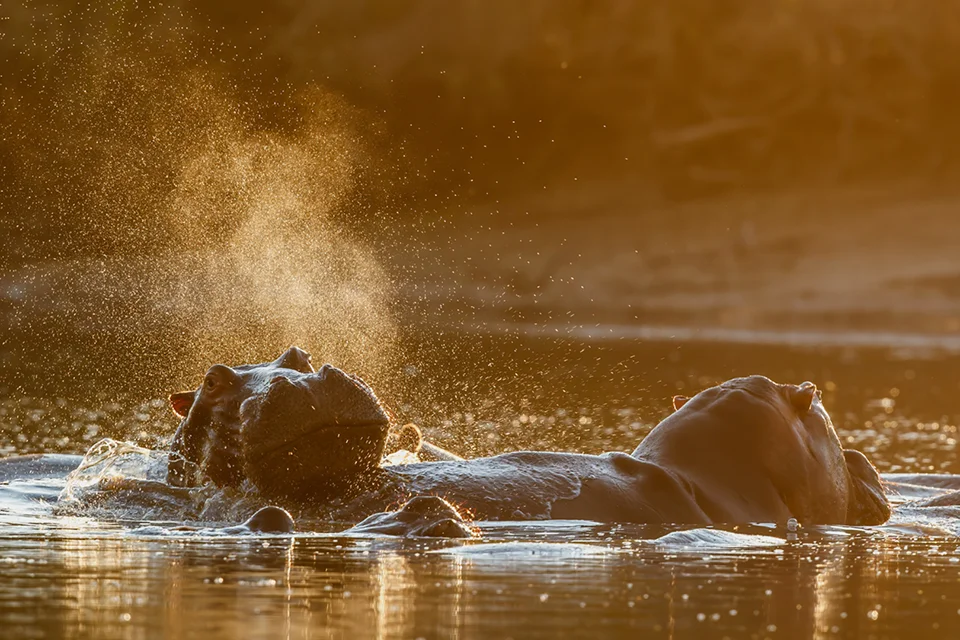
November to April: the park closes
Seasonal rains typically begin in November, flooding roads, filling pans across the landscape, and dispersing wildlife away from the river. Most lodges close entirely during this period, reopening only once conditions allow safe access, usually from May.
Our favourite Mana Pools safaris
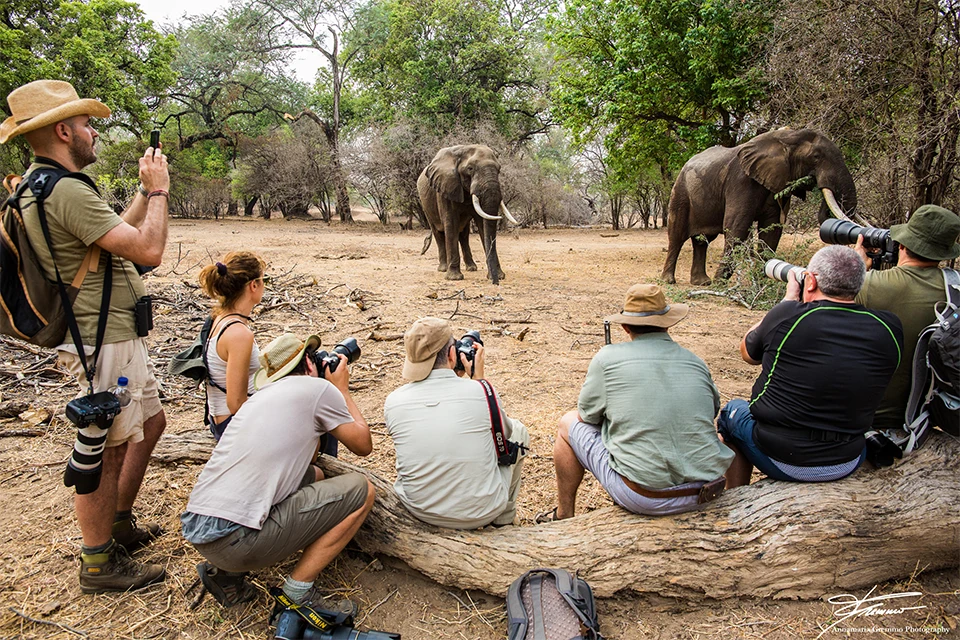
Why October earns its fearsome nickname
What 'suicide month' actually means on the ground
The nickname reflects heat, not danger to visitors. By October, Mana Pools' inland pans have dried out completely, temperatures regularly climb past 40 degrees by midday, and the bush turns to dust and bare branches underfoot. It is also, paradoxically, when sightings are at their most concentrated and predictable of the year, since virtually all wildlife now depends on the Zambezi and its remaining pools to drink.
How specialists manage the heat
Experienced Zimbabwean guides structure October days around the heat rather than against it: early starts well before sunrise, activities paused through the hottest hours, and afternoon drives timed for the cooler, golden light before dusk. Guests who follow this rhythm, rather than fighting it, often describe October as their most productive wildlife photography of the entire year, heat included.
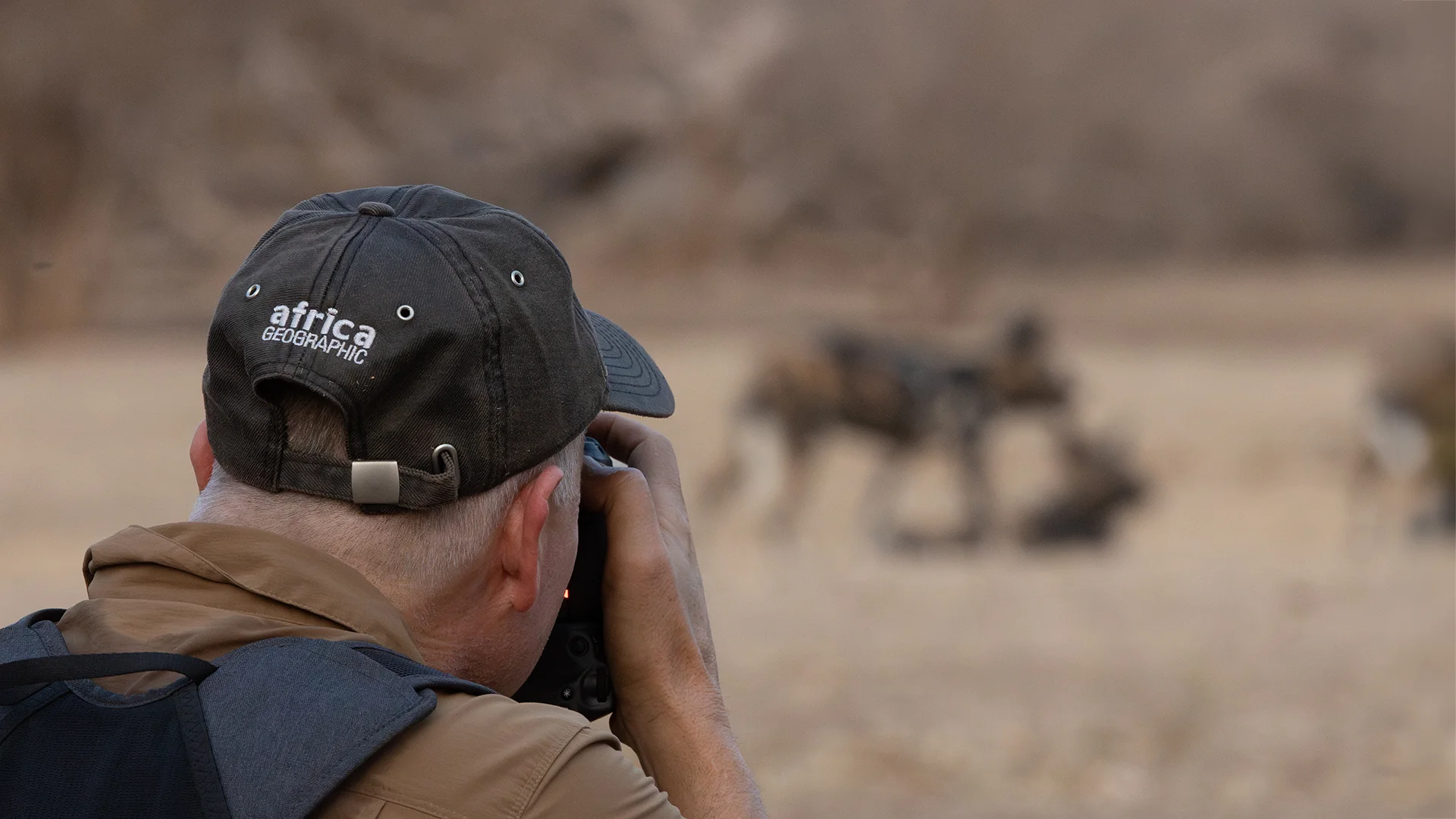
Matching walking and canoe safaris to the calendar
Best months for walking safaris
Walking safaris are best from May to August, when cooler mornings and moderate midday heat make extended time on foot comfortable. September and October remain excellent for walking in terms of wildlife activity, but shorter, earlier outings are advisable given the heat. Mana Pools remains the only national park in Africa where guests may walk unguided among dangerous wildlife, though going with an experienced guide is strongly recommended for safety and for getting the most from the experience.
Best months for canoe safaris
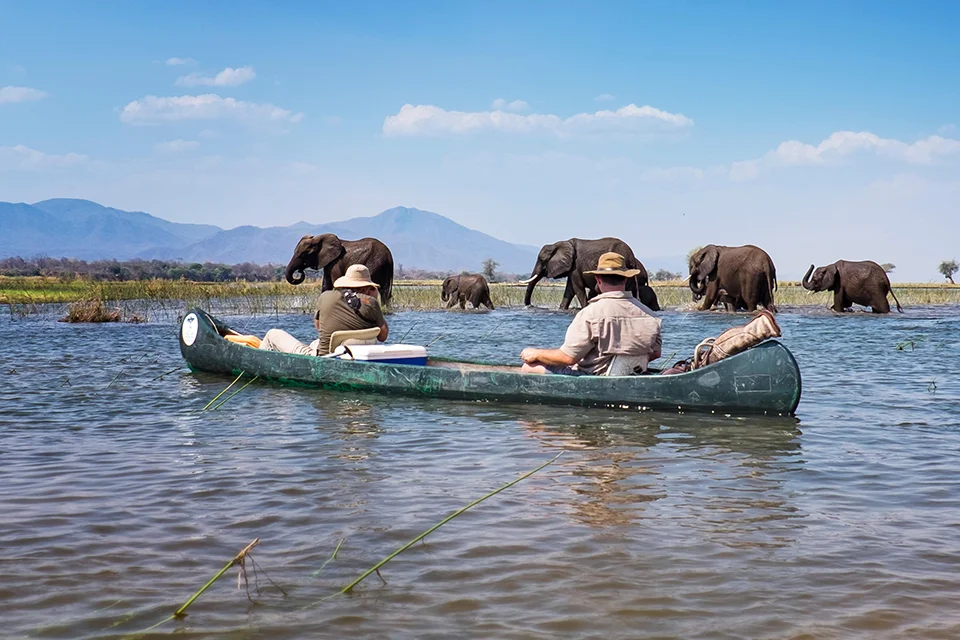
Canoe safaris depend on water levels rather than temperature. May and June offer the fullest channels and the most scenic paddling, though some stretches may still run fast shortly after the rains have receded. By September and October, lower water levels concentrate hippo and crocodile activity into fewer channels, heightening the experience but requiring a guide who reads the river's moods well.
Quick planning checklist by season
May and June: book early for cooler walking safaris and full river channels, before peak demand
July and August: reserve well ahead, since this is peak season for concentrated wildlife sightings
September and October: pack light, breathable clothing and expect daytime heat above 35 degrees
November to April: Mana Pools is closed, so plan an alternative Zimbabwe or Zambia itinerary
Charter flights are the most comfortable way into the park during September and October heat
Malaria prophylaxis is recommended year-round in Mana Pools, regardless of which month you pick
Photographers should favour June to August for cooler light and October for concentration
Ask our specialists which exact week suits your priorities most before booking your dates
Wish you were here?
How our specialists time your Mana Pools safari
Why the exact week matters more than the month
Two safaris booked a fortnight apart in Mana Pools can look entirely different, depending on rainfall the previous season and how far the dry season has progressed. As our destination expert Nadia Lautenbach puts it: 'Mana Pools feels utterly wild and in perfect balance, elephants feeding behind you, buffalo heading to drink, hyena on the move at dusk, hippo grazing, all unfolding quietly alongside the timeless flow of the Zambezi.' Getting that right depends on the exact week, not the month.
What our specialists know that generic guides don't
Our Zimbabwe specialists track conditions at Mana Pools throughout each season, from water levels at Chitake Springs to which lodges open earliest after the rains. That detail decides whether you catch the cooler comfort of June, the concentrated drama of October, or the quiet, verdant edge of the season in May.
“The next destination was to Mana Pools in Zimbabwe... Wild dogs drinking by the camp, a herd of buffalos coming to drink at the springs, lions feeding on a kudu below where we were sitting, lions in trees, etc. Overall, this has to be the best safari experience to date. The wildlife and birds are too numerous to mention and will take some beating.” – Mr R Whittle
Frequently asked questions
June to October is the best period, with each month offering something different. June and July are cooler and ideal for walking safaris. August brings rising wildlife concentration as water sources shrink. September and October are hottest but deliver the most reliable sightings, since nearly all water outside the Zambezi River has dried up by then. The park closes entirely from November to April during the rains.
No. Mana Pools closes to visitors from around November through April, once seasonal rains begin. Roads become impassable, river levels rise, and wildlife disperses away from the Zambezi across a landscape no longer dependent on it for water. Most lodges close entirely during this period and reopen only once conditions allow safe access again, typically from May onward, depending on how that year's rains have behaved.
It is a term some Zimbabwean guides use informally to describe October's intense heat, when daytime temperatures regularly exceed 40 degrees and almost all water outside the Zambezi River has dried up. It refers to the physical demands of the heat on visitors and staff, not to any danger from wildlife. Despite the name, October also delivers some of the most concentrated and reliable wildlife sightings of the year.
June and July are the coolest months, with mild days and genuinely cold early mornings and nights, sometimes dropping below 10 degrees. These conditions make for particularly comfortable walking safaris, since exertion in the bush is far more manageable than during the heat of September and October. Wildlife concentration is still building at this stage of the dry season, though sightings remain excellent throughout.
May and June typically offer the fullest, most scenic river channels for canoeing, shortly after the rains have receded and before the heat of later months sets in. By September and October, lower water levels concentrate hippo and crocodile activity into narrower channels, which can heighten encounters but requires a guide experienced in reading the river's changing moods and hazards at that time of year.
Walking safaris run throughout the May to October dry season, though conditions vary. June to August offer the most comfortable temperatures for extended time on foot. September and October remain rewarding for wildlife activity, but outings are typically shorter and start earlier to avoid the worst of the midday heat. Mana Pools closes entirely during the rainy season, from November to April each year, with no walking possible then.
Because Mana Pools has a limited number of lodges and a short dry season, the peak months of July to October should be booked six to twelve months ahead, particularly for sought-after lodges near Chitake Springs or the Zambezi floodplain. May and June, the quieter shoulder months, generally allow more flexibility, though early booking is still advisable for the best lodge and camp choices available.
Yes, in the sense that the Zambezi's floodplain and surrounding pans fill with seasonal rain most years between November and April, closing the park to visitors entirely. The extent and timing vary annually depending on regional rainfall, which is why some lodges open slightly earlier or later in May, and why our specialists check current ground conditions before confirming exact travel dates each season.
Lightweight, breathable, neutral-coloured clothing is essential, along with a wide-brimmed hat, high-factor sunscreen and more drinking water than you expect to need in the heat. Early starts and quiet midday hours are standard practice during these hottest months of the year. A good pair of walking shoes matters too, since much of Mana Pools' appeal lies in exploring on foot alongside an experienced local guide.
May sits at the edge of the dry season, with mild temperatures, low visitor numbers and full river channels ideal for canoeing along the Zambezi. Some inland roads may still be soft depending on that year's rains, and a handful of lodges open slightly later than others as a result. For travellers prioritising quiet, uncrowded conditions over maximum wildlife concentration, May is a genuinely rewarding trade-off.
Start planning your dream safari
Our travel experts will craft a no-obligation itinerary just for you. We have crafted over 5,000 safaris since 1991. Your personal details are protected; we only use this information to contact you.
Why book your safari with us?

Deep Experience & Knowledge
Handcrafted experiential safaris since 1991.
Travel in Africa is about knowing when and where to go, and with whom. A few weeks too early/late or a few kilometres off course, and you could miss the greatest show on Earth. And wouldn’t that be a pity?

Trust & Safety

Make A Difference
We donate a portion of the revenue from every safari sold to carefully selected conservation projects that make a significant difference at ground level.
YOUR safari choice does make a difference - thank you!