

Tailor-made safaris. Since 1991

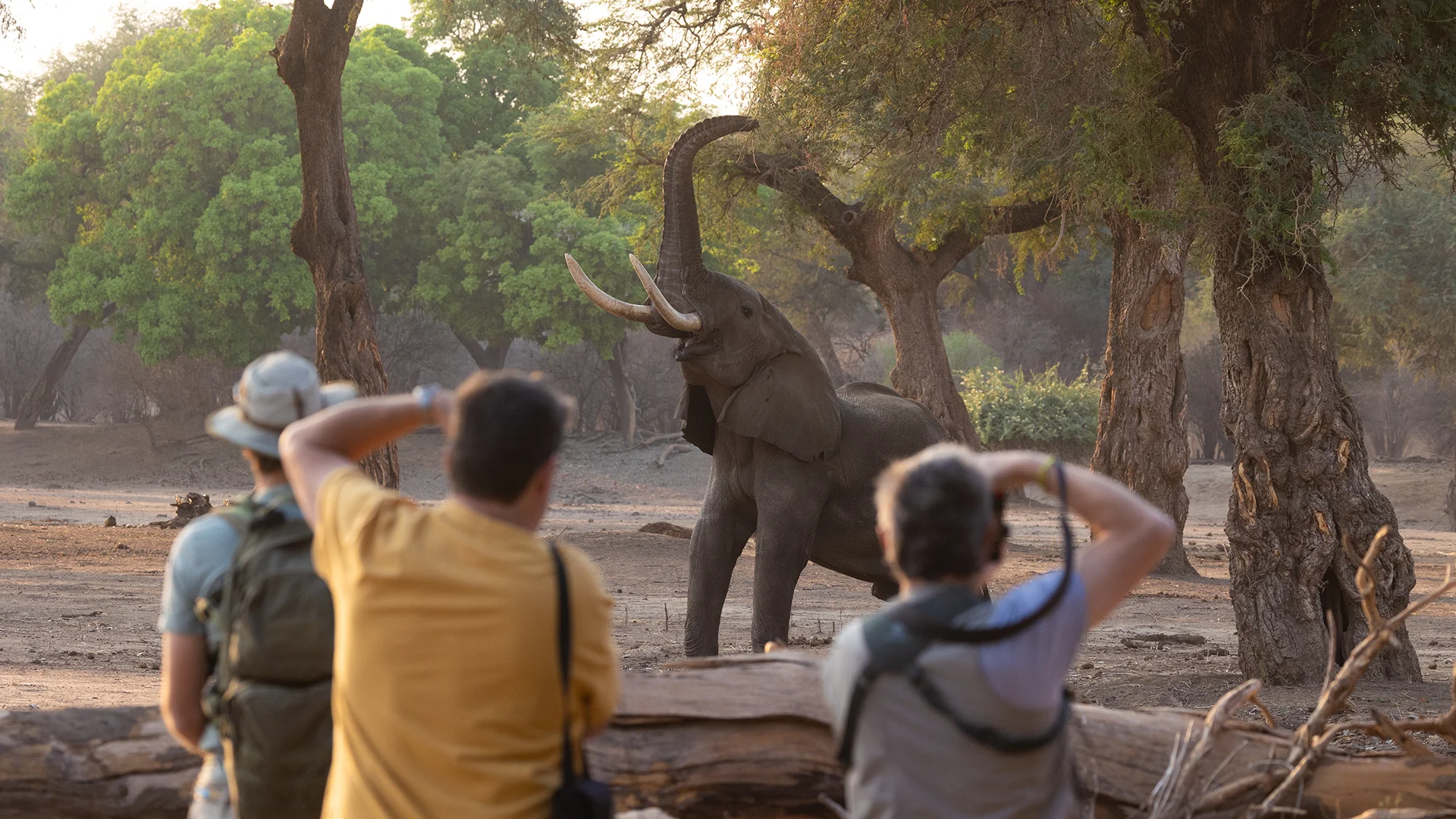


Big 5 photography tips
Africa Geographic's safari specialists and Africa Geographic Photographer of the Year finalists share their most practical advice for photographing the Big 5 on safari; namely lion, leopard, elephant, rhino and buffalo – from your first shot to your best one.
Photographing the Big 5 is one of the most rewarding challenges in wildlife photography. You're working with unpredictable animals in variable light, from a moving vehicle, often at a distance. The tips in this guide come from people who spend significant time doing exactly this – Africa Geographic's on-the-ground safari specialists, and the finalists of our annual Photographer of the Year competition. Whether you're picking up a camera for the first time on safari, looking to sharpen your technique, or considering a photographic safari, this is where to start.
Big 5 photography safaris we love
These Africa Geographic itineraries offer some of the strongest photographic conditions for the Big 5 – combining private reserve access, specialist guiding, and destinations known for excellent light and wildlife density.
MalaMala and Mashatu luxury safari: Pair two of southern Africa's finest Big 5 reserves – MalaMala in Sabi Sands with its extraordinary leopard and lion sightings, and Mashatu in the Tuli Block with its celebrated underground photographic hide. 8 days. View this safari →
Maasai Mara Explorer: East Africa's most iconic safari canvas, with lions, leopard, elephant and buffalo across open plains that make for expansive, contextual wildlife photography. Specialist guiding and early-morning access included. 7 days. Explore this safari →
Classic Botswana Big 5 safari: Northern Botswana's private concessions offer off-road access and low visitor numbers, giving photographers unhurried time with subjects across wetland, floodplain and woodland. 9 days. Discover this safari →
A guide to photographing each of the Big 5
Lion
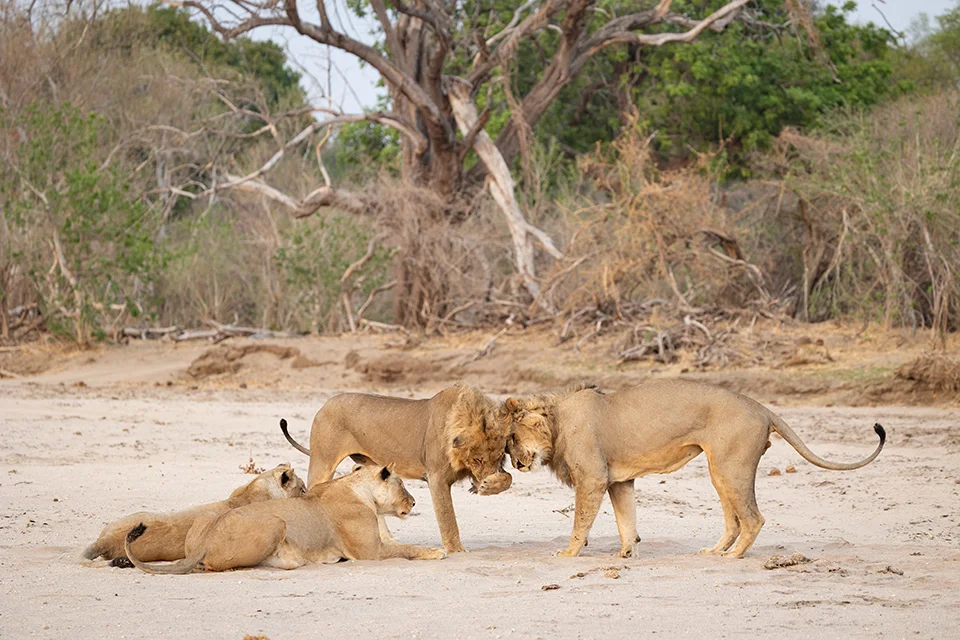
Lions are often the most accessible of the Big 5 for photography – they're large, active in early morning and late afternoon, and frequently found in open country where long telephoto lenses give you a full frame without disturbance. The key is patience and position. A resting lion is a reliable photographic subject, but the real images come from behaviour: the moment of a yawn, a cub at play, a male scanning his territory.
Jordan Fry, Photographer of the Year finalist, watches for behavioural cues: “Understanding your subject is key. For example, right before a lion yawns it will curl its tongue. Recognising this behaviour will allow you to quickly compose your shot and capture the yawn at its peak.”
Greater Kruger's private reserves – MalaMala, Sabi Sands, Timbavati – are among Africa's most reliable for lion encounters. Luis Gama, Africa Geographic safari expert, highlights MalaMala specifically: “At MalaMala I found the perfect blend of comfort and wilderness – unfenced with Kruger, leopard sightings around every corner, and effortless Big Five encounters.”
Leopard
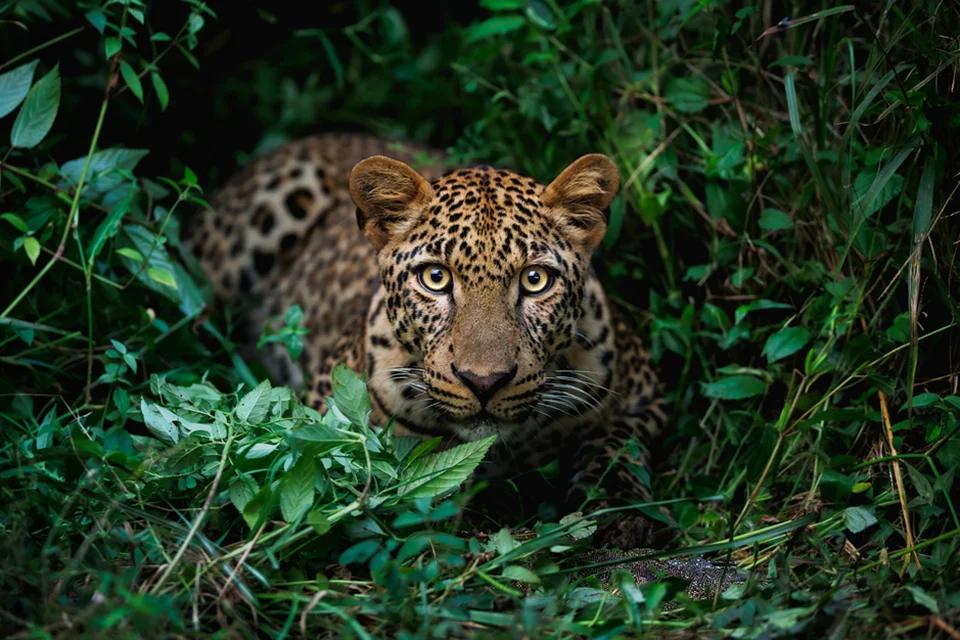
Leopards are the most challenging of the Big 5 to photograph well. They're secretive, largely nocturnal, and when found, often in dense vegetation. Private reserves that allow night drives open up a completely different photographic window. Sabi Sand, MalaMala and Timbavati consistently produce high leopard encounter rates, largely because the animals have been habituated to vehicles over generations.
For the Mashatu underground hide, leopard photography at close range and eye level is possible in a way that's very difficult elsewhere. Africa Geographic CEO Simon Espley's enthusiasm for this location is specific: the baobab and arid Tuli Block landscape create a backdrop unlike anything in the wetter reserves to the north.
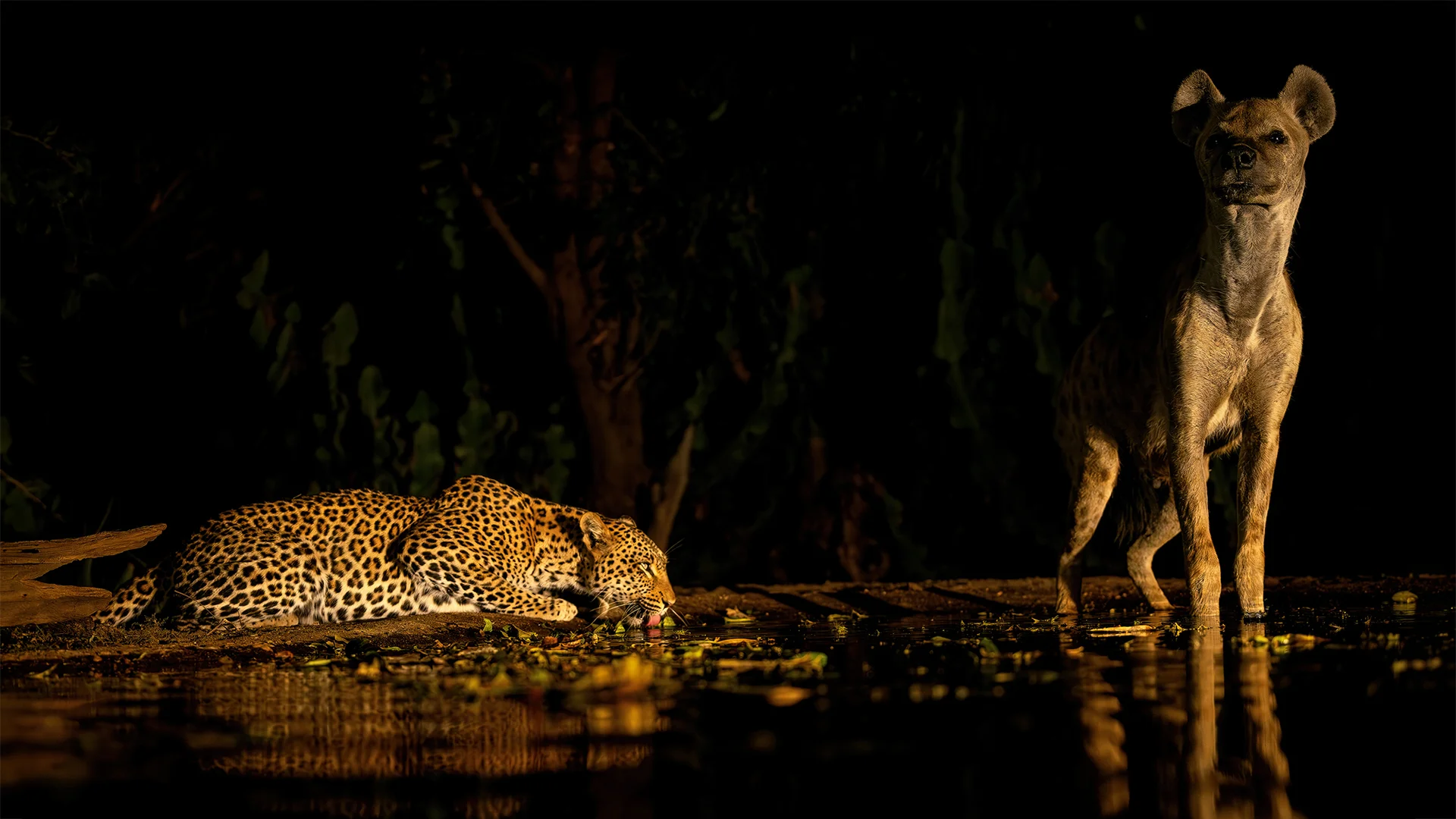
Photographer of the Year finalist Harry Martin's advice on eye contact applies especially to leopard: “The simple nature of a leopard portrait is enhanced a hundredfold by the connection generated by intense eye contact. Take a variety of images where your subject is looking around and moving, and then decide afterwards which you prefer.”
Elephant
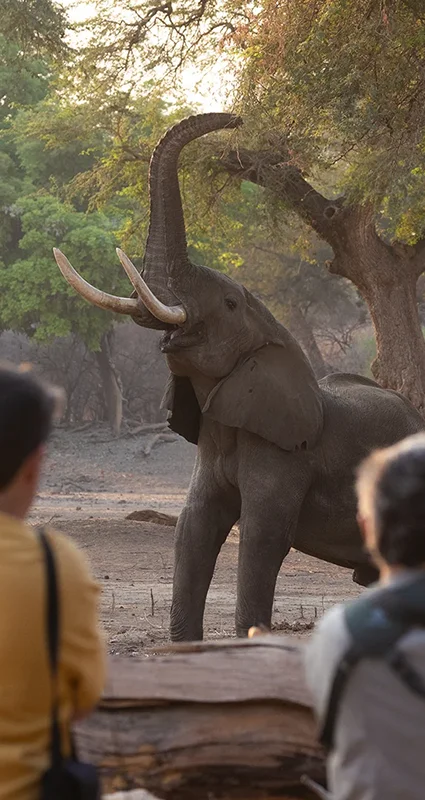
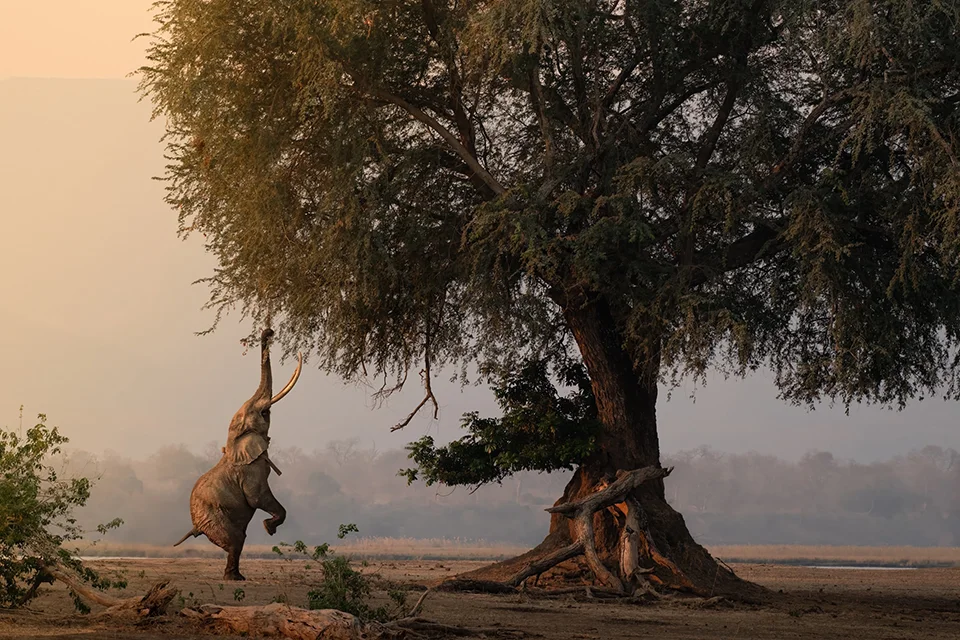
Elephants offer extraordinary photographic range – from tightly framed portrait shots to wide environmental images showing the animal in its landscape. For eye-level waterhole photography, sunken hides are unmatched. Elephants visit waterholes throughout the day and can be photographed from behind the hide's concealed position with minimal disturbance.
Nili Gudhka, Photographer of the Year finalist from Kenya, photographs elephants regularly in Amboseli with Kilimanjaro as backdrop: “You must first understand the intricacies of animal behaviour. Once you understand their behaviour, you will be able to anticipate their next move. When an animal feels comfortable with your presence, you will be able to document its natural behaviour and capture beautiful photographs.”
Sam Hankss, Photographer of the Year finalist working in Namibia's Damaraland, offers a perspective shift: “Don't judge a wildlife sighting based on a photo. Judge it on how the moment made you feel. Too often people assess the sighting on whether they managed to get a good photo or not.”
Rhino
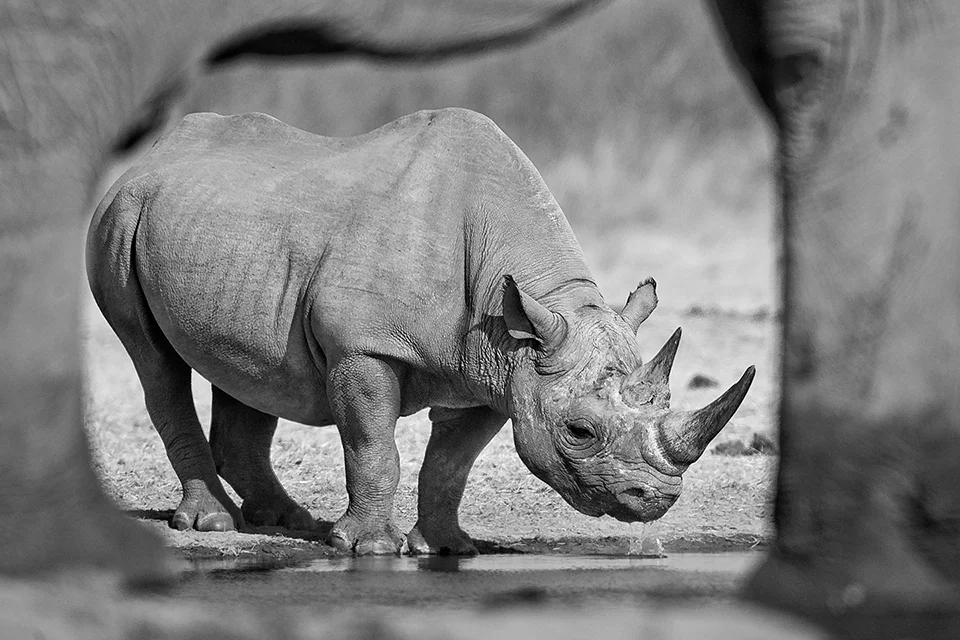
Rhino photography rewards early-morning positioning and patience. White rhinos, more placid and often found on open grassland, are more accessible for photography than the solitary, denser-habitat black rhino. In South Africa, Madikwe, Hluhluwe-iMfolozi and Pilanesberg offer good white rhino encounters. For a Botswana rhino encounter, head to Moremi Game Reserve, especially around Chief’s Island.
Keep your distance – rhinos can move fast and unexpectedly. Let the guide position the vehicle. Given the species' conservation status, every photographic encounter is something to approach with both the camera and the privilege firmly in mind.
Buffalo
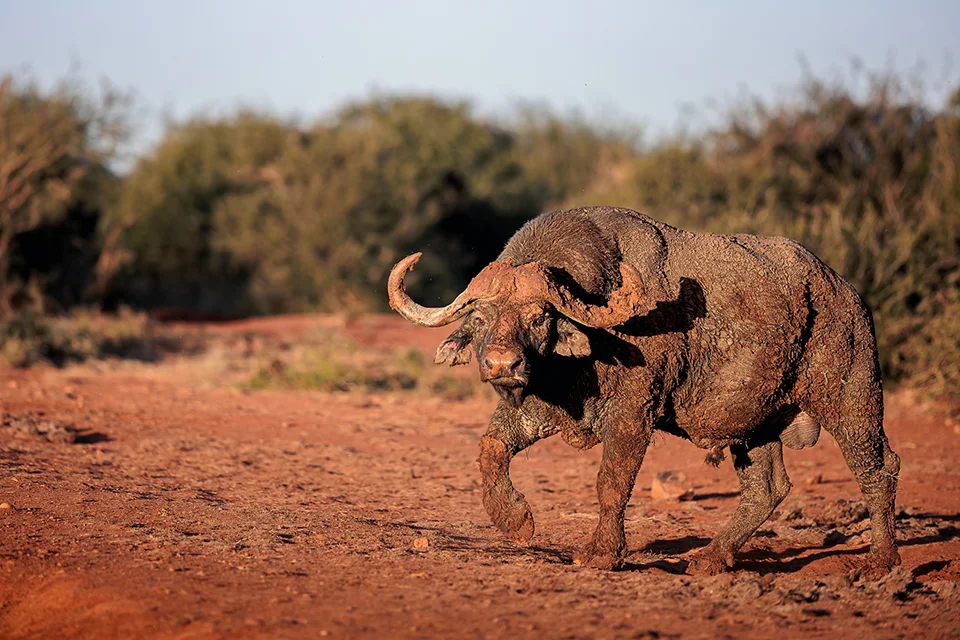
Buffalo are often overlooked as a photographic subject because they're perceived as predictable. But large herds moving through dust at golden hour, or old dagga bulls wallowing in a muddy pan, are genuinely compelling compositions. Eric Coiffier, Photographer of the Year finalist, spent extended time in the Maasai Mara photographing a buffalo-lion encounter – the kind of behavioural image that requires exactly the patience and guide relationship he describes: “Spend enough time in the same location to understand the environment, relationships and behaviours of animals in a given area. The key element is your local guide, who must perfectly know nature and wildlife, allowing him to anticipate reactions and behaviours.”
The foundation: gear, settings and timing
Camera gear for safari
You don't need a professional setup to photograph the Big 5, but certain basics make a significant difference. A telephoto lens with a focal length of at least 300mm gives you working distance from potentially dangerous animals and enough reach to fill the frame with a distant subject. A 400–600mm lens is preferable for shy or distant species. Pair it with a camera body that has a fast autofocus system and a reasonable burst rate – wildlife moves quickly and moments don't repeat.
A bean bag or window mount is far more useful on a game drive vehicle than a tripod. It stabilises your lens along the vehicle's edge and lets you pan smoothly when following movement. Bring high-capacity, fast memory cards; you'll shoot more frames than you expect. Keep spare batteries charged. Dust is a constant in dry-season reserves – a camera bag with a good seal and a dry cloth for your lens are worth their weight.
Camera settings to start with
Turgay Uzer, Africa Geographic Photographer of the Year 2025 finalist, puts it simply: find the best guide you can. “There is no substitute for expertise on an African safari. An expert guide will make or break your safari. And if you can find one with photography expertise, you are golden.”
On settings: shoot in RAW. It gives you maximum flexibility for recovering detail in high-contrast African light. Set your shutter speed to at least 1/1000s for animals in motion – faster (1/2000s or above) for flight, running, or close-range action. Africa's light shifts rapidly from the soft warmth of golden hour to flat midday glare; check your histogram regularly.
Devon Jenkin, Photographer of the Year finalist, adds a useful habit: “Knowing the placement of my camera buttons and their functions without looking at them was essential in capturing one of my best shots. I often practise changing my settings with my eye on the viewfinder at quieter sightings once I have a safety shot in the bag.”
Timing and light
The golden hours – the 45 to 90 minutes after sunrise and before sunset – produce the most photogenic light and also coincide with peak animal activity. Tania Cholwich, Photographer of the Year finalist, notes that midday sun creates unflattering, high-contrast shadows, though it can work for dramatic silhouettes and backlighting through dust or mist. Plan your game drives to be in the field for both golden hours. Most private lodges in Greater Kruger and Botswana offer pre-dawn departures specifically for this reason.
Lucy Gemmill, Photographer of the Year finalist, brings a patience-first approach from landscape photography: “I have learnt to wait that extra hour or so after sunset, to get to the sunrise spot well before sun up, so that you're ready and not flustered.”
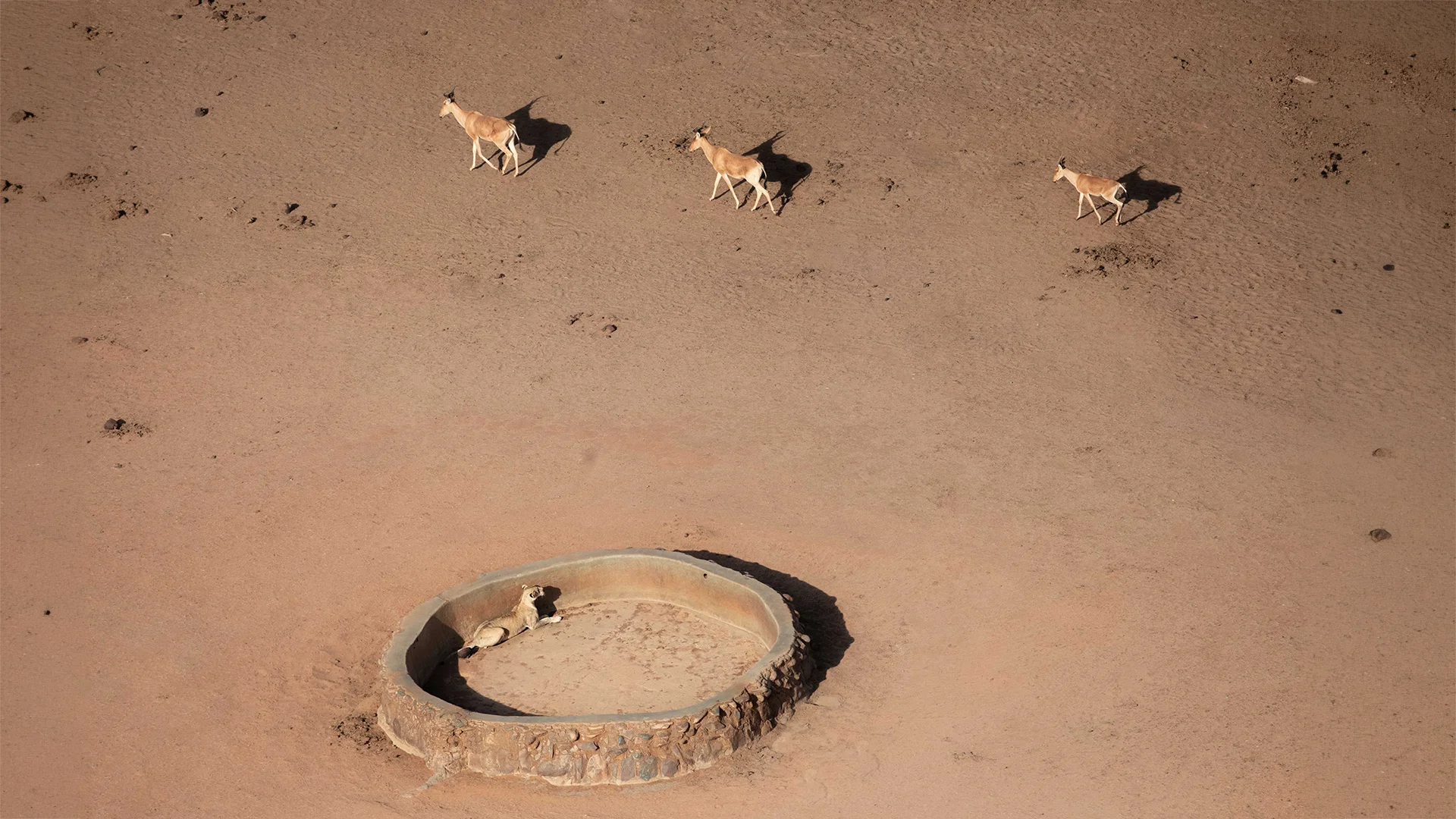
Camera position and composition
Get low and stay level
Camera position is the single factor most likely to transform a decent shot into a compelling one. Harry Martin, Photographer of the Year finalist, is direct about this: “The position of the camera for any photograph is the single most important factor dictating the final result and is so often overlooked. Constantly pay attention to the position of your camera relative to your subject, taking note of any background distractions, angle of light, and how close you are.”
Eye-level shots create intimacy and connection. Shooting down onto an animal from a high vehicle roof produces a very different – and usually weaker – image than one taken at or near eye level. Hendrick Louw, Photographer of the Year finalist, makes this a rule: “Vantage point gives intimacy and connection. Always try to be on eye level.”
This is one reason specialist photographic hides are so valued. The underground hide at Mashatu Game Reserve in Botswana's Tuli Block positions photographers at ground level, looking out across a waterhole at eye level with approaching elephant, leopard and other species. Africa Geographic CEO Simon Espley describes it as one of his all-time favourite wildlife experiences: “Mashatu in Botswana's Tuli Block is one of Africa's best places for leopard sightings, and the arid landscape and ancient baobab trees as backdrop ensure excellent photos of my favourite big cat. The underground photo hide is one of my all-time favourite wildlife experiences.”
Composition and story
Roan Carr-Hartley, Photographer of the Year finalist, seeks the quiet moment over the obvious one: “The most powerful images often aren't the bold, obvious moments, but the quiet, intricate interactions between unexpected elements. Finding unique angles can completely transform even the most ordinary scene into something special.”
Mark Fernley, Photographer of the Year finalist, chose to keep a mountain gorilla small in the frame so the forest atmosphere could become part of the photograph: “The strongest frame often comes from patience, positioning, and waiting for behaviour that tells a different story. Sometimes context is what makes an image feel rare.”
Laura Dyer, Photographer of the Year finalist, recommends changing angles within a single sighting: “A low-angle photograph can be a lot more impactful, and backlighting can tell a very different story to front lighting. In a lot of situations, using the angle and light source well can allow you to take a variety of images in one sighting, enhancing your portfolio.”
Wish you were here?
Practical tips for better Big 5 images
Always be ready
Greg du Toit, Photographer of the Year finalist, is unequivocal in his advice: “In the wilderness, remarkable moments don't send a warning. The rarest sightings and most compelling photographs often happen when you least expect them. If your camera isn't with you, the opportunity is already gone.”
Stick with a subject
Hendrik Louw's advice is to resist the urge to move on: “Once you have a subject that works, stick with it. Do not run to the next subject unnecessarily. Shoot. Observe. Enjoy your subject for what it is. Shoot some more. The best shot is rarely the first one.”
Shoot with passion, not obligation
Amit Eshel, Photographer of the Year runner up, links photographic quality directly to genuine interest: “The secret to exceptional photography isn't just technical skill – it's genuine interest. Focus your lens on the animals and environments that move you most. When you invest your heart into a project, that passion translates into the frame.”
Frequently asked questions
Photographing Africa's Big 5 – lion, leopard, elephant, rhino and buffalo – requires the right combination of gear, settings, timing, and positioning. Key tips include shooting during the golden hours of early morning and late afternoon, using a telephoto lens of at least 300mm, setting a shutter speed of 1/1000s or faster for moving subjects, and keeping your camera ready at all times. Specialist photographic hides, such as the underground hide at Mashatu in Botswana's Tuli Block, offer eye-level angles unavailable from a standard game drive vehicle. Private reserves across Greater Kruger and northern Botswana allow off-road driving, which significantly improves photographic positioning for all five species. Africa Geographic safari specialists recommend combining two complementary reserves for the strongest Big 5 photographic itinerary.
A modern mirrorless or DSLR camera with fast autofocus and burst capability is well suited to Big 5 photography. The lens matters more than the body: a telephoto zoom in the 300–500mm range is the most useful single lens on safari. You don't need a high-end professional camera to get good Big 5 images, but faster autofocus systems do give you a higher keeper rate when animals are moving or in low-light conditions at dawn and dusk.
Shoot in RAW for maximum editing flexibility. Use shutter priority or manual exposure. Set your shutter speed to at least 1/1000s for animals in motion, and 1/2000s or faster for running, flying or action sequences. Keep your ISO as low as the light allows, but don't sacrifice shutter speed for a lower ISO. In golden-hour low light, ISO 800–3200 on a modern sensor gives usable results. Autofocus set to continuous tracking mode is the most reliable for moving subjects.
The first 90 minutes after sunrise and the last 90 minutes before sunset – the golden hours – produce the best light and the highest animal activity. During these periods, light is directional and warm, animals are moving, feeding and drinking, and dust or mist can add atmosphere to wide shots. Avoid photographing in harsh midday sun unless specifically working with silhouette, backlight or shadow effects. Most private lodge safaris depart before dawn to catch the best of the morning.
Yes, particularly for elephant, leopard and plains wildlife. The underground hide at Mashatu Game Reserve in Botswana's Tuli Block is among Africa's best-known specialist photographic hides, positioning photographers at eye level with animals visiting the waterhole. Eye-level shots are categorically different in impact from vehicle-top images. Specialist hides also remove the vehicle noise and motion that can disturb animals at critical moments. If Big 5 photography is a priority, building a hide visit into your itinerary is worth the planning.
Greater Kruger's private reserves – particularly MalaMala, Sabi Sand and Timbavati – are consistently strong for all five species with excellent access and habituated animals. For specialist photography, Mashatu in Botswana adds the underground hide option. The Maasai Mara in Kenya offers exceptional open-plain photography for lion, elephant and buffalo, with good leopard sightings in the private conservancies. Madikwe is a strong malaria-free option for photographers with families or health considerations.
A 300mm lens is the practical minimum for wildlife photography on safari. A 400–500mm lens gives you more reach for shy or distant subjects, particularly black rhino and leopard in dense vegetation. If weight and budget allow, a 500–600mm prime lens produces the sharpest results at distance. Many experienced safari photographers travel with a 100–400mm or 200–600mm zoom as a versatile all-in-one solution that covers most Big 5 scenarios without carrying multiple lenses.
Not necessarily. Any well-guided private reserve safari with early-morning departures and good guide-photographer communication will give you strong photographic opportunities. That said, specialist photography safaris and vehicles add real value: modified vehicles improve your shooting angle, guides with photographic knowledge position you better, and smaller groups mean less competition for the best spots. If photography is your primary goal, a specialist safari or the inclusion of a known photographic hide is worth considering.
Leopard photography requires a reserve with habituated animals and a guide who knows individual animals and their territories. Greater Kruger's private reserves are the most reliable in Africa for close leopard encounters. Keep your ISO high enough for low light – leopards are most active at dawn and dusk, and in shade. Focus on the eyes and use continuous autofocus. If the leopard is in a tree, try to get a vehicle angle that separates the animal from the foliage behind it. Night drives in private reserves give access to leopard behaviour that national parks don't offer.
Start planning your dream safari
Our travel experts will craft a no-obligation itinerary just for you. We have crafted over 5,000 safaris since 1991. Your personal details are protected; we only use this information to contact you.
Why book your safari with us?

Deep Experience & Knowledge
Handcrafted experiential safaris since 1991.
Travel in Africa is about knowing when and where to go, and with whom. A few weeks too early/late or a few kilometres off course, and you could miss the greatest show on Earth. And wouldn’t that be a pity?

Trust & Safety

Make A Difference
We donate a portion of the revenue from every safari sold to carefully selected conservation projects that make a significant difference at ground level.
YOUR safari choice does make a difference - thank you!