

Tailor-made safaris. Since 1991

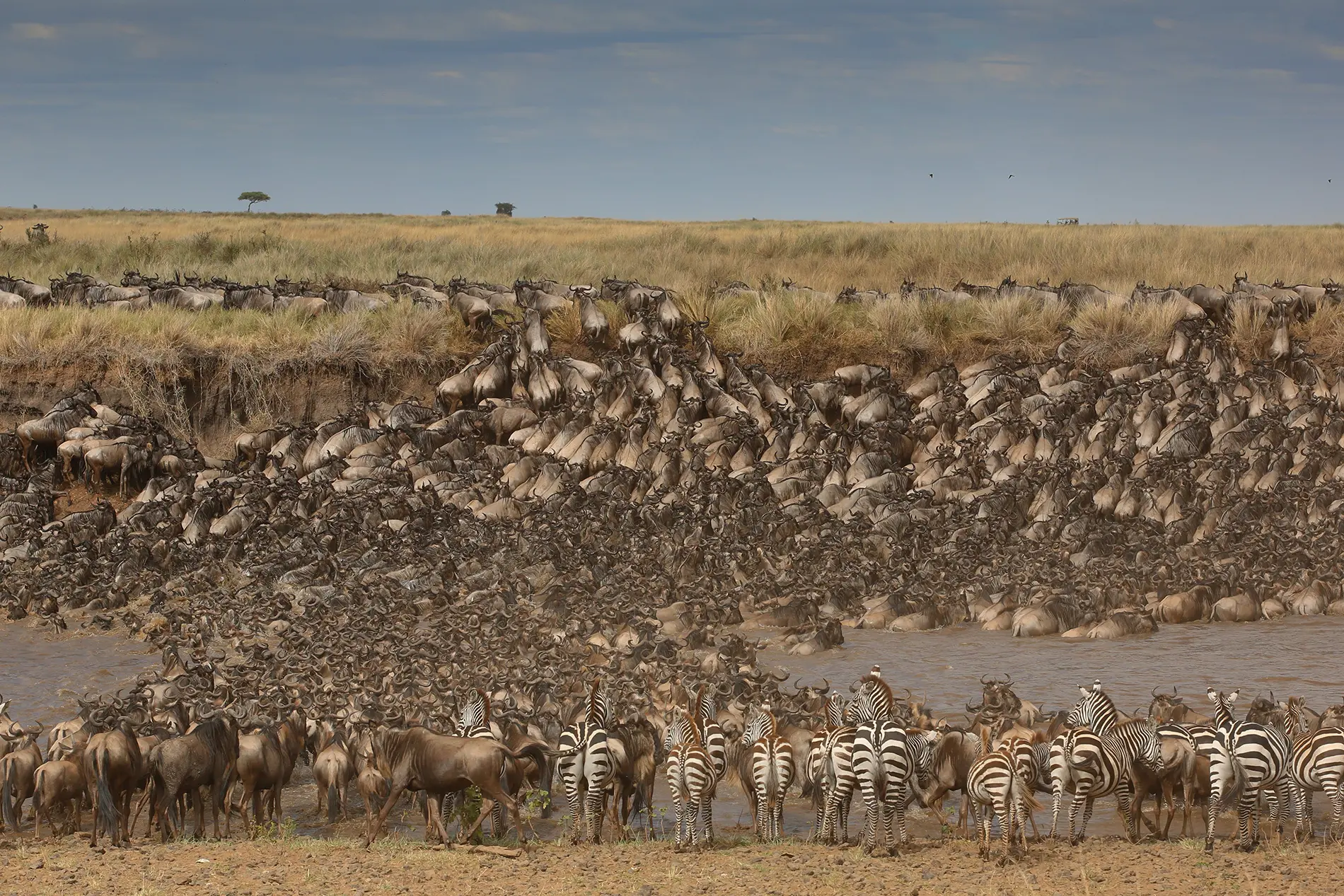
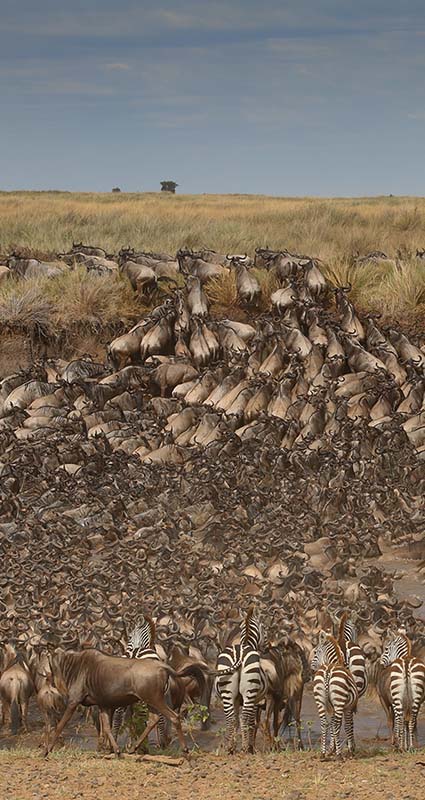


Trust us to find you the rarest animals, the most spectacular wildlife events, the remotest landscapes and deeply meaningful cultural encounters!
Kenya or Tanzania for your Great Migration safari? An expert comparison of wildlife, logistics, and experiences to help you choose – from river crossings and calving season on the Serengeti's southern plains to the Maasai Mara's conservancies and concentrated wildlife viewing.
Where can I have the best
Great Migration experience?
As one of the most ancient and continuous natural migrations, the wildebeest route of the Great Migration was carved by nature long before borders were drawn.
The wildebeest herds move between Tanzania's Serengeti and Kenya's Maasai Mara in a clockwise cycle, following rain and fresh grazing. But for safari-goers planning to witness this spectacle, the choice between Kenya and Tanzania can feel overwhelming.
Both countries offer extraordinary migration experiences, yet they differ significantly in character, logistics, and atmosphere. Understanding these differences – and knowing that you don't necessarily have to choose just one – is key to planning your ideal East African Great Migration safari.
Great Wildebeest Migration:
Kenya vs. Tanzania overview
Tanzania (Serengeti National Park) | Kenya (Maasai Mara National Reserve) |
Ten times larger than the Maasai Mara | Dense wildlife in a smaller area |
Great Migration is present year-round, including river crossings in the north (August-mid-October) and peak calving on the southern plains (February–March) | Great Migration from August to mid-October, with Mara River crossings, which occur simultaneously in Tanzania's northern Serengeti during this period |
Vast, open landscapes result in more opportunities to avoid the crowds | Private conservancy system offers exclusive, crowd-free viewing. Note that river crossings occur in the main reserve and are subject to crowding |
Big 5 are present, but combine with an Ngorongoro Crater safari for higher chances of seeing rhinos | Combine with another safari in Laikipia and the rhino sanctuaries for a high likelihood of sighting the entire Big Five |
Best for: photographers, wilderness seekers, experienced safari-goers | Best for: first-timers, families, shorter trips |
Handcrafting your
Great Migration safari
You can have a tailor-made Great Migration safari planned by experts who are more than travel agents: they're passionate conservationists and storytellers who create magical moments you'll treasure forever.
When you choose to embark on a Great Migration safari, you’re investing in the trip of a lifetime. Let us make it flawless.
Kenya vs. Tanzania: at a glance
| Kenya (Maasai Mara) | Tanzania (Serengeti) |
Size | 1,510 km² national reserve | 14,763 km² national park |
Migration timing | August–mid-October | Year-round (peak calving Feb–Mar) |
Landscape | Concentrated, lush plains | Vast, open horizons |
Crowds | High during peak season | Great Migration from August to mid-October, with Mara River crossings, which occur simultaneously in Tanzania's northern Serengeti during this period |
Unique advantage | Conservancy system | Scale and vastness |
Big Five reliability | Reliably good (especially with conservancies) | Good, but rhino are harder to find |
Best for | Shorter trips, photographers, first-timers | Photographers, wilderness seekers |
Activities beyond game drives | Walking, night drives, cultural experiences | Hot-air balloon experience and cultural experiences |
Accessibility | 45-min flight from Nairobi | Longer flights from entry points |
The landscape experience: scale vs. concentration
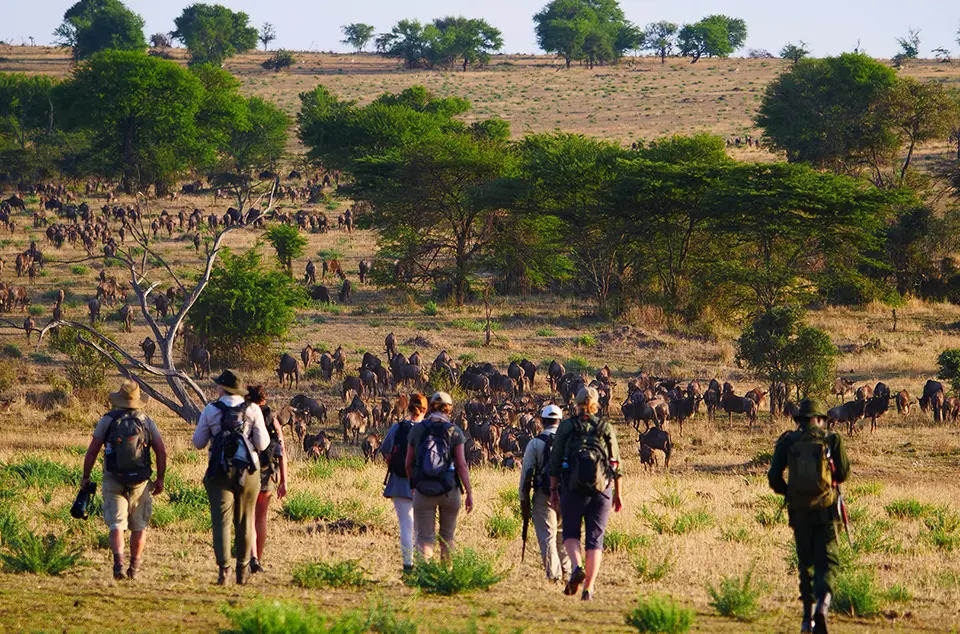
Tanzania's Serengeti: vastness that overwhelms
The Serengeti covers roughly ten times the area of the Maasai Mara. "What blew my mind was the magnitude and vastness," says Linda Fox, one of Africa Geographic’s safari experts. "From Ngorongoro Crater, the plains stretch endlessly. You can look 360 degrees and always see animals."
This scale creates a unique sense of wilderness. The horizon feels boundless, unbroken by fences or development. During the migration, you don’t just watch wildlife – you’re immersed in a functioning ecosystem. The Serengeti’s varied regions – southern Ndutu, northern Kogatende, and eastern Namiri Plains – each offer distinct experiences.
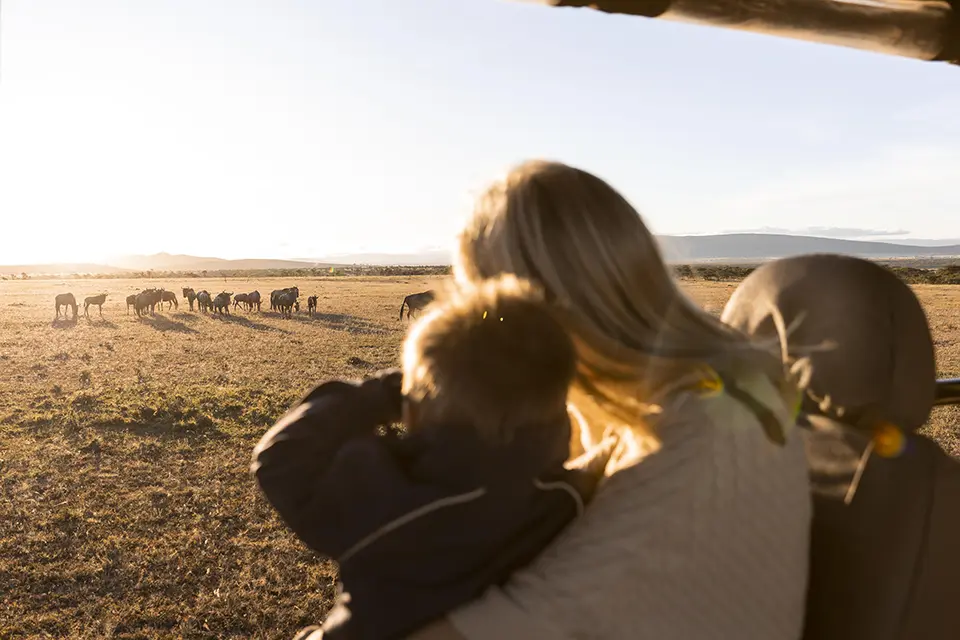
Kenya's Maasai Mara: concentrated intensity
What the Mara lacks in scale, it makes up for in diversity. "In the Mara you see so much game," one expert notes. "The lush plains create concentrated viewing."
The Mara's defining advantage is its conservancy system. Private conservancies border the main reserve, and do not have access to river crossings. However they do offer exclusive game viewing, along with activities prohibited in national parks: night drives, walking safaris, and off-road driving in designated areas.
Migration timing: when each country shines
Both countries offer Mara River crossings during August to October, though Tanzania’s northern Serengeti generally has slightly fewer vehicles at crossing points, though both countries experience significant crowding during peak season.
One critical point: the herds don't simply cross once from Tanzania into Kenya. They mill around, crossing back and forth multiple times – the same family groups have been observed crossing multiple times. Many wildebeest never fully enter Kenya at all.
August to mid-October: Kenya's moment
The Maasai Mara hosts the migration during Kenya’s dry season, with peak river crossings and ideal weather. It’s also the busiest time. "If a migration event is happening, crowds are inevitable," says Linda. "There are apps, radios, and calls – every vehicle rushes to the same spot."
12 months of the year: Tanzania's advantage
Outside of the river crossing season and calving season, Tanzania offers superb "green" or "secret" season experiences – particularly late October through January and in April – with excellent resident wildlife, predators, and lush photography conditions, without the crowds.
HOT TIP: the Big Five is Kenya's hidden strength
"For clients with a budget, I recommend Kenya – Laikipia and Lewa combined with the Mara – for above average Big Five sightings," says Ramona Rubach, Africa Geographic safari expert. Tanzania’s Serengeti is outstanding, but black rhino are rare. Kenya’s conservancies, particularly Laikipia and parts of the Mara, deliver near-certain encounters. This makes Kenya ideal for first-time safari-goers seeking the full wildlife experience.
THE AFRICA GEOGRAPHIC RECOMMENDATION
If you choose the WHEN, we can help you choose the WHERE. Each season has it's own experiences and every month has something incredible happening.
The raw brutality and incredible experience of the Great Migration spans August-October, but comes with heavy crowds. It is still spectacular.
The intensity of the calving seasons spans February-March.
Combine both countries: stay in Kenya's conservancies for crowd-free wildlife viewing, then visit northern Tanzania for a few nights of Serengeti migration experience. This maximises wildlife encounters while minimising unpredictability.
"If you only do Tanzania, you’ll face crowds, but doing both creates balance," says Luis Gama, Africa Geographic safari expert. Many seasoned travellers now combine Kenya’s conservancies for private Big Five viewing with Tanzania’s northern Serengeti for migration action. This approach increases the chances of unforgettable encounters while reducing the unpredictability of following the herds.
Alternatively, experience Tanzania’s calving season in the south, then fly to Kenya’s Laikipia for varied activities and reliable Big Five sightings. Combining both offers the best of each country with flexibility if weather or migration shifts.
Bottom line: Don’t choose just one! The wildebeest don’t recognise borders, and neither should you. The best Great Migration safaris combine both countries for a complete East African experience.
Some of our favourite migration safaris
Our safari experts have chosen these as their favourites Great Wildebeest Migration safaris. Many of our guests use these as inspiration when curating and tailor-making their Migration safaris with one of our safari experts.
Frequently asked questions about the Great Migration
Yes, especially in August–October when herds move between Kenya's Maasai Mara and Tanzania's Serengeti. Flying between countries is faster and more practical than driving. Many travellers combine Kenya’s private Maasai Mara conservancies for exclusive viewing with northern Tanzania’s Serengeti for river crossing action.
Both excel in different ways. Kenya’s conservancies make it possible to see the Big Five, while Tanzania’s Serengeti offers unmatched scale and variety. Your choice depends on priorities: predictability and variety (Kenya) or wilderness and vastness (Tanzania).
Base your decision on timing (Kenya August–October, Tanzania year-round), focus (Big Five vs. expansive landscapes), and travel style (shorter, more accessible vs. longer, immersive safaris). First-timers often prefer Kenya; seasoned travellers lean toward Tanzania. Combining both provides the most complete experience.
Tanzania generally has fewer visitors outside August–September, particularly in the western corridor and southern Serengeti. Kenya’s conservancies maintain low guest density even in peak season, though the main Mara Reserve can be busy during river crossings.
The Great Migration is a shared East African phenomenon that transcends borders. By choosing responsible operators in both Kenya and Tanzania, travellers support the conservation of this natural wonder for generations to come.
Start planning your dream Great Migration safari
Time to finally book that Great Migration safari? Let our conservation experts craft a journey that matches your values with your dreams of Africa. Your personal details are protected; we only use this information to contact you.
Trusted by thousands of ecstatic travellers
✔️ 5-Star Trustpilot Rating ✔️ Condé Nast Travel Specialist Award Winner
✔️ Accredited by SATSA ✔️ 5,000+ Exceptional Safaris Since 1991
Why choose Africa Geographic to plan your safari?
Why book your safari with us?

Deep Experience & Knowledge
Handcrafted experiential safaris since 1991.
Travel in Africa is about knowing when and where to go, and with whom. A few weeks too early/late or a few kilometres off course, and you could miss the greatest show on Earth. And wouldn’t that be a pity?

Trust & Safety

Make A Difference
We donate a portion of the revenue from every safari sold to carefully selected conservation projects that make a significant difference at ground level.
YOUR safari choice does make a difference - thank you!