

Tailor-made safaris. Since 1991

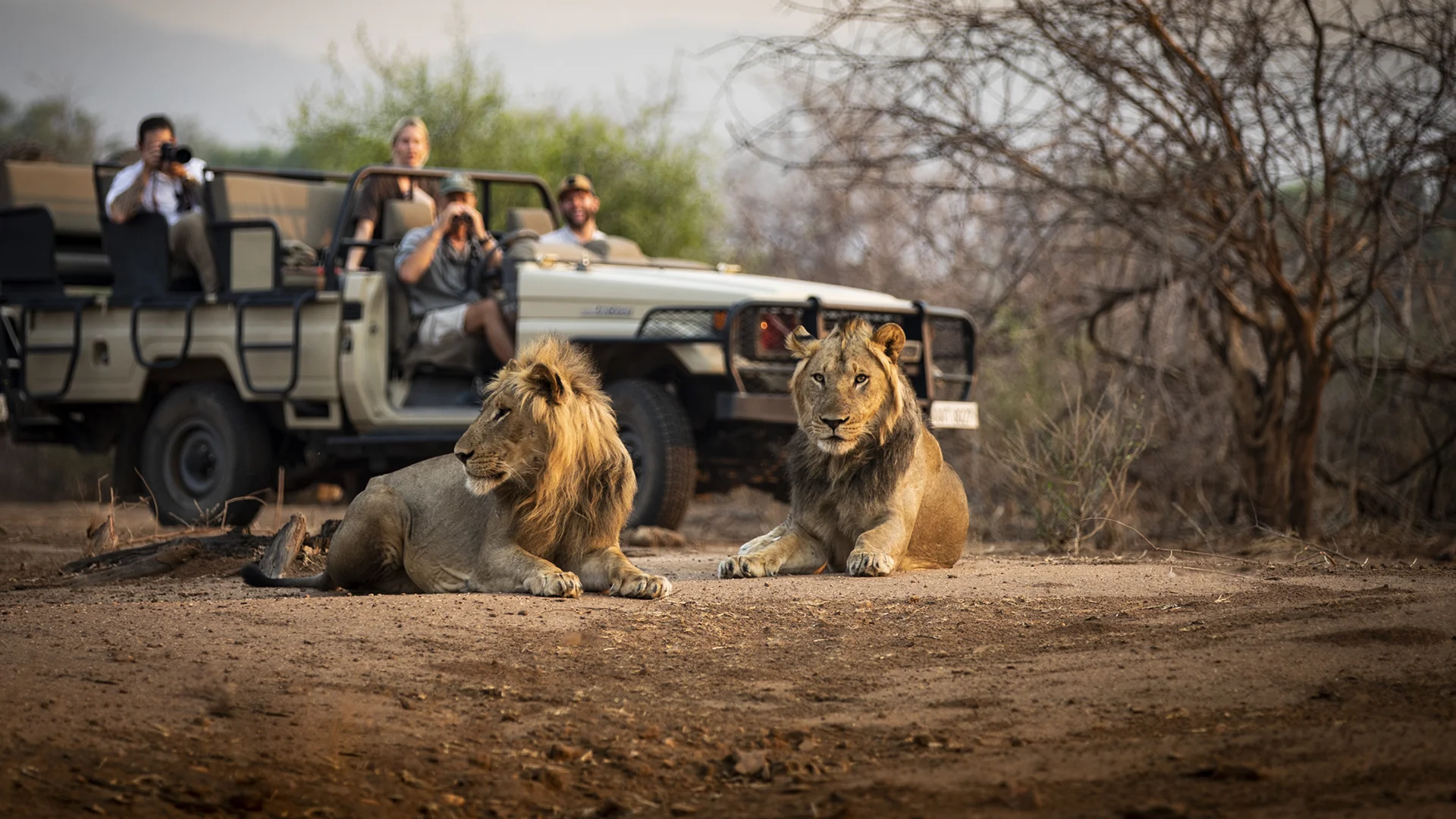


Trust us to find you the rarest animals, the most spectacular wildlife events, the remotest landscapes and deeply meaningful cultural encounters!
Plan your first Big 5 safari with ease
Planning your first Big 5 safari doesn’t have to be complicated, but it does involve five key decisions that can make or break your trip. Get them right and your chances of seeing lion, leopard, elephant, rhino and buffalo improve significantly. Get them wrong and you can end up in the right country at the wrong time, in the right lodge for the wrong reasons, or with not enough nights to do justice to what's in front of you. Africa Geographic's safari experts break down each decision below.
Big 5 safaris we love
These three Africa Geographic safaris put the five tips above into practice – strong private reserves, dry-season timing options, enough nights to do the wildlife justice, and outstanding guiding across southern and East Africa.
MalaMala and Madikwe Big 5 safari: Six nights across two of South Africa's finest private Big 5 reserves – MalaMala in the Greater Kruger (unfenced, exceptional leopard sightings, off-road and night access) and Madikwe (malaria-free, white rhino). A complete first Big 5 safari in one country. View safari →
Kenya Big 5 – Laikipia and Maasai Mara: Nine nights combining Kenya's best black rhino country in Laikipia with the lion-rich Maasai Mara and its private conservancies. Strong guiding, excellent camp quality and reliable Big 5 encounters across two ecosystems. View safari →
Classic Botswana Big 5 safari: Eight nights across northern Botswana, including the Okavango Delta. Spot the Big 5 in one of Africa's most remote and rewarding wilderness areas. View safari →
Tip 1 – start with destination, but don't stop there
The first question most first-time safari travellers ask is: where should I go? It's a reasonable place to start, but destination alone doesn't determine how good your Big 5 safari will be. A well-chosen lodge with an outstanding guide in a good Big 5 area will outperform a prestigious lodge with average guiding every time.
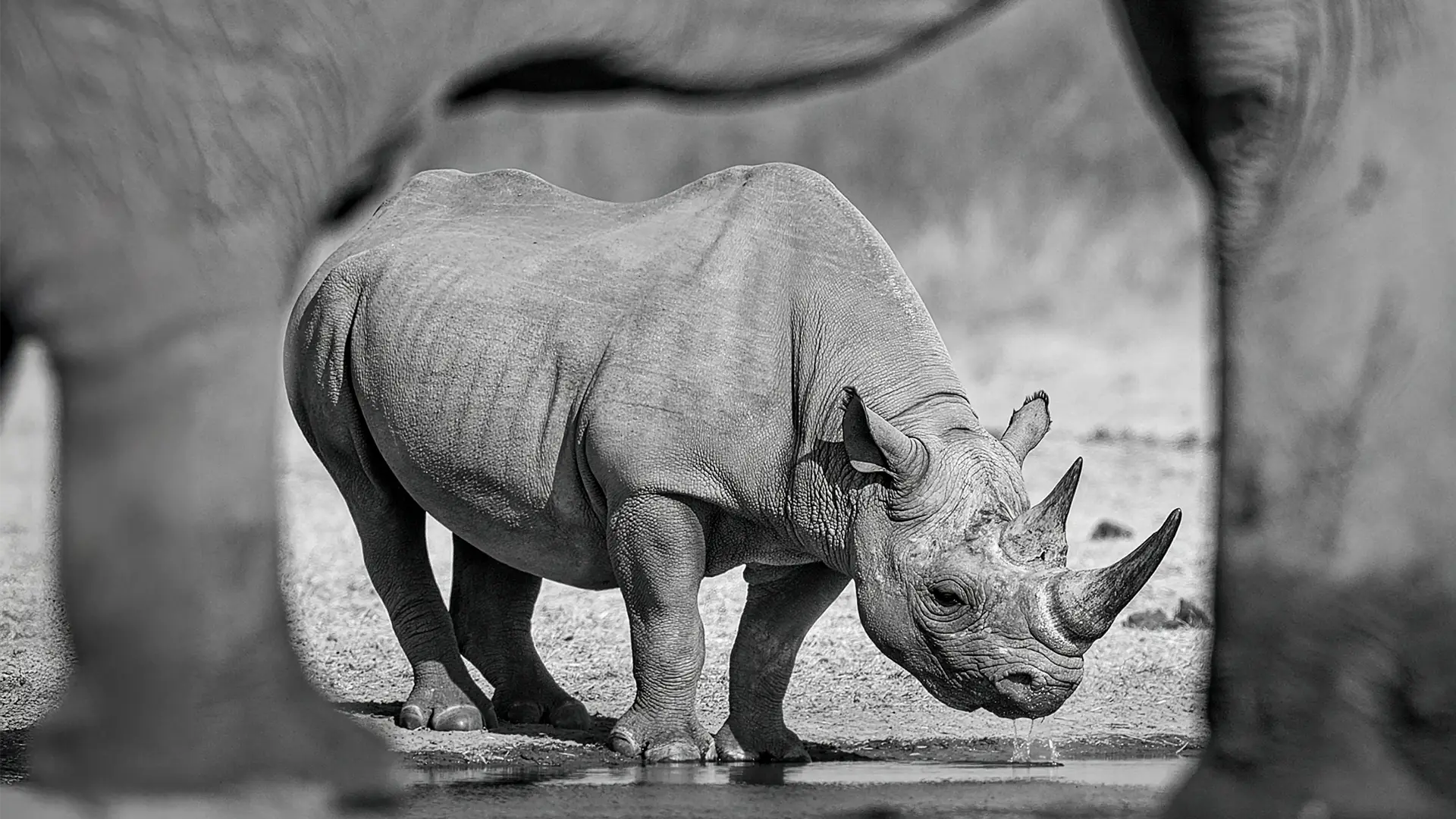
That said, destination does matter for one specific reason: rhino. Of all the Big 5, rhino can be the hardest to find in many parts of Africa, and the right destination choice can make the difference between completing your list or not. South Africa's Greater Kruger private reserves and Madikwe Game Reserve offer some of Africa's best opportunities to see rhino. East Africa's options – Kenya's Laikipia and Tanzania's Ngorongoro Crater – offer excellent rhino viewing, although sightings depend more heavily on experienced local guides and current animal movements.
Tip 2 – travel in the dry season
Timing has a direct effect on how much wildlife you see – more so than most first-time travellers expect. In southern Africa, June to October is the prime window. Vegetation thins as the season progresses, water sources dry up and concentrate, and animals move predictably between feeding and drinking areas. All five of the Big 5 are generally easier to locate and observe during this period. Tracking is easier, guides can read the landscape more accurately, and game drives produce more consistent wildlife sightings.
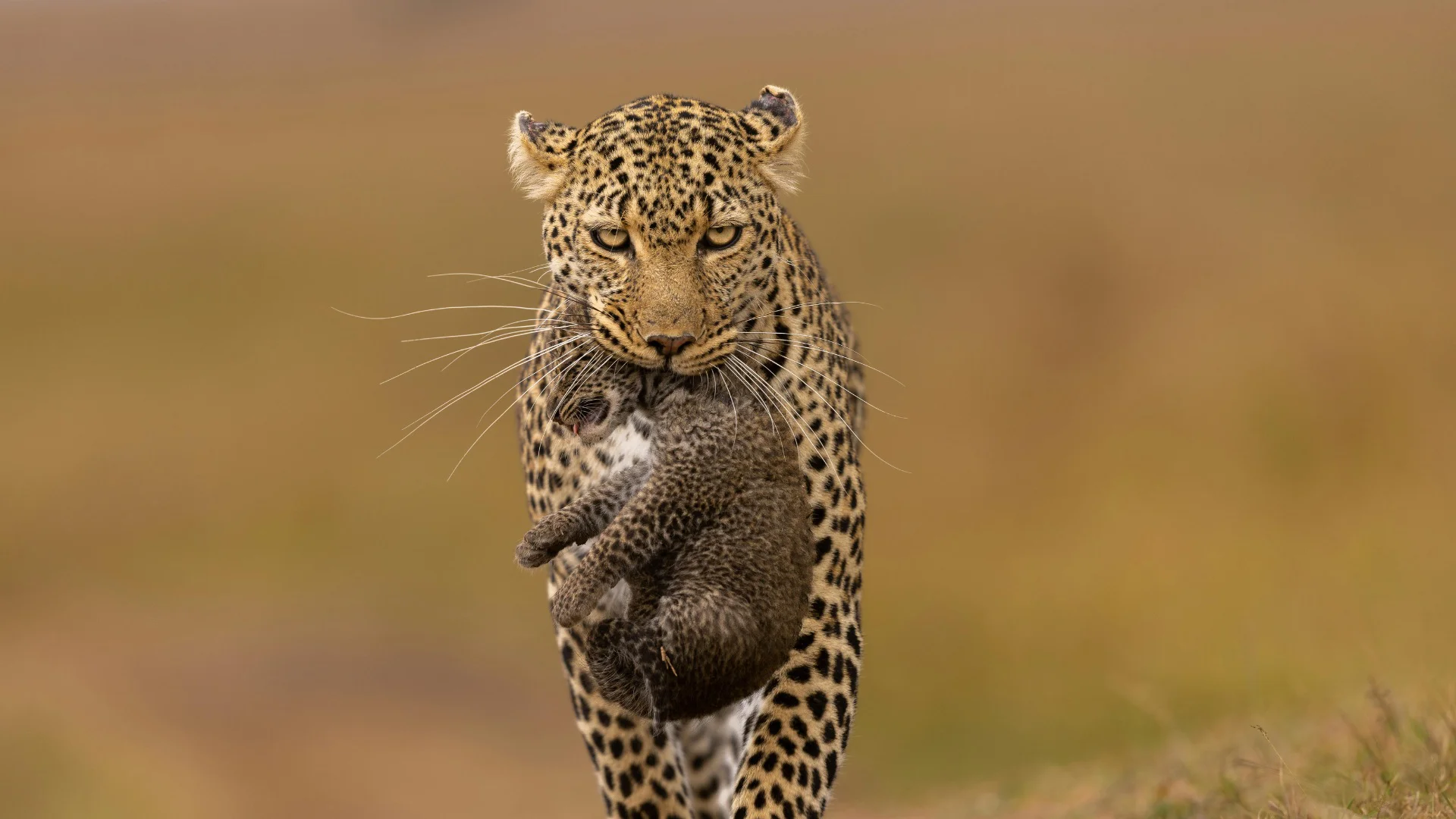
In East Africa, the best periods are June to October and January to March. The Great Migration moves through different parts of the Serengeti–Maasai Mara ecosystem during much of this period, and dry conditions across the Maasai Mara and Laikipia make predators easier to spot in shorter grass. Our Kenya expert Ramona Rubach, describing a combined Laikipia and Mara North itinerary, puts it well: "The exceptional staff and service at both camps, only to be outdone by the multi-layered conservation experiences of Laikipia and an unforgettable leopard encounter in Mara North – put this combination at the top of my 'Top Safari Memories' list."
Tip 3 – allow enough nights
The longer you spend on safari, the more rewarding it becomes. Extra nights don't just increase your chances of seeing the Big 5 – they give wildlife encounters time to unfold naturally, allow you to settle into the rhythm of the bush, and turn a checklist of sightings into a genuinely memorable safari experience.
Five nights is the recommended minimum
The most common planning mistake on a first safari is booking too few nights. Three nights in a strong Big 5 reserve can deliver all five species – it happens – but it's not a sound basis for planning. Five nights gives you ten game drives (two per day, morning and late afternoon), time to recover from jet lag, and the pace to actually absorb the bush rather than rush through it. It also gives your guide the time to track a specific animal across multiple drives, which is when encounters become genuinely memorable rather than just logged.
Stefan Winterboer, our South Africa safari expert, has tracked Big 5 game for years across Timbavati and Madikwe: "Madikwe and the Timbavati produce some of South Africa's finest field guides, reflecting exceptional standards and a deep conservation culture. Safaris here consistently deliver authentic wildlife experiences." The depth of that experience requires time – not days, but immersion.
Multi-destination itineraries need more time, not less
If you're combining two areas – which is often sensible when one destination is stronger for rhino and another for big cats – allow at least four nights in each. A two-destination itinerary covering nine to twelve nights gives you space to settle into both ecosystems. Rushing between camps in fewer nights than that produces a highlights reel, not a safari. Our guest Roger Whittle, who has enjoyed more than 20 safaris with us, after a stay at Tanda Tula in the Timbavati: "The first stop was Tanda Tula, and as usual, the game viewing was excellent. Great sightings of lions bringing down a buffalo, rhino and calf, leopards, and the first sighting of a harrier hawk attempting to break into a hornbill nest in a tree trunk, to name a few. Looking forward to the next visit." That quality of observation takes time to produce.
Tip 4 – choose a private reserve over a national park
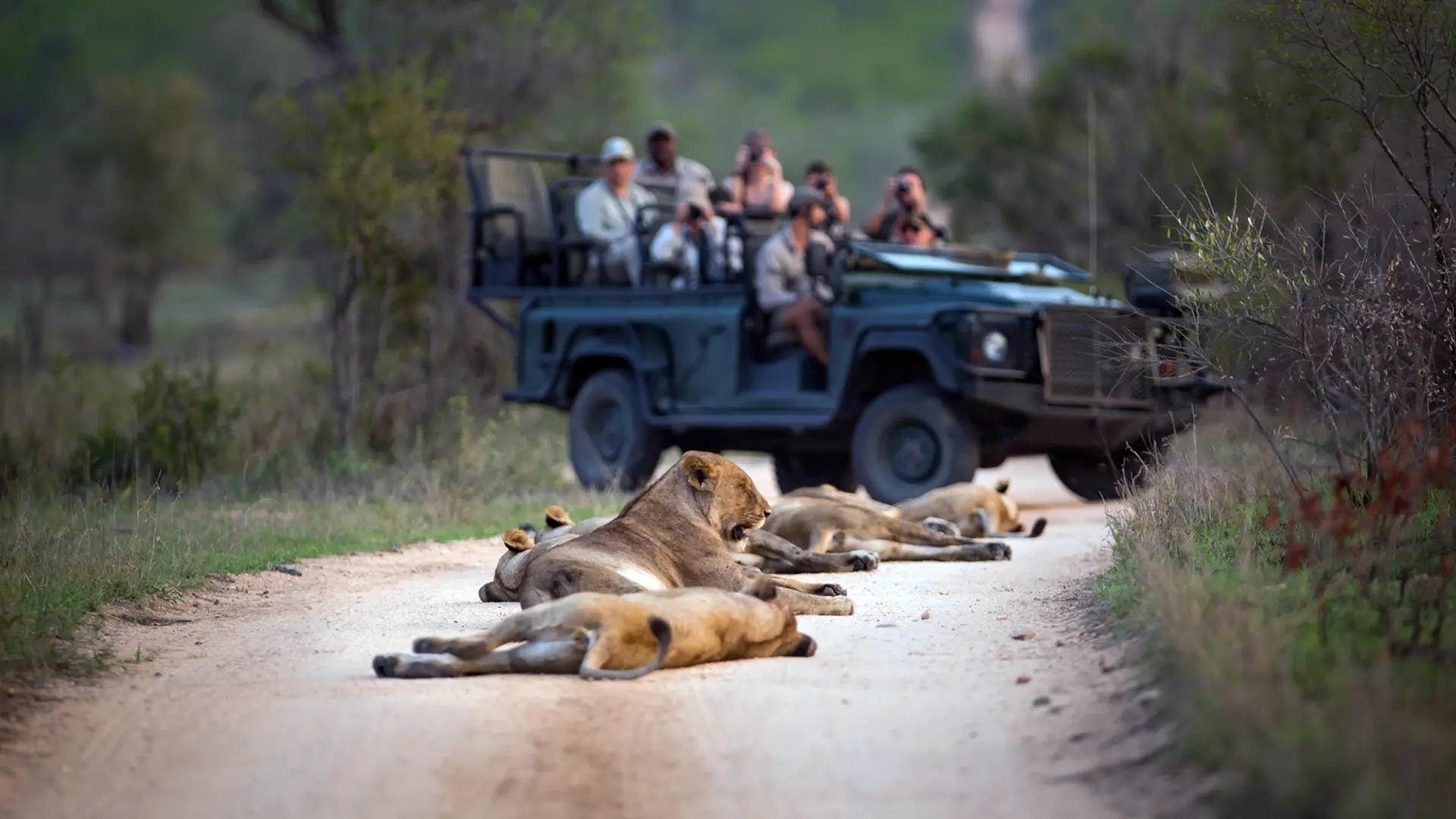
National parks are accessible, well-managed and home to superb wildlife. But for a first Big 5 safari, a private game reserve or private concession delivers a meaningfully different experience. The reasons are practical: private reserves usually allow off-road driving, which means your guide can follow an animal into the bush rather than lose it at the roadside. They allow night drives, which is when leopard and lion are most active. Vehicle numbers per sighting are limited by the reserve – no queue of minibuses at a kill. They also allow bush walking, which could give you a different perspective of Big Five encounters. And the guiding is typically exceptional, with field guides who know individual animals by name, range and recent behaviour.
Our destination expert Nadia Lautenbach, who worked as a guide for close to two decades: "Having guided in Madikwe for 17 years, this Big Five reserve is close to my heart – diverse, exciting, never dull. Madikwe Hills stands out: owner-run with genuine care and beautiful detail you feel in every moment." And our CEO Simon Espley on MalaMala: "At MalaMala I found the perfect blend of comfort and wilderness – unfenced with Kruger, leopard sightings around every corner, and effortless Big Five encounters."
Private vs national park – at a glance
Feature | Private reserve | National park |
Off-road driving | Usually permitted | No – roads only |
Night drives | Usually permitted | Limited |
Bush walking | Usually permitted | Limited |
Vehicles per sighting | Limited (1–3 typically) | Unrestricted |
Guide style | Dedicated guide and tracker teams common | Guide experience varies by operator |
Flexibility | More freedom to follow sightings | More structured around park rules |
Cost | Higher | Lower |
All-inclusive rates | Standard | Rarely |
Malaria-free private reserves
If malaria is a concern – for families with young children, travellers who cannot tolerate anti-malarials, or those who prefer not to take prophylaxis – South Africa's malaria-free private reserves are a strong option. Madikwe Game Reserve and the Eastern Cape's private reserves both hold all of the Big 5 and offer the same private-reserve advantages (off-road access, night drives, limited vehicles) without the malaria consideration. This is worth raising early in your planning process, as it shapes destination and lodge choice from the outset.
Wish you were here?
Tip 5 – allocate your budget where it counts most
Private Big 5 lodges typically cost between US$700 and US$1,500 per person sharing per night, all-inclusive of accommodation, meals, game drives and guiding. The top end of the market runs above US$3,000 per person per night. Entry-level private reserves start around US$700. The price difference between the lower and upper ends of the mid-range does not correlate directly with wildlife quality – some of Africa's best-guided Big 5 safaris happen at lodges that charge US$900 per person per night, not US$2,500.
What does vary with price is:
lodge exclusivity
room quality
service ratios, and, importantly,
the number of vehicles allowed per sighting.
At the very top end, you may have a guide and vehicle exclusively for your group in a private concession. That level of access is genuinely different and can be worth the premium. But for a first Big 5 safari, Africa Geographic does not recommend overspending on room quality at the expense of time on the ground and guide calibre.
Frequently asked questions
The five decisions to make in order are: destination (choosing a reserve with strong, year-round Big 5 populations and experienced guiding); timing (dry season gives the best wildlife visibility); trip duration (five nights minimum in a single destination, nine to twelve nights for two destinations); accommodation type (a private game reserve rather than a national park for off-road access, night drives and limited vehicles per sighting); and budget allocation (prioritise reserve quality and guide calibre over room grade). Africa Geographic's safari specialists can work through each decision with you based on your dates, budget and priorities.
Africa Geographic recommends a minimum of five nights in one strong Big 5 destination. This gives you ten game drives at two per day, time to settle into the rhythm of the bush, and enough encounters for your guide to build a picture of animal territories and recent behaviour. Three nights can produce all five species in favourable conditions, but it's not a reliable planning target. If you're combining two destinations – for example, Kenya's Laikipia with the Maasai Mara, or South Africa's Greater Kruger with Madikwe – allow at least four nights in each area, making a minimum total of nine nights.
The dry season is the most productive period for Big 5 game viewing. In southern Africa (South Africa, Botswana, Zimbabwe, Namibia, Zambia), this runs from June to October. In East Africa (Kenya, Tanzania, Rwanda, Malawi), June to October and January to March are both strong windows. During these months, vegetation is lower, animals concentrate around water sources, and game drives produce more consistent encounters. The wet season offers lower rates and lush scenery, but thicker vegetation makes it more challenging to spot the Big 5. First-time Big 5 travellers are advised to plan around the dry season where possible.
For a first Big 5 safari, a private game reserve or private concession within a national park gives you a significantly better game-viewing experience. Private reserves allow off-road driving (following animals into the bush), night drives (when leopard and lion are most active), and typically restrict vehicle numbers per sighting to two or three. National parks require vehicles to stay on defined roads, prohibit night drives in most cases, and have no restriction on the number of vehicles at a sighting. The cost difference is real, but for Big 5 game viewing – particularly for elusive species like leopard and rhino – the private-reserve experience is worth it.
Private Big 5 lodges typically cost between US$700 and US$1,500 per person sharing per night, all-inclusive of accommodation, meals, game drives and guiding. The total cost for a five-night Big 5 safari including international flights commonly falls between US$5,000 and US$15,000 per person, depending on origin, lodge choice and season. Africa Geographic works across the full price range and focuses budget allocation on the factors that most directly improve wildlife outcomes: reserve quality, guide calibre, trip duration and, where distances are long, internal charter flights.
Rhino is consistently the most difficult of the Big 5 to locate because of their rarity, particularly black rhino, which are solitary and often found in dense vegetation. White rhinos are easier to find but restricted to specific reserves. South Africa has the world's largest rhino population, which is why private reserves in the Greater Kruger, Madikwe and the Eastern Cape offer the best odds for both species. Leopard is the second most elusive, being largely nocturnal and naturally secretive – though private reserves with off-road and night-drive access change this considerably. In some Greater Kruger reserves, daily leopard sightings are routine. Buffalo move where they can find water and good grazing. Elephant and lion are typically the easiest of the five to find in any well-managed wildlife area.
It depends on the destination. Most of Africa's prime Big 5 reserves – including the Greater Kruger in South Africa, the Maasai Mara in Kenya and the Serengeti in Tanzania – are in malaria-risk areas where prophylaxis is recommended. South Africa's malaria-free options include Madikwe Game Reserve and the private reserves of the Eastern Cape, both of which are home to all the Big 5. These are the preferred choice for families with young children and travellers who cannot take anti-malarials. Discuss your specific health situation and destination options with Africa Geographic's safari specialists before booking.
Start planning your dream safari
Our travel experts will craft a no-obligation itinerary just for you. We have crafted over 5,000 safaris since 1991. Your personal details are protected; we only use this information to contact you.
Why book your safari with us?

Deep Experience & Knowledge
Handcrafted experiential safaris since 1991.
Travel in Africa is about knowing when and where to go, and with whom. A few weeks too early/late or a few kilometres off course, and you could miss the greatest show on Earth. And wouldn’t that be a pity?

Trust & Safety

Make A Difference
We donate a portion of the revenue from every safari sold to carefully selected conservation projects that make a significant difference at ground level.
YOUR safari choice does make a difference - thank you!