

Tailor-made safaris. Since 1991



Trust us to find you the rarest animals, the most spectacular wildlife events, the remotest landscapes and deeply meaningful cultural encounters!
Odzala-Kokoua itinerary and trip length
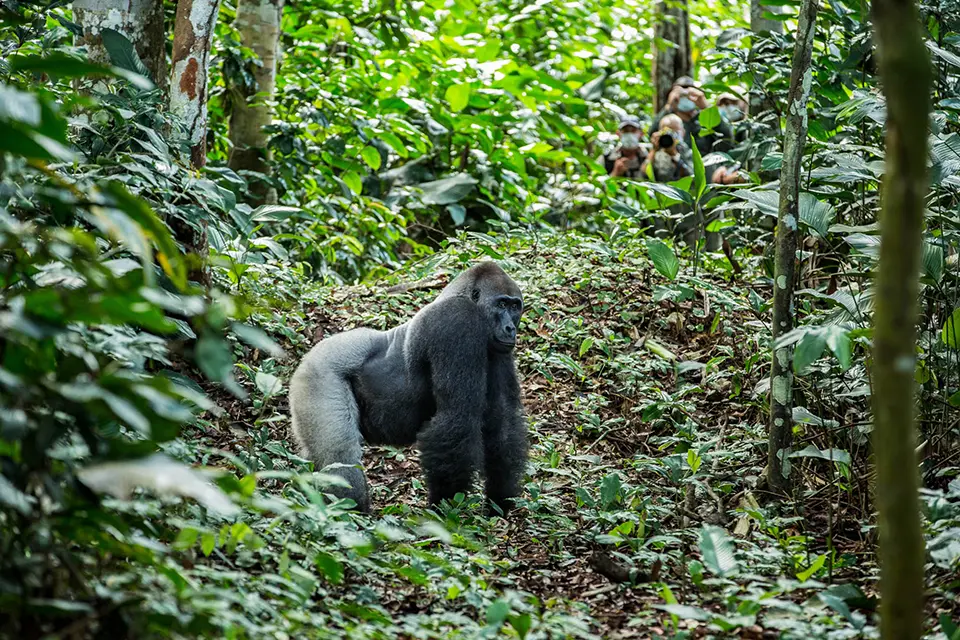
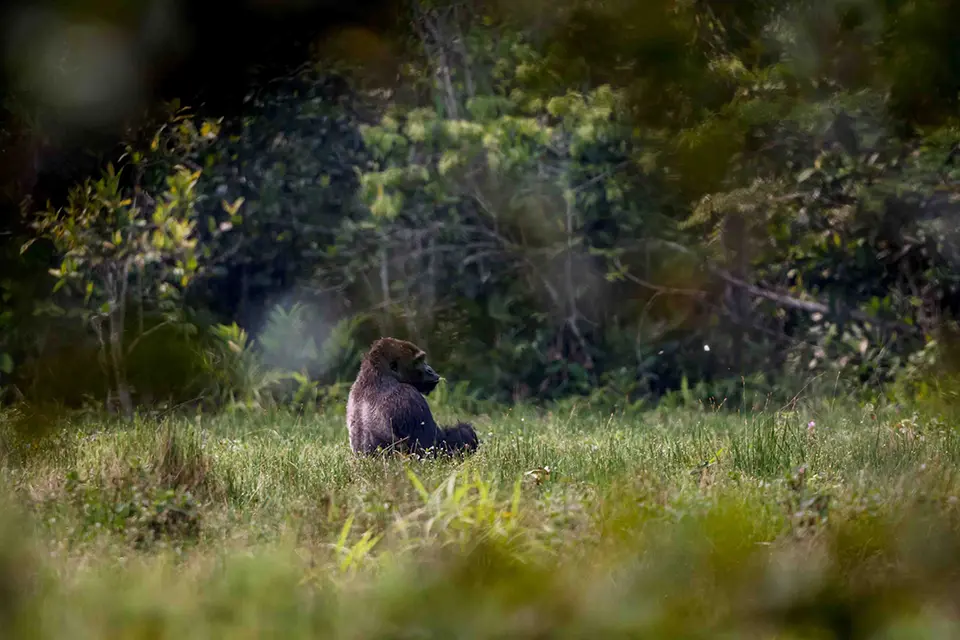
Dawn at a baï arrives as sound before light. African grey parrots cross the canopy in whistling flocks, and mist sits on black water below the treehouse. A silverback western lowland gorilla steps out of the treeline, tests the ground with one hand and settles down to feed. Nobody tracked him. There is no permit, no hour on a stopwatch, no line of trekkers behind a guide. He is simply there, for as long as you are willing to sit still.
That difference shapes how long you should stay. Odzala rewards patience rather than itinerary density, and most first-time visitors underestimate both the travel time in and the mornings needed to see this forest properly.
Five nights is the minimum in Odzala-Kokoua and seven nights is ideal, plus one or two nights in Brazzaville. Five nights covers repeated baï sessions, one gorilla experience and time on the river. Seven allows Moba Pool, forest walks and a second gorilla outing at an unhurried pace. Adding a mountain gorilla trek in Rwanda brings the total trip to 10 to 14 days.
Odzala-Kokoua trip length at a glance
Five nights in the park is the realistic minimum for most visitors
Seven nights allows baï watching and a habituated gorilla trek
Add one or two nights in Brazzaville either side of the park stay
Charter flights run on fixed days, which shapes your arrival date
A two-gorilla-species trip with Rwanda runs 10 to 14 days overall
Trip length here is governed by access rather than activity choice. The light aircraft from Brazzaville runs on set days, so in-park stays fall into blocks of three or four nights.
Trip lengths compared by what they cover
Trip length | Park nights | What it covers | Best suited to |
7 days | 5 | Baï sessions, one gorilla experience, a river outing | A first visit with limited leave |
9 days | 7 | Adds Moba Pool, forest walks and a second gorilla outing | The recommended length |
10–12 days | 7 | Odzala plus mountain gorillas in Rwanda | Two gorilla species in one trip |
12–15 days | 7 | Odzala plus Bwindi in Uganda, via a connecting flight | Travellers with more time |
3 things we love about Odzala-Kokoua
Beyond the gorilla headline, here’s what makes Odzala worth building a longer trip around rather than slotting in as a short add-on.
Gorillas on their own terms – at Imbalanga Baï you watch wild families from an elevated treehouse, with no permit, no mask and no one-hour time limit.
A UNESCO-listed rainforest – Odzala-Kokoua covers roughly 13,500 km² of Congo Basin forest, savanna and swamp, inscribed as a World Heritage Site in 2023.
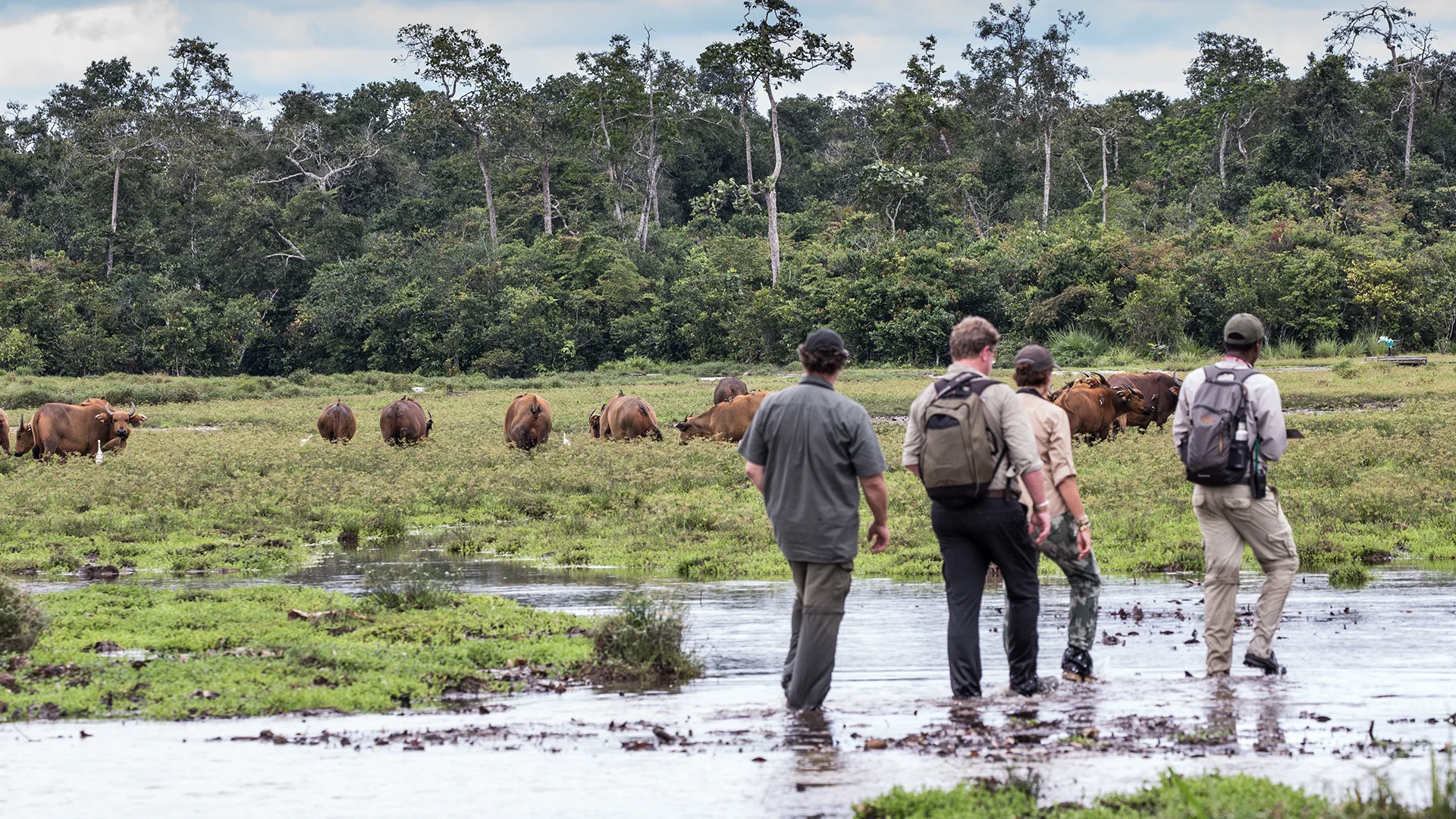
Five forest specialists in one clearing – western lowland gorilla, forest elephant, forest buffalo, bongo and giant forest hog all draw to the same baïs.
What each night in the park gives you
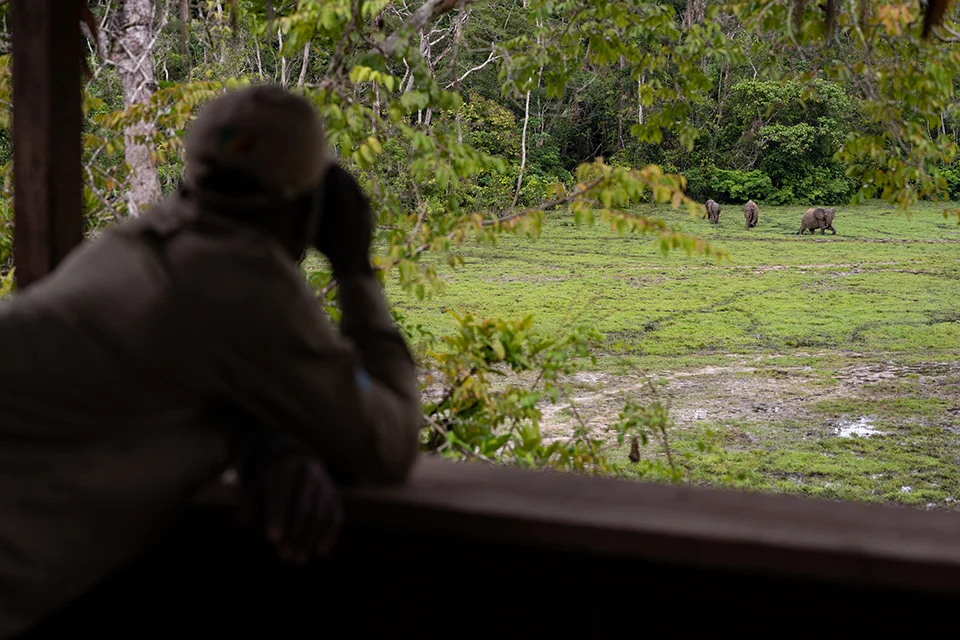
Nights one and two at the baï
Most stays open with long sessions at the clearing. Gorillas keep no schedule, so the first morning can pass quietly and the second delivers a family feeding in the open. Forest elephants wade in to dig for minerals below you.
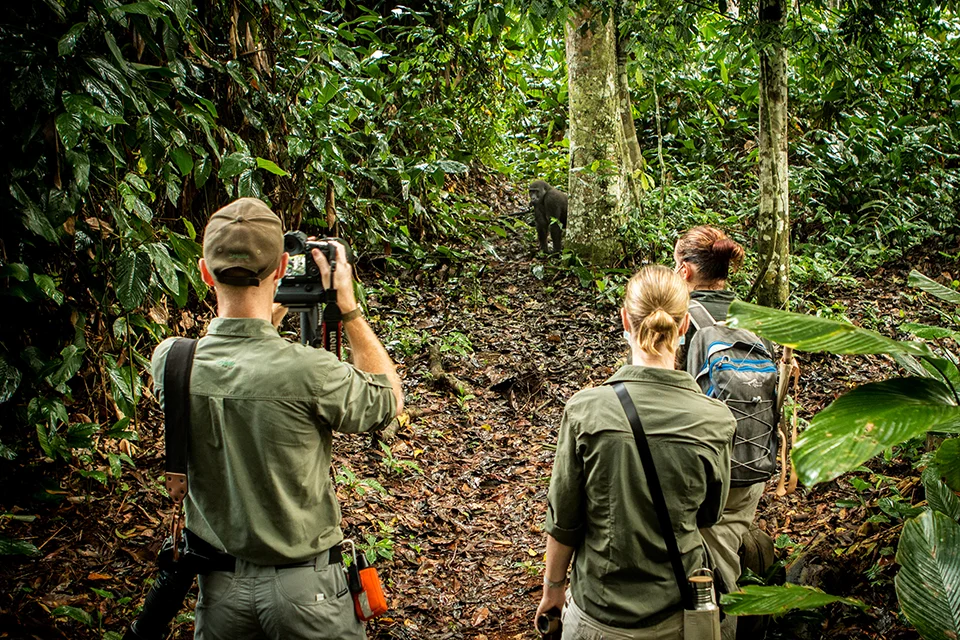
Night three and the gorilla trek
Trekking a habituated family is a separate activity from watching at the clearing. Departures are early, the walking is flat but dense, and you wade rivers and marsh. Treks run two to four hours, with one hour at the family.
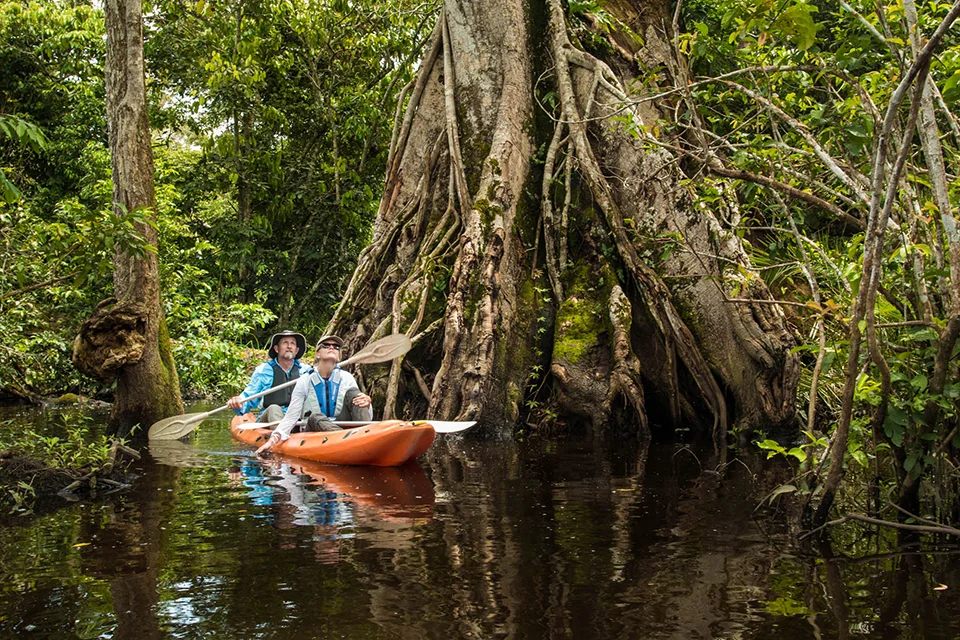
Nights four and five on the water
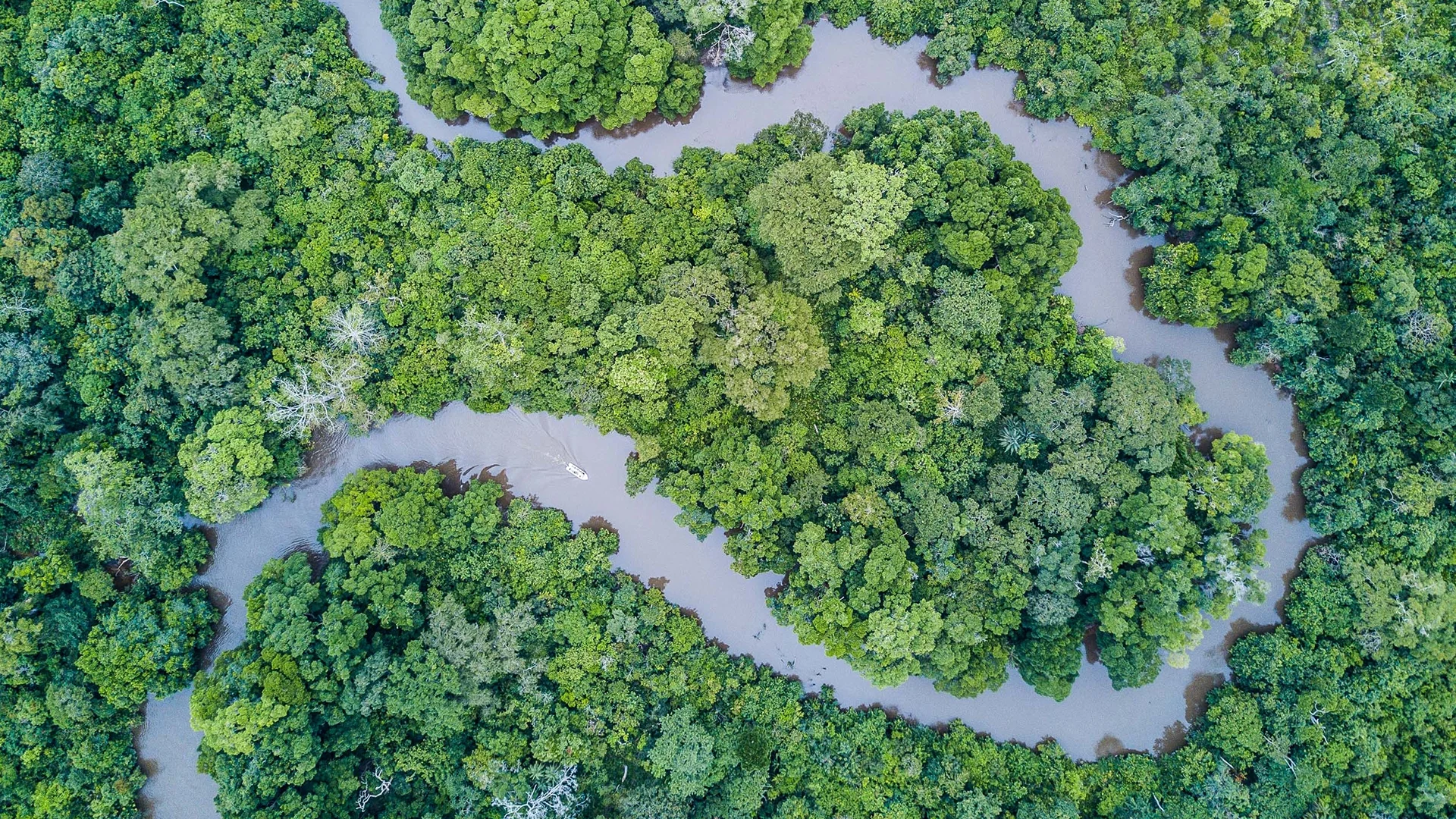
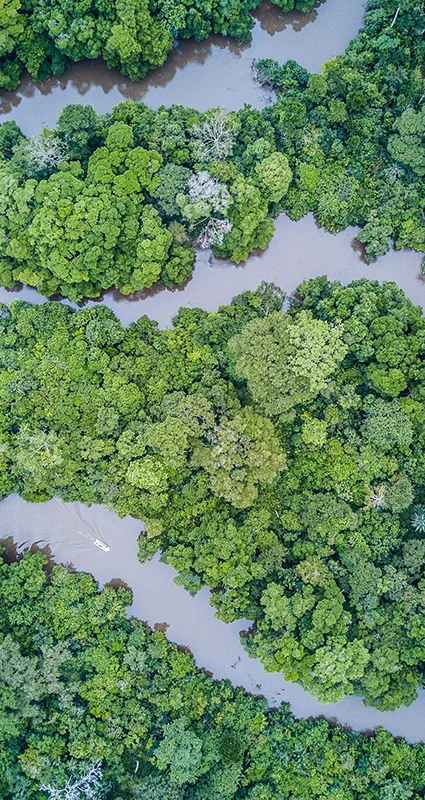
The Mambili River opens the park from another angle. Boats and kayaks reach gallery forest that is unreachable on foot, and the Lekoli is where forest buffalo and sitatunga come down to drink. Moba Pool lies 90 minutes away by forest drive.
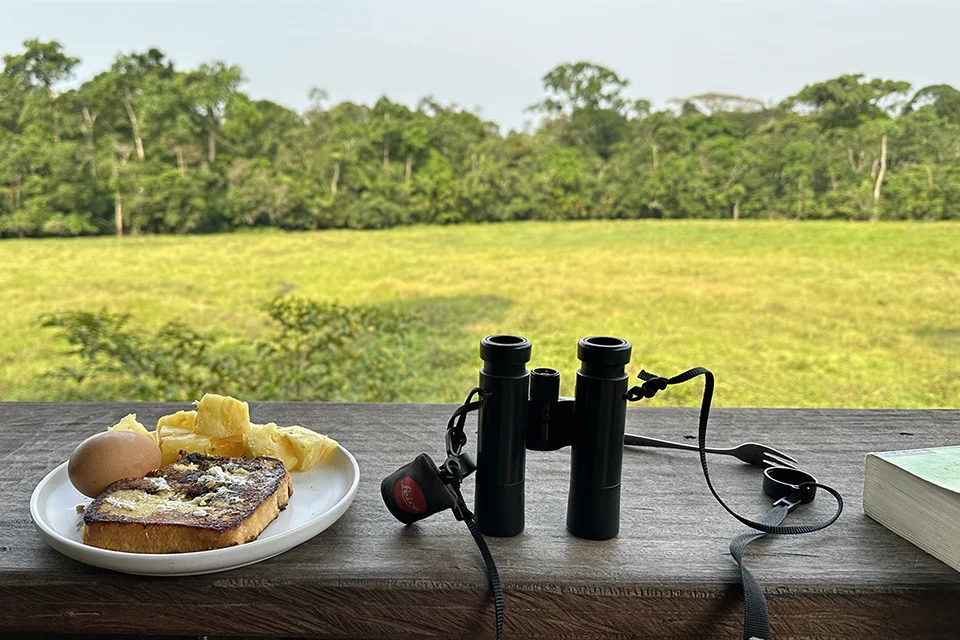
Nights six and seven for depth
The final two nights are not padding. They absorb the days when rain closes in or the gorillas feed deep in the forest, and they allow a second trek. They also make room for an overnight at Lokoué Baï, reached by river and a pre-dawn walk.
Africa Geographic CEO Simon Espley described one such morning. "Sipping Ethiopian coffee and snacking on delicious French toast and pineapple slices, I watched a family of western lowland gorillas forage in the baï while African grey parrots wolf-whistled overhead. I had found paradise!"
Getting to Odzala and why Brazzaville counts
Flying into Congo-Brazzaville
Every route begins at Maya-Maya International Airport in Brazzaville, served from Paris, Addis Ababa, Casablanca and Kigali. The Republic of Congo is a separate country from the Democratic Republic of Congo, and the two are regularly confused online. A visa is required for British, American, European and South African passport holders, and a yellow fever certificate is checked on arrival at immigration, so allow time for paperwork.
The charter days that set your dates
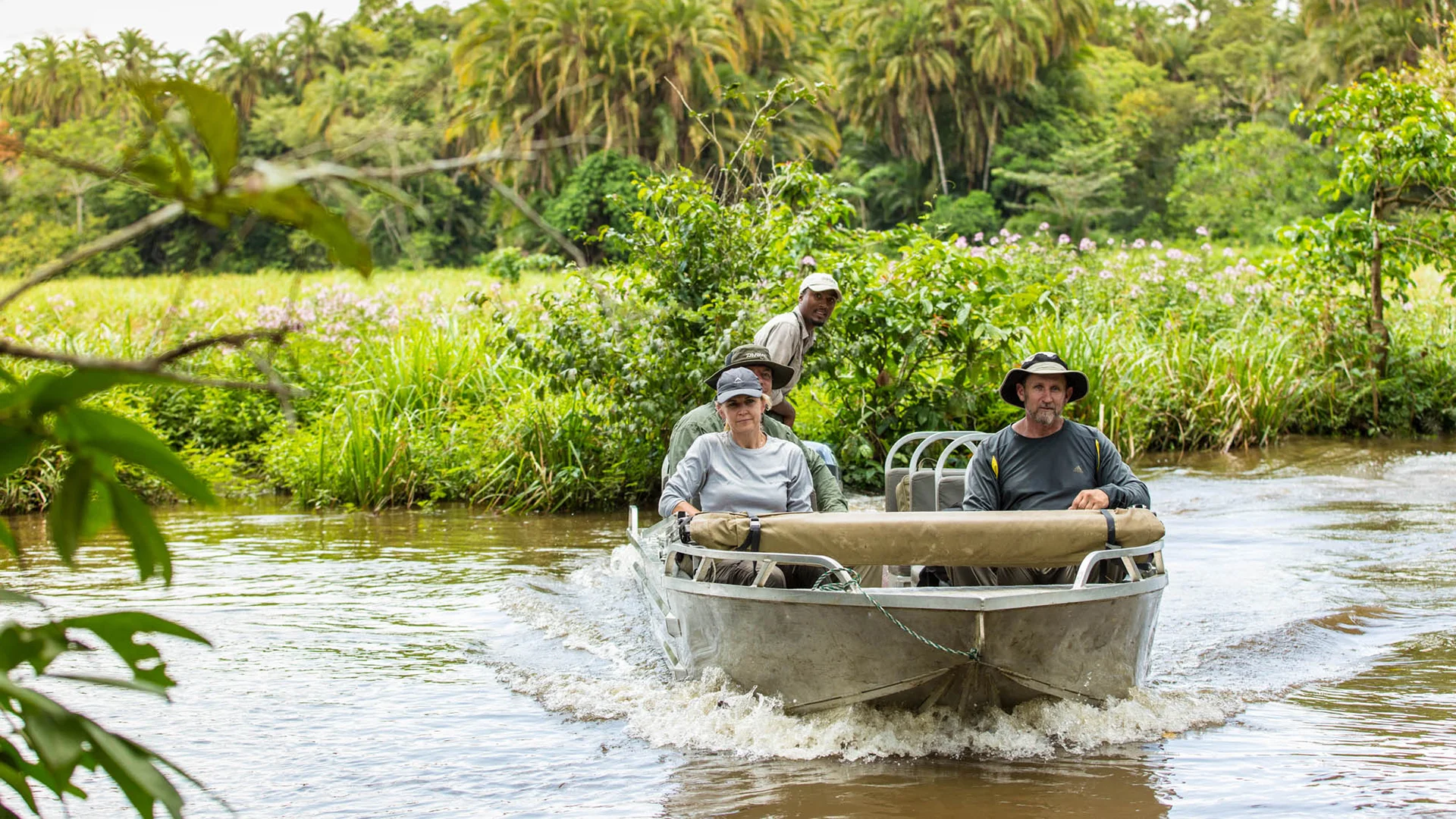
The light aircraft transfer from Brazzaville to the Mboko airstrip takes under two hours and leaves on fixed days, currently Mondays and Thursdays in the early afternoon, with a strict 15kg soft-bag allowance. The alternative is a nine to ten hour drive north on the tarred N2. Because the flight runs twice weekly, in-park stays settle into three or four night blocks, and this quietly sets the length of the whole trip.
One night in the capital, or two
International arrival times rarely align with an early-afternoon charter, so one night in Brazzaville is standard and two is safer when the inbound flight involves a tight connection. The capital is calm and walkable, with the Congo River, the Basilique Sainte-Anne and the Poto-Poto painting school enough for a half day. Our safari experts build this buffer in as standard rather than as an optional extra.
Wish you were here?
Adding a mountain gorilla trek to the trip
Why Rwanda is the practical pairing
RwandAir and Ethiopian Airlines link Brazzaville and Kigali directly in about two and a half hours, the only clean connection between lowland and mountain gorilla country. Two nights near Volcanoes National Park covers one trek with a spare day for weather. Permits are US$1,500 per person and capped daily, so they need booking months ahead. Total trip length lands at 10 to 12 days. Explore Volcanoes National Park before committing.
Uganda as the longer alternative
Bwindi Impenetrable National Park has no direct service from Brazzaville and needs a connection through Addis Ababa, Nairobi or Kigali. Permits are US$800, falling to US$600 in April, May and November. The saving is real, but the extra transfer day and either a long drive or a light aircraft hop from Entebbe push the total to 12 to 15 days. Discover Bwindi Impenetrable National Park before deciding.
How the two encounters differ
Mountain gorillas are larger, ground-dwelling and long habituated, watched at close range on steep montane slopes at altitude. Western lowland gorillas are smaller, more arboreal and far less predictable, moving constantly through dense Marantaceae forest at low elevation. Seeing both on one trip reads as two separate experiences rather than a repeat. To choose between countries instead of combining them, compare Rwanda, Uganda and Congo for gorilla trekking.
Stefan Winterboer, a gorilla trekking expert at Africa Geographic, put it this way. "I was unprepared for how deeply, profoundly we mirrored each other, the great apes and I."
Timing your visit and booking ahead
The low rainfall months
Rain is a constant factor in the Congo Basin, but there are two main rainy seasons, from March to May and October to December. The best months for wildlife viewing are the low rainfall periods, June to September and January to February, when humidity is lower, conditions are more comfortable and wildlife is easier to spot. These months carry the heaviest demand, so dates need holding early. The park never closes, and wet-season travel still works well by boat.
What to lock in first
Charter seats, limited to 12 per flight and taken first in the June to September dry months
Your Odzala nights, which should be confirmed before any onward Rwanda or Uganda arrangements
A mountain gorilla permit, released per day and taken fastest for July and August treks
Visa paperwork and the letter of invitation, allowing at least six weeks before departure
Soft-sided luggage only, because the 15kg charter allowance includes your hand baggage too
Travel insurance that covers remote medical evacuation from the Congo Basin interior
Frequently asked questions
Five nights in the park is the minimum and seven is ideal, plus one or two nights in Brazzaville. Five nights covers repeated baï sessions, one gorilla experience and a river excursion. Seven adds Moba Pool, forest walks and a second gorilla outing without rushing. Door to door, that is seven to nine days from home. Pairing Odzala with mountain gorillas in Rwanda extends the trip to 10 to 14 days.
Five nights gives a strong chance but no guarantee, which is the honest position with wild animals. Watching from the treehouse at Imbalanga Baï depends on gorillas choosing to feed in that clearing on that morning, and they do not appear every day. Repeat mornings are what raise the odds, which is the main argument for seven nights. Trekking a habituated family at Ngaga carries a higher success rate, so most seven-night itineraries include both.
All routes start at Maya-Maya International Airport in Brazzaville, reached from Paris, Addis Ababa, Casablanca and Kigali. From there it is a light aircraft transfer of under two hours to the Mboko airstrip, running on fixed days with a 15kg soft-bag limit, or a nine to ten hour road transfer north on the tarred N2 highway. A visa and a yellow fever certificate are both required, and the charter allowance is strictly enforced.
A baï is a natural, often swampy clearing in the rainforest that is rich in minerals and salts, and the word comes from the Mbenga people of the Congo Basin. Forest elephants maintain these openings through constant use. They matter because the surrounding forest is dense enough to hide almost everything, and the baï is where western lowland gorillas, forest elephants, forest buffalo and bongo become visible at a distance.
Yes, and it is one of the few itineraries that allows it. Odzala-Kokoua holds western lowland gorillas, while Rwanda and Uganda hold mountain gorillas, and the two are separate species. The practical route is Brazzaville to Kigali on a direct flight of about two and a half hours, then two nights near Volcanoes National Park. Allow 10 to 14 days in total for a comfortable version, or 12 to 15 days if you would rather trek in Uganda.
Rain falls throughout the year, with two main rainy seasons from March to May and October to December. The best months for wildlife viewing are the low rainfall periods of June to September and January to February, when humidity is lower and walking conditions are easier. The park stays open year-round and wildlife does not migrate, so wet-season travel remains productive, particularly by boat, and availability is far easier to secure.
It is less steep than mountain gorilla trekking but more humid and more awkward underfoot. The terrain is flat, with dense Marantaceae forest, river crossings and stretches of marsh to wade through. Expect two to four hours of walking, an early start and one hour with the family once they are found. Minimum age is 15, and reasonable general fitness matters more than specialist training or hiking experience.
Twelve to eighteen months for the dry months of June to September, and six to nine months for quieter dates. Two things drive this. Lodge capacity is small, at roughly 12 guests at a time, and the charter carries only 12 seats twice a week. If a mountain gorilla permit forms part of the plan, that needs securing at the same time rather than afterwards, since daily permit numbers are capped and release well in advance.
Start planning your dream safari
Our travel experts will craft a no-obligation itinerary just for you. We have crafted over 5,000 safaris since 1991. Your personal details are protected; we only use this information to contact you.
Why book your safari with us?

Deep Experience & Knowledge
Handcrafted experiential safaris since 1991.
Travel in Africa is about knowing when and where to go, and with whom. A few weeks too early/late or a few kilometres off course, and you could miss the greatest show on Earth. And wouldn’t that be a pity?

Trust & Safety

Make A Difference
We donate a portion of the revenue from every safari sold to carefully selected conservation projects that make a significant difference at ground level.
YOUR safari choice does make a difference - thank you!