

Tailor-made safaris. Since 1991



Trust us to find you the rarest animals, the most spectacular wildlife events, the remotest landscapes and deeply meaningful cultural encounters!
Odzala-Kokoua month-by-month guide
Odzala-Kokoua National Park sits directly on the equator, so its temperature holds steady near 24-28C all year, and its wildlife doesn't migrate. It’s one of those wonderful places where there's no single best month. Many people choose June to September as their window; it’s the longest low-rainfall spell and the most popular time to travel. January and February bring a second, shorter dry spell. March to May and October to December are Odzala's two rainy seasons, but baï viewing continues uninterrupted from the treehouse lookouts, river cruises reach further into the forest, and the light for photography is often at its best. Choose a month based on priorities: wildlife comfort, photography, or availability and rate.
Odzala-Kokoua's climate at a glance
Equatorial climate: stable 24-28C year-round, with no true cold season
Two best windows for wildlife viewing: June to September, and January to February
Two rainy seasons: March to May, and October to December each year
Odzala doesn't follow a single wet or dry pattern like savannah parks - rain is a constant factor here, but the two rainy seasons and two lower-rainfall windows still shape when it's easiest to travel.
Odzala-Kokoua's seasons compared
Season | Months | Rainfall | Best for |
Long dry season | June to September | Lowest | First safaris, easiest logistics |
Short dry season | January to February | Low | Good rates, easier availability |
First rains | March to May | Higher | Fewer visitors, lush scenery |
Second rains | October to December | Highest | Photography, deeper river access |
3 things we love about Odzala's wet season
The rain puts off less committed travellers, but for those willing to go anyway, Odzala's rainy months quietly offer rewards the dry season simply can't match.
Baïs stay open all year - forest elephants, gorillas and forest buffalo keep visiting the mineral clearings, and covered treehouse lookouts work in any weather.
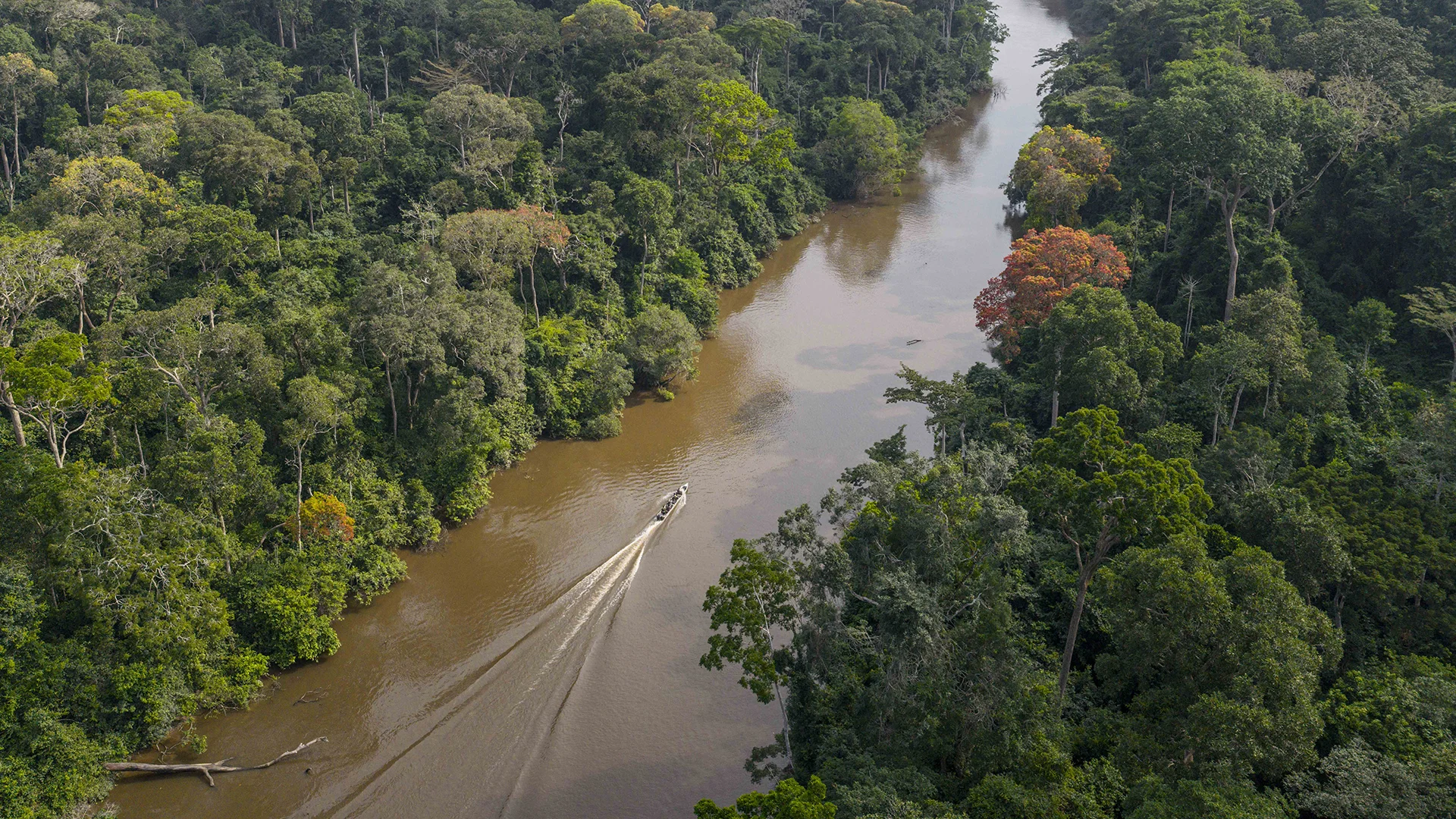
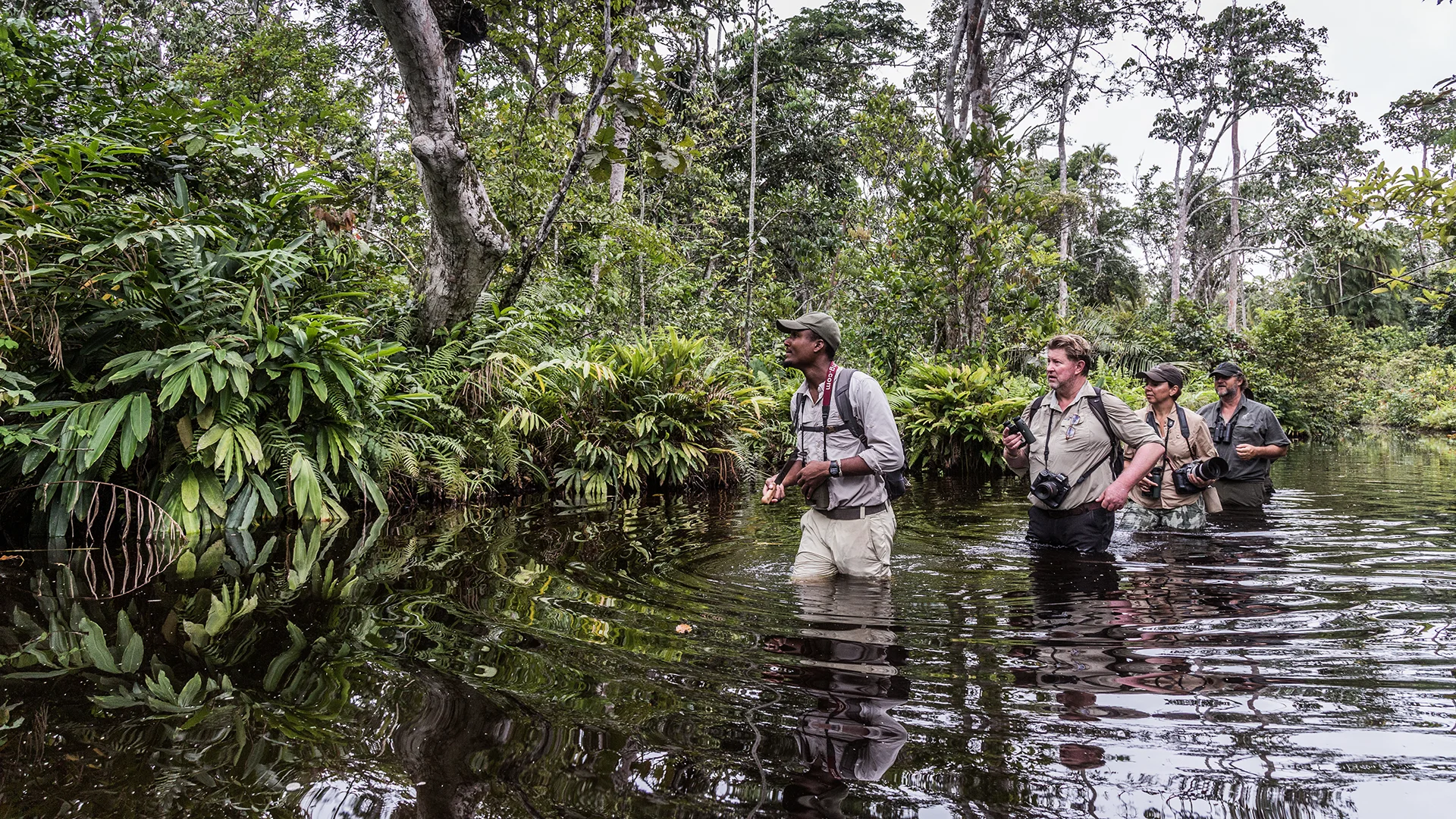
Rivers run much deeper - the Mambili and Lokoué rivers swell with rain, so boat cruises and kayak safaris reach further stretches of forest than in the dry months.
Skies turn dramatic - equatorial storms roll in fast and clear just as fast, producing some of the most striking light of the year for photography.
How Odzala-Kokoua's seasons actually work
Four seasons, not two
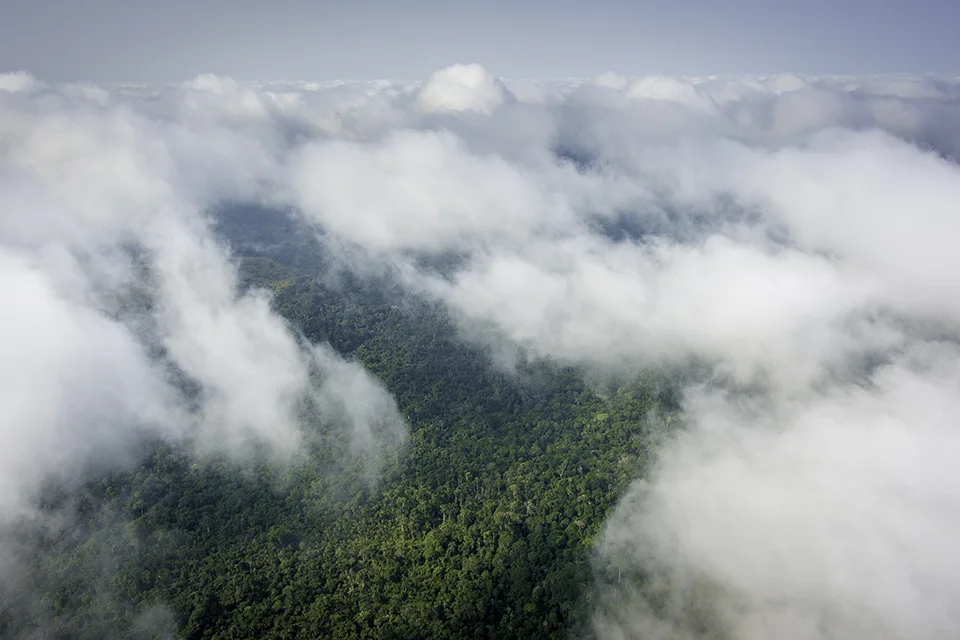
Odzala follows a bimodal equatorial pattern with four distinct seasons: a long low-rainfall window from June to September, a shorter one in January and February, and two rainy seasons, March to May and October to December. Rain is a constant factor here even in the driest months, so it's worth packing for it whenever you travel.
Rain does not cancel a safari
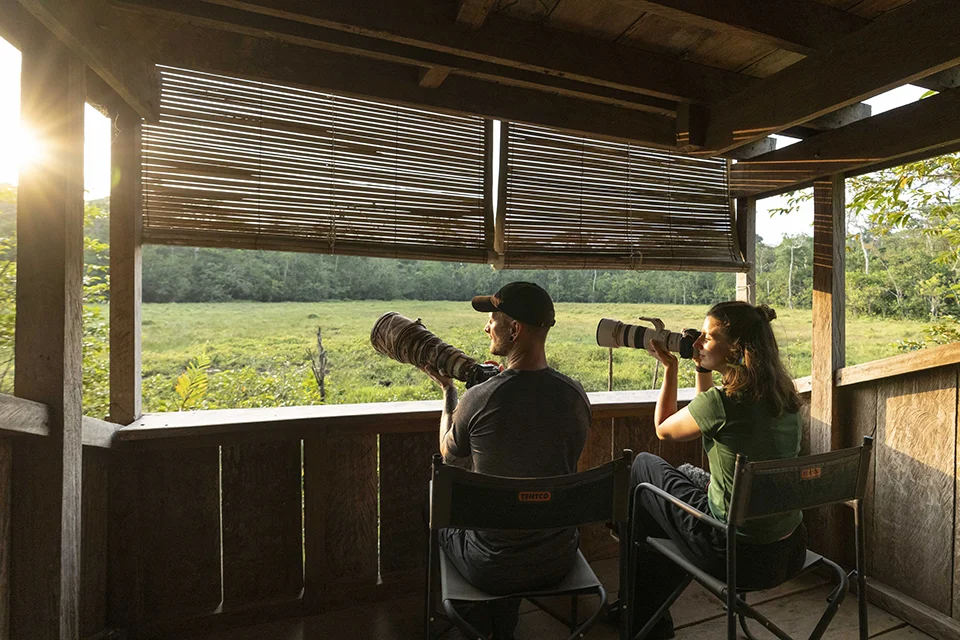
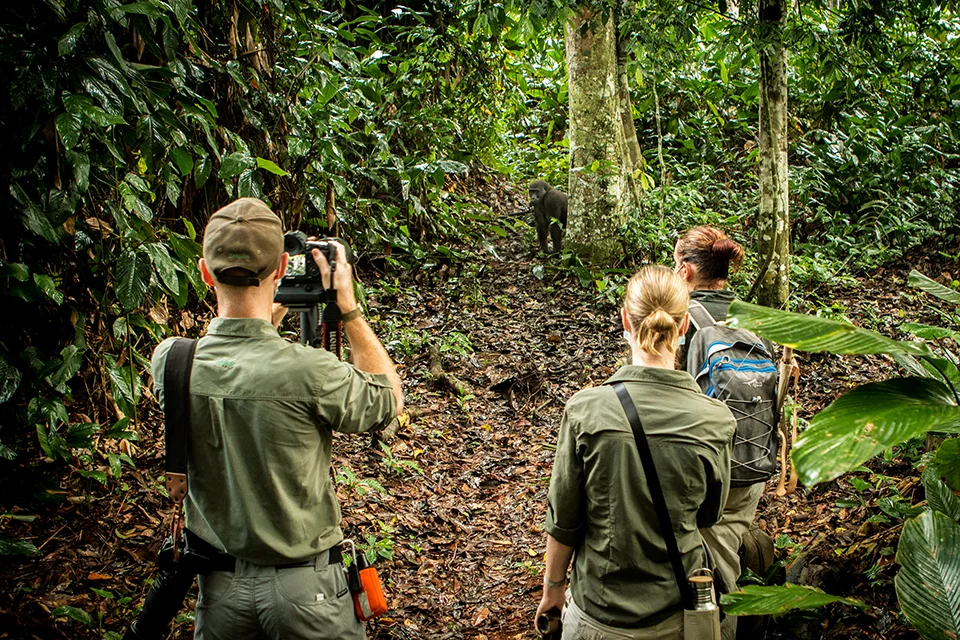
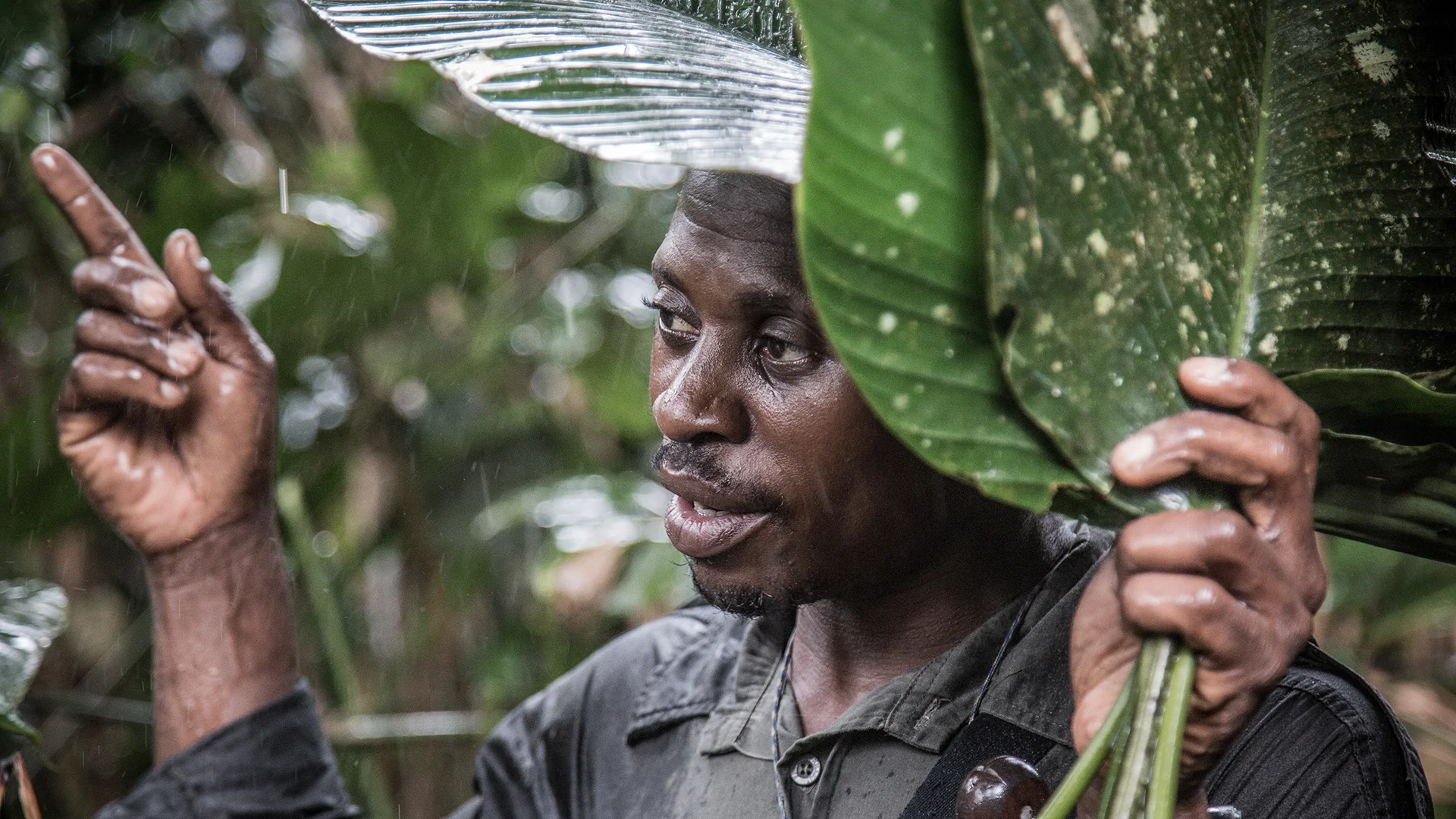
Storms tend to arrive in short, heavy bursts rather than settling in for days at a time. Guided forest walks simply pause and resume around them, baï viewing from the covered, elevated treehouse lookouts is unaffected by weather below, and gorilla trekking continues on all but the very wettest mornings, when trails become genuinely unsafe underfoot.
Wildlife stays put all year
Unlike savannah parks built around a seasonal migration, Odzala's forest elephants, western lowland gorillas and forest buffalo live permanently within the park and its baïs. Timing a visit here is about traveller comfort, road and river access, and photographic light - not about the risk of missing the animals altogether.
The rainy seasons, month by month
March: the rains return
Rain returns after the January-February dry spell, arriving in short, heavy storms rather than settling in for the day. The forest greens up quickly, and baï viewing stays unaffected from the covered treehouse lookouts.
April: rain becomes routine
Showers are more frequent and the ground stays consistently soft underfoot. Guided walks demand more effort, but wildlife traffic at the baïs holds steady.
May: the wettest of the first rains
This is typically the heaviest month of the first rainy season. River levels are rising, opening more of the Mambili to boat traffic ahead of the drier months to come.
October: the second rains build
After the long June-September dry stretch, afternoon storms return and build steadily through the month. The forest's deep green returns fast.
November: the year's wettest month
The Mambili and Lokoué rivers approach their fullest, and boat cruises push further into flooded forest than at any other time of year. Equatorial storms build most afternoons and clear just as quickly, producing some of the year's most striking skies for photography.
"Knee-deep in the baï, we reached Lango Lodge's jetty, dripping and greeted by cold beers. From the deck, green pigeons flew over wading forest buffalo and bongos after kayaking and river walks." – Linda Fox, Africa Geographic safari expert
December: rain begins to ease
Storms are still common but start to space out towards month's end, as the short dry spell approaches. Visitor numbers are at their lowest for the year, so lodges feel emptier and nightly rates are typically at their best.
The dry season, month by month
June: the rains taper off
The rains taper off quickly, and forest trails firm up within days. This marks the start of Odzala's longest dry season, and bookings for the year's most popular window are already well underway.
July: peak dry conditions
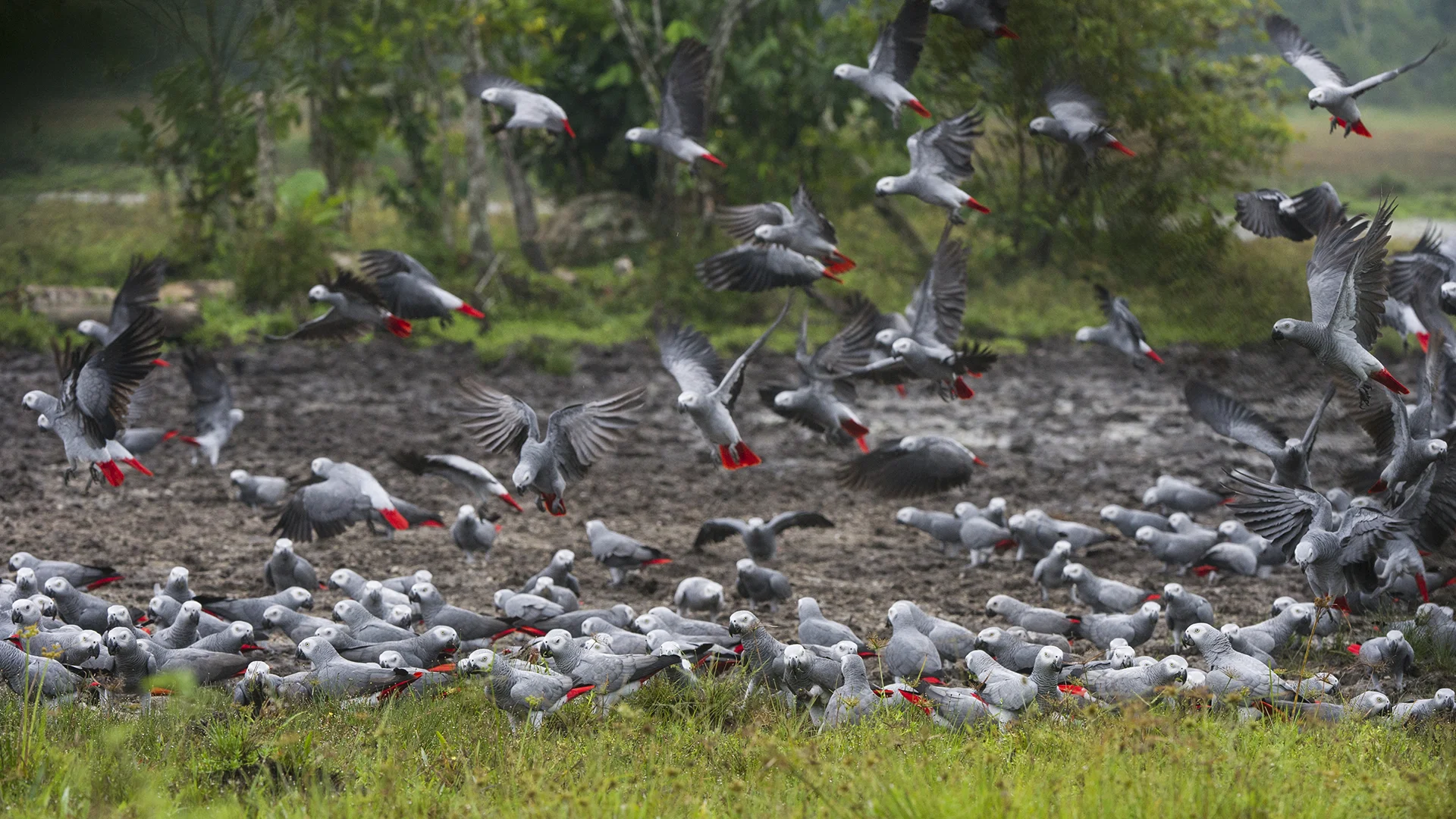
The driest, most reliable month of the year. Humidity is at its lowest, and baïs see some of their busiest wildlife traffic, as animals rely more heavily on the mineral clearings.
August: dry conditions hold
Conditions stay consistently dry and comfortable, much like July. This remains peak booking season, so lodge availability is at its tightest.
September: dry season's final stretch
Dry conditions hold for most of the month, though the first hints of the approaching rains can build towards the end. It's still a reliable month for firm trails and easy access.
January: the short dry spell begins
The short dry spell begins as the December rains ease off, with the ground drying out steadily through the month. Wildlife viewing is good, and lodges are notably easier to book than in June-September.
February: the driest of the short window
Typically the driest month of this shorter window, with humidity lower than January. Rain starts building again as March approaches, but conditions remain favourable throughout.
Wish you were here?
Choosing your month by priority
Travelling in comfort
If firm ground underfoot, lower humidity and the shortest odds of a rained-out activity matter most to you, June to September delivers the most consistent conditions of the year, month after month. January and February are a reasonable second choice, particularly for travellers who can't commit to a booking more than a year out but still want good viewing conditions on the ground.
Travelling for photography
The rainy months reward photographers willing to work around the weather and change their expectations of light. Storm-lit skies, saturated forest colour and near-empty baïs make October to December particularly strong for imagery, while the flatter, more diffuse light of overcast low-rainfall mornings can leave photographs taken at the very same baïs in July and August feeling comparatively ordinary by comparison, frame for frame.
Travelling on availability and rate
Camp Imbalanga and the southern lodges hold very few beds between them, and the June-September window fills furthest in advance of any period on the calendar year. January-February and the two rainy seasons generally offer noticeably better availability at shorter notice, along with lower nightly rates, which is useful for travellers planning inside a 6 to 9 month window rather than a year or more ahead of departure.
Booking timelines to keep in mind
Peak season, June to September, needs booking 12 to 18 months ahead given the tiny bed count spread across Odzala's handful of lodges. Off-peak trips, including January-February and the two rainy seasons, can usually be arranged 6 to 9 months out instead, often with considerably more flexibility on dates and choice of lodge.
Frequently asked questions
There isn't a single best month, since Odzala's wildlife doesn't migrate and the park stays open year-round. June to September is the longest low-rainfall season and the most popular booking window. January and February bring a second, shorter dry spell, with easier availability. March to May and October to December are Odzala's two rainy seasons, but baï viewing continues uninterrupted and river cruises reach further into the forest. Choose a month based on comfort or budget.
No. Odzala's forest elephants, western lowland gorillas, forest buffalo and other resident wildlife live in the park year-round and don't migrate with the seasons, unlike East Africa's wildebeest herds. Sightings at the baïs, the mineral-rich forest clearings, happen throughout the year, in both the dry and rainy months. Timing a visit is therefore about traveller comfort, access and photographic conditions, not about missing a seasonal wildlife event tied to animal movement.
Odzala sits directly on the equator, so temperatures stay stable year-round, typically 24-28 degrees Celsius with little seasonal variation. Humidity remains high throughout, and rain is possible in any month, even the driest ones. The park has two lower-rainfall periods, June to September and January to February, when wildlife viewing conditions are at their best, and two rainy seasons, March to May and October to December, when heavier storms are more frequent.
Yes, particularly for photographers and travellers who prefer fewer visitors. Rain arrives in short, heavy bursts rather than settling in for days, and gorilla and forest elephant viewing from the covered treehouse lookouts at the baïs continues uninterrupted throughout. River levels rise, allowing boat cruises to reach further into the forest, and dramatic storm skies make for striking photographic light. Lodges are noticeably quieter and nightly rates are typically lower than in peak season.
Book 12 to 18 months ahead for the June-September season, when demand is highest against Odzala's very limited lodge capacity across just a handful of properties. Trips during January-February or the two rainy seasons, March to May and October to December, can generally be arranged 6 to 9 months in advance instead, often with noticeably better availability and rates. Speak to one of our safari experts early to help secure your preferred lodge and dates.
Baï viewing is largely unaffected by rain, since sightings take place from covered, elevated treehouse lookouts regardless of the weather outside. Guided gorilla treks through the forest can be more physically demanding after heavy rain, as trails become soft and the Marantaceae understory grows denser and harder to push through, but treks continue on all but the very wettest mornings. Waterproofing for cameras, binoculars and important luggage is recommended in every season.
The tarred N2 highway between Brazzaville and Camp Imbalanga is in good condition year-round, though the 9 to 10 hour transfer is more comfortable during the June-September window than during the rainy seasons. Guests concerned about road conditions, or short on time, can fly instead: a scheduled flight connects Brazzaville to the park's Mboko airstrip in around 1 hour 45 minutes, regardless of the season chosen for travel.
January-February and the two rainy seasons, March to May and October to December, typically offer better lodge availability and lower nightly rates than the peak June-September window. For travellers with flexible dates and a shorter booking runway, these periods deliver strong wildlife viewing and considerably easier planning, without the 12 to 18 month lead time that peak season at Odzala's handful of lodges usually requires.
Start planning your dream safari
Our travel experts will craft a no-obligation itinerary just for you. We have crafted over 5,000 safaris since 1991. Your personal details are protected; we only use this information to contact you.
Why book your safari with us?

Deep Experience & Knowledge
Handcrafted experiential safaris since 1991.
Travel in Africa is about knowing when and where to go, and with whom. A few weeks too early/late or a few kilometres off course, and you could miss the greatest show on Earth. And wouldn’t that be a pity?

Trust & Safety

Make A Difference
We donate a portion of the revenue from every safari sold to carefully selected conservation projects that make a significant difference at ground level.
YOUR safari choice does make a difference - thank you!