

Tailor-made safaris. Since 1991


Trust us to find you the rarest animals, the most spectacular wildlife events, the remotest landscapes and deeply meaningful cultural encounters!
How to choose between the four lodges in Odzala-Kokoua National Park, Congo-Brazzaville.
Early morning at Imbalanga Bai usually arrives wrapped in mist. Red-fronted duikers graze in the clearing below the lookout, Guereza colobus peer down from the canopy, and African grey parrots whistle overhead. Then a silverback western lowland gorilla steps out of the treeline to feed, and the clearing goes quiet. This is Odzala-Kokoua National Park, in the equatorial forests of northern Congo-Brazzaville, and how you experience it depends almost entirely on which of its four lodges you choose.
Here is the short answer: Camp Imbalanga in the far north delivers the wildest, least-managed gorilla encounter, watched from an elevated hide with no trek permit needed. The southern trio – Ngaga, Lango and Mboko – offers habituated gorilla trekking and more comfortable accommodation at a higher price. Choose Camp Imbalanga for a patient, off-grid encounter, and the southern lodges for guided treks and habitat variety.
How to choose your Odzala-Kokoua lodge
Camp Imbalanga suits those wanting wild, non-habituated gorillas
Ngaga is the base for habituated gorilla trekking on foot from camp
Lango overlooks a bai where forest elephants gather daily to feed
Mboko adds river cruises, kayaking, savanna drives and night drives
Your decision comes down to two things: whether you want the wildest possible gorilla encounter or reliable habituated sightings, and whether you want a single base or a multi-habitat circuit. The answers point clearly to one lodge or to a combination.
The four Odzala-Kokoua lodges compared
Lodge | Signature experience | Gorilla access | Rate per night |
Camp Imbalanga | Bai treehouse, off-grid | Wild, non-habituated, no permit | From US$415 |
Ngaga | Habituated gorilla trekking | On foot, permit US$750 | US$1,250 |
Lango | Bai-side forest elephants | Via Ngaga only | US$1,250 |
Mboko | Rivers, kayaks, night drives | Via Ngaga only | US$1,135 |
3 things we love about Odzala-Kokoua's lodges
Odzala-Kokoua has only a handful of lodges, and each one sits inside a different habitat, so the act of moving between them becomes a large part of the safari itself.
Camp Imbalanga lets you watch wild gorillas for hours from an elevated hide, with no trek, no mask and no time limit placed on the encounter you get there.
Ngaga sits within the home ranges of habituated western lowland gorillas, so expert guides and Ba'Aka trackers lead you on foot from the lodge to find them.
Lango and Mboko add forest elephants at the bai and river journeys by kayak and boat, widening a gorilla trip into a fuller Congo Basin wilderness one.
A closer look at each lodge
Camp Imbalanga – the wild, off-grid choice
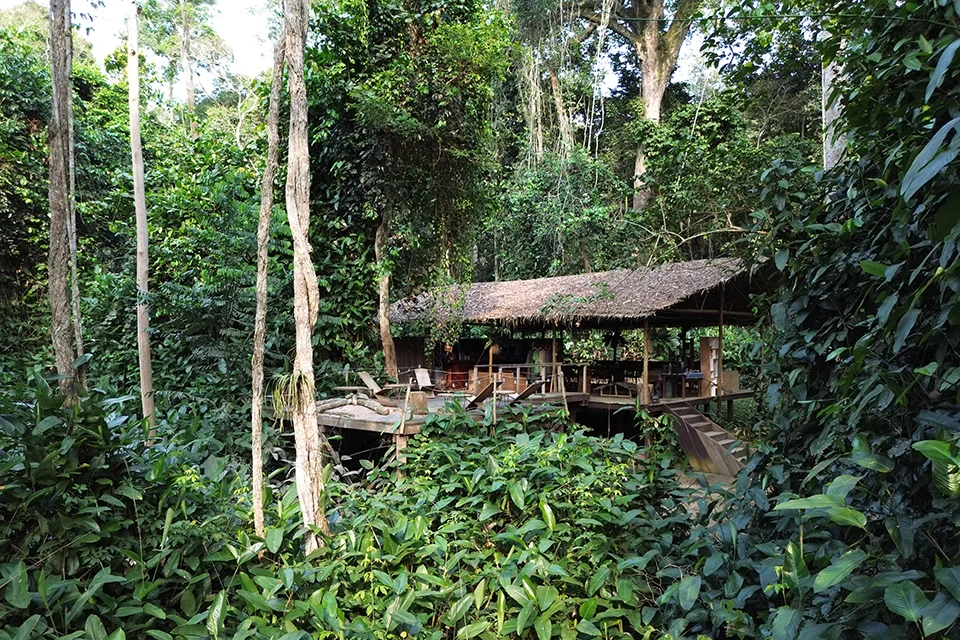
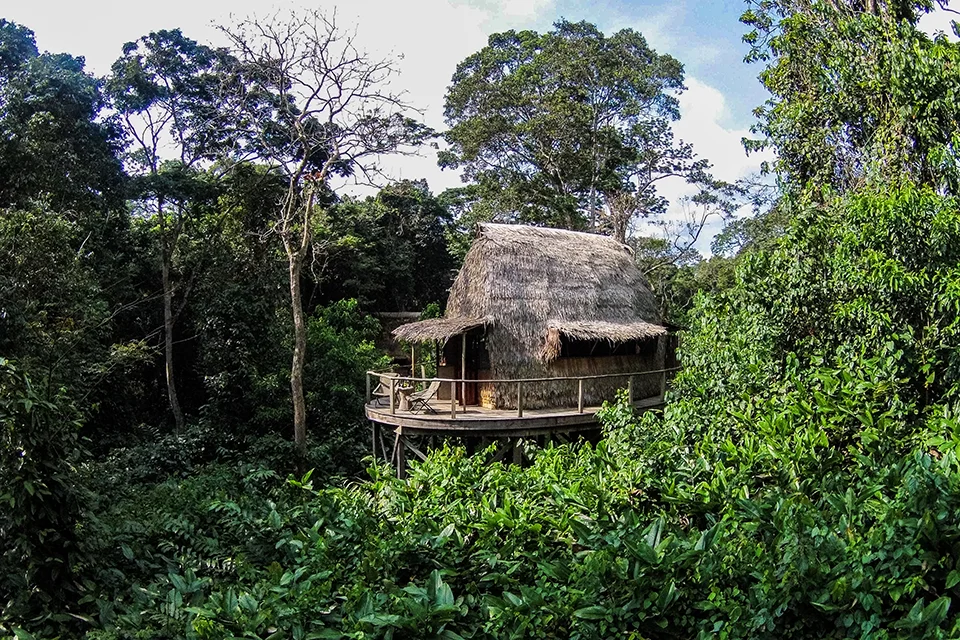
Camp Imbalanga is the park's only lodge in the far north, run by African Parks, with tourism revenue going to conservation and communities. It is a fully catered, off-grid tented lodge of ensuite canvas chalets on raised decks. Imbalanga Bai is a short walk along a raised walkway. There is no habituation, no trek permit and no mask requirement.
Ngaga – gorilla trekking headquarters
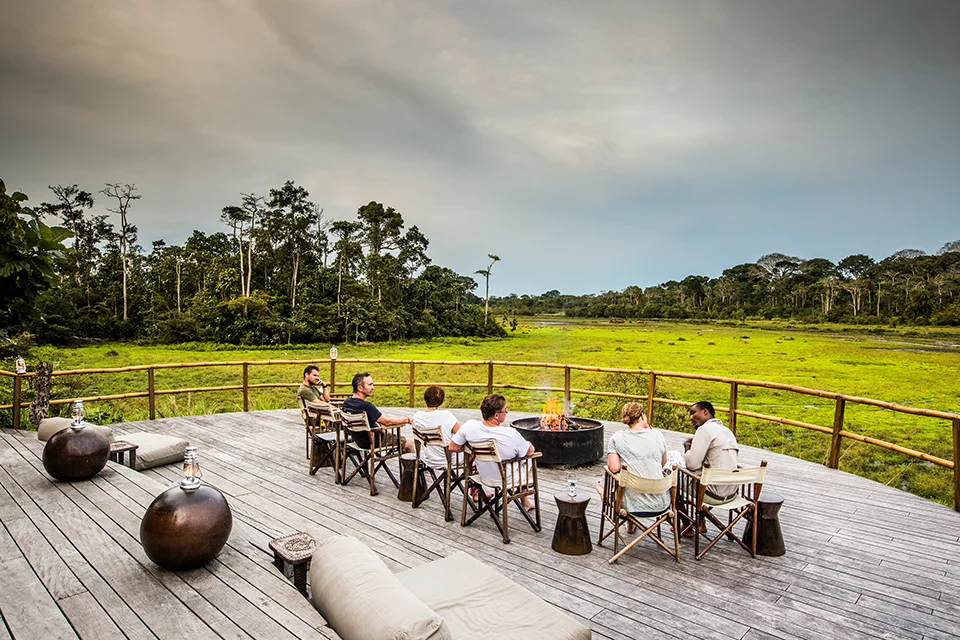
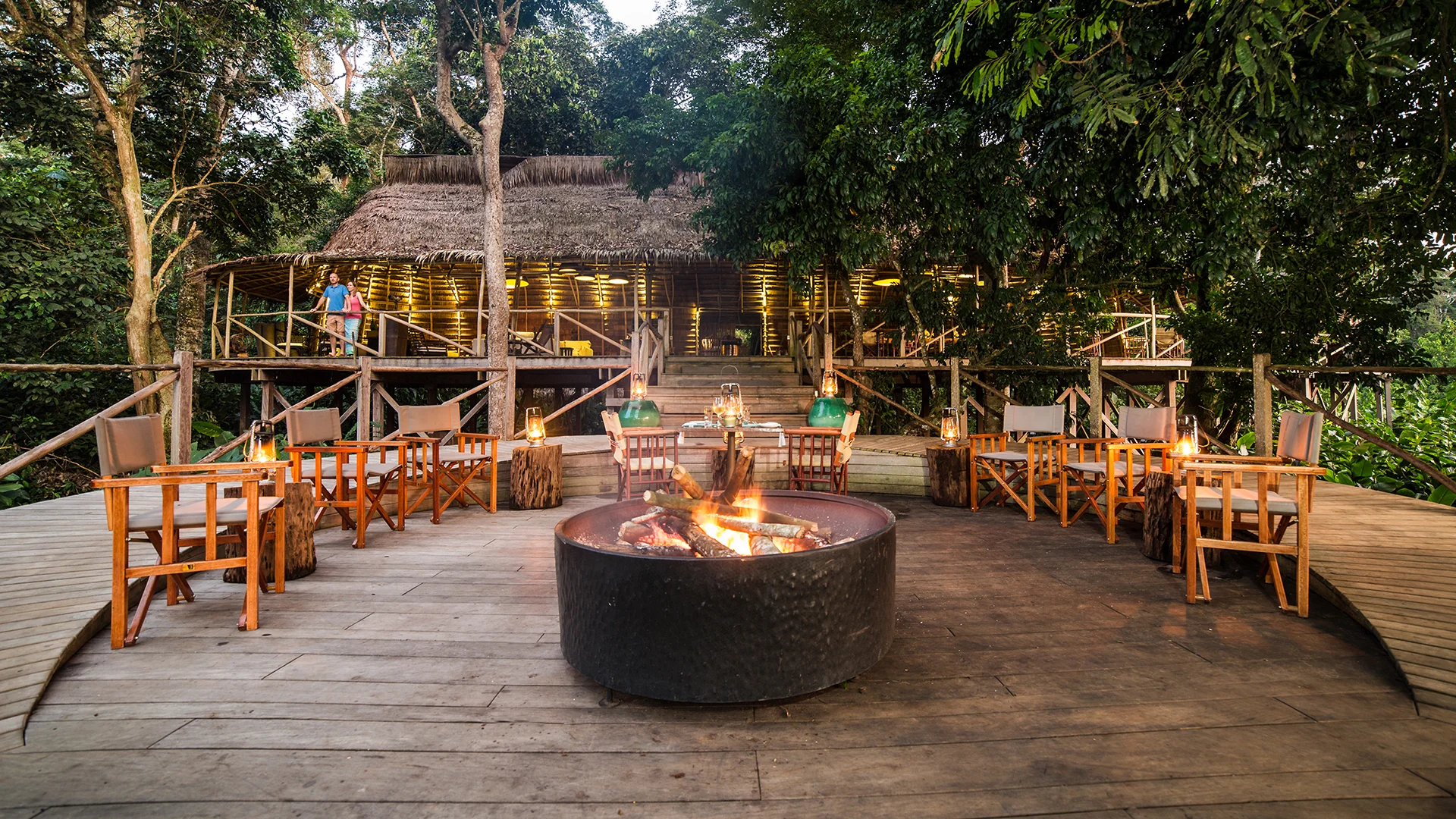
Ngaga sits in the Ndzehi Forest on the park's western boundary, with six raffia-and-thatch rooms raised among the marantaceae. It is the base for habituated western lowland gorilla trekking, led on foot by expert guides and Ba'Aka trackers. Habituated families, including the Jupiter and Neptuno groups, are tracked in parties of up to four guests.
Lango – the bai-side treehouse
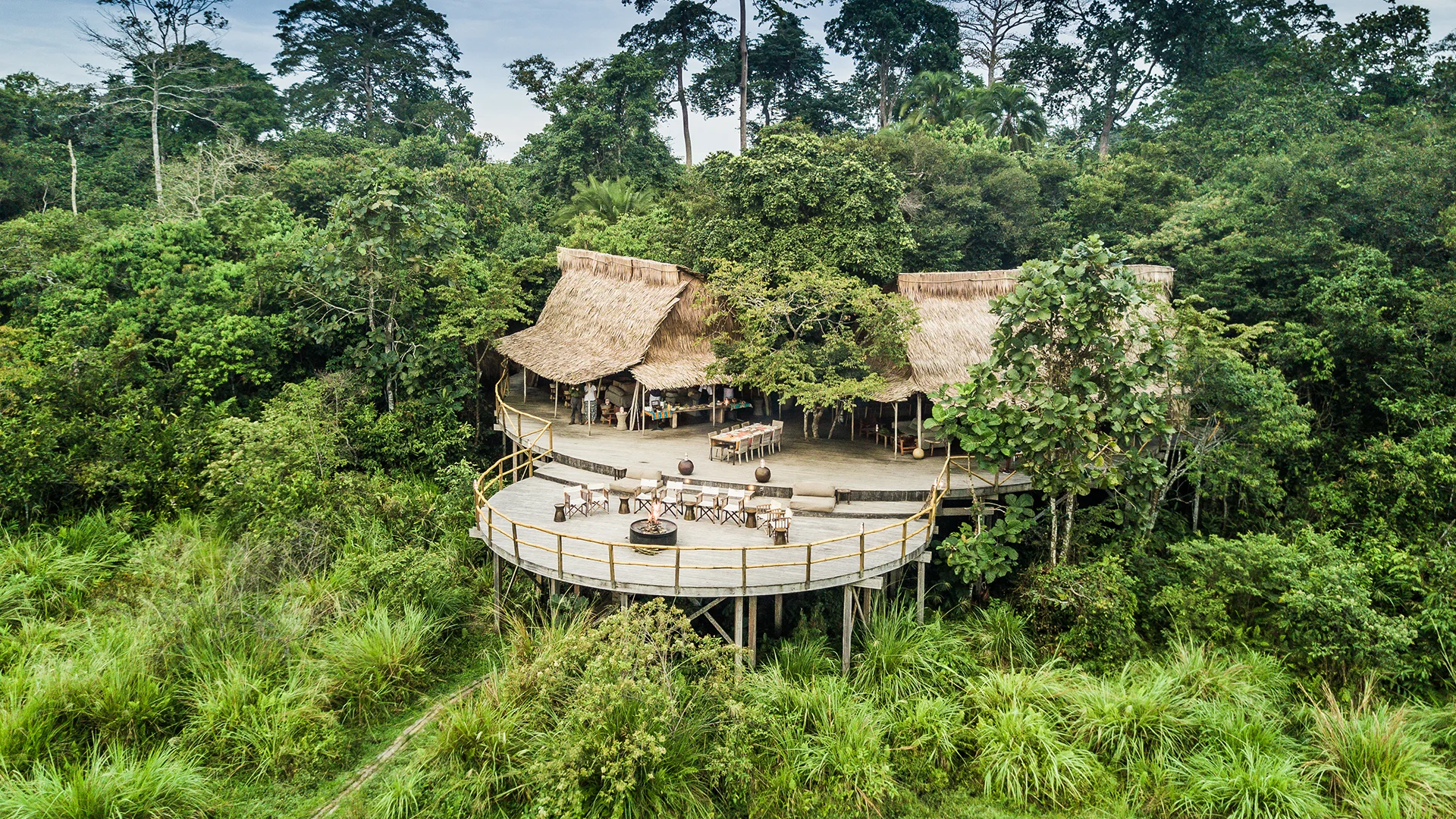
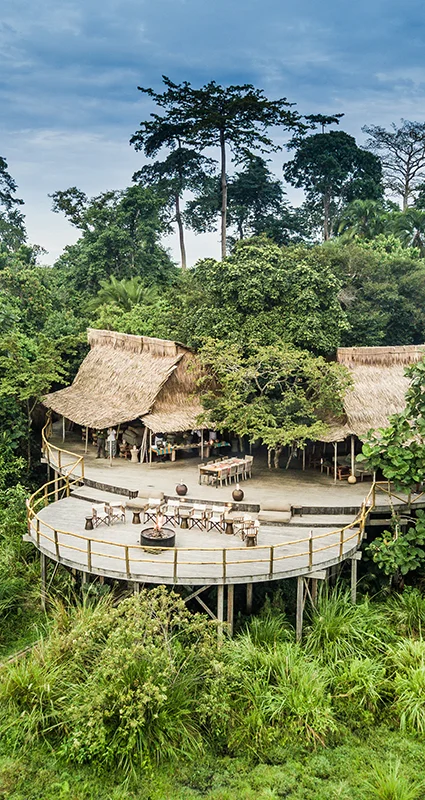
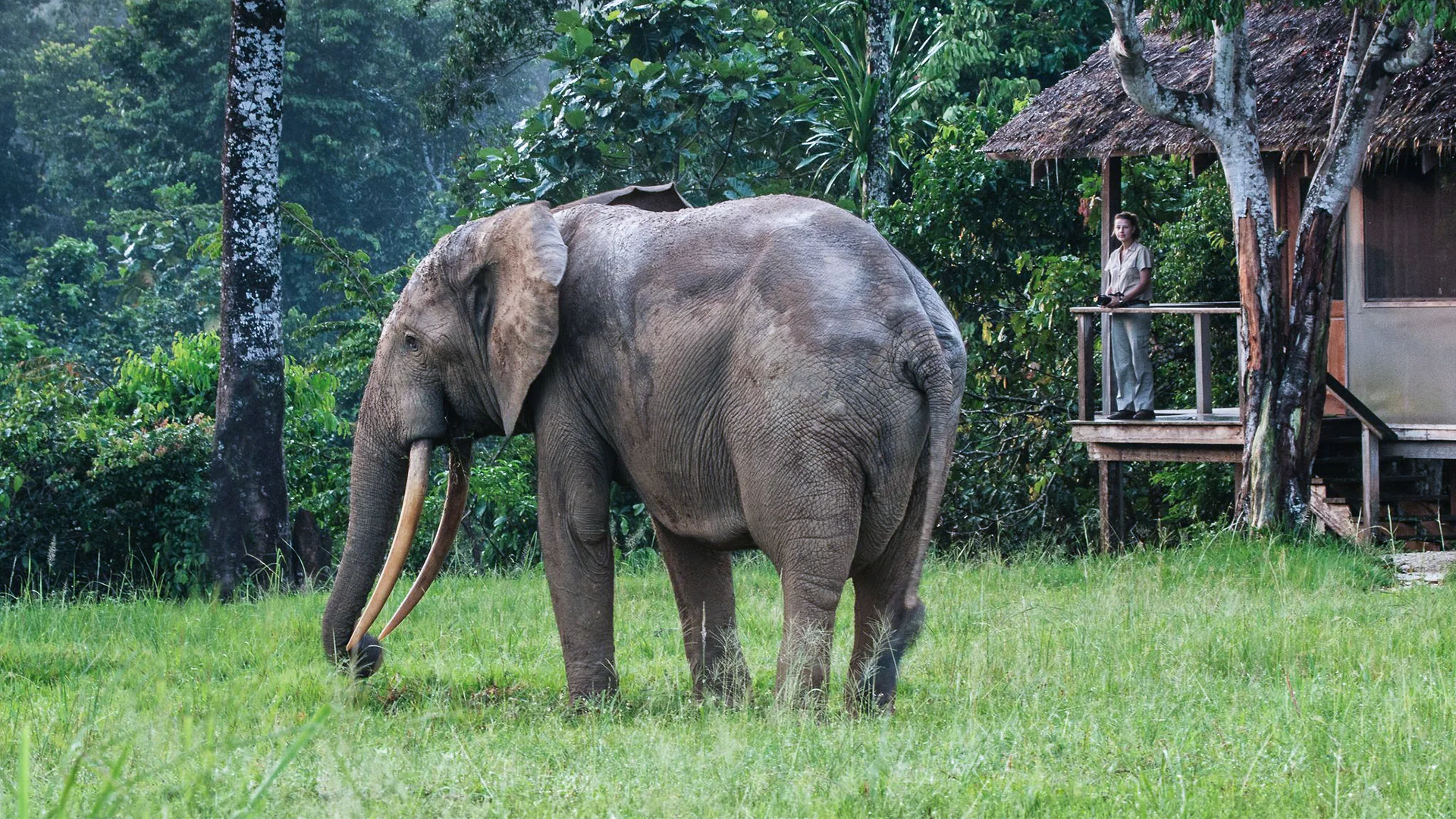
Lango overlooks a mineral-rich bai where forest elephants, buffalo and bongo emerge to feed. Its six domed rooms sit on stilts above the clearing. Activities centre on walk-and-wade bai sessions, kayaking, birding and boating on the Lekoli River, rather than gorilla trekking, which is run from Ngaga. The bai view is among the finest in Africa.
Mboko – rivers and savanna
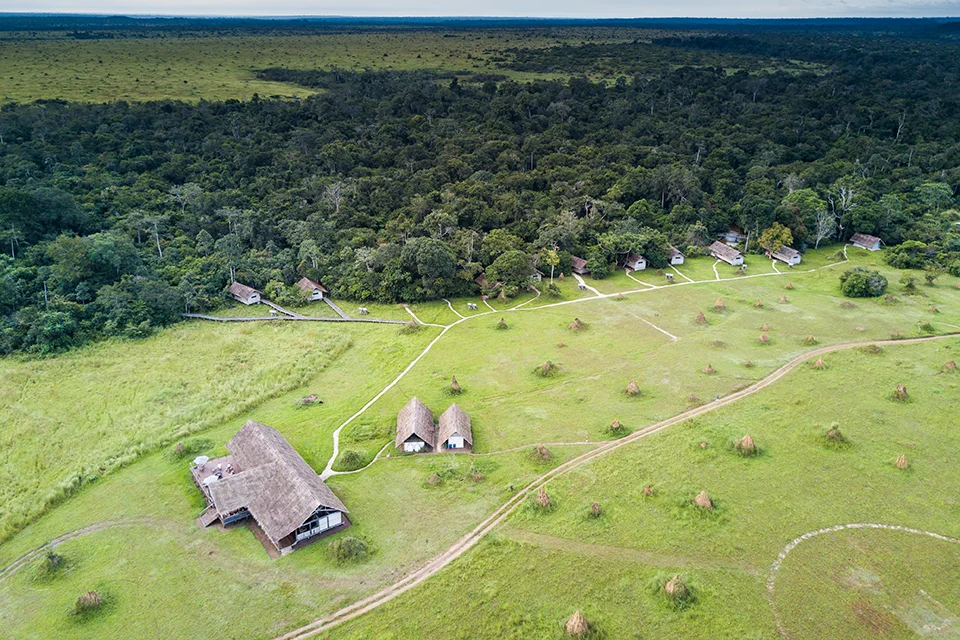
Mboko is the largest of the three southern lodges, with twelve rooms spread along the Lekoli River where forest meets savanna. Days here mean boat cruises, kayaking, forest walks and the park's only day-and-night game drives, turning up forest buffalo by day and serval, genet and aardvark after dark.
Getting to the lodges and combining them
Access routes from Brazzaville
The southern trio is reached by scheduled charter from Brazzaville's Maya-Maya Airport to the Mboko airstrip, on a twelve-seat aircraft flying twice weekly in roughly one hour and forty-five minutes, with baggage capped at 15kg per person in soft bags. From the airstrip, transfers continue by 4x4, boat and on foot. Camp Imbalanga is reached overland on the tarred N2 highway, a nine to ten hour road day north from Brazzaville with a lunch stop at Oyo.
How the lodges are typically combined
The classic southern circuit runs seven to twelve nights, weighting nights at Ngaga for gorillas, Lango for the bai and Mboko for rivers. A seven-night version uses three nights at Ngaga and two each at Lango and Mboko. Camp Imbalanga is usually a standalone stay of several nights, since sightings there are not guaranteed on any given day and patience rewards a longer visit. Our safari experts can build either approach around your dates.
When to travel
Rain is a constant factor, but there are two main rainy seasons, from March to May and October to December. The best months for wildlife viewing are the low rainfall months, June to September and January to February. Because the park sits close to the equator, temperatures vary little through the year, so the season affects underfoot conditions, river levels and general comfort far more than whether wildlife is present.
Wish you were here?
Which lodge is right for you
For the wildest gorilla encounter
Choose Camp Imbalanga. Africa Geographic CEO Simon Espley, writing about his own stay, put the difference plainly. "The gorilla experience here differs significantly from the relaxed hangout with habituated mountain gorillas in Uganda and Rwanda. No arduous trek is involved; you wait in an elevated treehouse for the gorillas to appear." It suits patient travellers who value a wild, unmanaged encounter over a guaranteed one, and who are content to sit and watch.
For guided treks and comfort
Choose the southern trio. Ngaga anchors the habituated trekking, Lango delivers the bai and its forest elephants, and Mboko adds rivers and night activities, all in more polished surroundings. This is the better fit for travellers who want a structured programme, habitat variety and strong cumulative sightings across a multi-night stay, with permits, charter flights and park fees bundled into a single price.
Practical points worth knowing
A visa, yellow fever certificate and malaria prophylaxis are all required for travel to Congo
Charter baggage is limited to 15kg per person, packed in soft bags rather than hard cases
The southern lodges set a minimum age of 15 for habituated gorilla trekking on foot
Trekking parties are small, usually no more than four guests with a guide and trackers
Closed shoes, long sleeves and rain protection matter more here than safari neutrals
Forest humidity stays high all year, so pack quick-drying layers and a dry bag for cameras
Our safari experts arrange the letter of invitation needed to apply for the Congo visa
Frequently asked questions
There is no single best lodge, because the right choice depends on your priority. Camp Imbalanga is best for wild, non-habituated gorilla viewing from a bai treehouse with no trek permit. Ngaga is best for habituated gorilla trekking on foot. Lango is best for forest elephants at the bai, and Mboko is best for rivers, kayaking and night drives. Most travellers combine the southern three on one circuit.
No. Camp Imbalanga offers gorilla viewing from an elevated hide above Imbalanga Bai, and no trek permit, mask or hike is required. You wait for wild gorillas to enter the clearing to feed. This differs from the southern lodges, where habituated gorilla trekking is run from Ngaga and requires a permit, priced at US$750 per trek, which is normally bundled into the package price rather than paid separately.
The southern lodges are reached by scheduled charter flight from Brazzaville's Maya-Maya Airport to the Mboko airstrip, then by 4x4, boat and on foot. Camp Imbalanga is reached overland on the tarred N2 highway north from Brazzaville, a nine to ten hour drive. A visa, yellow fever certificate and malaria prophylaxis are required, and our safari experts arrange the letter of invitation for the visa.
They sit in different sectors of the park and are run separately, so combining them on one trip takes planning and additional travel time. The southern trio forms a natural fly-in circuit of seven to twelve nights, while Camp Imbalanga is usually a standalone overland stay. Our safari experts can advise whether a combined itinerary suits the time and the budget you have available for a trip to Congo, and how best to sequence it.
The best months for wildlife viewing are the low rainfall months, June to September and January to February. The two main rainy seasons run from March to May and October to December. Because the park lies close to the equator, temperatures stay steady year-round, so the season mainly affects trail conditions, river levels and general comfort underfoot rather than whether wildlife is present in the forest at all.
Camp Imbalanga is the most accessible entry point, starting from US$415 per person per night. The southern lodges sit in a luxury tier, with Ngaga and Lango around US$1,250 and Mboko around US$1,135 per person per night. A packaged seven-night southern circuit is priced from roughly US$14,930 per person sharing, which includes gorilla permits, charter flights, park fees, meals, drinks and all activities.
The southern lodges set a minimum age of 15 for habituated gorilla trekking on foot, and a reduced rate is usually offered for young adults travelling with a parent. Camp Imbalanga is more flexible on younger children, though it is an unfenced forest lodge in a park with dangerous wildlife, so close supervision is essential at all times. Policies are reviewed regularly, so confirm the current position with our safari experts when you plan your dates.
At Ngaga, habituated western lowland gorilla families are tracked on foot in small parties, and a multi-night stay gives strong cumulative success across several treks. At Camp Imbalanga, several wild groups visit Imbalanga Bai and guests have reported seeing more than one group during a stay, though sightings there are never guaranteed on any single day, and patience across a longer stay matters a great deal.
Odzala-Kokoua protects forest elephants, forest buffalo, bongo, sitatunga, spotted hyena and eleven diurnal primate species including chimpanzees, putty-nosed monkeys and Guereza colobus. Birding is exceptional, with African grey parrots, Hartlaub's ducks and Congo Basin endemics. Night drives from Mboko regularly turn up serval, genet and aardvark, an activity that very few other Central African parks are able to offer guests.
Start planning your dream safari
Our travel experts will craft a no-obligation itinerary just for you. We have crafted over 5,000 safaris since 1991. Your personal details are protected; we only use this information to contact you.
Why book your safari with us?

Deep Experience & Knowledge
Handcrafted experiential safaris since 1991.
Travel in Africa is about knowing when and where to go, and with whom. A few weeks too early/late or a few kilometres off course, and you could miss the greatest show on Earth. And wouldn’t that be a pity?

Trust & Safety

Make A Difference
We donate a portion of the revenue from every safari sold to carefully selected conservation projects that make a significant difference at ground level.
YOUR safari choice does make a difference - thank you!