
Tailor-made safaris. Since 1991



The best African destinations to see all Big 5 on one safari
The Big 5 – lion, leopard, elephant, buffalo and black or white rhino – are found together in a relatively small number of African ecosystems. Of those, only a handful give you a realistic chance of seeing all five in a single trip – the goal of many enthusiastic safari-goers. The Greater Kruger, Maasai Mara, Serengeti, Laikipia, Ngorongoro Crater and various smaller fenced private reserves in South Africa consistently deliver the highest all-round sighting rates, but rhino remains the toughest to see: your destination choice matters more for this species than for any other. This guide ranks Africa's top Big 5 destinations by reliability, with honest notes on each species and the best time to visit.
How we assess Big 5 sighting rates
Our Africa Geographic safari experts assess each destination based on years of firsthand experience and guest feedback, and look at factors like season, vegetation density, reserve size and the density of each species' population. No safari guarantees a complete Big 5 sighting, but some destinations are substantially more consistent than others – and rhino is almost always the deciding factor.
Big 5 destination comparison at a glance
Destination | Lion | Leopard | Elephant | Buffalo | Rhino |
Very high | Very high | Very high | High | High | |
Very high | High | Very high | Very high | Moderate | |
Very high | High | Very high | Very high | Low-Moderate | |
Very high | Moderate | Very high | High | High | |
Very high | Moderate | Very high | High | High | |
High | Moderate | Very high | High | High | |
High | Moderate | Very high | High | High | |
High | Moderate | Very high | High | Moderate |
Note: Rhino ratings reflect the presence and sighting consistency of both black and white rhino where applicable. ‘Very high’ indicates sightings on most safaris during favourable conditions; 'High' indicates regular sightings most days; 'Moderate' indicates reliable but not guaranteed sightings; 'Low' indicates uncommon.
Big 5 safaris we love
From the rolling plains of Laikipia to the wet wonderland of the Okavango Delta, here are 3 safaris that make for a wonderful all-round experience and take you into the heart of some of Africa’s Big 5 ecosystems:
MalaMala and Madikwe Big 5 safari: Two of South Africa's most consistent Big 5 reserves back to back – MalaMala for leopard and open-vehicle Kruger ecosystem wildlife viewing, and Madikwe for malaria-free rhino sightings and exceptional guiding standards. 8 days. View safari →
Kenya Big 5 – Laikipia and Maasai Mara: Combines rhino conservation in Laikipia with the lion-rich plains and wildebeest migration of the Maasai Mara. An excellent itinerary for travellers who want reliable rhino sightings alongside East Africa's most iconic wildlife landscape. 8 days. See this safari →
Big 5 + chimps + gorillas in Rwanda: From searching for the Big 5 in the rolling plains and lake shores of Akagera NP – one of Africa's conservation success stories – to the dense forests of Nyungwe NP for chimpanzees and the highland forests of Volcanoes NP for mountain gorillas. 10 days. Check out this safari →
When to go for the best Big 5 sightings
Southern Africa – dry season
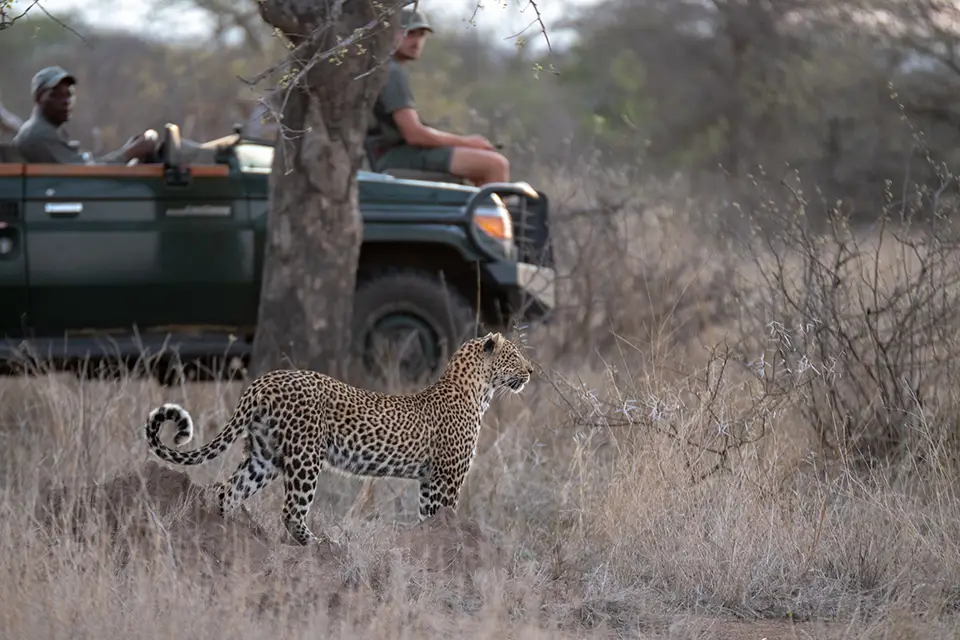
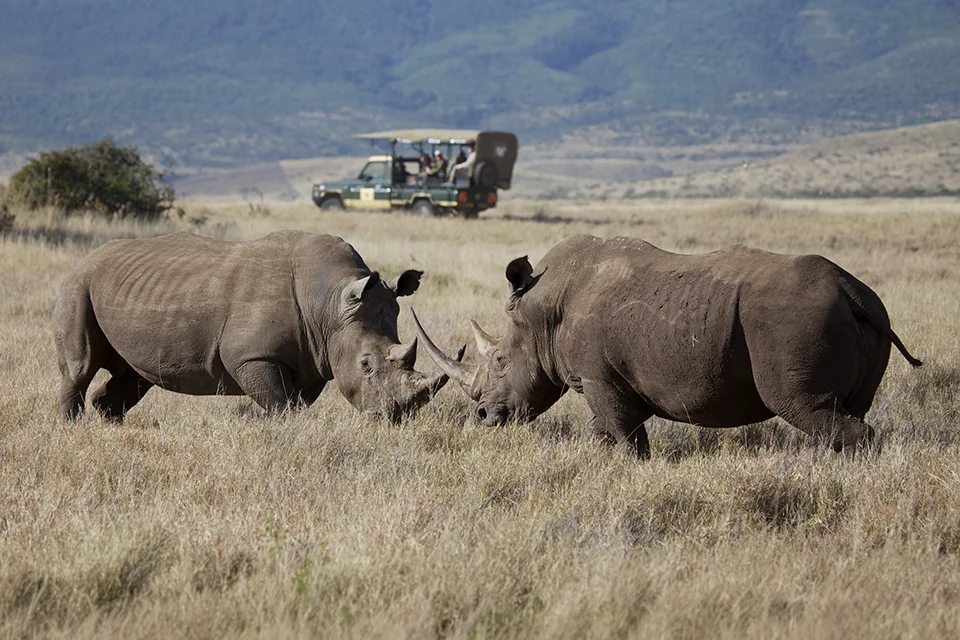
June to October is the optimal window for Big 5 wildlife viewing across southern Africa's major destinations, including Greater Kruger and Madikwe. Reduced vegetation and the concentration of animals at permanent water sources improve sighting rates significantly across all five species. Rhino sightings in particular benefit from the open conditions of the dry season.
East Africa – dry seasons
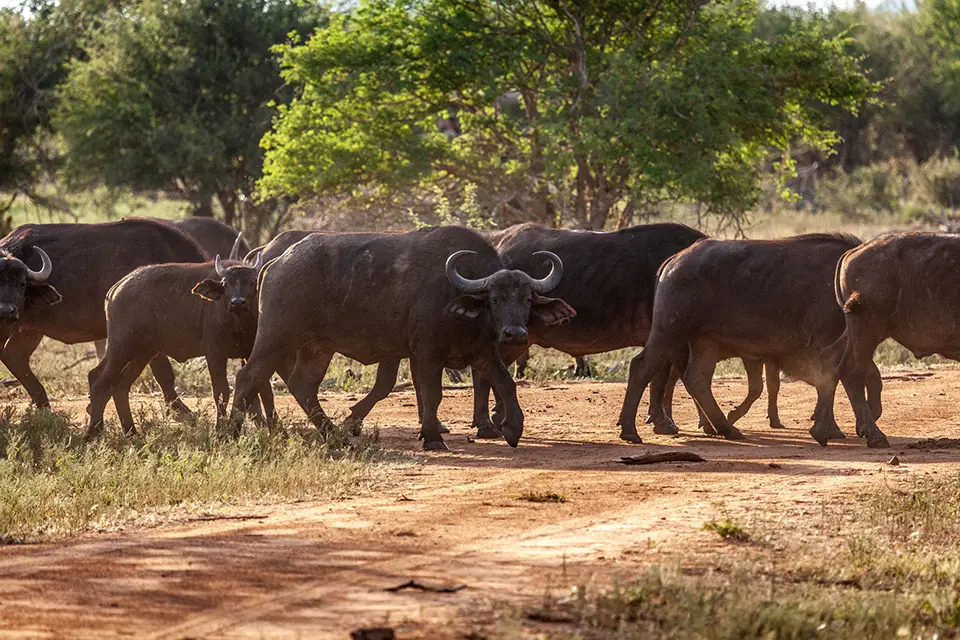
Kenya and Tanzania have two dry seasons: January to March and July to October. The July to October period is when we see the Great Migration Mara River crossings in both Maasai Mara and Serengeti, and is the most visited and most productive time for Big 5 viewing. Laikipia is excellent year-round but benefits from the long dry season for rhino tracking on foot.
Year-round destinations
Madikwe, Ngorongoro Crater, Akagera and Majete are worth visiting year-round. Madikwe's semi-arid climate means vegetation is never as dense as in wetter ecosystems, and wildlife viewing is consistent across seasons. Ngorongoro's contained ecosystem maintains reliable wildlife density regardless of season, though the crater floor can become very muddy after heavy rains. Akagera's compact size and mix of savannah, lakes and papyrus swamp mean wildlife stays visible throughout the year, though the rainy season brings lusher scenery and can make some roads harder to navigate.
South Africa's Greater Kruger region and Madikwe
MalaMala and the Sabi Sands
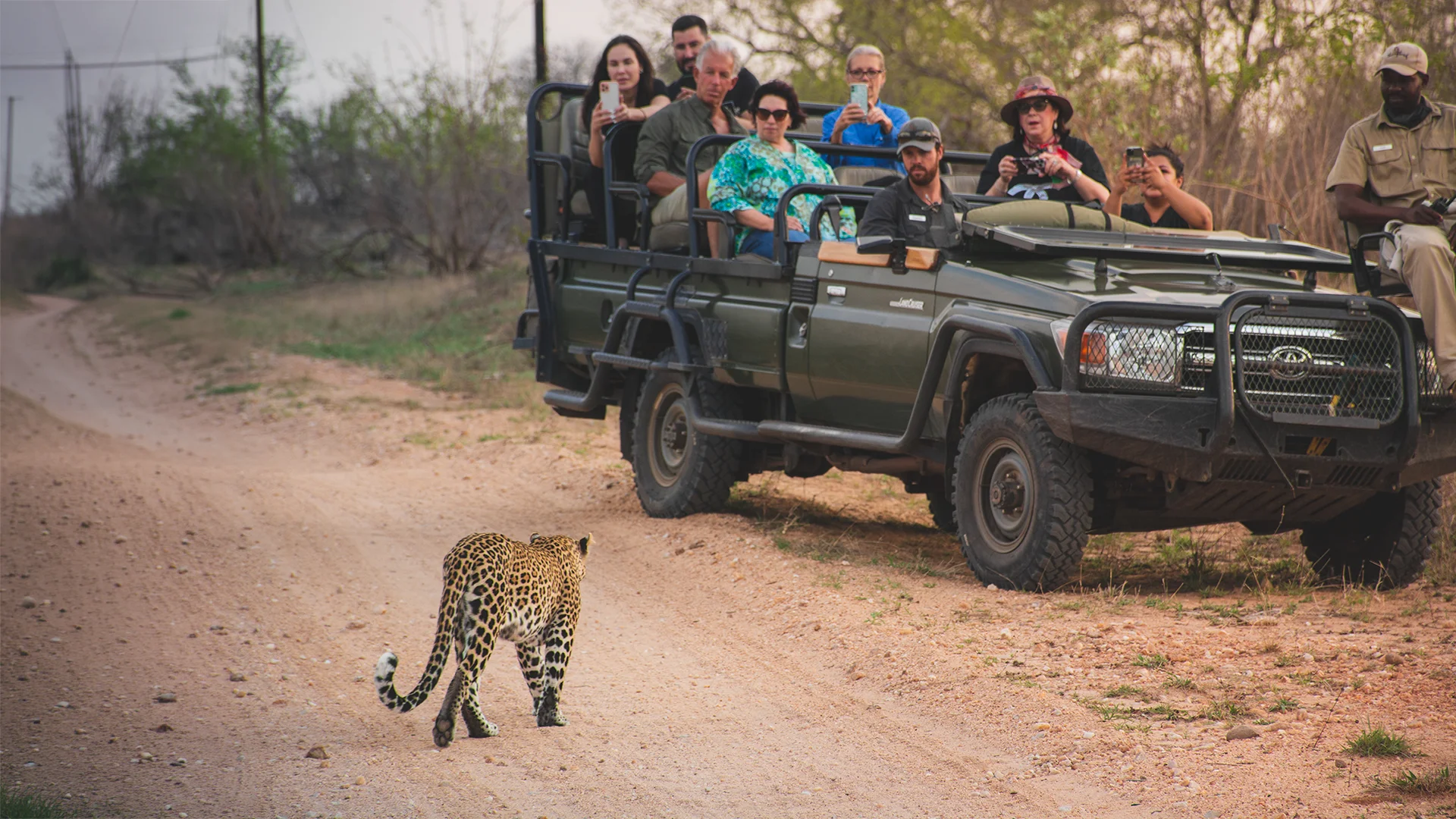
The Sabi Sands Game Reserve, unfenced along its western border with Kruger National Park, produces some of Africa's most consistent leopard sightings. This Greater Kruger destination offers lion prides that are well established, elephant and buffalo that move through in large numbers, and both black and white rhino – though sightings of rhinos are less predictable than for the other four species.
MalaMala Game Reserve, bordering Sabi Sands and Kruger National Park, is one of the most consistently productive Big 5 areas on the continent. AG safari expert Luis Gama describes it: "At MalaMala I found the perfect blend of comfort and wilderness – unfenced with Kruger, leopard sightings around every corner, and effortless Big Five encounters."
Timbavati Private Nature Reserve
The Timbavati borders Kruger National Park's central section and offers strong lion, elephant and buffalo sightings. Leopard is present and regularly seen. Rhino sightings in this Greater Kruger reserve are possible but not as reliable as in dedicated rhino-management areas. Stefan Winterboer, AG South Africa safari expert, notes: "Madikwe and the Timbavati produce some of South Africa's finest field guides, reflecting exceptional standards and a deep conservation culture. Safaris here consistently deliver authentic wildlife experiences."
Madikwe Game Reserve, South Africa
Madikwe is malaria-free, making it particularly suitable for families and travellers with health concerns. It is one of South Africa's largest reserves and holds a well-managed population of both white and black rhino, giving it among the highest rhino sighting rates of any Big 5 destination in southern Africa. Lion, elephant and buffalo are all reliably seen; leopard as well, but not as frequently as in other destinations.
Nadia Lautenbach, AG destination expert, has worked in Madikwe for 17 years: "Having guided in Madikwe for 17 years, this Big Five reserve is close to my heart – diverse, exciting, never dull. Quality lodges and quality guides elevate your safari experience."
Stefan Winterboer adds: "You couldn't ask for a stronger Big 5 safari pairing: exceptional wildlife viewing, outstanding guiding, warm, polished hospitality, and beautiful accommodation. MalaMala and Madikwe Hills together deliver a complete, world-class safari experience."
Kenya – Maasai Mara and Laikipia
Maasai Mara National Reserve and conservancies
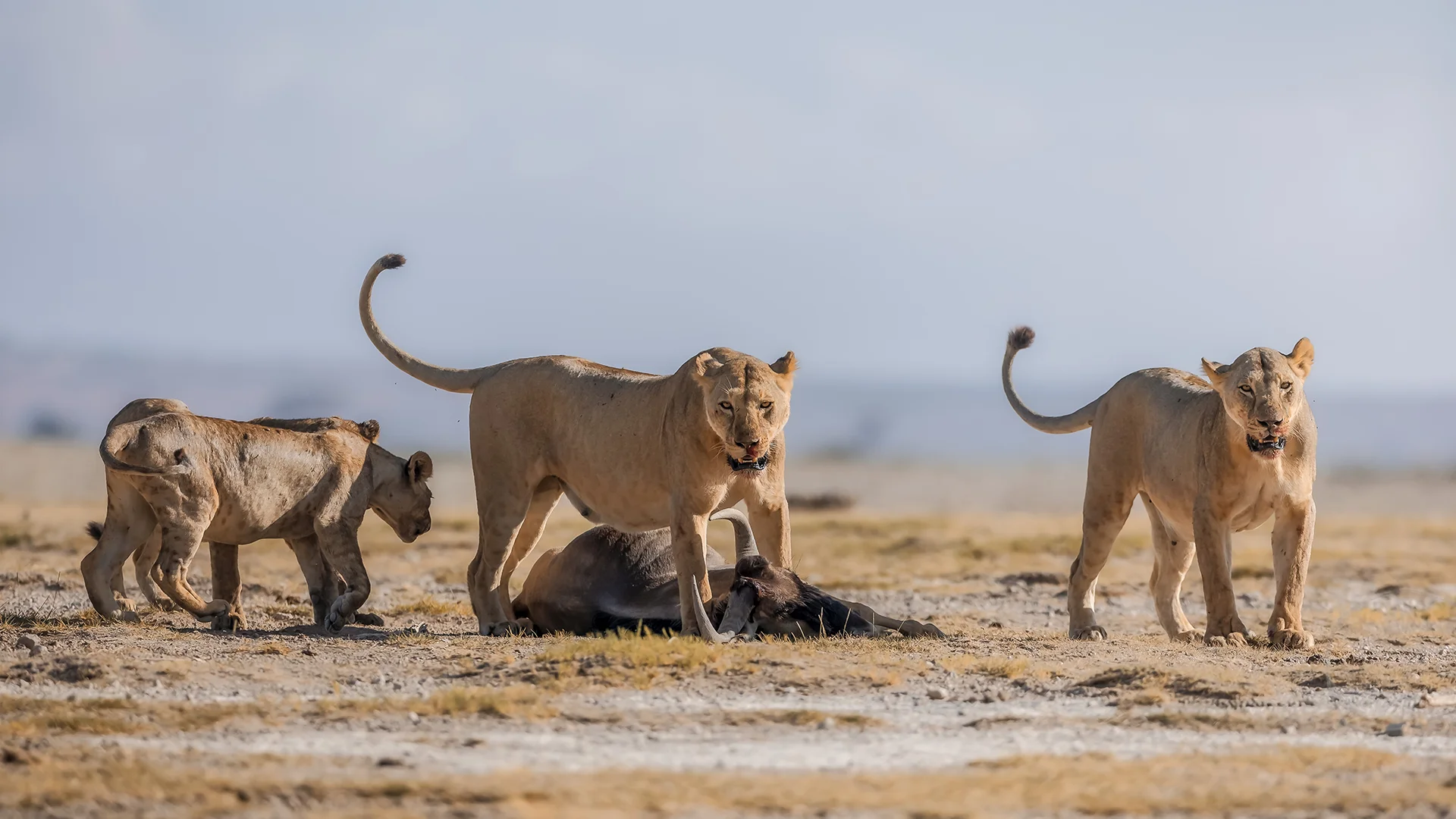
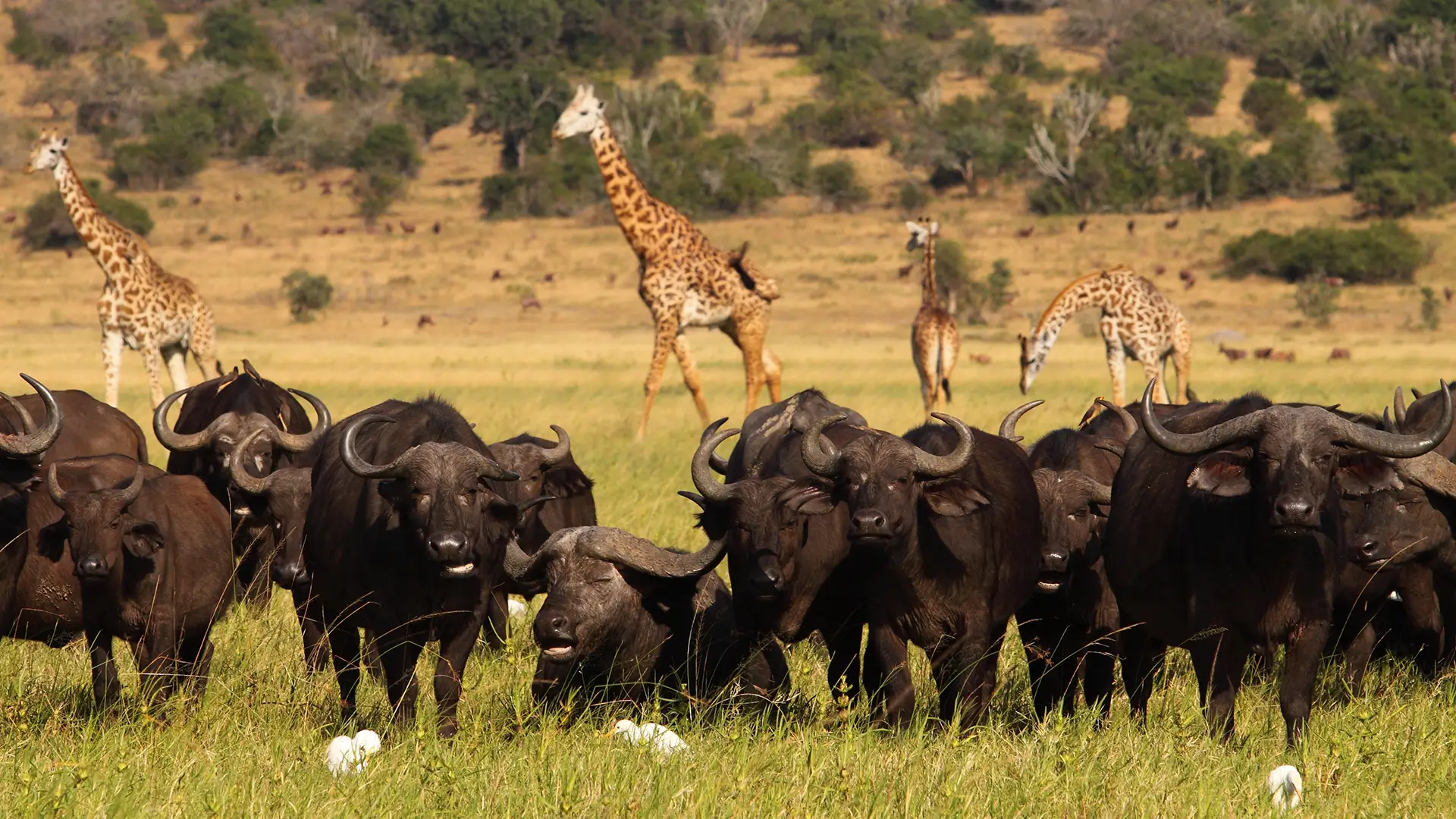
The Maasai Mara is one of East Africa's most celebrated and photograph-worthy Big 5 destinations. With a high number of lions – in fact, lion density is among the highest on the continent – and open plains, lion sightings are straightforward. Large buffalo herds are regularly encountered throughout the Mara ecosystem, and leopard is reliably seen in the riverine woodland along the Mara River and its tributaries. Elephant populations are large and approachable. Rhino – primarily black rhino – is present but sightings require patience and are not guaranteed on every game drive.
The July to October period brings the wildebeest migration from Tanzania's Serengeti, concentrating predators and dramatically improving the chances of witnessing lion and leopard hunting behaviour.
Luis Gama, AG East Africa safari expert: "In Laikipia, I locked eyes with endangered rhinos, a moment of pure awe. Then the Maasai Mara stole my heart – floating above elephants at dawn and sleeping to lions' wild serenade."
Laikipia Plateau
Laikipia sits north of Mount Kenya and is one of Africa's most important rhino sanctuaries. Both black and white rhino are well established here, and dedicated rhino tracking on foot or from vehicles is a core experience at several camps. Lion, elephant and buffalo are all reliably seen. Leopard is present but the open, semi-arid landscape makes sightings less consistent than in the Mara's dense riverine corridors.
Ramona Rubach, AG Kenya safari expert, says: "The exceptional staff and service at both camps, only to be outdone by the multi-layered conservation experiences of Laikipia and an unforgettable leopard encounter in Mara North – put this combination at the top of my 'Top Safari Memories' list."
A Kenya itinerary combining Laikipia and the Maasai Mara covers all five species with high reliability, with Laikipia delivering on rhino and Mara covering lion, leopard and buffalo.
Tanzania – Ngorongoro Crater and Serengeti
Ngorongoro Crater
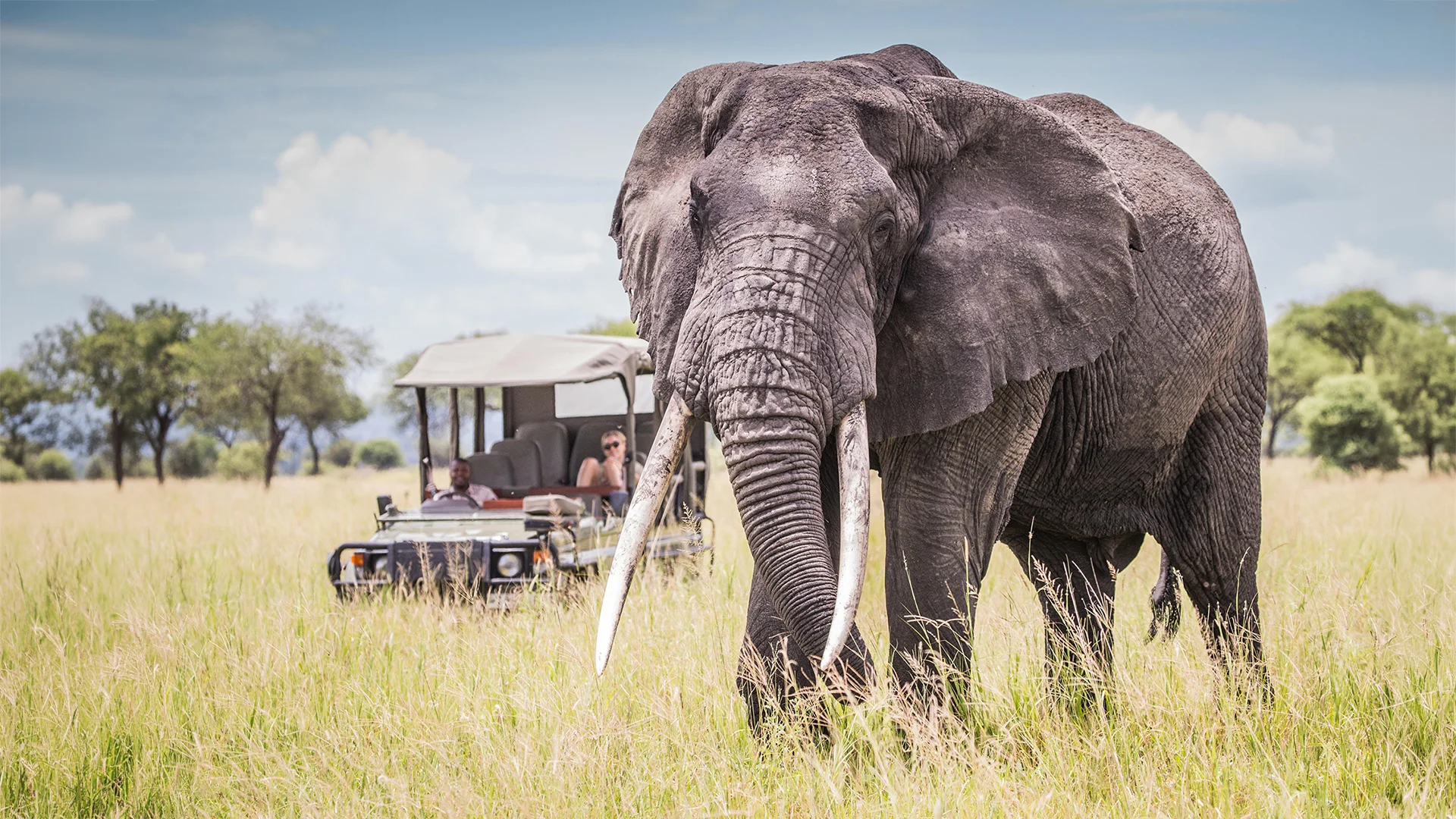
The Ngorongoro Crater is the world's largest intact volcanic caldera and one of Africa's most concentrated wildlife areas. The enclosed ecosystem – approximately 260 km² – holds self-contained populations of lion, leopard, elephant, buffalo and black rhino. All five species may be seen in a single day in the crater floor. Lion sightings are nearly guaranteed, buffalo herds are large, and elephant bulls move regularly through the crater. Black rhino is present and sightings occur with reasonable regularity, though the population is small.
The Ngorongoro's contained geography makes it one of the most reliable single-day Big 5 destinations in Africa, though access is limited to day visits (most travellers overnight at the crater rim).
Serengeti National Park
The Serengeti is Tanzania's largest and most diverse park. Lion is prolific across the ecosystem, with the central Seronera Valley particularly productive year-round. Leopard is regularly seen in the Seronera area, particularly in the sausage tree woodland. Elephant and buffalo are widespread. Rhino – primarily black rhino – is present in the Moru Kopjes area, but sightings are far less reliable than for the other four species. Travellers focused specifically on rhino are better served by Ngorongoro or Laikipia.
Wish you were here?
Akagera National Park, Rwanda
Akagera underwent a comprehensive restoration programme from 2010 onwards, reintroducing lion (2015) and black rhino (2017) to complete its Big 5 roster. The park now holds lion, leopard, elephant, buffalo and black rhino, making it one of East Africa's most accessible complete Big 5 destinations. Rhino sightings in Akagera are relatively reliable given the park's management intensity and smaller size. Rwanda's geographic position also makes Akagera a natural pairing with gorilla trekking in Volcanoes National Park – a combination that is increasingly popular among travellers seeking both Big 5 and primates on a single itinerary.
Majete Wildlife Reserve, Malawi
Majete Wildlife Reserve represents one of Africa's greatest conservation success stories. Once almost devoid of large mammals due to poaching, the reserve has been transformed through African Parks' restoration programme into a thriving Big 5 destination. Today, lion, leopard, elephant, buffalo and both black and white rhino are all well established. Elephant, buffalo and rhino sightings are particularly reliable, while lions are regularly encountered. Leopards remain more elusive, reflecting the reserve's rugged terrain and dense riverine vegetation.
Majete's relatively small size and carefully managed wildlife populations make for rewarding game viewing, while its lower visitor numbers provide a quieter, more exclusive safari experience than many better-known Big 5 destinations. The reserve also pairs naturally with Liwonde National Park for exceptional wildlife diversity or with Lake Malawi for a classic bush-and-beach itinerary.
Frequently asked questions
The best African destinations for seeing all Big 5 – lion, leopard, elephant, buffalo and rhino – in a single safari are the Greater Kruger region (including the Sabi Sands and MalaMala), South Africa's Madikwe Game Reserve, Kenya's Maasai Mara and Laikipia Plateau, and Tanzania's Ngorongoro Crater. Rhino is the hardest Big 5 species to locate in most ecosystems; dedicated rhino conservation areas such as Madikwe, Akagera in Rwanda and Majete in Malawi offer the strongest sighting rates. Timing matters: the dry season (roughly June to October in southern Africa, July to October in East Africa) concentrates wildlife at waterholes and reduces vegetation, significantly improving sighting rates across all five species.
South Africa gives the highest probability of seeing all Big 5 in a short trip. The Greater Kruger ecosystem (including MalaMala and the Sabi Sands) and Madikwe Game Reserve both hold all five species, with Madikwe offering particularly strong rhino sighting rates. Kenya is excellent for lion, elephant and buffalo, and strong for rhino if you combine the Maasai Mara with Laikipia. Tanzania's Ngorongoro Crater is the most reliable single-day Big 5 location on the continent.
Madikwe Game Reserve in South Africa is one of the most reliable rhino destinations in Africa for both black and white rhino. Laikipia Plateau in Kenya is East Africa's strongest black rhino sanctuary. Akagera National Park in Rwanda has well-managed black rhino populations with relatively consistent sighting rates. Hluhluwe-iMfolozi Park in KwaZulu-Natal is the historic centre of white rhino conservation in Africa and offers reliable sightings. Majete Wildlife Reserve in Malawi has a thriving black rhino population following successful reintroductions, making it one of southern Africa's most rewarding emerging rhino destinations.
Both are outstanding, but they suit different traveller priorities. The Maasai Mara has higher lion density and dramatic open plains, making lion and buffalo encounters particularly impressive. During July to October, the wildebeest migration adds extraordinary scale. Kruger and the adjacent private reserves – particularly the Sabi Sands – offer Africa's most consistent leopard sightings and very strong all-round Big 5 wildlife viewing. For rhino specifically, Kruger's private reserve areas are more reliable than the Mara, though neither matches Madikwe or Laikipia.
Yes, but it requires planning. The Okavango Delta delivers outstanding sightings for elephant, lion, buffalo and leopard. Rhino was largely absent from the Delta ecosystem for many years after heavy poaching pressure, but reintroduction is underway. For a complete Botswana Big 5 experience, Africa Geographic has access to private reserves with reliable rhino sightings, but these don't want to be marketed as rhino locations for anti-poaching purposes. Combining these areas into a 7–10 day itinerary makes a complete Big 5 tick realistic.
The dry season is optimal across most of Africa. In southern Africa (Kruger, Madikwe, Okavango), the best window is June to October when vegetation is low and animals concentrate at water. In East Africa (Maasai Mara, Laikipia, Serengeti), July to October coincides with the dry season and the wildebeest migration, producing high predator activity and large herbivore aggregations. Ngorongoro Crater and Madikwe are reliable year-round destinations. Always check seasonal rhino tracking conditions with Africa Geographic before booking, as these can vary by reserve.
Akagera National Park is now a credible Big 5 destination following the reintroduction of lion in 2015 and black rhino in 2017. The park is well managed, relatively compact, and delivers reliable sightings across all five species, with leopards the hardest to find. Its proximity to Kigali makes logistics straightforward, and many travellers combine Akagera with gorilla trekking in Volcanoes National Park for a diverse 7–10 day Rwanda safari. It is not as prolific as Kruger or the Maasai Mara in raw sighting numbers, but the conservation story and intimate scale are genuine advantages.
In the most productive destinations, all Big 5 can be seen within 3–4 days on safari. MalaMala, Madikwe and Ngorongoro Crater are particularly efficient in this regard. For less concentrated ecosystems such as the Serengeti or northern Botswana, allow at least 5–7 days. For itineraries that combine multiple countries or pair rhino-specific areas with broader Big 5 destinations, 8–12 days is recommended to see all five species reliably across different habitats. Africa Geographic's experts can help structure an itinerary around your specific priorities.
Ngorongoro Crater is considerably more concentrated and consistent for Big 5 sightings than the Serengeti. The crater's enclosed ecosystem – roughly 260 km² – holds self-contained wildlife populations and lion is sighted on almost every descent. The Serengeti is far larger and offers a broader wilderness experience, with exceptional lion sightings in the Seronera Valley and rhino in the Moru Kopjes, but sightings require more time and patience. For travellers with limited time and a specific Big 5 focus, Ngorongoro delivers more reliably per day than the Serengeti.
Start planning your dream safari
Our travel experts will craft a no-obligation itinerary just for you. We have crafted over 5,000 safaris since 1991. Your personal details are protected; we only use this information to contact you.
Why book your safari with us?

Deep Experience & Knowledge
Handcrafted experiential safaris since 1991.
Travel in Africa is about knowing when and where to go, and with whom. A few weeks too early/late or a few kilometres off course, and you could miss the greatest show on Earth. And wouldn’t that be a pity?

Trust & Safety

Make A Difference
We donate a portion of the revenue from every safari sold to carefully selected conservation projects that make a significant difference at ground level.
YOUR safari choice does make a difference - thank you!