

Tailor-made safaris. Since 1991

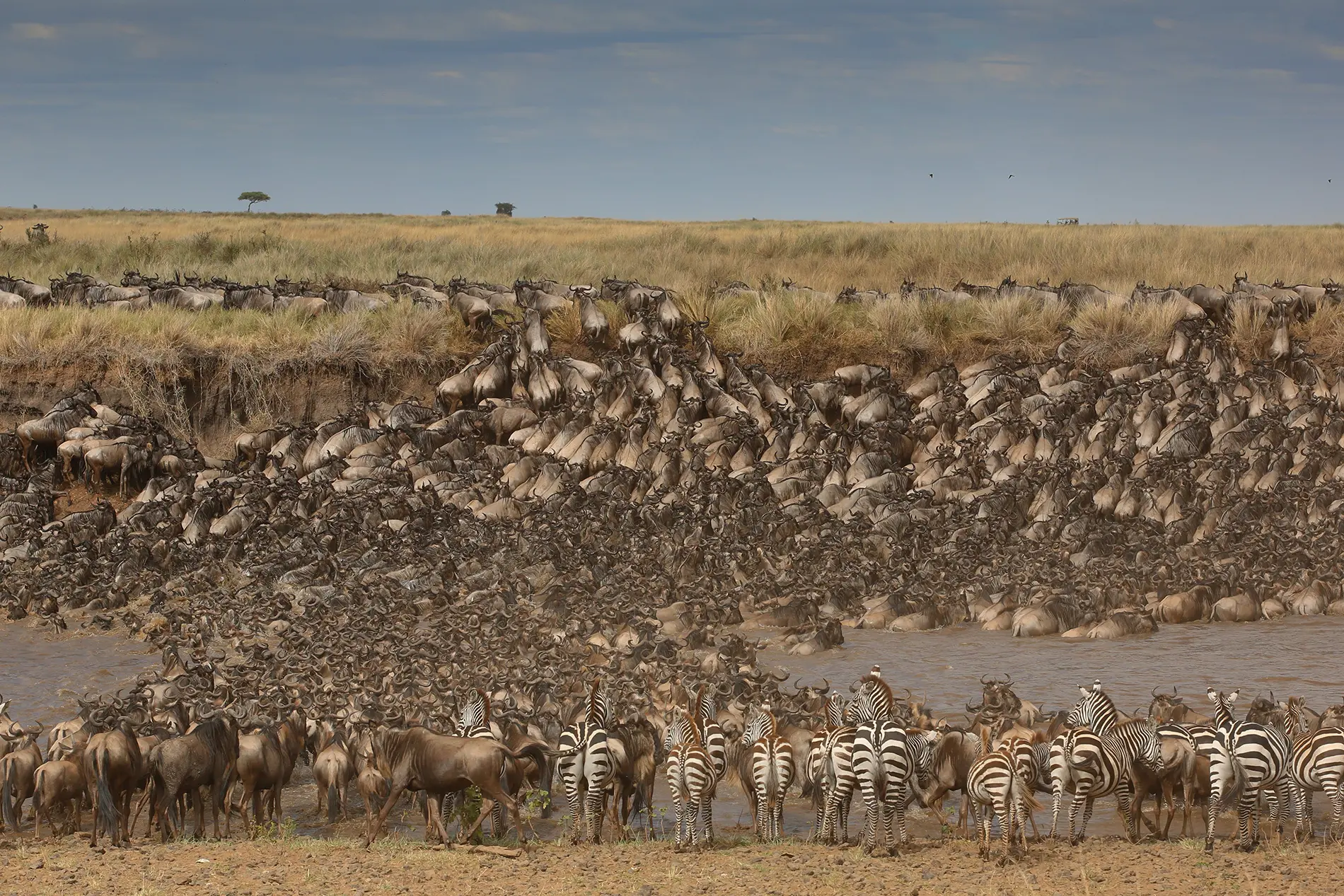
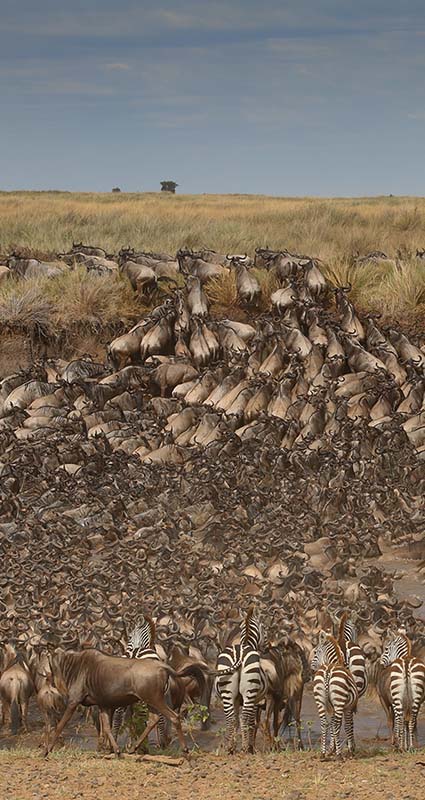


Great Wildebeest Migration timing in a nutshell: Wildebeest calving season peaks in February in the Southern Serengeti. River crossings dominate August through October. Shoulder seasons offer fewer crowds and better value. However, planning a Great Migration safari requires more than circling dates on a calendar. The 1.3 to 2.5 million wildebeest, zebra, and other species follow the rains in an endless clockwise circuit through Tanzania's Serengeti and Kenya's Maasai Mara – and nature doesn't keep Swiss time.
Timing overview
The herds follow a clockwise migration through Tanzania’s Serengeti ecosystem:
In February and March, wildebeest give birth on the nutrient-rich southern plains, including in and around the Ngorongoro Conservation Area
From there, they move north through Serengeti National Park and Maswa Game Reserve, with some splintering off into the Grumeti Reserves in May and June, while others continue through the Central Serengeti.
By August, the herds converge in the Lamai region along the Mara River.
Dramatic river crossings peak at the Mara River in August as herds cross into Maasai Mara National Reserve, and taper off by the end of September or mid-October.
By December and January, they are back in the south, ready to begin the cycle again.
The migration year: month by month
February–March: Calving season in Tanzania
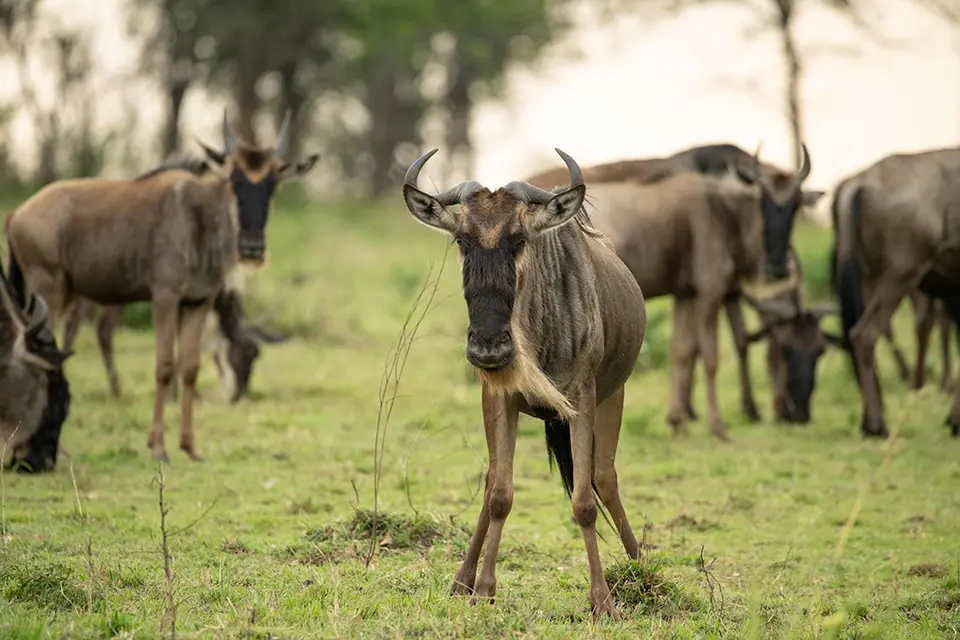
The year begins with arguably the most spectacular event: the calving season in Tanzania. Around half a million wildebeest are born on the nutrient-rich southern plains of the Serengeti ecosystem, with February seeing up to 8,000 births daily. Predator action is intense, making this an exceptional time for wildlife photographers willing to witness nature's brutal realities.
Best locations: The Ndutu region and Lake Masek (straddling the Ngorongoro Conservation Area and the southern part of Serengeti National Park).
April: The most affordable month
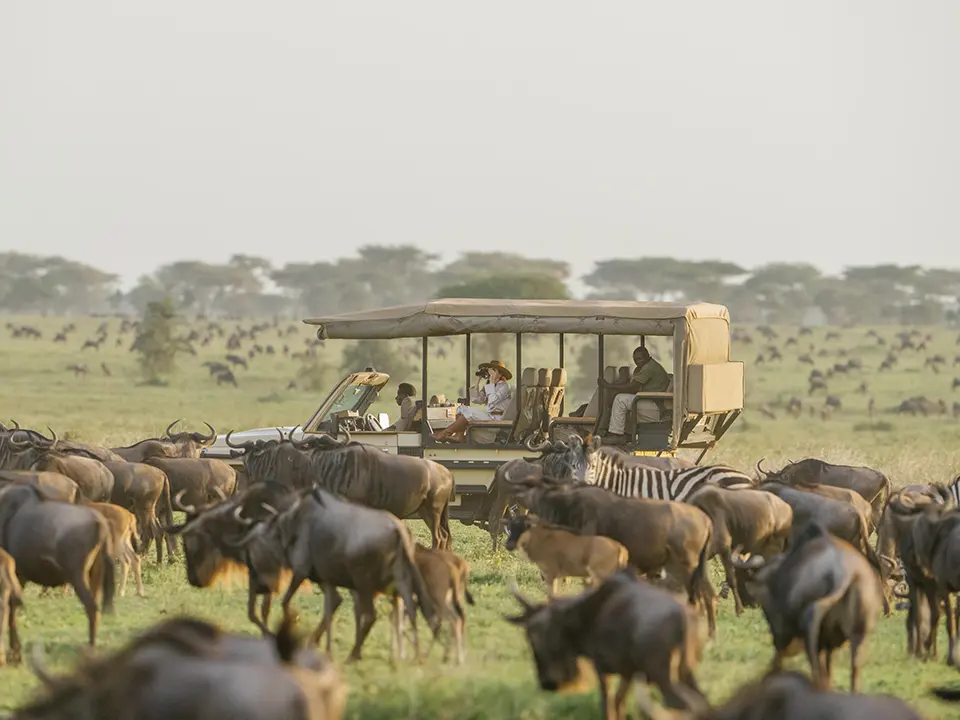
As the "long rains" arrive, the herds begin their journey north and west. The massive concentrations fragment into smaller groups, moving past Simba Kopjes towards Moru and the western corridor. March remains busy due to the tail end of calving season, but April offers better value and fewer tourists, despite being the wettest month.
Best locations: Moru, Western Serengeti, Grumeti Reserves
May–June: The shoulder season advantage
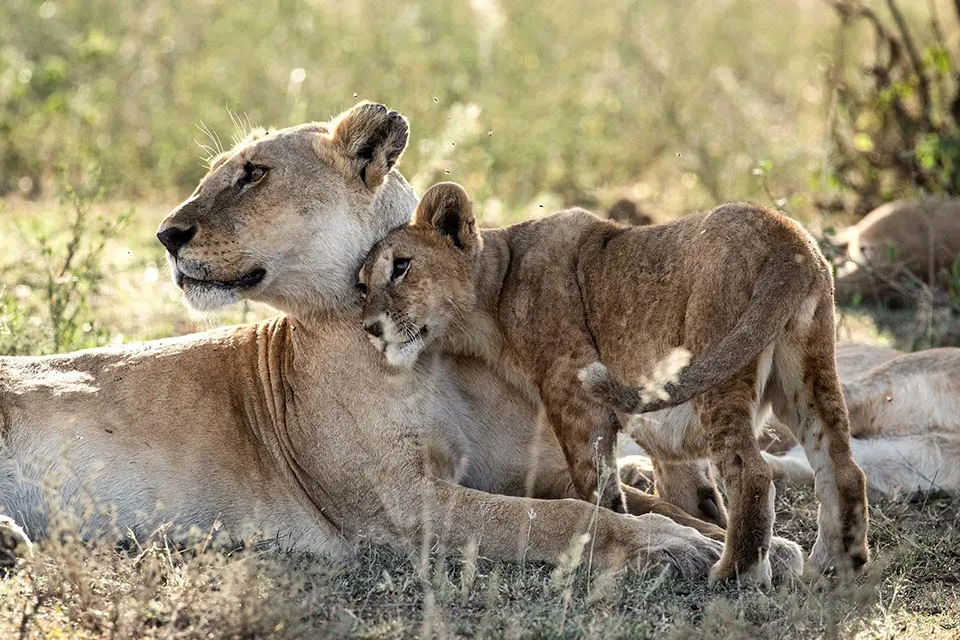
May through early June represents excellent value for Great Migration safaris. The herds spread out as they move north. Front-runners reach the Mbalageti River while others trail behind near the Simiti and Nyamuma Hills. The herds splinter off into the Grumeti Reserve, where they cross the Grumeti River, while others continue through the Central Serengeti.
This is when split-stay safaris work particularly well. Consider three nights in the western corridor camps combined with two nights further north to position yourself ahead of the herds.
Best locations: Grumeti Reserves, Central Serengeti (Seronera), Mbalageti River
July: Mating season and Grumeti crossings
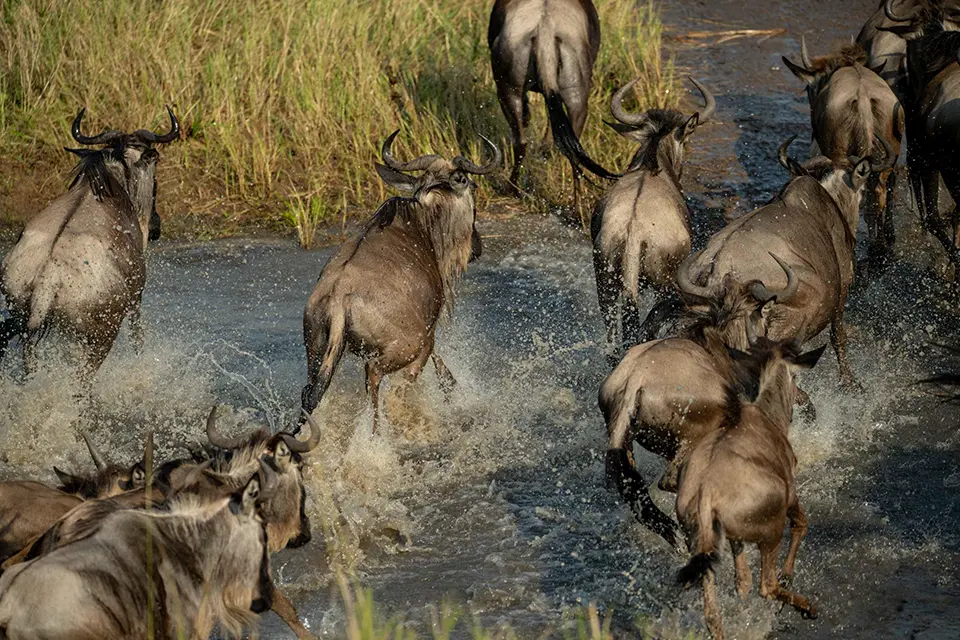
July brings mating season and the first river crossings at the Grumeti River. While less dramatic than the famous Mara River crossings, these Western Serengeti crossings offer the advantage of fewer tourists. The area remains vast and relatively underdeveloped, meaning you're more likely to have sightings to yourself.
Best locations: Grumeti Reserves, western corridor
August–September: The main event
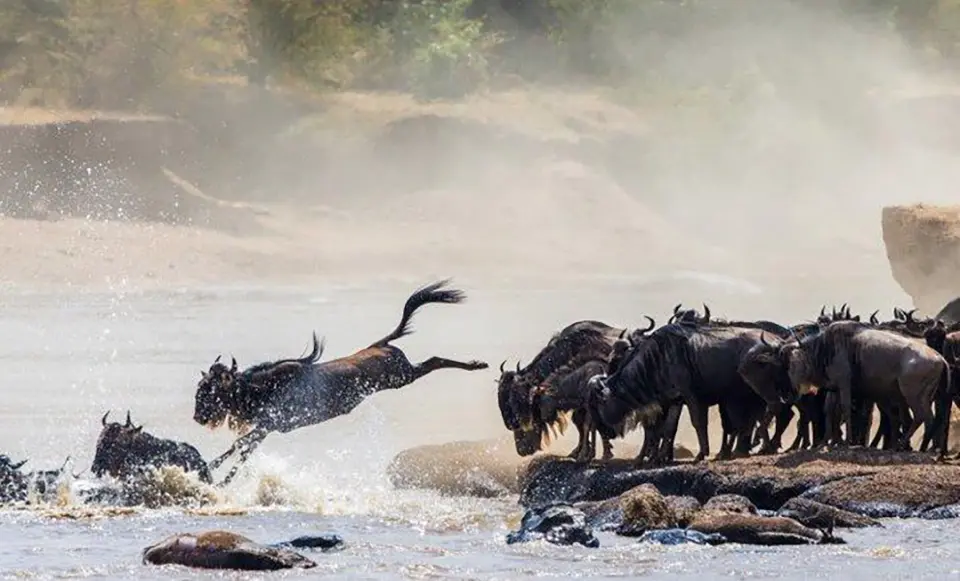
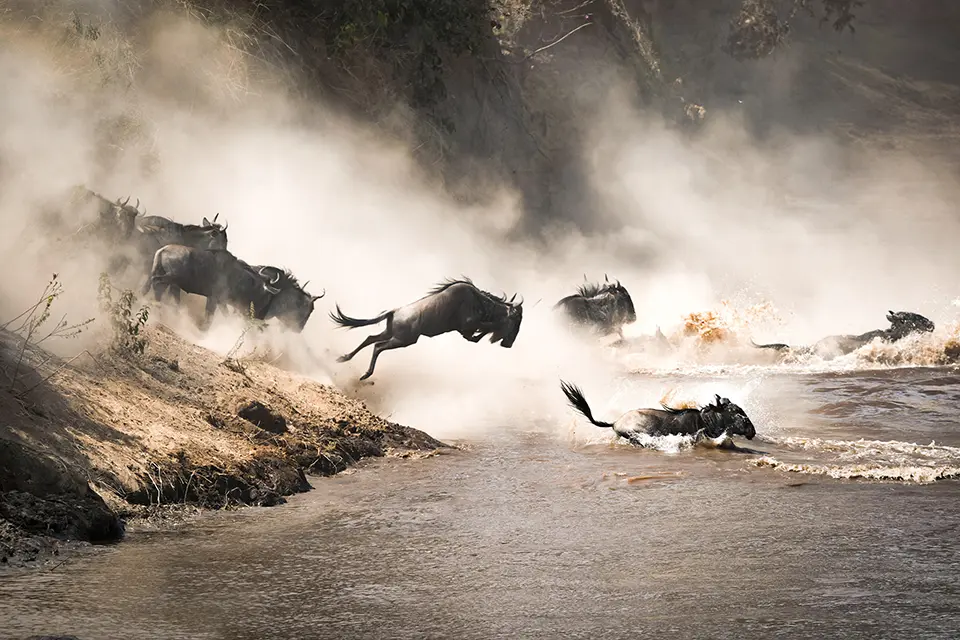
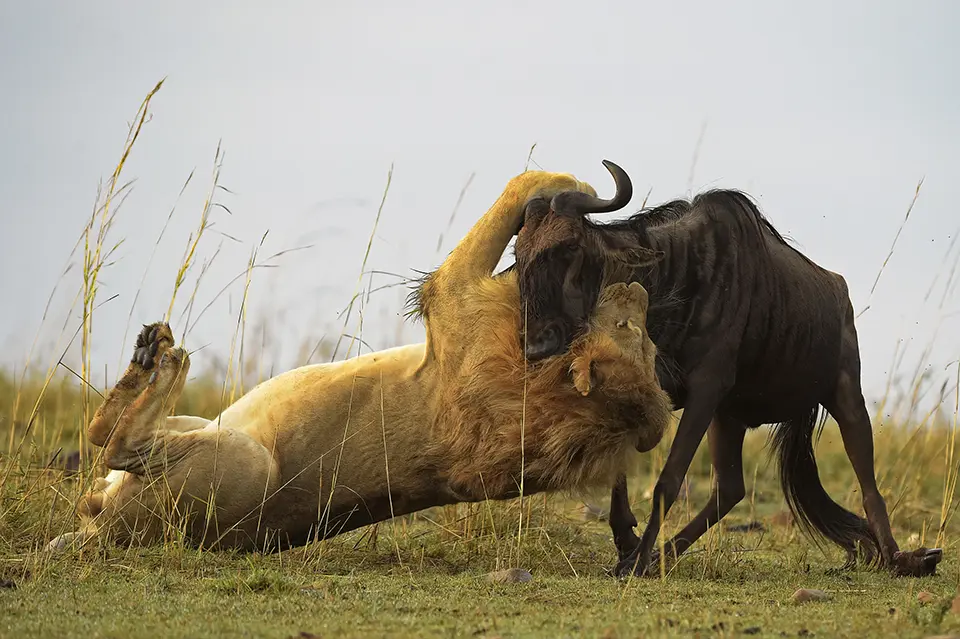
For most people planning a Great Migration safari, this is what they're after: the Mara River crossings. August and September offer the best chances in the Northern Serengeti (Kogatende area) and Kenya's Maasai Mara, where wildebeest hurl themselves into crocodile-infested waters in chaotic, adrenaline-fuelled crossings.
But here's what you might not be prepared for: "It's brutal, raw, and emotionally intense," warns AG safari expert Ramona Rubach. Expect injured animals, visible deaths, carcasses, and predation. You might also spend entire days waiting alongside 50 other vehicles in the hopes of catching a river crossing.
Best locations: Northern Serengeti (Kogatende), Maasai Mara National Reserve (Kenya)
What you may not know
Wildebeest often cross back and forth multiple times. They mill around the river rather than stampeding in one direction, so expecting to position yourself "ahead of the herd" or on a specific side of the river is unrealistic. The herds move in a giant clockwise circle, with family groups grazing and following the rains, not in a predictable linear pattern.
October–November: The return journey
Although Mara River crossings can stretch into October, usually this month ushers in a scene of casual grazing in the Maasai Mara. By October, most herds are crossing back into Tanzania, though some crossings continue into early November. The 'short rains' trigger the southward migration through the Loliondo Game Controlled Area and Eastern Serengeti. Tourist numbers drop significantly, offering better value and more intimate wildlife encounters.
November is particularly recommended for avoiding crowds while still catching the tail end of the spectacle.
Best locations: Loliondo, Lobo area, Eastern Serengeti
December: Back to the beginning
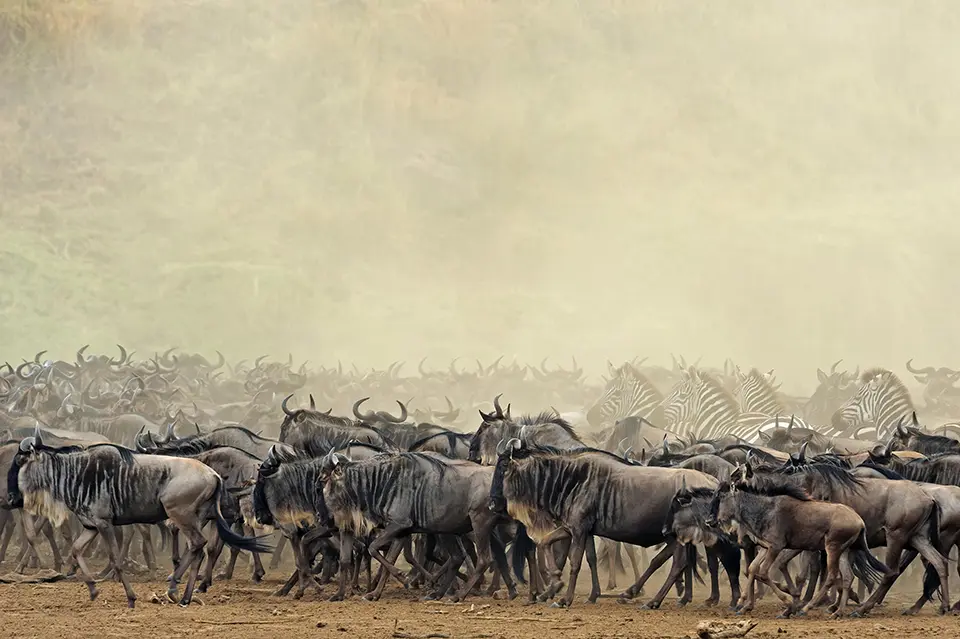
The herds return to the Southern Serengeti and Ngorongoro Conservation Area, readying themselves for another calving season. This is an excellent time for those seeking vast herds without the river crossing chaos.
Best locations: Southern Serengeti, Ngorongoro Conservation Area (Ndutu region)
Managing expectations: The reality of river crossings
Many first-time safari-goers fixate on river crossings, but our safari experts caution against building an entire itinerary around them. If you're determined to witness a crossing, book at least three nights at the river with a private vehicle (book early to guarantee one in peak season).
The waiting game: Many visitors aren't prepared for the reality of river-crossing viewing. You might be positioned kilometres away from the river, watching wildebeest approach for hours with no action. Midday heat, dust, limited shade, and the possibility of spending an entire day without witnessing a crossing are the norm, not the exception.
Handcrafting your
Great Migration safari
You can have a tailor-made Great Migration safari planned by experts who are more than travel agents: they're passionate conservationists and storytellers who create magical moments you'll treasure forever.
When you choose to embark on a Great Migration safari, you’re investing in the trip of a lifetime. Let us make it flawless.
Frequently asked questions about the Great Migration
Yes, especially in August–September when herds move between Kenya and Tanzania. Flying between countries is faster and more practical than driving. Many travellers combine Kenya’s private conservancies for exclusive viewing with northern Tanzania’s Serengeti for migration action.
Both excel in different ways. Kenya’s conservancies may offer Big Five sightings, while Tanzania’s Serengeti offers unmatched scale and variety. Your choice depends on priorities: predictability and variety (Kenya) or wilderness and vastness (Tanzania).
It depends entirely on when you plan to travel – and this is where understanding the full migration story matters.
The Great Migration is a Tanzanian event for twelve months of the year, with herds moving through vast areas of the Serengeti ecosystem. Between February and March, the southern Serengeti hosts the calving season – one of the migration's most remarkable and often overlooked chapters, when hundreds of thousands of wildebeest calves are born in a matter of weeks. Between May and July, the herds push north through the central and western Serengeti corridors toward the Grumeti River – spectacular in their own right, and largely crowd-free. From around August, the herds approach the Mara River region on the Kenya–Tanzania border, where crossings become possible through to October.
So the answer is: your travel dates should drive your destination, not the other way around. If you're set on river crossings, plan for August to October – and note that this is the one window where Kenya's Maasai Mara becomes a compelling option, as the herds spill across the border. For the calving season or the Grumeti corridor, Tanzania's Serengeti is your destination.
Tanzania generally has fewer visitors outside August–September, particularly in the western corridor and Southern Serengeti. Kenya’s conservancies maintain low guest density even in peak season, though the main Mara Reserve can be busy during river crossings.
The Great Migration is a shared East African phenomenon that transcends borders. By choosing responsible operators in both Kenya and Tanzania, travellers support the conservation of this natural wonder for generations to come.
The months with the absolute lowest visitor numbers are generally April and May (during the "long rains") and November (the "short rains"). However, if you are looking for the best balance of excellent wildlife viewing and fewer crowds, consider early June and early December.
It is important to distinguish between the two countries:
Tanzania: February and March are actually peak season in the Southern Serengeti for the wildebeest calving. If you want to avoid crowds in Tanzania, avoid February and March, the festive season (mid-December to mid-January), and the river crossing season (July to October).
Kenya: In contrast, February and March are part of the "Secret Season" in the Maasai Mara. While the migration is in Tanzania, Kenya offers lush landscapes, resident big cats, and significantly fewer tourists during this time.
If a migration event is happening, crowds are inevitable. Guides communicate constantly via apps and chat groups, and vehicles travel from across the region to converge on any crossing. Your best strategy is staying in a private conservancy and venturing into reserves with a private vehicle for specific viewing opportunities.
The Great Migration remains one of nature's most spectacular events – but success lies in matching your expectations to reality, choosing the right timing for your priorities, and working with experts who understand that witnessing this ancient journey requires patience, flexibility and a genuine appreciation for the wild unpredictability that makes it so extraordinary.
The rainy season in East Africa generally falls into two distinct periods: the "long rains" (typically April and May) and the "short rains" (typically November). While rainfall patterns can shift annually due to climate change, the wettest conditions are usually found in April, May, and November.
What to expect: The rains are often misunderstood. Rather than constant, all-day washouts, the rainy season is characterised by afternoon tropical downpours and thunderstorms. Mornings are frequently bright and clear, with clouds building up nicely throughout the day to create dramatic skies.
Start planning your dream Great Migration safari
Time to finally book that Great Migration safari? Let our conservation experts craft a journey that matches your values with your dreams of Africa. Your personal details are protected; we only use this information to contact you.
Trusted by thousands of ecstatic travellers
✔️ 5-Star Trustpilot Rating ✔️ Condé Nast Travel Specialist Award Winner
✔️ Accredited by SATSA ✔️ 5,000+ Exceptional Safaris Since 1991
Why choose Africa Geographic to plan your safari?
Why book your safari with us?

Deep Experience & Knowledge
Handcrafted experiential safaris since 1991.
Travel in Africa is about knowing when and where to go, and with whom. A few weeks too early/late or a few kilometres off course, and you could miss the greatest show on Earth. And wouldn’t that be a pity?

Trust & Safety

Make A Difference
We donate a portion of the revenue from every safari sold to carefully selected conservation projects that make a significant difference at ground level.
YOUR safari choice does make a difference - thank you!