

Tailor-made safaris. Since 1991



Trust us to find you the rarest animals, the most spectacular wildlife events, the remotest landscapes and deeply meaningful cultural encounters!
Understanding the ethics of gorilla trekking
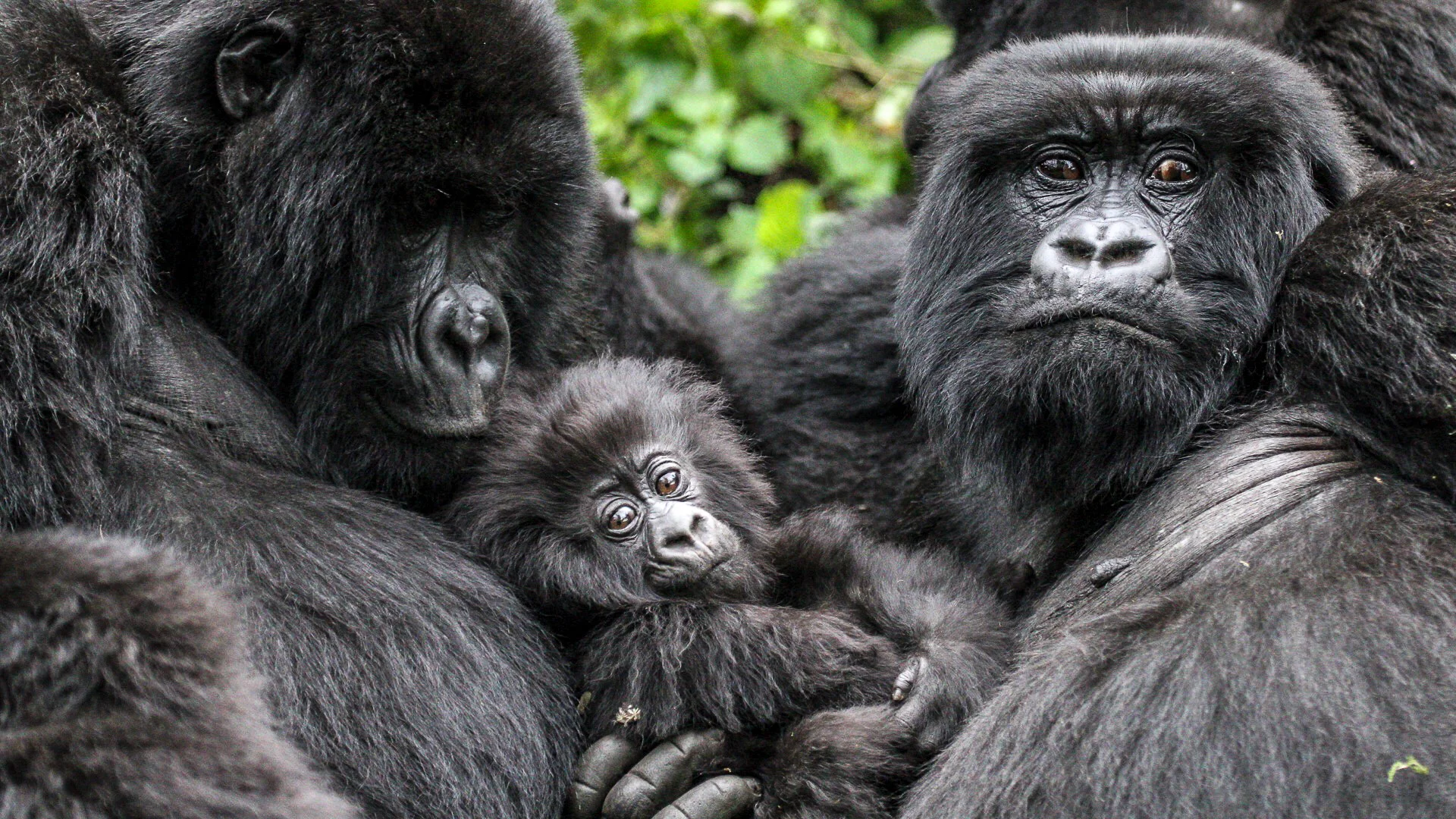
Well-managed gorilla trekking is ethical, and is in fact, funded by tourism and gorilla permits. Today, more than 1,000 mountain gorillas survive in the wild. Tourism revenue has been one of the key drivers behind the recovery of mountain gorilla populations, helping fund ranger protection, veterinary care and habitat conservation. Gorilla trekking permits fund rangers, research, and habitat protection on mountain gorillas across Uganda, Rwanda, and the Democratic Republic of Congo. You can also see lowland gorillas when gorilla trekking or gorilla watching in Odzala-Kokoua in Congo-Brazzaville, which funds conservation projects and supports local communities. This makes tourism one of conservation's most powerful tools. When you invest in a gorilla trek, you become part of that story.
As safari experts, we know the ethical question is not whether to trek, but how and with whom.
Uganda vs Rwanda – mountain gorilla trekking at a glance
Factor | |||
Gorilla families | 20+ habituated groups | 1 habituated group | 12 habituated groups |
Permit cost (approx.) | US$800 | US$800 | US$1,500 |
Revenue sharing with communities | 20% of gate revenue | 20% of gate revenue | 10% of permit revenue |
Trek difficulty | Moderate to strenuous | Moderate | Moderate to strenuous |
Best combined with | Chimp trekking, game drives | Golden monkey tracking | Big 5 safari, golden monkeys |
Why gorilla trekking works for conservation
The connection between gorilla tourism and conservation is economic and practical. Gorilla tourism and tourism generate significant national income for Uganda, Rwanda and Congo-Brazzaville, and these funds are channelled. into national park management, ranger salaries, anti-poaching operations, and surrounding community development.
Key conservation outputs funded by gorilla tourism revenue:
Anti-poaching patrol operations in Bwindi Impenetrable National Park, Mgahinga Gorilla National Park, and Volcanoes National Park
Veterinary intervention such as field medical care to wild gorillas across the Virunga Massif and Bwindi
Community revenue-sharing programmes: Uganda directs 20% of gate revenue to surrounding communities; Rwanda channels 10% of permit revenue
Habitat protection that reduces agricultural encroachment on gorilla range
Odzala-Kokoua, where you can see lowland gorillas, is managed by African Parks, and 100% of tourism revenue flows back into conservation and local community development
Without the economic value that tourism creates, the political and financial case for protecting gorilla habitat against competing land uses would be significantly weaker.
Gorilla safaris we love
A well-planned gorilla safari pairs the trek itself with the wider primate landscape – chimpanzees, golden monkeys, colobus troops – for an encounter with our nearest animal relatives that goes well beyond a single hour in the forest. Here are three Africa Geographic safaris to consider:
Lowland gorilla watching in Odzala-Kokoua NP: Watch western lowland gorillas and other shy forest creatures from elevated treehouses overlooking forest clearings in Odzala-Kokoua, Congo-Brazzaville – alongside forest elephants, bongo, buffalo and more in one of Africa's most remote wild places. 8 days. View safari →
Trek for Kibale chimps and Bwindi gorillas: An immersive 7-day journey through Uganda's densest mountain forests, combining chimpanzee trekking in Kibale with mountain gorilla encounters in Bwindi Impenetrable Forest. View safari →
The ultimate primate safari: An 8-day expedition through the ancient volcanic rainforests of Uganda and Rwanda, trekking for mountain gorillas, chimpanzees, golden monkeys and 400-strong colobus troops. View safari →
The health risk – and how it’s managed
Disease transmission between humans and gorillas
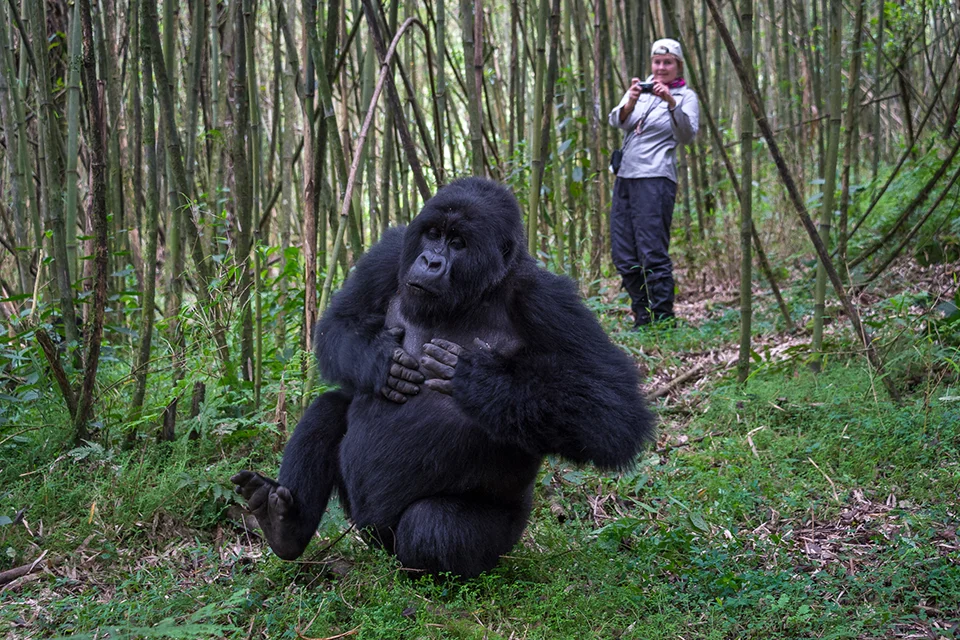
Gorillas are highly susceptible to many human illnesses, particularly respiratory infections, and protecting them is central to the success of gorilla tourism. This is because gorillas share approximately 98% of human DNA, and it is the most serious ongoing health risk in gorilla tourism. The protocols around minimum distance, group size, and illness exclusion were developed specifically in response to documented disease transmission events.
What habituation means for gorilla welfare
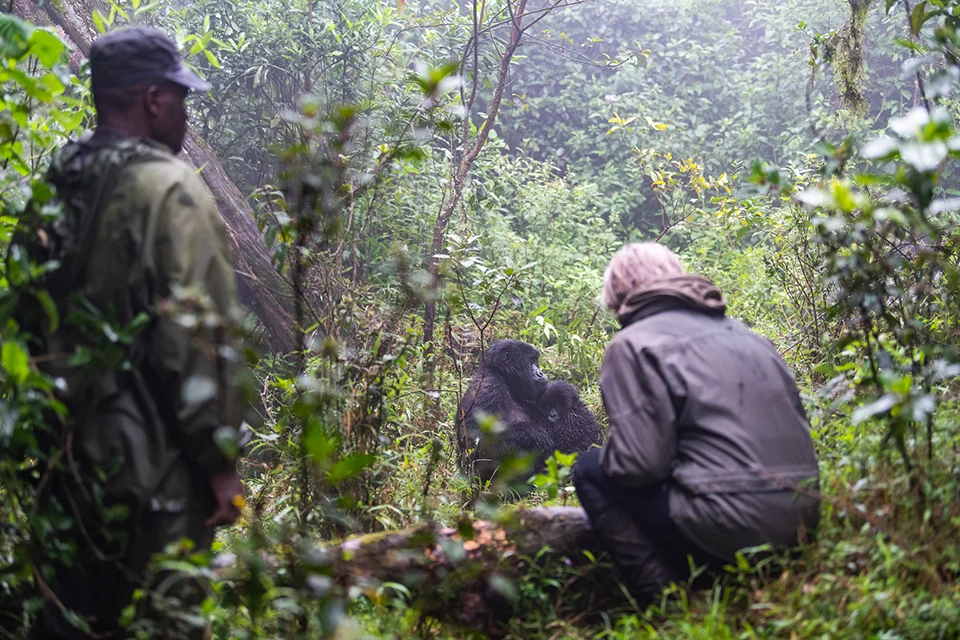
Habituated gorilla families are groups that have been gradually acclimatised to human presence through a structured process lasting two or more years. Habituation is not domestication; habituated gorillas remain fully wild and retain all natural behaviours. The process is managed by park rangers, and only families that are reliably calm around human visitors are opened to tourism. The habituation programme also creates additional employment for local rangers and trackers.
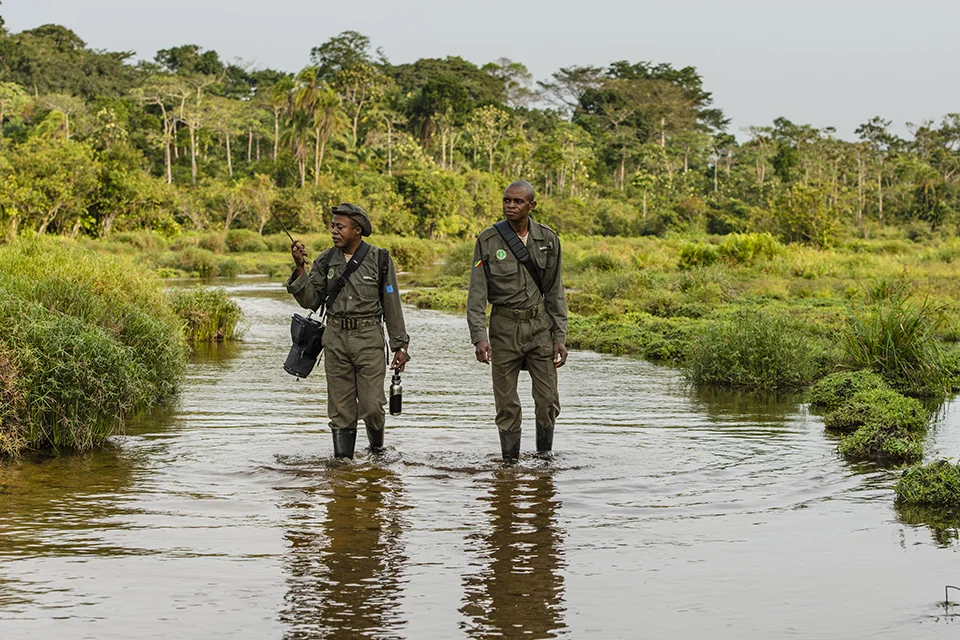
Evidence from the field
The mountain gorilla population has grown from fewer than 620 individuals in 1989 to 1,000+ today. While multiple conservation programmes have contributed to this recovery, the economic foundation provided by regulated tourism has been central to maintaining the political will and financial resources required for sustained protection. This is the most direct evidence that well-managed gorilla tourism supports rather than undermines conservation.
What the rules are – and why they exist
Gorilla trekking operates under a set of visitor protocols developed by national park authorities and conservation bodies. These rules exist to protect the gorillas from disease transmission and behavioural disruption, both of which are genuine risks when wild animals are exposed to humans regularly.
Standard visitor protocols across Uganda and Rwanda:
Maximum group size: 8 trekkers per gorilla family per day
Minimum approach distance: 7 metres from any gorilla
Maximum observation time: 1 hour per visit
Visitors showing signs of illness – including respiratory symptoms – are required to withdraw
No flash photography and no sudden movements
All food and waste must be carried out of the forest
Trekkers must wash hands before and after the trek
These protocols are enforced by trained rangers and guides, not left to individual discretion. Our safari experts will adequately prepare you before departure and our chosen guides will ensure that standards are maintained in the field.
Choosing a responsible gorilla trekking safari
How to travel responsibly and ethically when gorilla trekking
The difference between a positive conservation outcome and a harmful one often comes down to who you travel with. Africa Geographic works exclusively with partners who have demonstrated verifiable commitment to the IUCN Best Management Practices for great ape tourism, who employ and fairly remunerate local guides and porters, and whose bookings generate direct community benefit rather than extracting revenue from the destination.
The role of guides and porters
Experienced local guides do more than navigate the forest. They read gorilla behaviour, adjust visitor positioning to reduce stress on the group, and make real-time decisions to end an encounter early if the situation warrants it. Employing porters – local community members who carry equipment and assist trekkers on the climb – extends the direct economic benefit of tourism into surrounding villages and reduces reliance on subsistence farming within gorilla habitat.
Choosing who you travel with
When choosing a gorilla trekking safari, it's worth travelling with a company that prioritises conservation impact and community benefit. Africa Geographic works with a carefully vetted network of partners, ensuring permits are sourced through official channels and that tourism revenue supports local livelihoods and conservation initiatives wherever possible. Explore itineraries including gorilla trekking in Bwindi, the Rwanda Primate Bonanza, and the Ultimate Primate Safari.
Where to go – the main gorilla trekking destinations
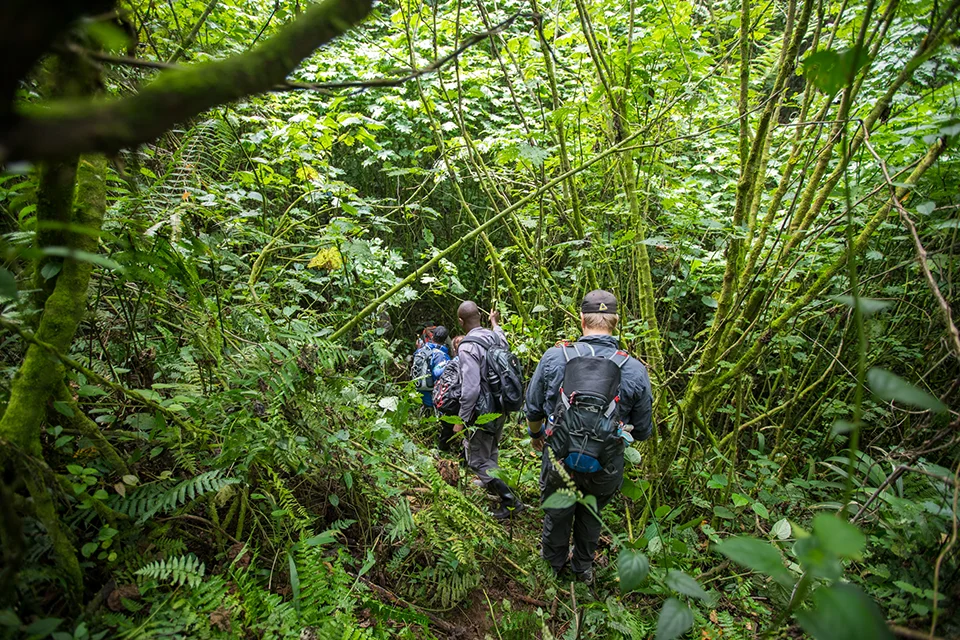
Bwindi is home to more than half the world's mountain gorilla population, with 20 or more habituated families available for trekking across four sectors: Buhoma, Ruhija, Rushaga and Nkuringo. The park is a UNESCO World Heritage Site. Combining gorilla trekking with chimpanzee tracking in Kibale National Park is a popular safari option.
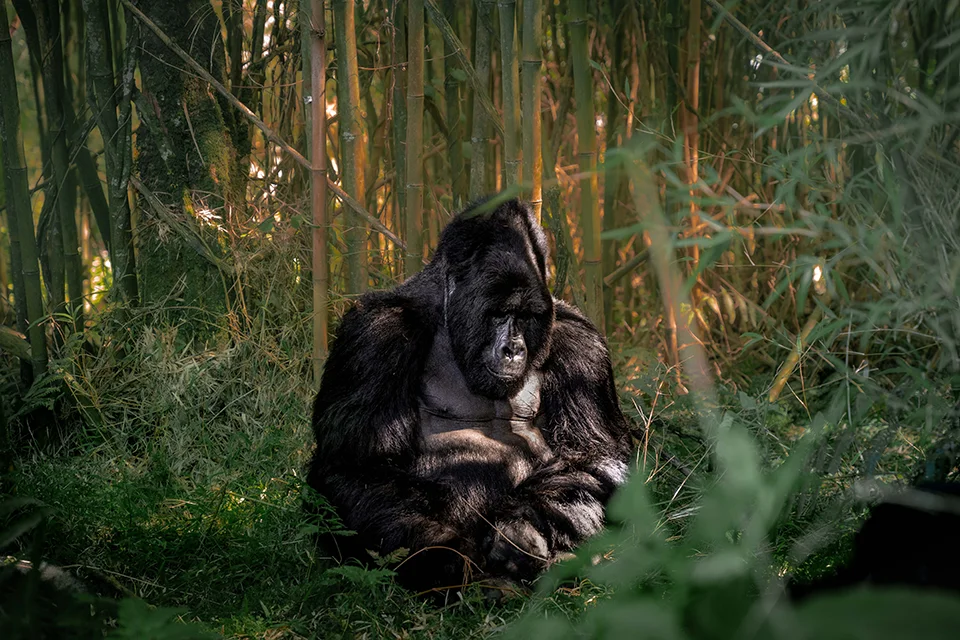
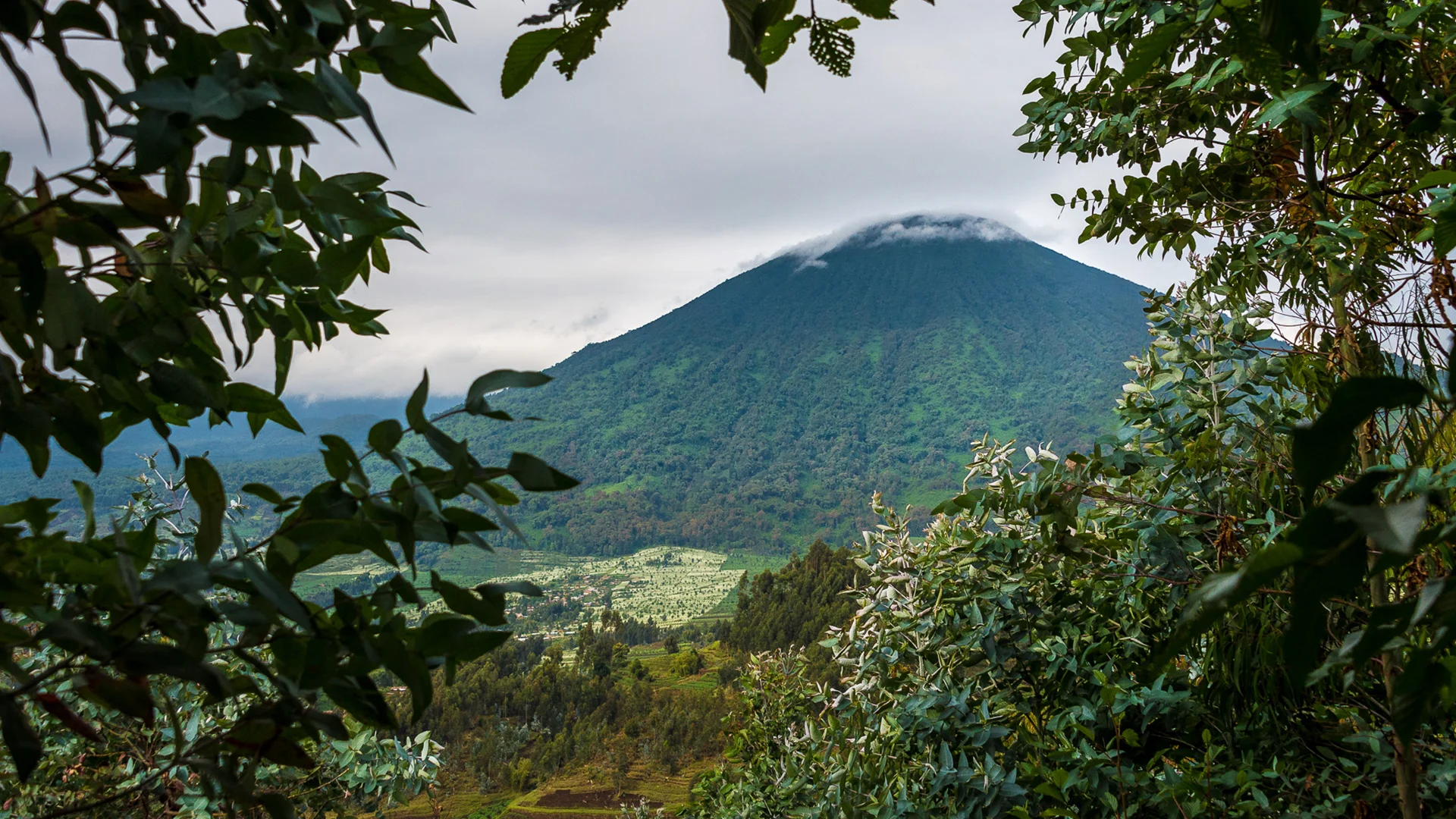
Mgahinga is the smaller of Uganda's two gorilla parks, hosting a single habituated gorilla family – the Nyakagezi group – alongside golden monkey tracking. Its position within the Virunga Massif means gorilla groups occasionally cross the border into Rwanda or the Democratic Republic of Congo, so availability should be confirmed in advance.
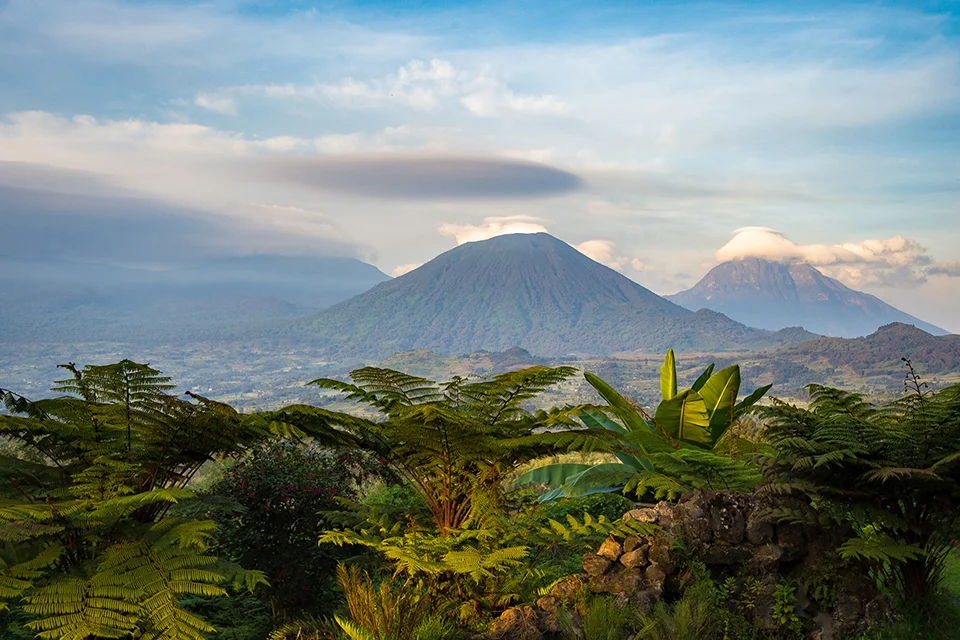
Rwanda's gorilla trekking is concentrated in Volcanoes National Park in the northwest of the country. Permits cost is significantly higher than in Uganda – and permits are highly sought after. The Rwanda Development Board channels a portion of permit revenue into the Iby'iwacu Cultural Village and other community projects. Rwanda combines gorilla trekking particularly well with golden monkey tracking and, for some itineraries, Big 5 safaris.
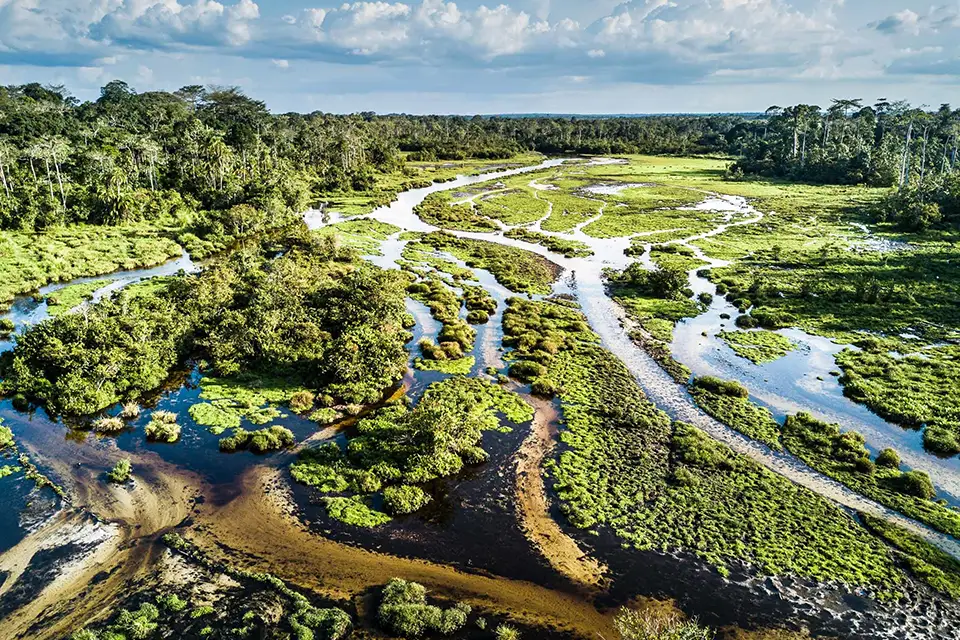
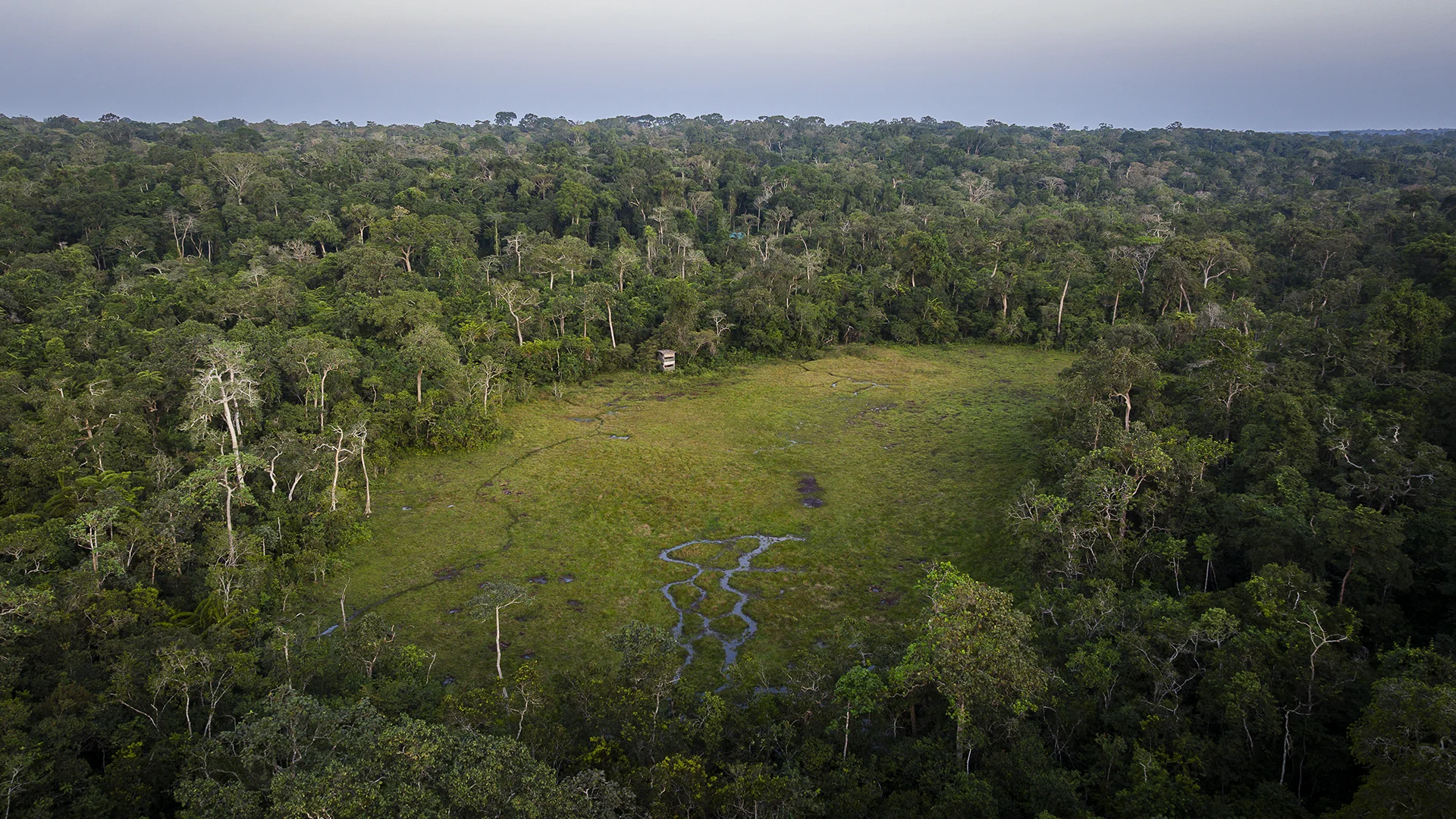
Odzala-Kokoua National Park offers one of Africa’s most distinctive gorilla experiences, focusing on western lowland gorillas rather than mountain gorillas. Guided treks through the Congo Basin rainforest lead visitors to habituated gorilla groups, with tracking conditions often less strenuous than in the steep mountain forests of East Africa. The park is also renowned for its forest clearings, known as baïs, where elevated treetop platforms and hides provide a rare opportunity to observe gorillas, forest elephants and other wildlife gathering below. Combining gorilla tracking with baï visits, river expeditions and exceptional birdwatching makes Odzala-Kokoua one of Central Africa’s most rewarding wilderness destinations.
Wish you were here?
Frequently asked questions
Yes – when conducted through authorised safari planners with valid permits from the Uganda Wildlife Authority or Rwanda Development Board. Well-managed gorilla trekking funds anti-poaching operations, veterinary care, habitat protection, and local community development. The mountain gorilla population has grown from below 620 to 1,000+ since regulated tourism began. Strict visitor protocols limit group sizes, approach distances, and visit duration to minimise stress and disease risk to the gorillas.
Gorilla tourism revenues are a major source of funding for gorilla conservation in Uganda, Rwanda and Congo-Brazzaville. Uganda directs 20% of national park gate revenue to surrounding communities, reducing reliance on forest resources. Rwanda channels 10% of tourism revenue into community benefit programmes. Permit income also finances ranger salaries, patrol equipment, and the gorilla veterinary programmes. In Odzala-Kokoua National Park, 100% of tourism revenue flows back into conservation and local community development. Without tourism revenue, the economic case for maintaining gorilla habitat against agricultural and extractive pressures would be much harder to sustain.
The regulated minimum approach distance is seven metres. In practice, gorillas do not always observe this boundary and may approach trekkers. Rangers are trained to manage proximity and will reposition the group if a gorilla comes too close. The 7-metre rule exists to reduce the risk of respiratory disease transmission from humans to gorillas, who share approximately 98% of human DNA and are highly susceptible to human illnesses.
A maximum of eight trekkers per gorilla family per day is the standard limit across Uganda and Rwanda. This cap is set by national park authorities to limit the cumulative stress on the gorilla group. Combined with the one-hour maximum observation window, these restrictions mean that any given family is exposed to a controlled and predictable level of human contact. Some parks operate a second visit slot, sometimes called a habituation experience, which allows longer time with partially habituated families.
Visitors showing any symptoms of respiratory illness – including a common cold – are required to withdraw from the trek. All trekkers must wash hands before entering and after leaving gorilla habitat. Face masks are required when in proximity to gorillas. No food may be consumed near the gorillas. These rules are enforced by rangers and guides and are not optional. If you are unwell on the day of your trek, your safari planner should assist with rebooking where possible.
Mountain gorillas (Gorilla beringei beringei) are classified as Endangered on the IUCN Red List – a downgrade from Critically Endangered in 2018, reflecting genuine population recovery. The global population stands at approximately 1,000 individuals, all living in two populations: the Virunga Massif (shared between Uganda, Rwanda, and the Democratic Republic of Congo) and Bwindi Impenetrable National Park in Uganda. Western lowland gorillas and Cross River gorillas remain Critically Endangered.
Both countries offer high-quality, well-managed gorilla trekking, and the choice depends on budget, itinerary, and travel priorities. Uganda offers lower permit costs (US$800 versus Rwanda's US$1,500), more habituated gorilla families at Bwindi, and easier combination with chimpanzee trekking. Rwanda's higher permit cost supports premium-positioned lodges and shorter average trek times due to more accessible terrain at Volcanoes National Park. Rwanda also combines efficiently with a wider range of East African safari circuits.
When you book a safari with Africa Geographic, we will source permits directly from the Uganda Wildlife Authority or Rwanda Development Board, which employs and fairly pays local guides and porters, and is transparent about where revenues flow. Africa Geographic works exclusively with vetted partners on the ground who meet these standards and are invested in long-term conservation outcomes. Our safari experts will tell you about our community benefit practices, guide employment policies, and any additional conservation contributions beyond the permit cost. A briefing on visitor protocols before departure is a minimum expectation.
This is one of the most common questions from guests who have previously tracked mountain gorillas in Rwanda or Uganda. Western lowland gorillas are found in the tropical lowland forests of West and Central Africa. They are slightly smaller than mountain gorillas and, because they live at lower, warmer altitudes, their fur is less dense. Crucially, because their diet is heavily fruit-based, they are significantly more arboreal – spending more time in the trees and constantly on the move through the canopy and forest floor. This makes encounters with them wilder and less predictable than the typically relaxed, ground-level mountain gorilla experience. Watching a western lowland silverback stride into a sunlit baï clearing is a rawer, more instinctive encounter – and many guests who have done both describe it as the more visceral of the two.
Gorilla watching (unhabituated gorillas): A 3-minute walk from Camp Imbalanga leads to an elevated covered lookout at Imbalanga Baï. Wild gorillas enter the clearing to feed. No time limit – guests can stay all day, and multiple sightings are common. No trek permit required, no hiking, no masks. This is the signature Odzala experience, available at several baïs across the park.
Gorilla trekking (habituated gorillas): A guided trek through the forest to spend up to one hour with a habituated family group at close quarters. Maximum one visit per day. Hiking through Marantaceae forest is involved. Masks required. A trek permit (~US$400 per person) is required in addition to safari costs. Guests participating in gorilla tracking must also submit a Medical Declaration Form, signed by a doctor, confirming fitness and the absence of TB symptoms, and confirming up-to-date polio and measles vaccinations.
Start planning your dream safari
Our travel experts will craft a no-obligation itinerary just for you. We have crafted over 5,000 safaris since 1991. Your personal details are protected; we only use this information to contact you.
Why book your safari with us?

Deep Experience & Knowledge
Handcrafted experiential safaris since 1991.
Travel in Africa is about knowing when and where to go, and with whom. A few weeks too early/late or a few kilometres off course, and you could miss the greatest show on Earth. And wouldn’t that be a pity?

Trust & Safety

Make A Difference
We donate a portion of the revenue from every safari sold to carefully selected conservation projects that make a significant difference at ground level.
YOUR safari choice does make a difference - thank you!