

Tailor-made safaris. Since 1991



Gorilla trekking health guide – fitness, altitude, vaccinations and what to pack
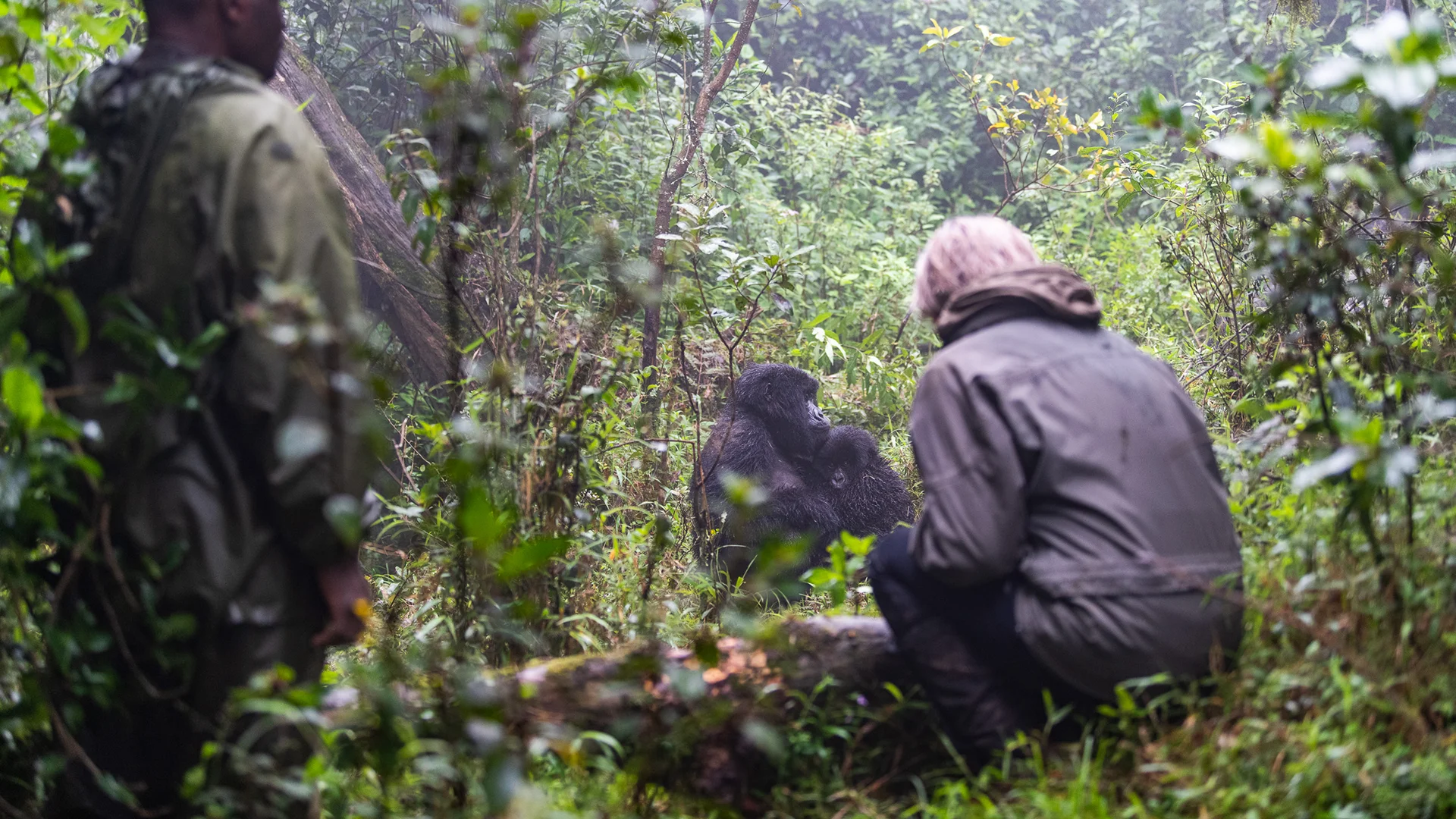
Few wildlife experiences rival the thrill of standing face-to-face with a wild gorilla in the misty forests of Central Africa. Yet for many travellers planning a gorilla trek, one question often comes before all others: am I physically prepared for it? What are the health requirements for going gorilla trekking?
Gorilla trekking takes place in remote, mountainous rainforests, often several hours from the nearest medical facilities. While most healthy adults complete their trek without difficulty, the combination of steep terrain, high altitude, variable weather, and strict health protocols means that preparation is important. Understanding the fitness requirements, altitude considerations, vaccination recommendations, and illness regulations before you travel can make the difference between a seamless experience and a disappointing one.
Most healthy adults complete a gorilla trek without difficulty, but arriving prepared makes a genuine difference to the experience. This article covers what fitness level you need, the altitude risks specific to each destination, the vaccinations required or recommended, and exactly what the illness rules mean for your permit.
Gorilla trekking safaris we love
A well-planned gorilla trekking safari can be magical and immersive. You can even pair your gorilla trek with a search for other primates. Here are three Africa Geographic safaris that guarantee a memorable trip:
Rwanda primate bonanza: A connoisseur's expedition; 8 days with Africa's great apes and many other primates, from the misty slopes of the Virunga volcanoes to the ancient rainforests of Nyungwe. View safari →
Gorilla trekking in Bwindi, Uganda: What better place to experience the gorillas than in Uganda’s Bwindi Impenetrable Forest, the birthplace of mountain gorilla trekking? View safari →
Trek for Kibale chimps & Bwindi gorillas: A humbling and immersive 7-day journey through some of Uganda’s most remarkable forests, including chimpanzees and gorillas. View safari →
Altitude sickness and gorilla trekking
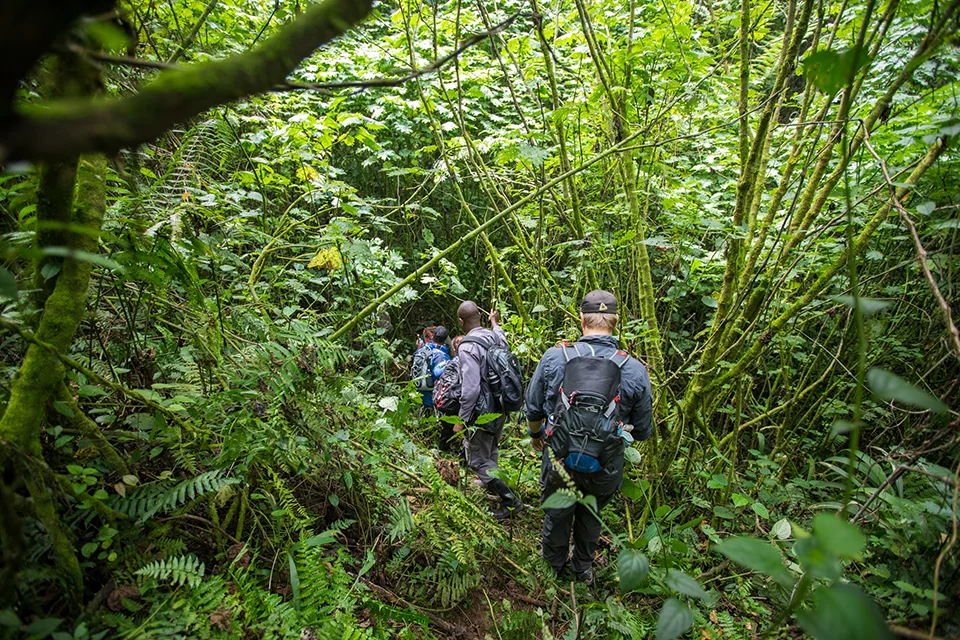
Bwindi Impenetrable National Park in Uganda sits at 1,160 m to 2,607 m above sea level. At these elevations, acute mountain sickness (AMS) is unlikely in healthy travellers. The dense forest canopy, moderate temperatures, and relatively low altitude make Bwindi the safer option for anyone with a history of altitude sensitivity. Travellers arriving from sea level can trek at Bwindi without a specific acclimatisation period, though staying well hydrated from the day of arrival is always advisable.
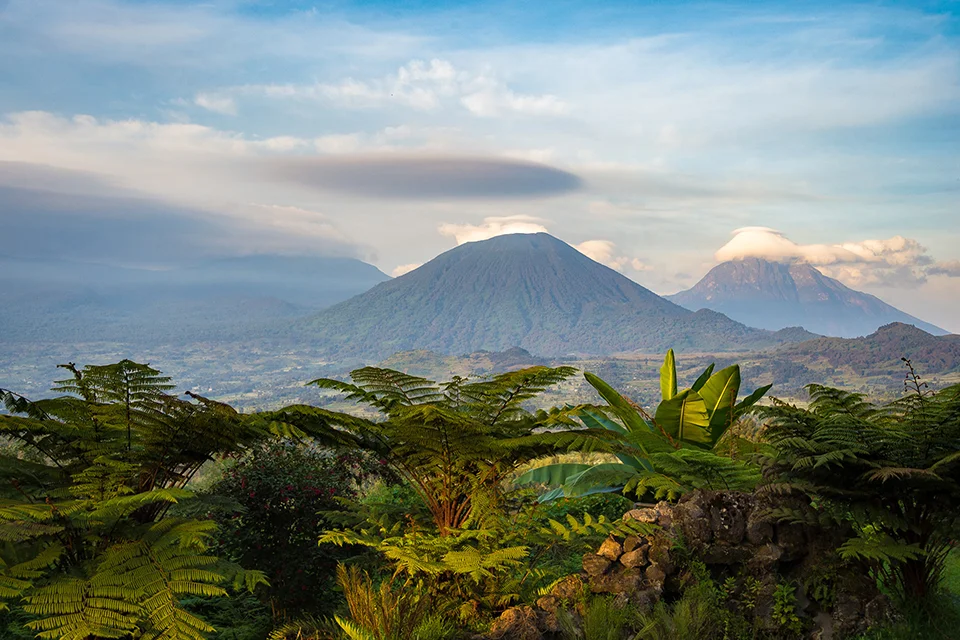
Volcanoes National Park in Rwanda spans 2,400 m to 4,507 m. Gorilla families are typically encountered between 2,400 m and 3,500 m, but treks following families higher up the volcanic slopes can reach altitudes where AMS becomes a real risk. Symptoms include headache, nausea, fatigue, and dizziness. The correct response is to descend, rest, and increase fluid intake. Spending at least one night in Kigali (1,567 m) before travelling to the park can help with partial acclimatisation. Travellers with a known sensitivity to altitude should consult their doctor about preventive medication before departure.
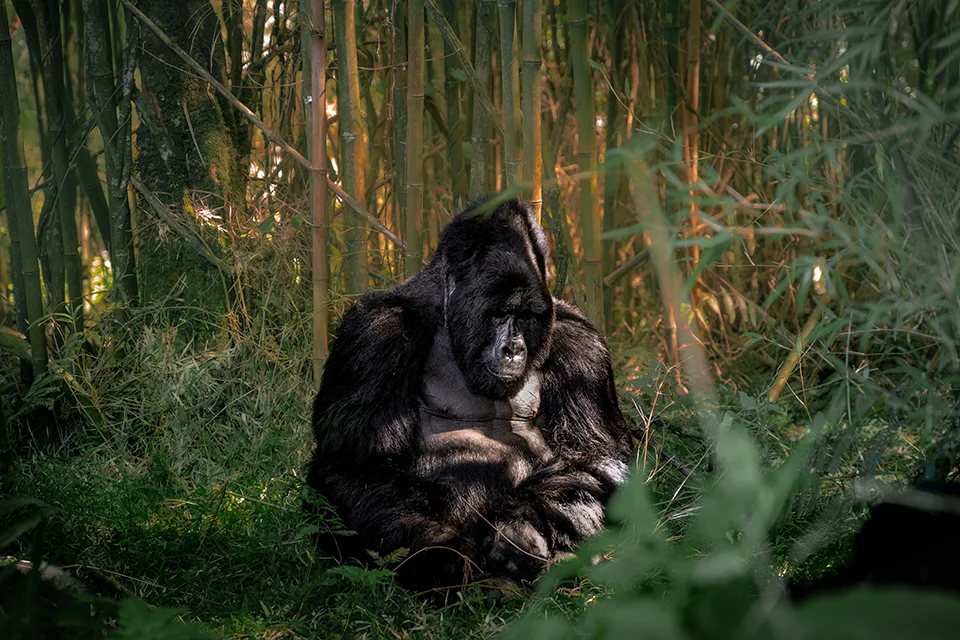
Uganda's smaller gorilla trekking park, Mgahinga, sits within the Virunga Mountains at altitudes comparable to those of Volcanoes National Park. The same acclimatisation guidance applies: arrive in the region at least one day before your scheduled trek. Mgahinga hosts one habituated gorilla family and treks here tend to cover open, high-altitude terrain.
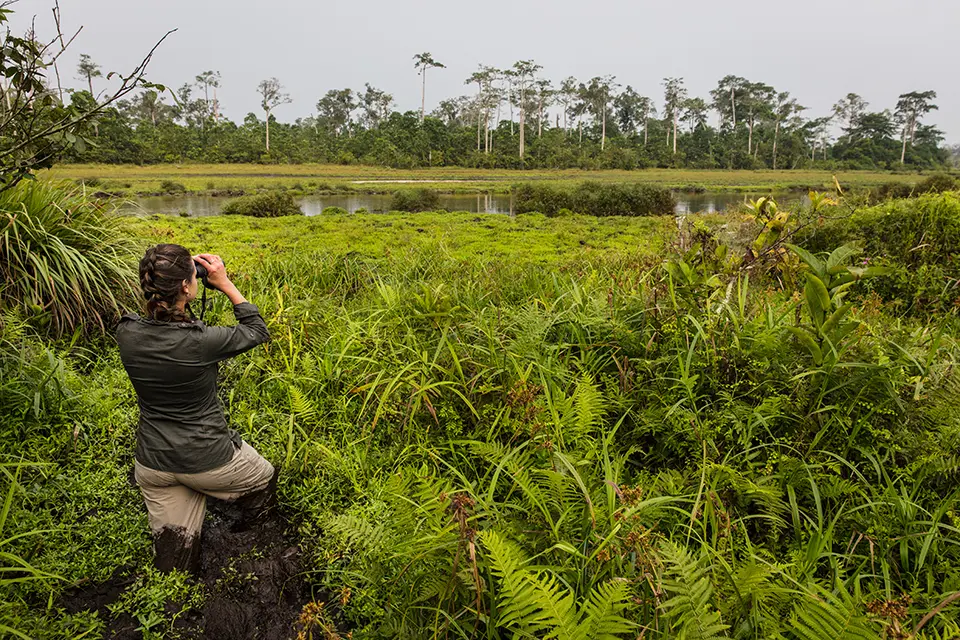
Odzala-Kokoua National Park
Odzala-Kokoua National Park in Congo-Brazzaville is home to western lowland gorillas and sits in equatorial lowland rainforest at roughly 300m to 500m above sea level. Altitude sickness is not a consideration here. Wildlife viewing centres on forest walks to mineral-rich clearings known as baïs, observed from treehouses – a different format from montane trekking. Yellow fever vaccination is required for entry and malaria prophylaxis is compulsory; the lowland equatorial setting carries a higher and more consistent malaria risk than the higher-altitude parks in Uganda and Rwanda. Explore this safari to see lowland gorillas in Odzala-Kokoua National Park.
How fit do you need to be for gorilla trekking?
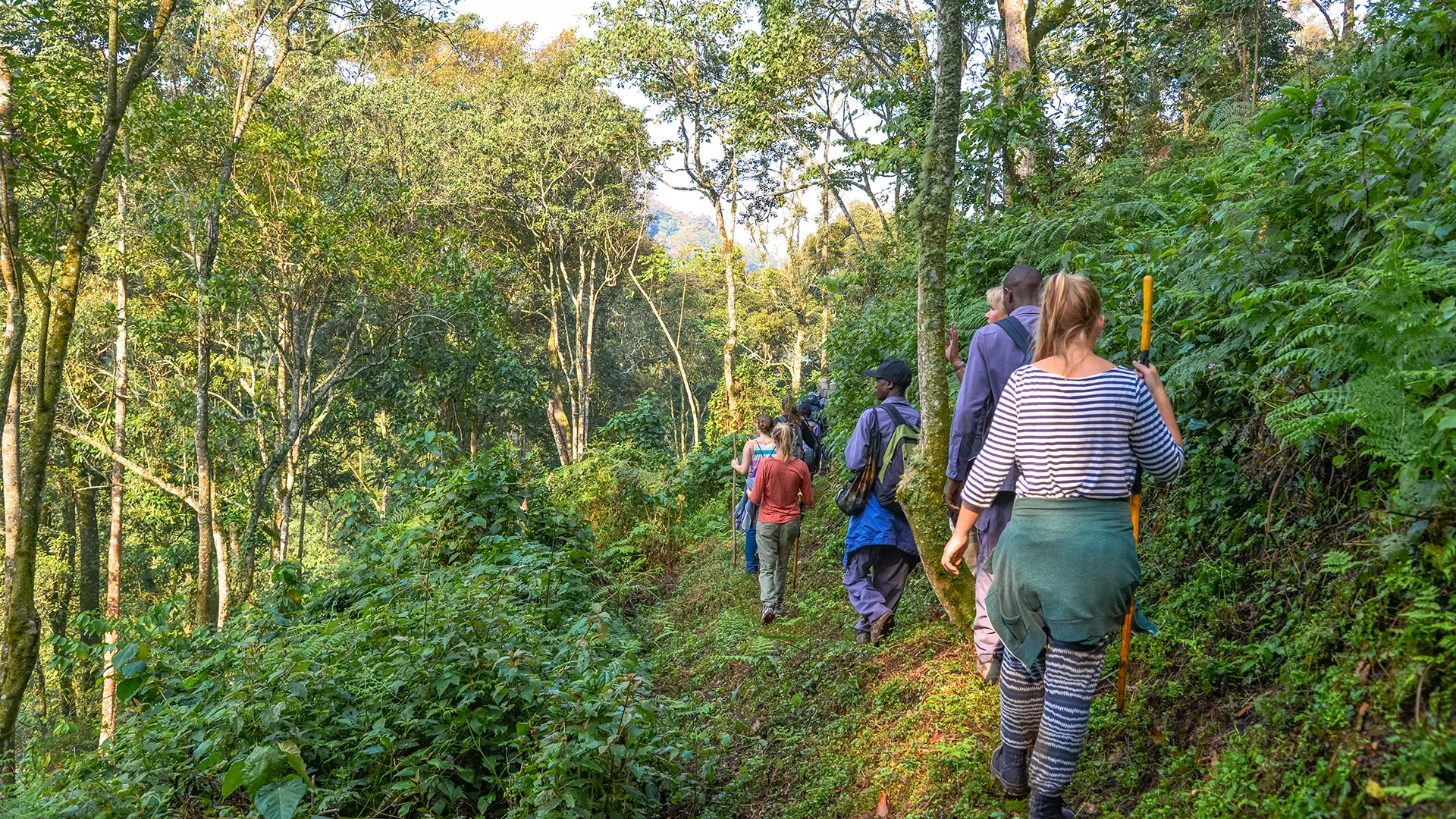
Gorilla trekking is not a technical or athletic challenge, but it does require sustained walking on difficult terrain. The practical benchmark is the ability to walk at a steady pace for one to six hours on steep, muddy, root-strewn trails in humid forest conditions.
What affects trek length:
The gorilla family's location changes daily, so expert trackers head into the rainforest ahead of visitors to locate and monitor them. They track signs such as nests and dung, then relay the gorillas’ location to ensure safe and successful viewing for tourists.
Short treks of one to two hours are possible when the gorilla families are ranging near forest edges.
Long treks of four to six hours occur when the gorilla families have moved deep into the forest.
You will not know your trek length until the morning briefing – plan for the longer trek to be better prepared.
EXPERT TIP: Porters are available at all gorilla trekking sectors in Uganda and Rwanda and are highly recommended. A porter carries your day pack, provides physical support on steep descents and stream crossings, and acts as an extra pair of hands on difficult sections. Hiring a porter directly supports local employment in communities surrounding the parks.
Uganda vs Rwanda – at-a-glance comparison
The two primary gorilla trekking destinations differ significantly in altitude, terrain, and the health demands they place on trekkers. The table below summarises key factors relevant to physical preparation and health planning.
Factor | Bwindi Impenetrable NP, Uganda | Volcanoes NP, Rwanda |
Altitude range | ~1,160 m–2,607 m | 2,400 m–4,507 m |
Altitude sickness risk | Low – unlikely at these elevations | Moderate – risk increases above 3,000 m |
Terrain | Dense rainforest, steep valley trails | Volcanic slopes, bamboo zones, open ridgelines |
Typical trek duration | 1–6 hours | 1–6 hours |
Habituated families | 20+ families across 4 sectors | 12 families |
Recommended fitness | Moderate – steady walking on uneven terrain | Moderate to high – altitude adds cardiovascular load |
Acclimatisation advised | Not required for most travellers | Yes – at least one night in Kigali (1,567 m) before trekking |
Wish you were here?
Vaccinations and medications for gorilla trekking
Required and recommended vaccinations
Visit a travel clinic or GP at least four to six weeks before departure to discuss vaccinations tailored to your specific itinerary. Some courses require multiple doses spaced several weeks apart. Yellow fever vaccination is required for entry into Uganda; and Rwanda requires a yellow fever certificate for travellers arriving from or transiting through countries with yellow fever risk. Bring your vaccination certificate and yellow fever card.
Vaccination guidelines:
Yellow fever – required for Uganda entry; and for Rwanda for travellers arriving from or transiting through yellow fever-endemic countries
Typhoid – recommended for both destinations
Hepatitis A – recommended for both destinations
Hepatitis B – recommended, particularly for longer trips
Tetanus, diphtheria and polio booster – recommended if not current
Meningococcal meningitis – recommended for Uganda and Rwanda
Cholera – not required for general safaris in Rwanda and Uganda, only recommended if travelling to active transmission zones in Uganda
Rabies pre-exposure prophylaxis – not mandatory, but recommended for travellers spending extended periods in remote areas or engaging in frequent wildlife activities, given remote forest settings
Malaria prophylaxis
Both Uganda and Rwanda are malaria-endemic countries. Malaria is transmitted by the female Anopheles mosquito, which is most active at dawn and dusk. Prophylaxis is recommended regardless of destination. The most appropriate choice depends on your health history, other medications, and trip duration. Use insect repellent containing DEET on exposed skin, wear long sleeves and trousers after dark, and sleep under a mosquito net. If you experience fever, headache, nausea, or flu-like symptoms during or after your trip, seek medical attention and mention your travel history immediately.
Travel medications to pack
In addition to prescription medications, a well-prepared travel kit for gorilla trekking should include:
Anti-diarrhoeal medication – gastrointestinal upset is the most common traveller's complaint
Pain relief – for headaches, muscle soreness, and minor altitude symptoms
Antihistamines – for allergic reactions to insects, plants, or dust
Motion sickness medication – for long road transfers to and from the parks
Oral rehydration salts – essential for managing dehydration from heat, exertion, or illness
High-SPF sunscreen – open ridgeline sections at altitude intensify UV exposure
Any personal prescription medications – carry enough for the full trip plus a few days' contingency
Why masks are required with gorillas
Mountain gorillas share approximately 98% of human DNA and are susceptible to many of the same respiratory and gastrointestinal illnesses. A single transmission event can spread through an entire family rapidly, so wearing a surgical mask during the hour spent with a gorilla family is a strict rule at all trekking sites in Uganda and Rwanda. It applies even if you feel well! Travellers with active colds, flu, or respiratory infections will not be permitted to trek on that day.

Age, health conditions and who can trek
Minimum age
The minimum age for gorilla trekking is 15 years at all sites in Uganda and Rwanda. This rule protects gorilla families from childhood diseases – chickenpox, measles, and mumps in particular – to which they have no immunity. There is no maximum age. Travellers in their seventies and eighties complete gorilla treks regularly; physical condition is a more reliable indicator of readiness than age.
Pre-existing health conditions
Most pre-existing conditions do not prevent gorilla trekking. The relevant question is whether you can sustain one to six hours of moderate physical activity on uneven terrain at altitude. Travellers with significant cardiovascular or respiratory conditions, severe mobility limitations, or a history of serious altitude sickness should consult their doctor before booking. For travellers with moderate concerns, choosing Bwindi over Volcanoes reduces altitude exposure, and selecting the Buhoma sector reduces typical trek duration.
What to do if you are ill on trek day
If you develop symptoms of illness on the morning of your scheduled trek – fever, active cough, vomiting, diarrhoea, or signs of respiratory infection – you will not be permitted to join the trek. This is a firm rule applied at all gorilla trekking sites. Inform your guide or lodge management as early as possible. Permit refund and transfer policies vary by park authority and booking channel; your safari operator will confirm the applicable terms at the time of booking. This is an important contingency to discuss before travel, particularly for single-day itineraries where rescheduling is not possible.
What to pack for a gorilla trek
Essential clothing and footwear
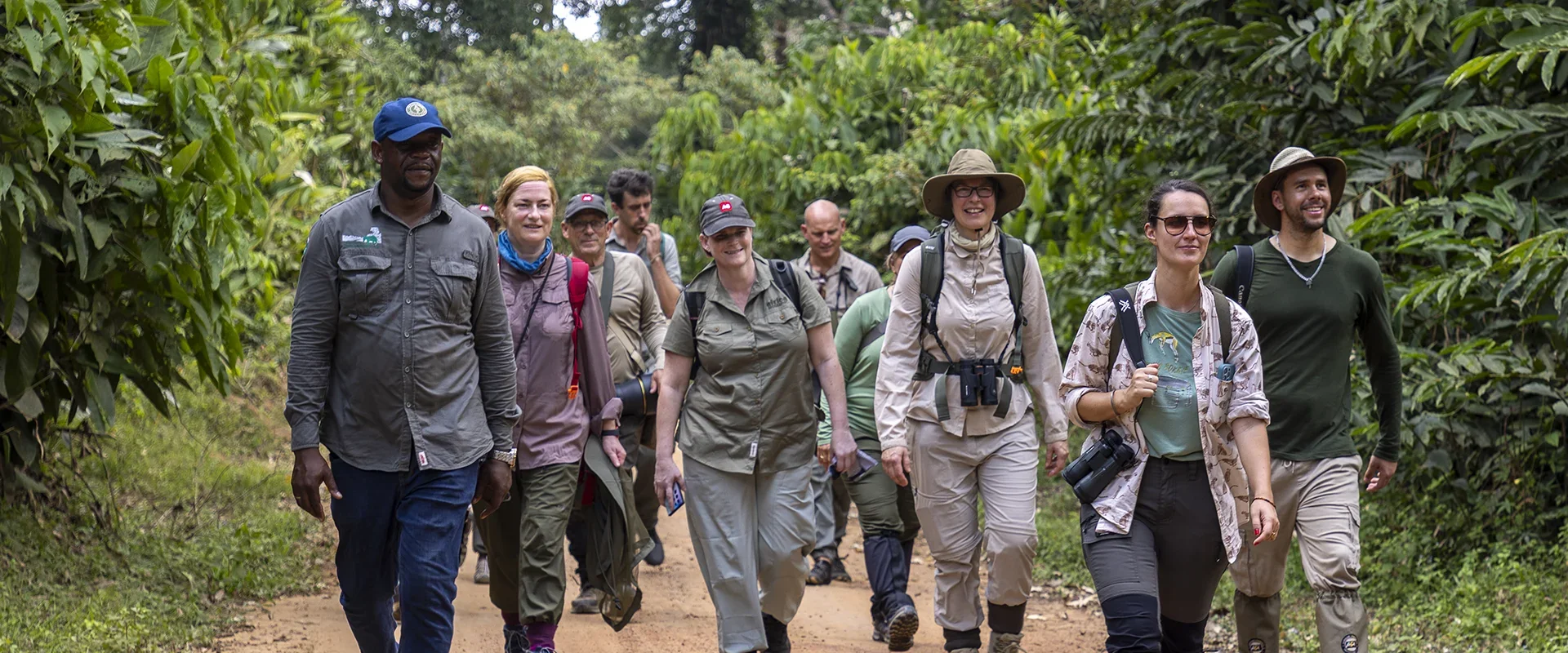
What you wear and carry directly affects how comfortable and safe your trek is. The forest is humid, trails are muddy, and nettles and insects are present throughout. Long clothing protects against all three. Your footwear is the single most important item – a wet, slippery trail in unsupported shoes is the most common source of difficulty on long treks.
Waterproof hiking boots with ankle support – break these in before your trip
Long-sleeved shirt and long trousers – neutral or dark colours; avoid bright patterns
Lightweight waterproof jacket – rain is possible at any time of year
Thin gardening gloves – for gripping vegetation on steep sections
Gaiters – optional but useful in the wet season for keeping boots and socks dry
What to carry in your day pack
Two to three litres of water – dehydration compounds fatigue at altitude
High-energy snacks – nuts, dried fruit, energy bars
Insect repellent containing DEET – apply before entering the forest
Walking stick or trekking poles – reduce strain on descents; sticks are available for hire at park offices
Surgical mask – though they will be provided, it's best to carry a spare
Small first aid kit – blister plasters, rehydration salts, basic pain relief
Rain cover for camera and electronics
Small amount of local currency for porter tip and any park purchases
Frequently asked questions
Gorilla trekking requires moderate fitness – the ability to walk for one to six hours on steep, uneven rainforest terrain at elevations between 1,160 m and 4,507 m depending on destination. Altitude sickness is unlikely at Uganda's Bwindi Impenetrable National Park but a real consideration at Rwanda's Volcanoes National Park, where spending at least one night in Kigali before trekking is advised.
Recommended vaccinations include yellow fever (required for Uganda), typhoid, hepatitis A and B, cholera, and rabies pre-exposure prophylaxis; malaria prophylaxis is advised for both countries. Travellers showing signs of illness on trek day are not permitted to trek, as mountain gorillas are highly susceptible to human respiratory and gastrointestinal infections. A surgical mask must be worn during the full hour spent with a gorilla family.
The practical fitness benchmark is the ability to walk at a steady pace for one two to six hours on steep, muddy, uneven forest trails. You do not need to be athletic – most healthy adults manage the trek without difficulty. If you walk regularly and can handle a brisk two-hour uphill walk, you are likely fit enough. Porters are available at all sites to carry packs and assist on difficult terrain sections, and using one is standard practice. Choose Bwindi's Buhoma sector if you want the shortest average trek times. Our safari experts will discuss your fitness concerns with you and help you plan the right trek according to your preferences.
Mountain gorillas share approximately 98% of human DNA and have no immunity to many common human illnesses, including colds, flu, and gastrointestinal infections. A single transmission event can spread rapidly through an entire gorilla family. Wearing a surgical mask during the hour spent with the gorillas is a strict requirement at all trekking sites in Uganda and Rwanda – not a recommendation. It applies even if you feel completely well. If you have active respiratory symptoms on trek day, you will not be permitted to trek.
Yellow fever vaccination is required for entry into Uganda and strongly recommended for Rwanda. Additional recommended vaccinations include typhoid, hepatitis A and B, cholera, tetanus-diphtheria-polio booster, meningococcal meningitis, and rabies pre-exposure prophylaxis. Malaria prophylaxis is advised for both countries. Consult a travel clinic or GP at least four to six weeks before departure. Bring your vaccination certificate and yellow fever card. Confirm current entry requirements with the relevant embassy before travel, as requirements can change.
The risk depends on your destination. Bwindi Impenetrable National Park in Uganda sits at 1,160 m to 2,607 m – altitude sickness is unlikely at these elevations for most travellers. Volcanoes National Park in Rwanda and Mgahinga in Uganda are set within the Virunga Mountains at 2,400 m to 4,507 m, where altitude sickness is a real consideration if you are travelling from sea level. Spending at least one night in Kigali (1,567 m) before travelling to Volcanoes National Park may help travellers adjust gradually to increasing altitude . Travellers with a history of altitude sensitivity should discuss preventive medication with their doctor.
Wear waterproof hiking boots with ankle support, long-sleeved shirt, long trousers, and a lightweight rain jacket. Long clothing protects against nettles, insects, and dense undergrowth. Avoid bright colours or patterns – neutral tones are less likely to startle the gorillas. Thin gardening gloves help with gripping vegetation on steep sections. Do not wear shorts or sandals. Breaking in your boots before the trip matters – blisters on a four-hour wet trek are a genuine problem.
The minimum age is 15 years at all trekking sites in Uganda and Rwanda. This protects gorilla families from childhood diseases such as chickenpox, measles, and mumps. There is no maximum age. Physical condition matters far more than age – healthy travellers in their seventies and beyond complete treks regularly. If you have any concern about the physical demands, choose Bwindi over Volcanoes for lower altitude, and the Buhoma sector for shorter average trek distances.
If you show signs of illness – fever, active respiratory infection, vomiting, or diarrhoea – you will not be permitted to join the trek on that day. This rule is applied strictly at all sites to protect gorilla health. Inform your guide or lodge as early as possible. Permit refund and transfer policies vary by park authority and booking channel. Confirm these terms with your safari operator before you travel, as single-night itineraries may offer no opportunity to reschedule. Scheduling an extra contingency night near the park is worth considering for long-haul travellers.
A walking stick or trekking pole is not mandatory but is strongly recommended. Descents on wet, steep forest trails are the most physically demanding part of most gorilla treks, and a stick significantly reduces the risk of slipping and the strain on your knees. Walking sticks are available for hire at park entrances in both Uganda and Rwanda for a small fee, so you do not need to travel with one. If you have existing knee or hip issues, bring poles you are already comfortable using rather than relying on hired sticks.
Carry two to three litres of water, high-energy snacks, a surgical mask, insect repellent containing DEET, a lightweight rain jacket, and a small first aid kit with blister plasters and rehydration salts. Wear waterproof hiking boots and long clothing. A porter can carry your day pack – hiring one is recommended and supports local livelihoods. Bring a small amount of local currency for a porter tip, which is customary. Leave valuables at your lodge and bring a waterproof cover for your camera.
Start planning your dream safari
Our travel experts will craft a no-obligation itinerary just for you. We have crafted over 5,000 safaris since 1991. Your personal details are protected; we only use this information to contact you.
Why book your safari with us?

Deep Experience & Knowledge
Handcrafted experiential safaris since 1991.
Travel in Africa is about knowing when and where to go, and with whom. A few weeks too early/late or a few kilometres off course, and you could miss the greatest show on Earth. And wouldn’t that be a pity?

Trust & Safety

Make A Difference
We donate a portion of the revenue from every safari sold to carefully selected conservation projects that make a significant difference at ground level.
YOUR safari choice does make a difference - thank you!