

Safari experts & storytellers. Since 1991

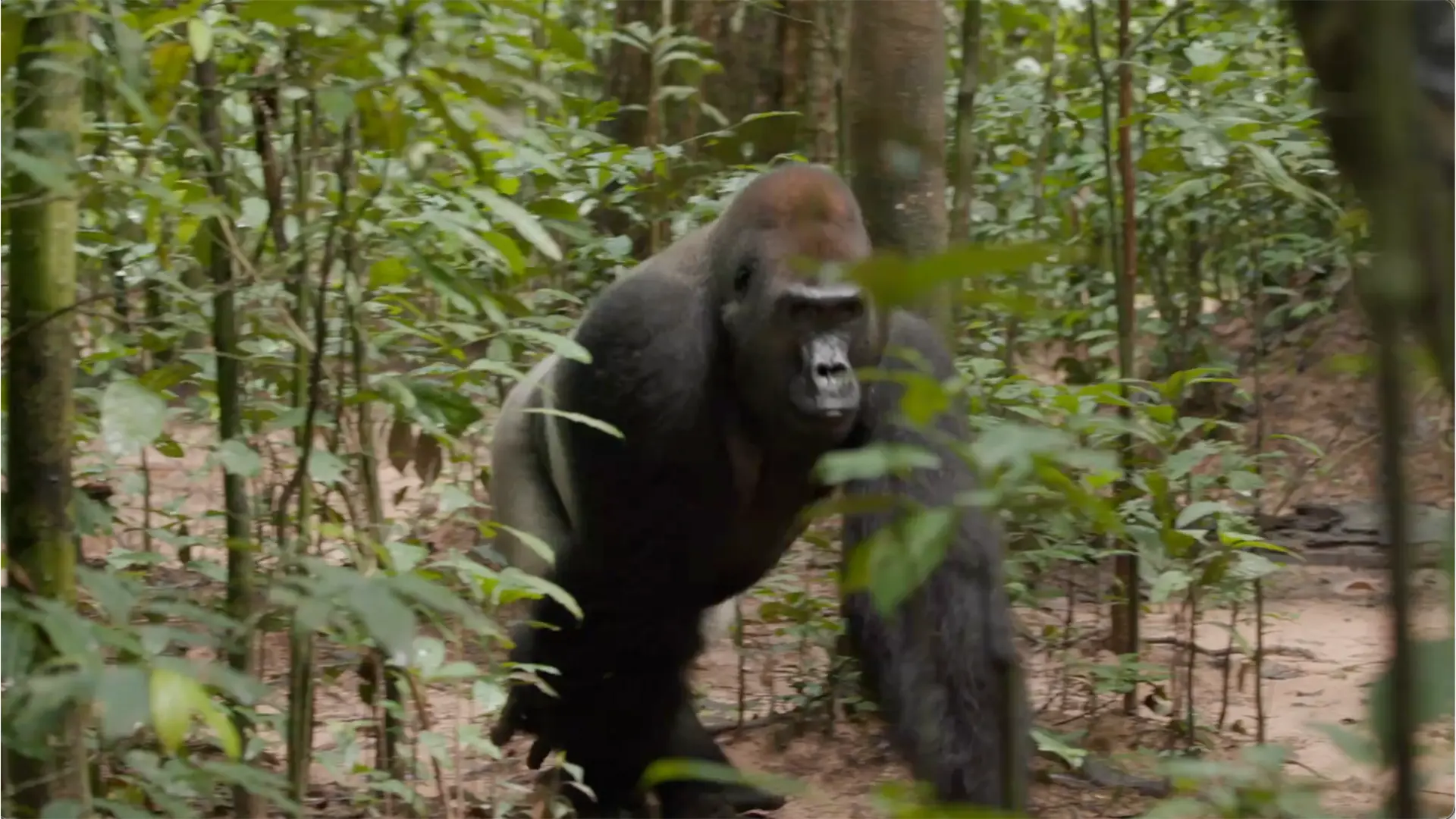
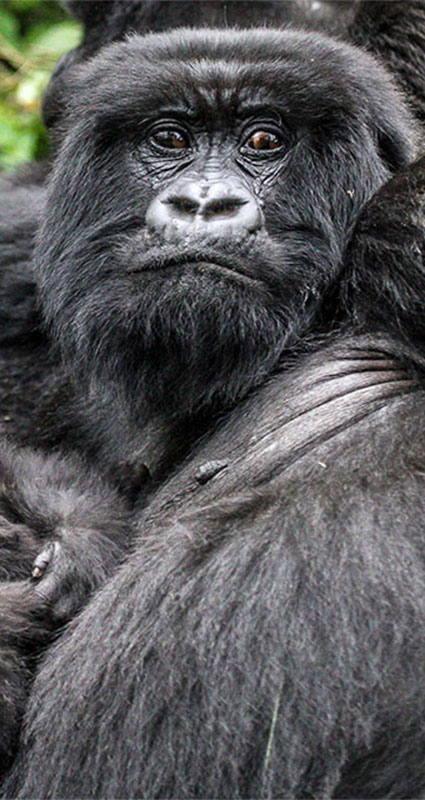


Gorilla trekking at a glance
Where | Uganda, Rwanda (mountain gorillas), Congo-Brazzaville (western lowland gorillas) & DRC (mountain and eastern lowland gorillas) |
Best time | Dry seasons: mid-December–early February and June–September |
The encounter | A 1–6 hour guided hike, then one hour with a habituated family; groups capped at eight |
Permits | From US$400 (DRC) to US$1,500 (Rwanda); minimum age 15 |
Gorilla trekking - a spiritual & impactful experience
Few wildlife encounters rival the quiet intensity of meeting a gorilla in its forest home. Time spent with these great apes, fellow primates who share more than 98% of our DNA, is humbling, unhurried and, by almost every account, profoundly moving. There is little here of the adrenaline of a tense lion or a cantankerous old buffalo. This is gentler: a to-and-fro of recognition across a narrow genetic gap.
Gorilla trekking is more than a sighting. It is a rare privilege that directly funds conservation and the communities living alongside these forests. Across Uganda, Rwanda, the DRC and Congo-Brazzaville, your permit supports rangers, veterinary care, anti-poaching patrols and habitat protection; the foundations of one of Africa's great conservation recoveries. Mountain gorilla numbers have climbed from fewer than 620 individuals in 1989 to more than 1,000 today.
The ethical question is not whether to trek, but where and with whom. This guide covers what you need: where the gorillas live, when to go, what a day on the mountain involves, and how to ensure your visit leaves the forest better than you found it.
Five Reasons We Love Gorilla Trekking
An hour at close quarters with a habituated gorilla family, silverbacks, mothers and tumbling infants going about their day, is widely described as a once-in-a-lifetime, soul-stirring encounter.
Your permit is conservation in action: revenue funds anti-poaching patrols, ranger salaries and the veterinary teams that helped bring mountain gorillas back from the brink of extinction.
The settings are extraordinary — mist-wrapped montane rainforest, bamboo thickets and the volcanic peaks of the Albertine Rift, among Africa's most biodiverse and evocative landscapes.
Treks pair naturally with golden monkey tracking, chimpanzee trekking and Big Five game drives (in Rwanda), building a multi-layered primate-and-wildlife journey.
Hiring local porters and buying local goods channels income directly into forest-edge villages, giving communities a tangible reason to protect gorillas and their habitat.
Gorilla Trekking Essentials
Gorilla trekking is a guided hike of one to six hours to spend a single, regulated hour with a habituated mountain or lowland gorilla family.
Mountain gorillas live in Uganda (Bwindi and Mgahinga), Rwanda (Volcanoes) and the DRC (Virunga). Eastern lowland (Grauer's) gorillas are found in Kahuzi-Biega (DRC), and western lowland gorillas are found in Congo-Brazzaville's Odzala-Kokoua.
Trek permits range from roughly US$400 (DRC) to US$1,500 (Rwanda), with Uganda around US$700–800. Lowland gorilla watching from a baï treehouse in Congo-Brazzaville needs no permit.
The dry seasons, mid-December to early February and June to September, are the most comfortable.
Group sizes are capped at eight, and the minimum age is 15.
Masks, a seven-metre distance and a one-hour limit protect gorillas, who share around 98% of human DNA and are highly susceptible to our illnesses.
Regulated tourism has helped mountain gorillas recover from fewer than 620 individuals in 1989 to more than 1,000 today. Book peak-season trips 12–18 months ahead.
Check out our additional resources on gorilla trekking:
Where is the best place to see wild gorillas? Check out our Rwanda vs Uganda vs Congo-Brazzaville comparison.
Want to photograph mountain gorillas like a pro? Read our gorilla photography guide.
Preparing for a gorilla trek? Read our essential health guide before you go.
How does gorilla tourism help conservation? Learn how your visit protects wildlife and local communities.
Our favourite gorilla trekking safari ideas
Why book with us?
Tailor-made experiential safaris - with love
"Travel in Africa is about knowing what, when and where to go - a few weeks too early/late or a few kilometres off course, and you could miss the Greatest Show on Earth. And wouldn’t that be a pity?
Our crew of passionate safari experts have lived and worked in Africa for most of their lives. Trust us to find you the rarest animals, the most spectacular wildlife events, the remotest landscapes and deeply meaningful cultural encounters!"
Simon Espley - CEO, Africa Geographic
All you need to know about Gorilla trekking
About the gorilla trekking experience
A gorilla trek begins early. After a briefing on the rules, you are assigned a habituated family and set off on foot with guides and trackers.
Finding your group can take anywhere from one to six hours, through steep, humid forest tangled with vines and nettles. The pace is relaxed, with frequent pauses to admire a view or identify a bird, but the hills and altitude take their toll; a reasonable level of fitness helps.
Once the family is located, you spend a single, precious hour in their company. Masks are worn throughout; you stay at least 7 metres away; and flash photography is not permitted. Groups are capped at eight trekkers per family per day, and the minimum age is 15. In Uganda's Rushaga sector, a habituation experience lets you spend up to 4 hours with a family that is still being prepared for tourism.
Porters carry your pack; a small payment that makes a real difference locally.
Where to go gorilla trekking
Gorillas live in just a handful of places, split between two very different experiences: the high-altitude mountain gorillas of the Albertine Rift and the lowland gorillas of Central Africa's rainforests.
Mountain gorillas: Mountain gorillas are found only in the Albertine Rift, a mountainous area wedged between Uganda, Rwanda, and the far east of the Democratic Republic of Congo (DRC). They are concentrated in two regions within the Albertine Rift:
The Virunga Mountains: Volcanoes National Park in Rwanda, Virunga National Park in DRC and Mgahinga Gorilla National Park in Uganda
Bwindi Impenetrable National Park in Uganda.
Lowland gorillas: Lowland gorillas are more widespread than mountain gorillas, but the most easily accessible places to find them are
Odzala Kokoua National Park in Congo-Brazzaville, for western lowland gorillas.
Kahuzi-Biega National Park in the Democratic Republic of Congo (DRC) is home to eastern lowland (Grauer's) gorillas, the largest of all gorillas.
When to go gorilla trekking
Gorilla trekking is possible year-round, but the two dry seasons are the most comfortable for trekking.
Mid-December to early February and June to September bring firmer ground, lighter rain and clearer mountain views. These are the peak months, so permits and lodges book out well in advance.
The wetter months of March to May and November are not to be dismissed: the forest is at its most lush, photography can be atmospheric, and you may have the trails, guides and gorillas largely to yourself, often at better rates.
Bear in mind that these are high-rainfall, high-altitude forests where the weather can swing from hot sunshine to cold, driving rain within minutes. Bwindi and the Virungas see showers in any season.
Whenever you travel, waterproof gear and worn-in boots are essential. For peak-season trips, plan 12 to 18 months ahead; off-peak journeys can often be arranged six to nine months out.
Gorilla trekking VS gorilla watching
Gorilla trekking involves walking in mountainous areas to find habituated gorilla families. You will spend at most one hour with them and will trek only once per day. The gorilla family group will usually be near you, and you will need to wear a medical mask to protect them from human diseases. You need to be fit to walk for two to six hours at a relaxed pace. A gorilla trekking permit is required. Gorilla trekking occurs in Uganda, Rwanda, the Democratic Republic of Congo (DRC) and Congo-Brazzaville
Gorilla watching involves waiting in elevated treehouses overlooking forest clearings (baïs) for unhabituated lowland gorillas to appear. There is no time limit to watching these gorillas, and you may enjoy multiple gorilla sightings, depending on how long you remain in the treehouse. No medical mask or trekking permit is required, and the walk to the treehouse is usually short and not strenuous. Gorilla watching is only available in central Odzala-Kokoua National Park, Congo-Brazzaville, in baïs near Camp Imbalanga.
Gorilla trekking accommodation types
Accommodation spans the full range, from simple community-run lodges to some of Africa's most refined wilderness retreats, and the cost of your trek and permit is the same whichever you choose.
In Bwindi, lodges cluster around the four trekking sectors, so matching your stay to your assigned gorilla family reduces pre-dawn driving. Rwanda's Volcanoes National Park is known for its premium, design-led lodges, well-suited to time-short travellers seeking comfort and a quick transfer from Kigali. Mgahinga offers quieter, more modest options for those seeking solitude. In Odzala-Kokoua, you can choose between luxury lodges as a base for gorilla treks or a rustic forest camp near Imbalanga Baï for gorilla watching in elevated treehouses.
Wherever you stay, expect hot water, hearty meals, raincoats and day packs to borrow, and staff who know the forest intimately. Safari costs typically start from around US$700 per person per night, excluding trekking permits.
Trusted by thousands of ecstatic travellers
✔️ 5-Star Trustpilot Rating ✔️ Condé Nast Travel Specialist Award Winner
✔️ Accredited by SATSA ✔️ 5,000+ Exceptional Safaris Since 1991
Why choose Africa Geographic to plan your safari?

I have been travelling with Africa Geographic for more than a decade ... on this trip, with my family of 11, including 5 children (7-18 yrs), to introduce them to the gorillas and chimpanzees of Uganda.... The treks into the rainforests of Kibale and Bwindi Impenetrable forests were fantastic and arduous, the golden monkeys' bamboo forest allowed for fantastic photography...
We recently returned from a wonderful adventure through the East African countries of Uganda, Rwanda and Tanzania... From tracking chimpanzees and gorillas in Uganda to canoeing and tracking golden monkeys in Rwanda to watching the migration of wildebeest in Tanzania, the drivers and guides were very personable and knowledgeable ...
WOW - if you have the opportunity to do this experience, DO IT!! It was an experience of a lifetime. It is a LONG drive, but I would do the Silverbacks in Uganda. They are in their more natural environment. I was extremely nervous to visit the gorillas. But once it was over, I was so glad I did it. Africa Geographic was amazing to work with from start to finish ...
Frequently asked questions
Permit prices vary by country. A mountain gorilla trek costs roughly US$700–800 in Uganda, US$1,500 in Rwanda and US$400 in the DRC. Uganda's gorilla habituation experience, up to four hours with a family, costs around US$1,500. Lowland gorilla trekking permits run roughly US$400–750, while gorilla watching from a baï treehouse in Odzala-Kokoua needs no permit. Permits are separate from your accommodation and other costs and channel revenue directly into conservation.
The dry seasons, mid-December to early February and June to September, are more comfortable for gorilla trekking because they offer firmer ground and clearer views. That said, don't be completely put off by the rains of November and March-May, as you will have the forests, mountains, guides and gorillas to yourself. Note that it can rain during the dry seasons as well.
You should be fit enough to walk for a few hours at a relaxed pace. The pace is gentle with frequent stops, but high humidity, steep terrain, and altitude make it tiring, and treks can take one to six hours each way. Hiring a porter to carry your pack makes the day considerably easier.
The minimum age is 15, with no upper limit. The rule exists to protect gorillas from childhood illnesses such as measles, mumps and chickenpox, to which they have no immunity.
Both are excellent for meeting gorilla families; the choice comes down to budget, time and priorities. Rwanda's Volcanoes National Park is more convenient, roughly a 2.5-hour drive from Kigali, with premium lodges, the legacy of Dian Fossey's Karisoke research, and the annual Kwita Izina gorilla-naming ceremony, but permits cost US$1,500 each. Uganda's Bwindi has more habituated gorilla families, a better overall forest-and-wildlife experience and permits at roughly half the price, but a longer journey from Entebbe.
The regulated minimum distance is seven metres, which reduces the risk of passing human illnesses to gorillas, who share around 98% of our DNA. In practice, gorillas don't always honour the rule and may wander closer; if that happens, stay calm, remain seated and retreat slowly while rangers manage the situation.
Yes, well-managed gorilla trekking is ethical, and is a key reason mountain gorillas have recovered from fewer than 620 individuals in 1989 to more than 1,000 today. Permit revenue funds rangers, veterinary care and anti-poaching work, while Uganda directs 20% of park gate revenue and Rwanda 10% of permit revenue to local communities. The key is travelling with operators who source permits officially and benefit local people. Read more about gorilla trekking ethics.
Other animals in the region include forest elephants, forest buffalo, duikers, forest hogs, bush pigs, golden cats, jackals and civets. It should be noted, though, that sightings are rare due to the thick vegetation. There are 1,074 bird species in the Albertine Rift, of which 42 occur only there, and you can expect to tick off many colourful birds as you hike.
Trekking means hiking to spend up to one hour with a habituated family, wearing a mask and keeping your distance; a permit is required. Watching, available only in Odzala-Kokoua, means observing unhabituated western lowland gorillas from an elevated baï treehouse just a few minutes' walk from your lodge, with no time limit, no mask and no permit. These gorillas are fully wild and will leave if disturbed, but will often feed in the clearing for long spells, sometimes giving several sightings in a day. Lowland gorillas are smaller, more arboreal and constantly on the move, making encounters wilder and less predictable.
No, gorillas are not dangerous. They are gentle, and habituated families are used for gorilla trek meetings, so incidents are rare. A silverback may beat his chest, roar or even mock-charge as a threat display; if this happens, stay seated, avoid eye contact and follow your guide. The displays look and sound alarming, but the gorillas almost always settle quickly.
Worn-in waterproof hiking boots, gaiters and gloves for the nettles, several layers including a warm top, long trousers and long sleeves, a rain jacket, a wide-brimmed hat, insect repellent and a small day pack. Bring a surgical mask, waterproof bags for camera gear, water and snacks. Lodges often lend raincoats and day packs. Hiring a porter at a nominal fee of about US$20 eases the climb and supports local families. Never break in new boots on a trek.
Trekking rules are essential to protect gorillas' health, as they are susceptible to human diseases. Gorillas will be stressed if there are too many visitors or if visitors misbehave.
Mask
Wearing a surgical mask while meeting gorillas is mandatory.
Feeling sick?
If you show any sign of illness on the day of your trek, please let your guide or the park staff know. They may decide to prevent you from trekking on that day. Exposing gorillas to disease may be catastrophic for the entire population. Also, if you are in the company of gorillas and need to cough or sneeze, face away from the gorillas - even while wearing the required mask.
Group size and frequency
Each gorilla group is visited daily - only once. Group size is limited to 6 or 8 tourists, and the interaction time is 1 hour.
Minimum visitor age
The minimum age for tourists is 15 years old, to prevent exposing the gorillas to childhood diseases such as mumps, chickenpox, measles, etc.
Flash photography is not permitted - the flash may frighten the gorillas or provoke an aggressive reaction.
Minimum distance
Tourists must remain at least seven metres from the gorillas. Gorillas may approach you, in which case you should retreat slowly if possible.
Stay together
Try to remain in a tight group - to make it easier for your guides to manage the situation and to prevent the gorillas from feeling threatened.
Your behaviour while with gorillas
Remain seated or crouching and keep your arms at your side when spending time with gorillas. Keep quiet - even when filming a selfie. Shouting, standing or gesturing with your arms may be perceived as a threat by gorillas. Silverback gorillas have been known to beat their chests, roar and even charge at tourists. If this happens, remain seated and avoid eye contact with the gorilla. These threat displays look and sound scary, but the gorillas soon calm down and go about their business without harming anybody.
Eating, drinking & smoking
No eating, drinking or smoking is permitted anywhere near gorillas. This may attract their attention, leading to unwelcome close encounters. Your food may also be harmful to gorillas' health.
Toilet
Please go to the bathroom before you set out on your trek. If you need to go to the toilet whilst in the forest, you will need to dig a deep hole to bury any excrement and fill it in afterwards. Your guides will lend you a machete for this purpose, but you will need to bring toilet paper.
Litter
Please keep all of your rubbish in your backpack and deposit it at your lodge after the trek.
Permits are limited, and demand is high. For peak-season travel, plan 12 to 18 months ahead. Trips outside peak season can usually be arranged six to nine months out, often with better availability and rates. Permits are typically non-refundable and non-transferable, and treks depart in all weather, so build in flexibility. Because habituated families are monitored daily, the chances of finding them are very high.
As of now, gorilla trekking in the DRC's Virunga and Kahuzi-Biega National Parks is suspended owing to armed conflict, with access routes closed and staff evacuated. Uganda, Rwanda and Congo-Brazzaville remain open for trekking. Confirm the latest status with your safari expert before planning any DRC trip.
Click here to schedule a no-obligation call with one of our Safari Experts or fill in our 2-minute form with your questions. Our team of experts are here to help! Whether you’re curious about the best time to travel, want to hear first-hand about an experience or need help planning your safari.
Explore more African safari experiences
Start planning your dream safari
Our travel experts will craft a no-obligation itinerary just for you. We have crafted over 5,000 safaris since 1991. Your personal details are protected; we only use this information to contact you.
Why book your safari with us?

Deep Experience & Knowledge
Handcrafted experiential safaris since 1991.
Travel in Africa is about knowing when and where to go, and with whom. A few weeks too early/late or a few kilometres off course, and you could miss the greatest show on Earth. And wouldn’t that be a pity?

Trust & Safety

Make A Difference
We donate a portion of the revenue from every safari sold to carefully selected conservation projects that make a significant difference at ground level.
YOUR safari choice does make a difference - thank you!