
Safari experts & storytellers. Since 1991


Trust us to find you the rarest animals, the most spectacular wildlife events, the remotest landscapes and deeply meaningful cultural encounters!
When to visit the Serengeti: month-by-month guide
The Serengeti doesn’t have an off-season. It has phases. The wildebeest migration, roughly two million animals moving in a rough clockwise circuit, dictates the rhythm of the entire ecosystem, and each month brings the herds to a different part of the park. Understanding that rhythm, alongside rainfall and temperature patterns, is the fastest way to work out which month suits the safari you actually want.
This guide breaks the year down month by month, covering where the migration typically sits, what the weather does, and what a safari in that period looks like on the ground.
Serengeti seasons at a glance
The Serengeti sits at 1,100 to 2,000 metres above sea level, which keeps temperatures moderate year-round. Rainfall, not temperature, is the variable that shapes a safari here.
Season | Months | Typical rainfall | Daytime temperature | Migration stage |
Short dry spell | January – February | Low, scattered showers | 27–29°C | Calving on the southern plains |
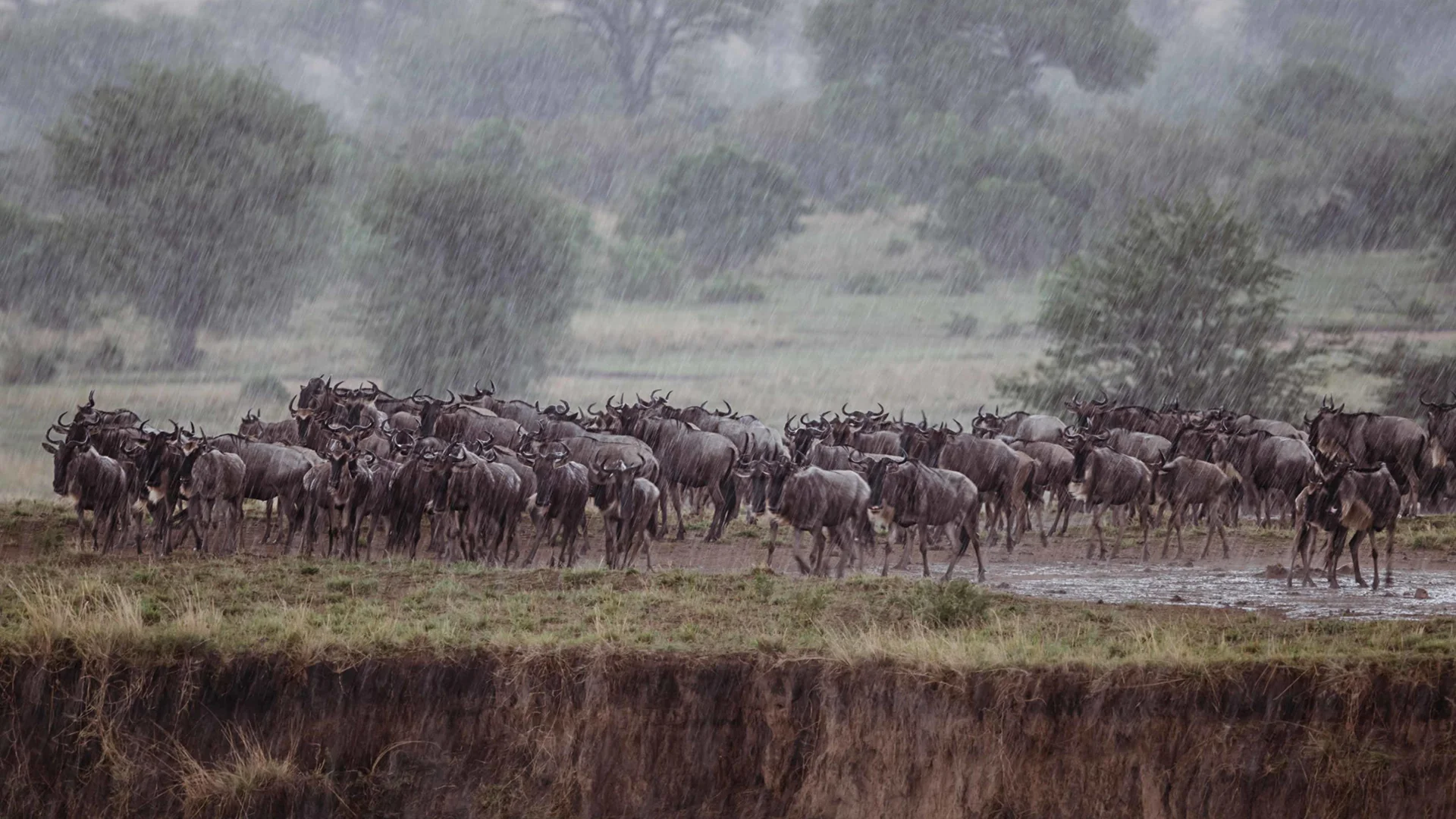
Long rains | March – May | Heaviest of the year, April wettest | 25–29°C | Move north through central Serengeti |
Dry season | June – October | Lowest of the year, especially July – September | 25–28°C | Western corridor, then Mara River crossings |
Short rains | November – December | Moderate, builds through November | 27–28°C | Return south towards the calving grounds |
Quick answer guide
Best for the wildebeest calving season: Late January to March
Best for photography: June to October for dry-season wildlife, or January to March for dramatic calving scenes and lush landscapes
Best value: April and May, when lower rates and fewer visitors can offer exceptional value despite occasional rain
Safaris we love
Every month in the Serengeti suits a different kind of itinerary. These are three of our favourites, matched to different phases of the migration and different travel styles.
Flying safari through the migration: Built around fly-in lodges that reposition with the herds, this route removes the long drives between migration hotspots. Explore this flying safari →
Calving season paired with a Seychelles finish: Positioned squarely within the February calving window, then followed by island time to unwind. View this calving season itinerary →
The best of Tanzania's northern circuit: Tarangire, the Serengeti and Ngorongoro Crater combined into a single, well-paced route suited to most months of the year. See this northern circuit route →
The Serengeti month by month
January in the Serengeti
January sits in the short dry spell between the short and long rains, so mornings are clear and afternoons can bring a passing shower. Daytime temperatures reach around 28°C, with cooler nights near 16°C. The wildebeest have mostly moved onto the eastern and southern short-grass plains, drawn by the nutrient-rich grass that will support the calving to come. Lions and hyenas begin to gather on the fringes of the herds, anticipating the births. This is a strong month for travellers who want big herds without the crowds of the July to September peak.
February in the Serengeti
February is the heart of calving season. Around 500,000 wildebeest calves are born within a two to three week window, concentrated on the short-grass plains around the Ndutu area and the southern Serengeti. The sheer volume of newborns overwhelms the resident predators, giving individual calves a better chance of survival even as lions, cheetahs and hyenas hunt in full view of visiting vehicles. Rainfall remains relatively light for a wet-season month, and the flat, open terrain of the calving grounds makes for some of the clearest wildlife viewing and photography conditions found anywhere in the Serengeti-Mara ecosystem.
March in the Serengeti
The long rains typically begin in March, and the herds start shifting their attention from calving to mating. Male wildebeest compete fiercely for females during the rut, which runs alongside the herds' gradual northward drift out of the southern plains. Rainfall increases through the month, landscapes turn a deep green, and visitor numbers drop noticeably compared with the earlier calving peak. Roads can be muddy in places, so open-sided vehicles and flexible itineraries help here.
April in the Serengeti
April is the wettest month of the year in the Serengeti, with rain falling on roughly 20 days and accounting for well over 100mm of the month's total. The herds continue their push north and west, moving in long columns through the central Serengeti around the Seronera area and the Moru Kopjes. Rates fall to their lowest point of the year and vehicle numbers thin out considerably. Given the reduced visibility that comes with tall, rain-fed grass, this suits travellers prioritising value and solitude over guaranteed sightings.
May in the Serengeti
May marks the transition out of the long rains. Showers become less frequent as the month progresses, though the landscape remains lush and green well into the following weeks. The herds, calves now strong enough to keep pace, pick up speed as they move through the western corridor towards the Grumeti River. Rates and crowds are still low, making May one of the better-value months for travellers who don't need river-crossing drama.
June in the Serengeti
June signals the start of the dry season proper. Rainfall drops sharply, skies clear, and the bulk of the migration gathers in the western corridor, where the Grumeti River presents the first serious water crossing of the annual cycle. Grumeti crossings are less consistent than the Mara River crossings later in the year, since water levels depend heavily on that season's rains, but the herds' movement through this stretch still produces excellent, less crowded wildlife viewing. Nights turn noticeably cooler, particularly at higher-altitude lodges.
July in the Serengeti
July is when the migration's centre of gravity shifts firmly north. The vanguard of the herd typically reaches the Mara River's southern bank in the second half of the month, with the first crossings into the Mara-Serengeti ecosystem's northern reaches occurring from mid to late July depending on that year's conditions. Skies are reliably clear and dry, days are warm without being uncomfortably hot, and this is the point at which advance booking becomes essential for lodges positioned near the river.
August in the Serengeti
August delivers the migration's most photographed spectacle: large-scale Mara River crossings, with wildebeest and zebra plunging into crocodile-patrolled water in their tens of thousands. This is peak season, both for wildlife activity and for visitor numbers, so vehicle congestion at popular crossing points is a realistic trade-off for the drama on offer. Lodges in the northern Serengeti fill up close to a year in advance for this period. Dry, dust-lit afternoons and cool, clear evenings are typical.
September in the Serengeti
September remains firmly within crossing season, though the balance of the herd has usually shifted further into the Maasai Mara-Serengeti border zone, with river traffic moving in both directions as some groups cross back into Tanzania. Weather stays dry and warm, and demand for northern Serengeti lodges remains high, though marginally lower than August. This is a dependable month for travellers who want crossing potential without committing to the very peak of the season.
October in the Serengeti
By October, the northward push has run its course and the herds begin drifting back south through the Lobo area and the little-visited northern plains. Southbound crossings of the Mara River tend to happen faster and with less prolonged hesitation than the northbound crossings earlier in the year. Vehicle numbers ease noticeably from the September peak, rates soften slightly, and the northern Serengeti and Lobo area offer some of the most rewarding, uncrowded wildlife viewing of the year for travellers with flexible dates.
November in the Serengeti
The short rains typically arrive in November, breaking the dry season and pulling the migration south out of the north and through the central Serengeti and Lobo region. Rainfall is unpredictable in both timing and volume, and can occasionally fail altogether in the drier southeast of the park, but when it does fall it revives the landscape quickly. This is a genuine shoulder-season month, with moderate crowds, greener scenery than the preceding dry months, and herds actively repositioning for the calving grounds.
December in the Serengeti
December sees the migration completing its return to the southern short-grass plains, ready for the calving season that follows in January and February. Rainfall from the short rains tends to ease as the month progresses, though showers remain a possibility. Some years bring early calving activity in late December, giving well-timed December travellers a preview of the following months' predator action. Rates and crowds remain moderate, rising towards the December and January holiday period.
Choosing your month by safari priority
Priority | Best months | Where to base yourself |
Newborn wildlife and predator action | Late January – March | Southern Serengeti and Ndutu area |
Mara River crossings | July – October | Northern Serengeti |
Value rates and fewer vehicles | April – May | Central Serengeti and western corridor |
Grumeti River crossings | June – early July | Western corridor |
A balance of good weather and moderate crowds | October and late June | Northern and central Serengeti |
Serengeti timing against the wider northern circuit
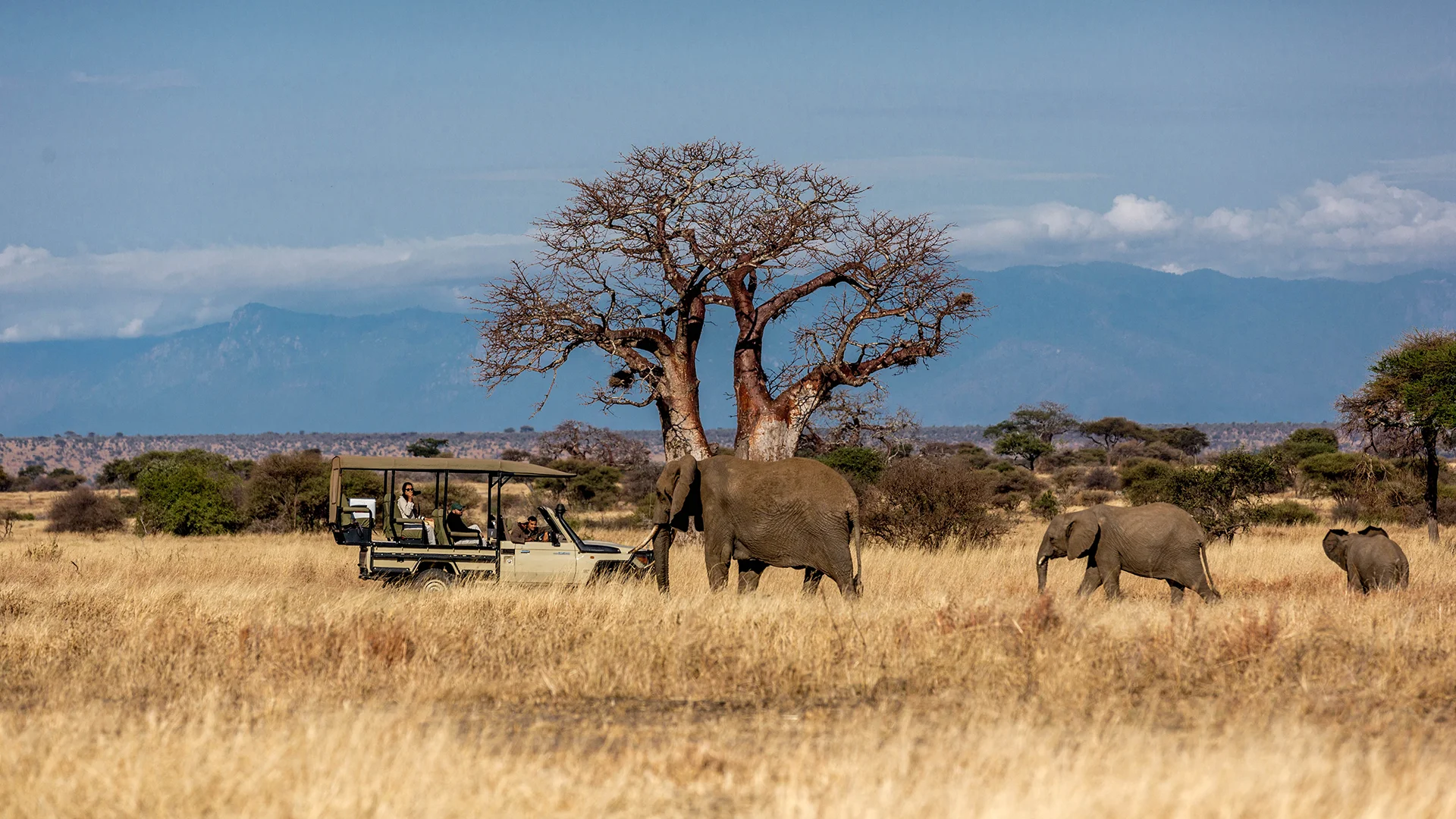
The Serengeti rarely stands alone on an itinerary. Most first-time travellers combine it with the Ngorongoro Crater and Tarangire National Park as part of Tanzania's northern circuit, and the timing that suits the Serengeti generally suits the wider route too, since all three sit within the same broad climate zone. For a full breakdown of how these destinations fit together across the year, see our guide to Tanzania's northern safari circuit. Linda Fox, AG Tanzania safari expert, makes the case for starting in Tarangire before heading north: "I love starting a northern Tanzania safari in Tarangire. Diverse habitats, 500+ bird species, elephants in wetlands, lions on termite mounds, and lovebirds in baobabs. A magical start to any Tanzania adventure!"
Travellers weighing up the Serengeti against Kenya's Masai Mara should note that the two parks form a single ecosystem, and the Great Migration simply crosses the border rather than starting afresh. Our broader look at Africa's great wildlife migrations sets the Serengeti-Mara cycle in context alongside other migratory spectacles across the continent.
Where you stay matters as much as when you travel. Infrastructure and lodge density can affect wildlife behaviour even in peak season, a point explored in our piece on why lodge choice matters in the Serengeti. Our safari experts factor this into every itinerary, positioning lodges to balance access to the migration against the pressure that high vehicle density can place on wildlife.
Families weighing up when to travel should also read our guide to Africa's best family safari destinations, which covers age recommendations and seasonal considerations for travelling with children in the Serengeti and beyond.
Beyond the Great Migration
The Serengeti's resident wildlife does not disappear when the migration moves elsewhere. Wild dog sightings, once rare in the park, have increased in recent years, and our feature on wild dogs returning to the Serengeti is worth reading regardless of which month you travel. Walking safaris also run year-round in parts of the ecosystem, offering a different pace entirely, as described in our account of a Serengeti walking safari. For a wider view of standout wildlife experiences across the continent, including several in Tanzania, see our roundup of Africa's top wildlife experiences.
Wish you were here?
Frequently asked questions
There is no single best month, since the right timing depends on what you want to see. February suits calving season and predator activity on the southern plains. July to October suits Mara River crossings in the north. April and May suit travellers prioritising lower rates and fewer vehicles over guaranteed drama. June to October offers the most consistently dry weather and reliable wildlife viewing across the whole park.
Northbound crossings typically begin from mid to late July and continue through August and September, which is the peak period for this spectacle. Southbound crossings, as the herds head back into Tanzania, usually occur in October. Exact timing varies by two to four weeks each year depending on rainfall in the preceding months, so travellers booking specifically for crossings should build flexibility into their itinerary.
Calving season runs from late January through March, with the peak concentrated into a two to three-week window in February, when an estimated 500,000 wildebeest calves are born on the southern plains around the Ndutu area. The synchronised timing floods local predator populations with more prey than they can consume, which improves individual calves' odds of survival despite heavy predation.
Yes. The Serengeti holds substantial resident wildlife populations, including lion, leopard, cheetah and an increasing number of African wild dogs, all of which remain in the ecosystem regardless of where the migratory herds happen to be. Birdlife is also strongest during the wetter months, when migratory species pass through alongside the roughly 500 species resident year-round.
April is typically the wettest month, with rain falling on around 20 days and monthly totals exceeding 100mm in much of the park, as part of the long rains that run from March to May. The short rains, from November to December, bring lower and less predictable rainfall by comparison.
For the July to September crossing season and the February calving peak, book nine to twelve months ahead, since lodges positioned closest to the action have limited capacity and fill early. For the shoulder months of April, May and November, three to six months is usually sufficient, and last-minute availability is more common.
There is no single best month, as the Serengeti offers outstanding wildlife viewing throughout the year. Your ideal timing depends on what you want to experience – river crossings are most likely from July to September, while January to March is best for the wildebeest calving season.
Yes. Although April falls within the long rainy season, it offers lush landscapes, excellent birdwatching, fewer vehicles and some of the year's best safari value. Rain usually comes in short, heavy showers rather than lasting all day.
The Great Migration is present in the Serengeti throughout the year, but its location changes with the seasons. Calving typically takes place in the southern Serengeti from late January to March, while the famous Mara River crossings usually occur between July and September.
Timing a Serengeti safari well means matching your priorities, whether that is calving season drama, river crossings or value travel, against the month that delivers it. Our safari experts plan Serengeti itineraries around the migration's real-time position, not just the seasonal averages in this guide. Start with the Serengeti National Park page for a full destination overview, or explore the broader Tanzania destination guide to plan a wider circuit. Talk to our safari experts about the right time to travel
Start planning your dream safari
Our travel experts will craft a no-obligation itinerary just for you. We have crafted over 5,000 safaris since 1991. Your personal details are protected; we only use this information to contact you.
Why book your safari with us?

Deep Experience & Knowledge
Handcrafted experiential safaris since 1991.
Travel in Africa is about knowing when and where to go, and with whom. A few weeks too early/late or a few kilometres off course, and you could miss the greatest show on Earth. And wouldn’t that be a pity?

Trust & Safety

Make A Difference
We donate a portion of the revenue from every safari sold to carefully selected conservation projects that make a significant difference at ground level.
YOUR safari choice does make a difference - thank you!