
Tailor-made safaris. Since 1991

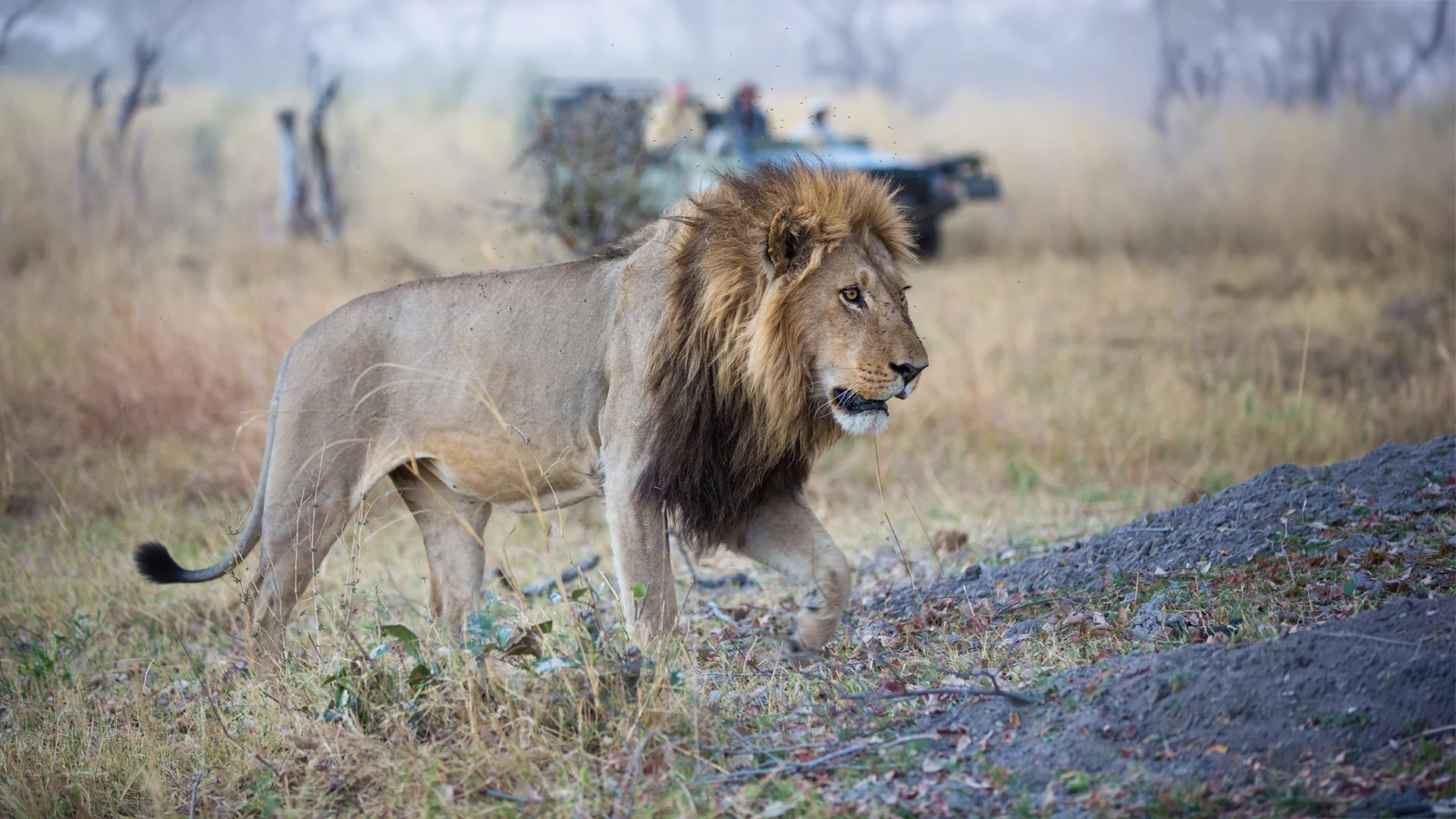
Chobe National Park and the Okavango Delta are two separate, breathtaking destinations in northern Botswana. Chobe is known for epic boat trips down the river and spectacular wildlife, from the elephant-rich Chobe Riverfront to the predator-rich Savuti and remote Linyanti. The Okavango Delta, on the other hand, is an incredible wetland, well-populated with wildlife and promising unique experiences, like mokoro rides.
These two areas lie roughly 300km apart. Although adventurous 4x4 routes connect them via Savuti and Khwai, most visitors travel between them by light aircraft.
Are Chobe and the Okavango Delta the same place?
They are not. This is the most common point of confusion among first-time Botswana travellers.
The Okavango Delta is a vast inland delta in north-west Botswana, in the Ngamiland district around the gateway town of Maun. The Okavango River rises in the Angolan highlands, flows over 1,600km south, and instead of reaching the sea, it fans out across the flat Kalahari sands, where almost all of the water evaporates or is taken up by plants. The result is a mosaic of channels, lagoons, floodplains and palm-fringed islands. UNESCO inscribed the Delta as a World Heritage Site in 2014.
Chobe National Park is a separate protected area in the far north-east of the country, bordering Namibia's Caprivi Strip and close to the town of Kasane. It takes its name from the Chobe River, which flows along its northern boundary and provides permanent water in an otherwise dry region. Chobe was Botswana's first national park and, at around 11,700km², is the country's third-largest, after the Central Kalahari Game Reserve and the Kgalagadi Transfrontier Park.
The two are administratively distinct, ecologically different, and physically apart. The confusion arises partly because they belong to the same northern Botswana safari circuit, partly because both are shaped by water in a dry land, and partly because the eastern Okavango, the Khwai region and the Savuti area of Chobe sit between them, making the boundaries between these safari areas less obvious in this vast unfenced ecosystem. Moremi Game Reserve, often discussed alongside Chobe, is the protected core of the Okavango Delta, not part of Chobe.
Chobe and the Okavango Delta compared at a glance
The table below sets out the key differences for quick reference.
Dimension | Chobe National Park | Okavango Delta |
Landscape / ecosystem | Riverfront park on the Chobe River with floodplains, woodland, the Savuti Marsh and Linyanti; dryland park fed by a permanent river | Inland delta wetland of channels, lagoons, reed beds and islands fanning across the Kalahari |
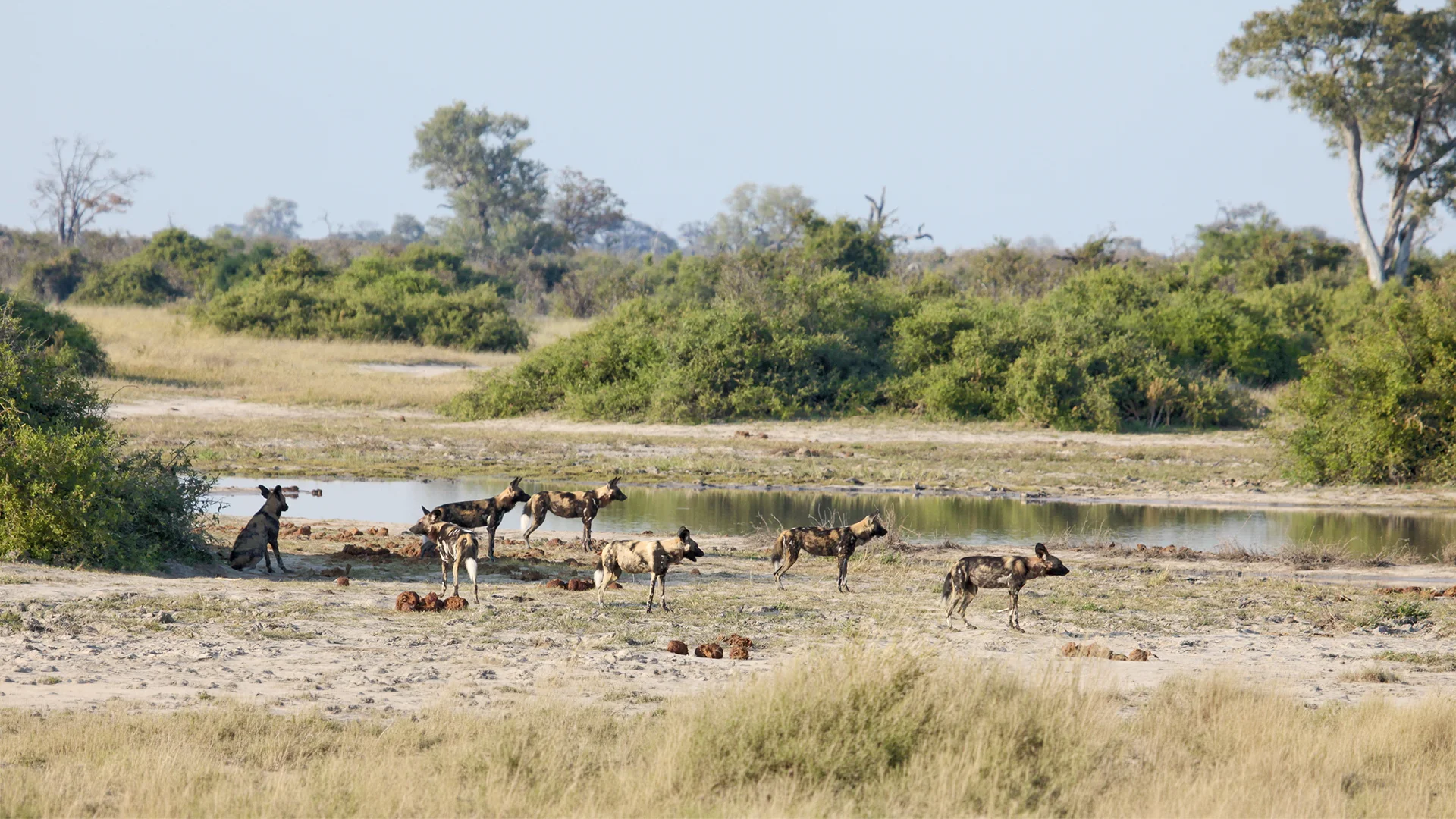
Signature wildlife | Among Africa's largest dry-season elephant and buffalo concentrations, lion, hippo, crocodile, puku; over 450 bird species | African wild dog, leopard, lion, red lechwe, sitatunga, hippo, elephant; around 500 bird species |
Typical safari activities | Boat safaris on the Chobe River, day wildlife drives | Mokoro, motorboat, walking safari, day and night wildlife drives, helicopter and fixed-wing scenic flights |
Best season | Dry season, roughly May to October, peaking August to October at the riverfront | Dry-winter flood, roughly June to October; water peaks while the surrounding bush is dry |
Typical traveller profile | First-timers, families, value-conscious travellers, those combining Victoria Falls | Honeymooners, photographers, repeat safari-goers, travellers seeking exclusivity |
Gateway town and airport | Kasane and Kasane International Airport (BBK) | Maun and Maun International Airport (MUB), then light aircraft to camps |
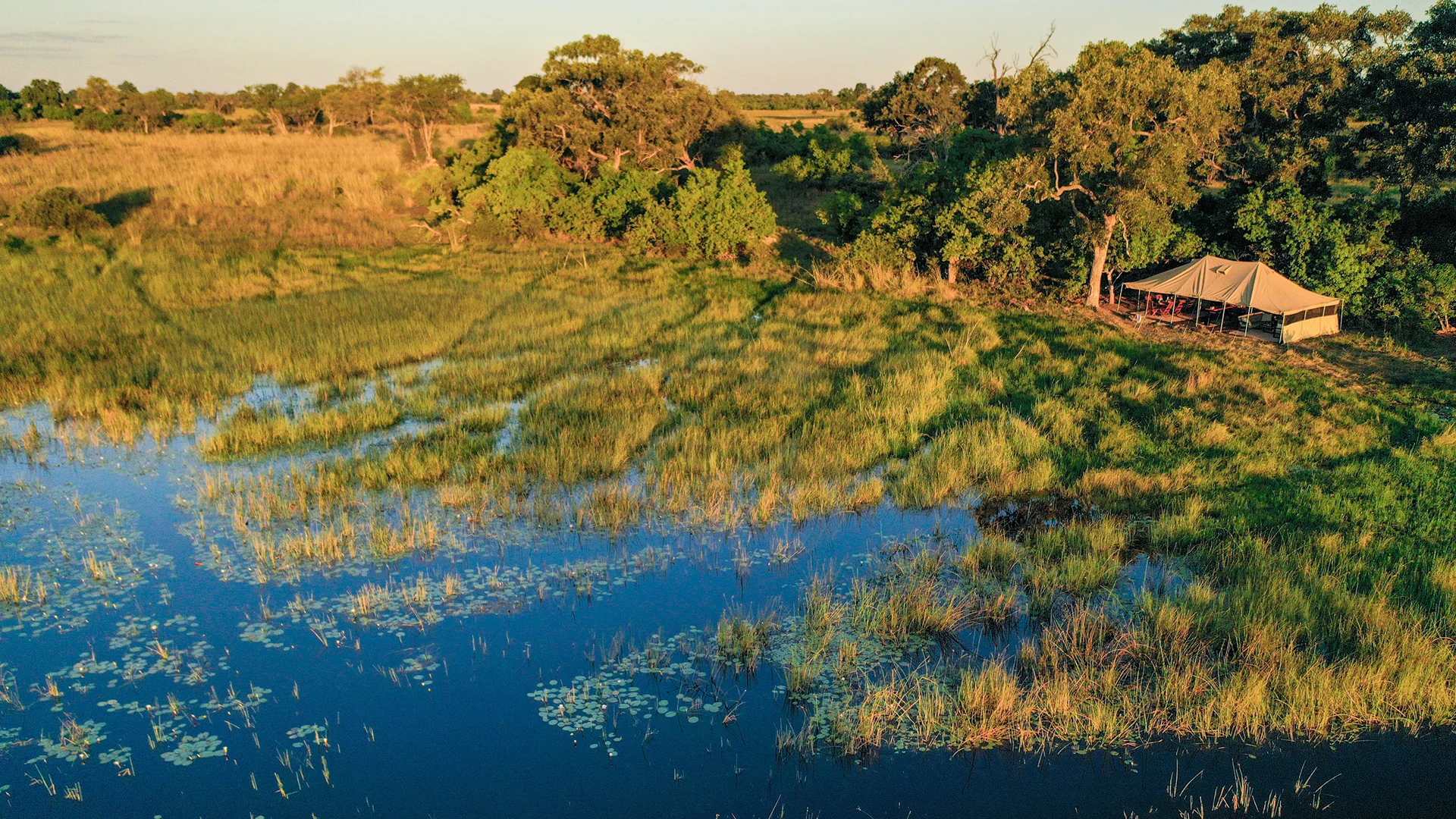
Typical safari style | Lodge- and hotel-based; day trips and houseboats possible | Mobile and fly-in camps on private concessions |
Conservation / visitor density | Higher vehicle density along the riverfront at peak season; one lodge inside the park | Low-volume, high-value model; limited concession beds and few vehicles per sighting |
Safaris that pair Chobe with the Okavango Delta
Here are 3 safaris we love that pair the magic of the Okavango with the beauty of Chobe.
Luxury Botswana safari: The Luxury Botswana safari moves between premium camps across the Okavango and Chobe regions, suited to travellers who want a high-comfort introduction to both ecosystems without compromising on either. Learn more →
Southern Africa mega safari: For travellers with more time, the Southern Africa mega safari extends the Chobe and Okavango combination into a longer regional journey, adding further parks across southern Africa. Read about this safari →
Botswana highlights with Victoria Falls: The Botswana highlights and Victoria Falls itinerary links the Okavango, Khwai, Chobe and Makgadikgadi before finishing at the falls, a natural add-on given Chobe's proximity to Victoria Falls. See the safari →
When each destination is at its best
The seasons in Botswana run opposite to what many visitors expect, and understanding why is the key to timing a trip well – though your Africa Geographic safari expert will guide you with this level of nuance and detail.
Why the Okavango floods in the dry season
The Okavango Delta's flood is counter-intuitive. The water that fills it does not derive from local rain. It falls in the Angolan highlands during their rainy season, then takes months to travel down the river system and spread across the flat delta. By the time it arrives, Botswana's own rains have stopped. Flood levels therefore peak between June and August, during the dry winter, when the delta swells to several times its low-water size and draws wildlife from across the parched Kalahari. The flood reaches the northern Panhandle first, around April or May, then moves slowly south, reaching the Maun area by about August. For water-based activities such as mokoro trips, the dry winter months are the prime window, though exact timing varies by camp location and by year.
When Chobe's riverfront peaks
Chobe runs on local rainfall rather than a distant flood. When the rains stop and the interior dries out, wildlife moves toward the Chobe River, which always has water. The dry season runs roughly May to October, and the riverfront concentrations build to their height between August and October, when large elephant and buffalo herds gather at the water in the late afternoon. October is the hottest month and can be uncomfortable, but wildlife concentrations are at their most dramatic. The green season, November to March, disperses wildlife into the interior but brings strong birding, newborn animals, the Savuti zebra migration and the lowest rates of the year.
Travelling between the two
There is no quick road route between Chobe's riverfront and the heart of the Okavango Delta inside the protected areas. The overland route via the Savuti and Khwai regions is a demanding drive of many hours on sand and bush tracks, suitable only for experienced self-drivers on a planned route. The standard and far easier option is to fly: a scheduled Kasane to Maun hop takes under an hour, and most Africa Geographic fly-in itineraries route guests directly between Chobe and Okavango Delta camps by light aircraft. Our safari experts handle all charter bookings as part of the itinerary.
Can you combine Chobe and the Okavango Delta?
Yes, and many travellers do. The two destinations complement each other closely: Chobe delivers reliable wildlife density and river boating, while the Delta delivers exclusivity, water-based safaris and strong predator viewing. A common and well-balanced structure is two to three nights at Chobe followed by three to four nights in the Okavango Delta, often with Victoria Falls or the Makgadikgadi Pans added on either end. A week is comfortable for both; ten days or more allows a more relaxed pace and a third region.
Conservation and the visitor experience
The two destinations sit at different ends of Botswana's tourism spectrum, and this shapes how a safari feels on the ground.
The Okavango Delta operates on Botswana's high-value, low-volume model. Most of the Delta is divided into private concessions with strictly limited bed numbers, so vehicles are few and sightings are often shared with no one else. This exclusivity translates into higher prices, since supplies must be flown or driven in and camps are built to leave a light footprint. Many camps are community-owned or community-partnered, channelling tourism revenue to local people.
Chobe's riverfront is the busier counterpoint. Because it is accessible, affordable and close to Victoria Falls, the Serondela riverfront draws day-trippers, houseboats and multiple mobile safari operators, and popular sightings at peak season can attract several vehicles at once. The wildlife density is considerable: Botswana holds the world's largest national elephant population, estimated at about 132,000 elephants, and the Chobe riverfront delivers some of the densest dry-season gatherings anywhere, though the atmosphere is less private than the Okavango Delta's. Travellers who want Chobe's wildlife with fewer vehicles can base themselves at a private concession, or seek out the wilder Savuti and Linyanti areas. One way to gain an edge at the riverfront is to stay at the only lodge inside the park itself, which allows guests into the park before day visitors arrive.
As AG Botswana safari expert Benjamin Lederer notes, “Chobe Game Lodge, the only lodge inside the park, offers whisper-quiet safaris with electric boats and vehicles. Don't miss the eco back-of-house tour - a rare glimpse into how the lodge champions sustainable luxury.”
Wish you were here?
Frequently asked questions
No. They are two separate protected areas in northern Botswana, roughly 300km apart. Chobe National Park sits in the far north-east on the Chobe River near Kasane. The Okavango Delta is an inland wetland in the north-west around Maun, fed by the Okavango River from Angola. Moremi Game Reserve, not Chobe, is the protected core of the Delta. The two belong to the same safari circuit but are distinct places.
Neither is universally better; they suit different travellers. Chobe offers accessible, affordable, reliable wildlife viewing and river boating, ideal for first-timers and families. The Okavango Delta offers exclusivity, water-based safaris and strong predator sightings, favoured by honeymooners, photographers and repeat visitors. With a week or more, combining both gives the strongest overall safari.
Yes, and it is one of Africa's strongest safari pairings. A typical structure is two to three nights at Chobe and three to four in the Delta, linked by a short flight. Many travellers add Victoria Falls or the Makgadikgadi Pans. Several Africa Geographic itineraries combine the two, and our safari experts can tailor the balance to your interests and budget.
The dry winter, roughly May to October, is the classic season for both. Chobe's riverfront area peaks from August to October as wildlife gathers at the river, while the Okavango's Angola-fed flood peaks from June to August even though no local rain falls. The green season, November to March, brings lush scenery, newborn animals, strong birding and lower rates.
By air. There is no quick road link inside the protected areas, so travellers fly. A scheduled Kasane to Maun flight takes under an hour, and most fly-in itineraries route guests directly between Chobe and Delta camps by light aircraft. The overland route via Savuti and Khwai is a demanding multi-hour drive on sand track, suitable only for experienced, well-planned self-drivers.
Yes. Botswana is one of Africa's most stable and peaceful countries, ranked 43rd of 163 in the 2025 Global Peace Index, second in Africa after Mauritius, and a rewarding safari destination. Violent crime against tourists is almost unheard of; the main practical risks are dangerous wildlife and remoteness, all managed by our experienced safari planners. Take normal precautions against petty theft in towns and follow guide instructions.
Start planning your dream safari
Our travel experts will craft a no-obligation itinerary just for you. We have crafted over 5,000 safaris since 1991. Your personal details are protected; we only use this information to contact you.
Why book your safari with us?

Deep Experience & Knowledge
Handcrafted experiential safaris since 1991.
Travel in Africa is about knowing when and where to go, and with whom. A few weeks too early/late or a few kilometres off course, and you could miss the greatest show on Earth. And wouldn’t that be a pity?

Trust & Safety

Make A Difference
We donate a portion of the revenue from every safari sold to carefully selected conservation projects that make a significant difference at ground level.
YOUR safari choice does make a difference - thank you!