

Safari experts & storytellers. Since 1991


Tsavo East: Kenya's great red wilderness
Tsavo East National Park at a glance:
Location: Southeastern Kenya, between Nairobi and Mombasa | Size: 13,700 km² (1,370,000 hectares) — combined with Tsavo West and Chyulu Hills: 23,000+ km² |
Access: Road from Nairobi (approximately 4 hours) or Mombasa (approximately 2 hours); light aircraft to park airstrips | Best time to visit: June–October (dry season); January–March (second dry period) |
Wildlife highlights: Super tusker elephants, maneless lion, hirola (world's rarest antelope), African wild dog, gerenuk, lesser kudu, fringe-eared oryx, ~500 bird species | Key features: Yatta Plateau (longest lava flow in the world), Mudanda Rock, Galana River, reopened "forbidden zone" |
Low visitor density: possible to spend a full day without seeing another vehicle | Accommodation: Satao Camp (Africa Geographic preferred supplier) and other camps across the park |
Why visit Tsavo East National Park?
Tsavo East National Park covers 13,700 km² (1,370,000 hectares) of arid grassland savanna and red semi-desert in southeastern Kenya — the larger of Tsavo's twin parks. Together with Tsavo West and Chyulu Hills, it forms a combined 23,000 km² (2,300,000 hectares), one of the world's largest wildlife sanctuaries.
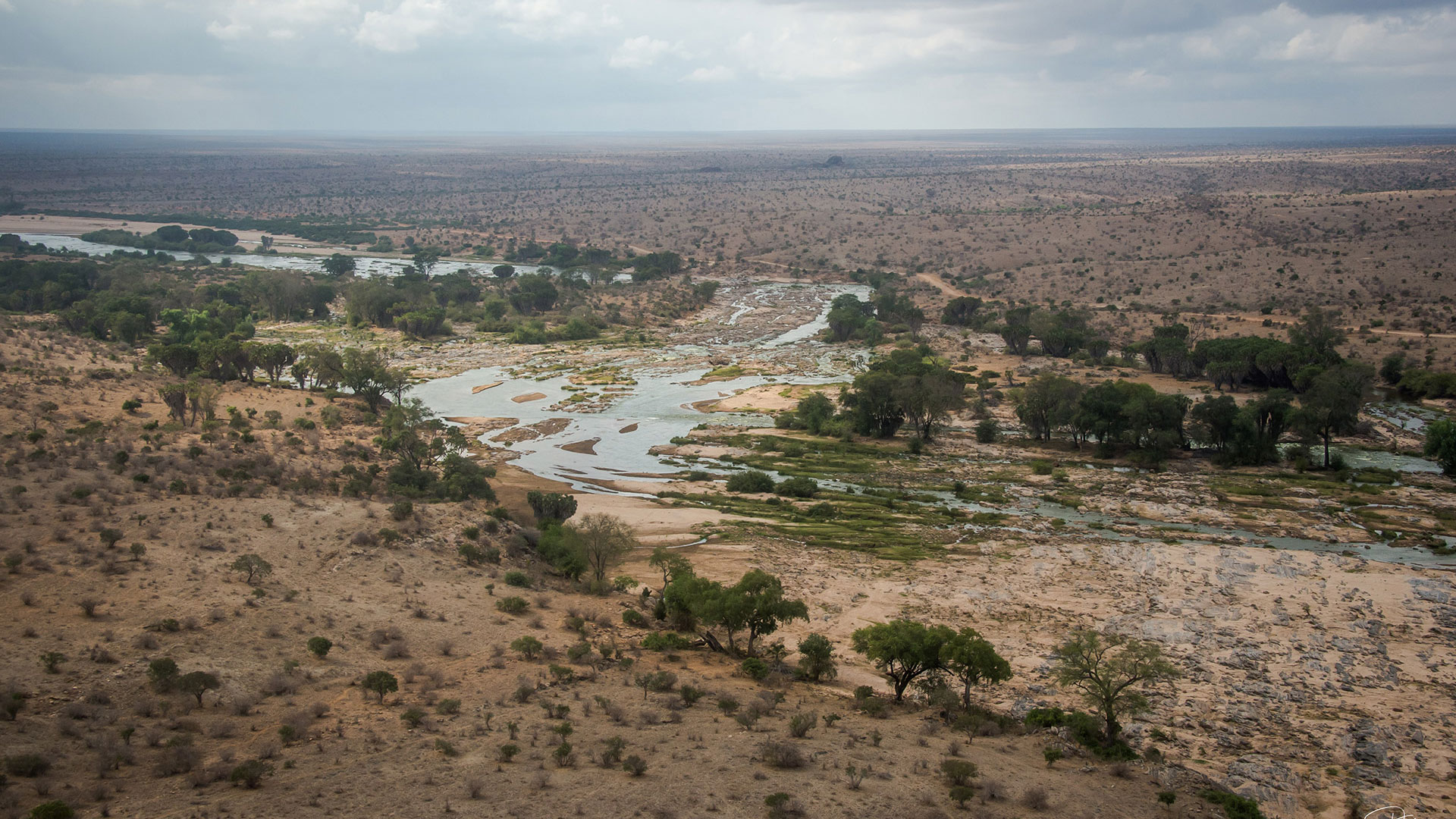
The park's character is shaped by two defining geological features. The Yatta Plateau — the longest lava flow in the world, beginning near Nairobi and extending over 300 kilometres — runs along the park's western boundary. Mudanda Rock acts as a natural water catchment and vantage point over animals arriving to drink. Between these landmarks, the Galana River cuts through dramatic gorges lined with riverine vegetation.
What defines Tsavo East above all else is space. The park receives fewer visitors than Tsavo West, and it is easily possible to spend a day exploring without encountering another vehicle. The red soil stains the leathery skin of Tsavo's elephants, giving them a colour unlike any other elephant population in Africa. Tsavo's history includes the notorious man-eating lions that killed railway workers, made famous by the film The Ghost and the Darkness. That past deepens the ancient wildness this place carries.
5 Reasons We Love Tsavo East
Red elephants: Tsavo's soil stains the skin of its famous herds. A herd of red elephants crossing the Galana River is one of Africa's great safari images.
The Yatta Plateau: the longest lava flow in the world at over 300km — defines the park's western boundary and gives Tsavo East its geological character.
The hirola: the world's rarest antelope, critically endangered, found in Kenya only in Tsavo East and along the Kenyan-Somali border.
Space and solitude: fewer visitors than Tsavo West. A full day in Tsavo East without seeing another vehicle is entirely possible on the open plains.
Maneless lions and wild dogs: Tsavo's lions are historically distinctive, and the reopened northern areas have brought wild dog sightings back to the park.
Our favourite Tsavo East safari ideas
All you need to know about Tsavo East
About Tsavo East National Park
Tsavo East National Park lies in southeastern Kenya, between Nairobi and Mombasa. Covering 13,700 km² (1,370,000 hectares), it is the larger of the two Tsavo parks, which together with Chyulu Hills form a combined protected area of over 23,000 km².
The park's terrain is primarily arid grassland savanna and red semi-desert, bisected by the gorges and riverine vegetation of the Galana River. The Yatta Plateau, along the western boundary, is the longest lava flow in the world, beginning near Nairobi and stretching for over 300 km. Mudanda Rock is a significant water catchment and wildlife-viewing vantage point.
The reopening of the former "forbidden zone", closed during the poaching wars, expanded the park's accessible area and brought African wild dog sightings back to the park.
Things to do in Tsavo East
Game drives across open savanna and along the Galana River gorges — the right approach to Tsavo East's vast, visitor-sparse wildlife landscape.
Mudanda Rock: a natural water catchment and elevated viewpoint from which to watch wildlife — particularly large elephant herds — arriving to drink below.
Explore the Yatta Plateau: the longest lava flow in the world, running over 300km along the park's western boundary and defining its geological character.
Search the reopened 'forbidden zone' for African wild dogs (painted wolves), restored to the park following the end of the poaching era.
Photography: low visitor density, red soil, red elephant herds, and open Tsavo East plains create quality wildlife photography conditions year-round.
Bush-and-beach combination: Tsavo East's position between Nairobi and Mombasa makes it a natural first leg of any Kenyan coast itinerary.
What wildlife will I see in Tsavo East?
Super tusker elephants: Tsavo is famous for big-tusked bulls. Red soil stains give the herds a colour unlike any other elephant population in Africa.
Maneless lions: Tsavo's males carry reduced or absent manes, documented since the park's infamous railway-era man-eating lions, and striking in appearance.
Hirola: the world's rarest antelope, critically endangered, found in Kenya only in Tsavo East and along the Kenyan-Somali border; introduced here to help save the species.
African wild dog (painted wolf): present in the reopened northern areas, making Tsavo East one of the few Kenyan parks where wild dog encounters are possible.
Gerenuk, lesser kudu, fringe-eared oryx, and striped hyena: dry-country specialists that define Tsavo East's distinct wildlife profile.
Birds: approximately 500 species, including golden-breasted starling, African orange-bellied parrot, vulturine guineafowl, and Somali ostrich.
Where to stay in Tsavo East
Accommodation in Tsavo East ranges from intimate waterhole camps to elevated clifftop lodges, each positioned for a different experience of this vast park.
Satao Camp, is set in the heart of the park near a permanent waterhole, positioned for the iconic red elephant experience. Baobab-shaded tented chalets have an open design that allows direct in-camp wildlife viewing. The combination of its central location, exceptional guiding, and the park's low visitor density makes Satao a consistent standout.
Galdessa Camp is a small, exclusive riverine camp on the banks of the Galana River — one of the park's most remote and wildlife-rich positions. Its location gives direct access to the gorges and riverine habitats that form a distinct character within Tsavo East's wider landscape.
Ashnil Aruba Lodge is set beside Aruba Dam in the heart of the park, a permanent water body that draws consistent and varied wildlife year-round. Its accessible position and family-friendly layout make it a reliable all-rounder for first-time Tsavo East visitors.
Kilalinda Safari Camp occupies a more secluded position in the park's southern section, suited to guests seeking a quieter, less structured experience.
Lion Hill Lodge sits on elevated ground above the plains near Voi, offering views across the open savanna. Voi Safari Lodge is similarly positioned on higher ground near the Voi gate area, with views over waterholes that draw regular wildlife.
Ngutuni Lodge is located on a private conservancy bordering the park, which allows off-road driving and more flexible activities than are available inside the national park.
Trusted by thousands of ecstatic travellers
✔️ 5-Star Trustpilot Rating ✔️ Condé Nast Travel Specialist Award Winner
✔️ Accredited by SATSA ✔️ 5,000+ Exceptional Safaris Since 1991
Why choose Africa Geographic to plan your safari?

"This safari on foot through Tsavo National Park was the trip of a lifetime... AG, who assisted me assiduously from the initial enquiry through the whole administrative process to the final planning stage right up to departure. The safari itself was an unforgettable experience. I'm immensely grateful to AG...who managed everything on the ground in Kenya, for making this wonderful safari possible."

"Africa Geographic was amazing to work with. They tailored a trip specifically for us based on our wants and needs. They take the time to listen to you and understand what you are looking for from this sometimes once in a lifetime experience. They are professional, courteous, friendly and with you every step of the way. Their job does not end until you are home. If I could give them more than 5 stars I would!"

"Yet another fabulous trip arranged...this time to Kenya, Tsavo East...The aim was to search for super tuskers and the endangered hirola in Tsavo...The experience with one of the super tuskers was breathtaking; it came within touching distance! In addition, so many other amazing encounters with numerous animals and birds...I can't wait for the next trip in September!!"
Wish you were here?
Frequently asked questions
Tsavo East National Park is the larger of Kenya's twin Tsavo parks, covering 13,700 km² (1,370,000 hectares) of arid grassland savanna and red semi-desert in southeastern Kenya. It lies between Nairobi and Mombasa and, together with Tsavo West and Chyulu Hills, forms a combined protected area of over 23,000 km² — one of the world's largest wildlife sanctuaries. The park is known for its red elephants, maneless lions, extraordinary geological features, and exceptionally low visitor density.
The iconic red colour of Tsavo's elephants is caused by the park's red laterite soil, which stains their skin as they roll in dust and mud. This colouration is unique to Tsavo's population and has become a defining visual characteristic of the park. A herd of red elephants crossing the Galana River is among the most striking wildlife images in Africa.
The Yatta Plateau is a geological formation running along the western boundary of Tsavo East National Park. It is the longest lava flow in the world, beginning near Nairobi and extending for over 300 kilometres into the park's landscape. The plateau is a defining feature of the park's terrain and one of the most significant geological formations in East Africa.
Mudanda Rock is a large inselberg within Tsavo East that acts as a natural water catchment. Rainwater collects on its surface and drains into a pool below, drawing wildlife from the surrounding plains. Visitors can climb the rock to observe the animals — particularly elephant herds — arriving to drink. It is one of the most rewarding and accessible wildlife-viewing points in the park.
In 1898, during the construction of the railway bridge over the Tsavo River, two maneless male lions killed a reported 135 construction workers over nine months before being shot by Lt Colonel JH Patterson. The story became internationally famous and was dramatised in the Hollywood film The Ghost and the Darkness. The lions' behaviour and manelessness have been the subject of scientific research ever since. Their preserved skins are held at the Field Museum of Natural History in Chicago.
The hirola (Beatragus hunteri) is the world's rarest antelope — critically endangered and found in the wild only in Tsavo East National Park and along the Kenyan-Somali border. Individuals were introduced into Tsavo East to help protect and grow the species' population outside its extremely limited natural range. An encounter with a hirola in the park is one of the rarest large mammal sightings available anywhere in Kenya.
The "forbidden zone" was a large section of Tsavo East that was closed to visitors during the intense poaching wars of the 1970s and 1980s, when elephant and rhino populations were decimated across Kenya. The zone was eventually reopened as security was restored, and the additional area it has made accessible has significantly expanded wildlife viewing in the park — particularly for African wild dogs (painted wolves), which have returned to this part of the ecosystem.
Yes — Tsavo East is one of the few Kenyan parks where African wild dog sightings are possible, following the reopening of the formerly closed northern section. Wild dogs are wide-ranging and encounters cannot be guaranteed, but the park's large unfenced area and low visitor pressure create the conditions for their presence. Tsavo East is specifically highlighted as a destination for guests keen to spot painted wolves.
The dry season from June to October is the primary game-viewing window, when water sources concentrate wildlife at permanent rivers and pools. January to March provides a second dry period with excellent conditions. The park can be visited year-round; the wet seasons (April–May and November) bring green scenery and fewer visitors but more dispersed wildlife. The park's flat, open terrain makes wildlife visible in most conditions.
Tsavo East is larger, more arid, flatter, and less visited than Tsavo West. Its open savanna makes wildlife easier to spot; Tsavo West's denser vegetation is more spectacular scenically but can make animals harder to locate. Tsavo East has its own geological highlights — the Yatta Plateau and Mudanda Rock — and the distinct advantage of very low visitor numbers. Tsavo West has the Mzima Springs as its signature attraction. Many guests combine both parks within a single itinerary.
Satao Camp is Africa Geographic's preferred supplier in Tsavo East and the property most closely associated with the park's iconic red elephant experience. Positioned in the heart of the park near a permanent waterhole, the camp is regularly visited by large elephant herds including exceptional bull tuskers. The tented chalets are set under ancient baobab trees, with an open design that allows wildlife viewing directly from the accommodation. The combination of Satao's wildlife-rich position and the park's low visitor density makes for encounters that feel private and unmanaged.
Yes — Tsavo East is strategically positioned for a bush-and-beach combination. The park lies approximately two hours by road from Mombasa, and several camps can arrange onward road or air transfers to the Kenyan coast. An itinerary that combines the red plains of Tsavo East with a few nights on the Indian Ocean is one of Kenya's most practical and rewarding travel combinations.
Our safaris typically cost from US$700 per person, per night, depending on the accommodation comfort level, time of year and activities. This price usually includes accommodation, all meals, game drives, experienced guides, airport transfers, and 24/7 support from our team.
You only make your first payment when you book your holiday. Your second (last) payment is about 105 days before you travel.
Peak season bookings require 12–18 months of advance planning. Trips outside of peak season can be arranged 6–9 months ahead, with better rates and availability.
Click here to schedule a no-obligation call with one of our Safari Experts or fill in our 2-minute form with your questions. Our team of experts are here to help! Whether you’re curious about the best time to travel, want to hear first-hand about an experience or need help planning your safari.
Explore more African destinations
Start planning your dream safari
Our travel experts will craft a no-obligation itinerary just for you. We have crafted over 5,000 safaris since 1991. Your personal details are protected; we only use this information to contact you.
Why book your safari with us?

Deep Experience & Knowledge
Handcrafted experiential safaris since 1991.
Travel in Africa is about knowing when and where to go, and with whom. A few weeks too early/late or a few kilometres off course, and you could miss the greatest show on Earth. And wouldn’t that be a pity?

Trust & Safety

Make A Difference
We donate a portion of the revenue from every safari sold to carefully selected conservation projects that make a significant difference at ground level.
YOUR safari choice does make a difference - thank you!