

Safari experts & storytellers. Since 1991


Trust us to find you the rarest animals, the most spectacular wildlife events, the remotest landscapes and deeply meaningful cultural encounters!
Why visit Bwindi Forest?
Bwindi Impenetrable National Park, the home of gorilla trekking, is the fairy-tale forest we dreamed about as children. It is also primaeval – one of Africa’s oldest ecosystems. This is a landscape wrapped in a blanket of mist, bursting with butterflies, birds and the secret sounds of hidden life.
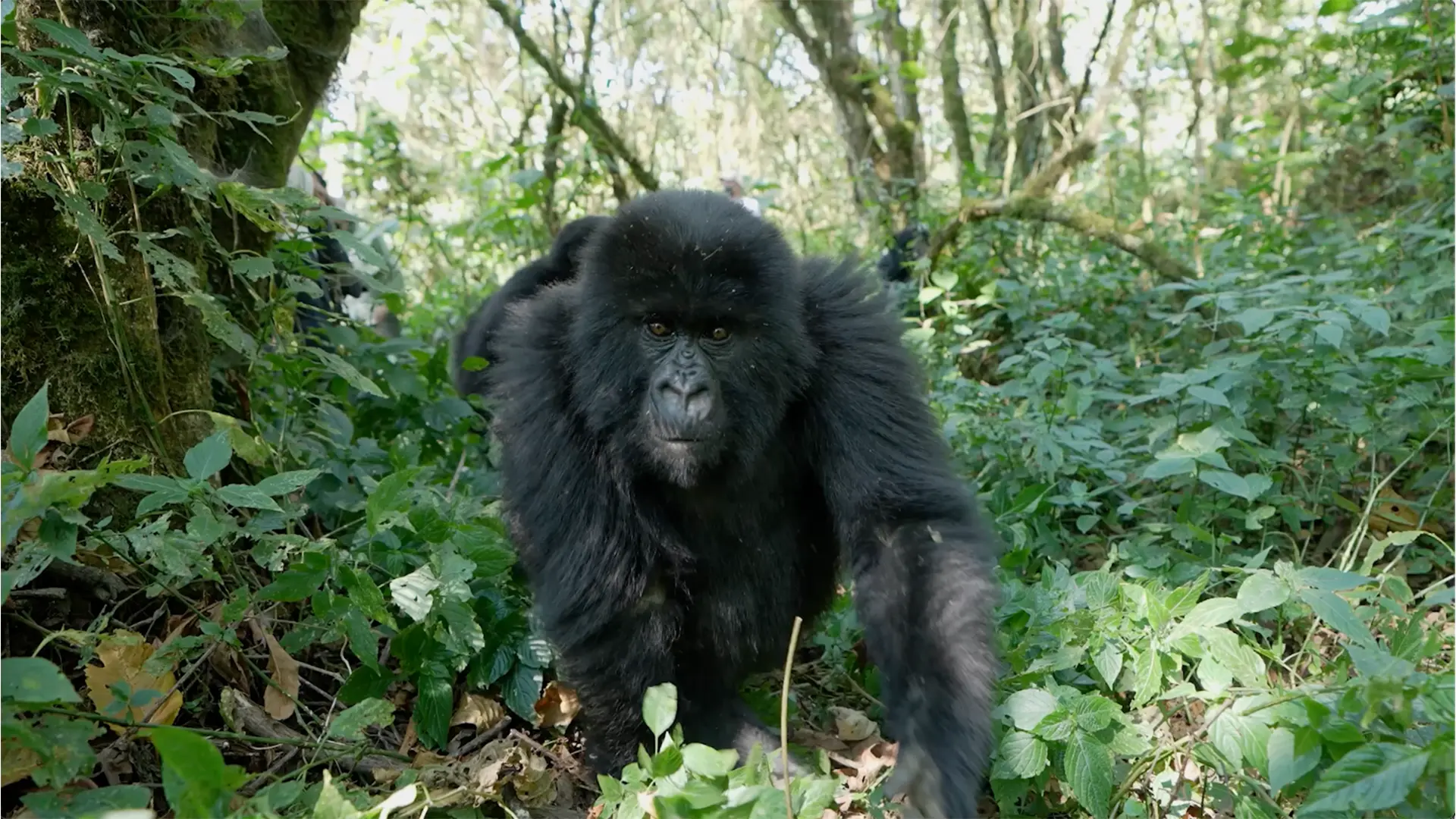
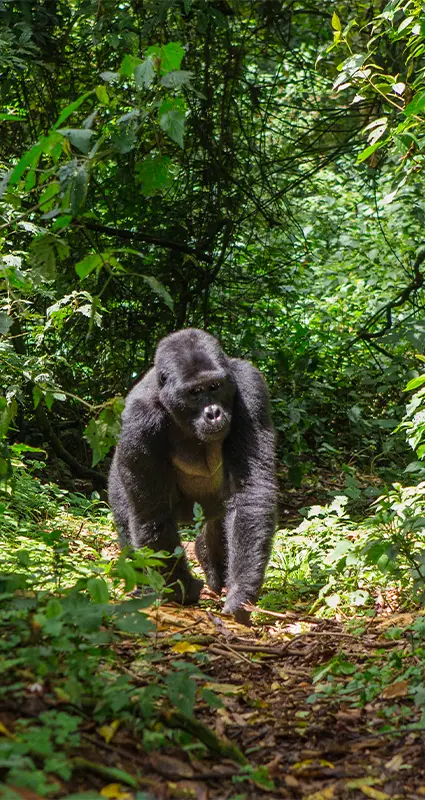
Bwindi has ancient rainforests with some of the highest levels of biodiversity in Uganda and protects about 480 mountain gorillas.
From ancient hardwood trees interspersed with bamboo thickets to delicate fern fronds and dangling vines, the word “Bwindi” literally translates to “impenetrable” in the local Runyakitara language of Uganda. But have no fear, your gorilla trekking rangers will take you on well-worn jungle tracks and hack clear a path where required. The hacked vegetation grows back within days, so this does not harm the forest.
Bwindi quick facts
This 330km² (33,000 hectares) UNESCO World Heritage Site rainforest is one of Africa’s oldest ecosystems, at over 25,000 years old.
Bwindi is divided into four sections, named after the surrounding villages: Buhoma, Ruhija, Rushaga and Nkuringo. See our FAQ below for the gorilla families found in each section.
19 of Bwindi's gorilla families are habituated for trekking, a process that takes years to acclimate them to humans.
Bwindi is about 490km (9 to 10 hours) by car from Entebbe. By aeroplane, Kisoro or Kahihi airstrips are about 1.5 hours from Entebbe International Airport.
What wildlife can I expect to see in Bwindi?
Gorillas and other wildlife
In addition to mountain gorillas, Bwindi also hosts other primate species, including the seldom-seen chimpanzees (Bwindi is the only place where mountain gorillas and chimpanzees are found together), black-and-white colobus, Ugandan red colobus, red-tailed and blue monkeys, golden monkeys, grey-cheeked mangabeys, vervets, and vulnerable L'Hoest's monkeys.
Other mammals found in Bwindi include forest elephants, duikers, forest hogs, bush pigs, golden cats, jackals and civets.
Bwindi bird watching
Bird watchers can hope for 350 bird species, including 23 Albertine Rift endemics. Notables include Chapin's flycatcher, short-tailed warblers, green tinkerbirds, Shelley's crimsonwing and African green broadbill.
Trusted by thousands of ecstatic travellers
✔️ 5 Star Trustpilot Rating ✔️ 5,000+ Safari Trips Completed
✔️ 35+ Years of Experience ✔️ 2025 Conde Nast Travel Specialist Award Winner
Bwindi FAQs
Bwindi Impenetrable National Park is open year-round, though the most popular time to visit is during the dry seasons - June to August and December to February. The drier forests mean less slippery trails and better visibility for photography.
Though the heaviest rainfall occurs from March to May and from September to November, this is an equatorial region, and rain is possible at any time. Consequently, it is essential to waterproof all electronics and photographic equipment, and a good pair of non-slip, waterproof walking boots is vital.
Gorilla trekking typically involves hiking for one to six hours to locate your assigned gorilla family group. Trackers will begin searching for your gorilla group hours before your trek starts, starting from the previous day's last-known position. Once you have located your gorilla family group, you will spend one hour with them. Your trek group size will be limited to eight participants
CLICK HERE for detailed information about gorilla trekking
Bwindi Impenetrable National Park is divided into four sections, named after the surrounding villages, and each hosts habituated gorilla families that are accessible for tourists:
1. Buhoma (northern Bwindi)
The most visited area of the park, Buhoma, is the largest of the four sectors and has the highest density of luxury accommodation options. As the first section of the park to open to visitors, this is where gorilla trekking first started in Bwindi. Visitors can also tour the neighbouring communities, bird watch and hike some of the most spectacular forest trails in Africa.
Gorilla family groups found in Buhoma:
Mubare
Habinyanja
Rushegura
Katwe
2. Ruhija (eastern Bwindi)
Ruhija is less frequented than Buhoma and popular with birdwatchers and avid hikers who aim for the top of Rwamunyonyi Peak ("the hill of many birds") - the park's highest point, offering extraordinary views.
Gorilla family groups found in Ruhija:
Kyaguriro
Oruzogo
Bitukura
3. Rushaga sector (southern Bwindi)
The Rushaga region of Bwindi is famed for its gorilla trekking and the gorilla habituation experience, where tourists spend up to 4 hours with the group rather than the standard 1 hour. The Rushaga sector includes Lake Mutanda, so visitors can set out on a boat cruise for an entirely different perspective of the spectacular scenery.
Gorilla family groups found in Rushaga:
Bikingi
Bweza
Busingye
Mishaya
Kahungye
Mucunguzi
Nshongi - the largest of all the gorilla families in Bwindi
Rwigi
4. Nkuringo (western Bwindi)
The Nkuringo sector is the most scenic area to visit in Bwindi. The dramatic topography and breathtaking views of the Virunga volcanoes do come at a physical cost; this particular region is better suited to more physically active visitors.
Gorilla family groups found in Nkuringo:
Bushaho
Christmas
Nkuringo
Posho
Gorilla trekking safaris to Bwindi typically cost from US$700 per person, per night, depending on the level of comfort and activities. This price usually includes accommodation, all meals, the activities described, park fees, experienced guides, airport transfers, and 24/7 support from our team. In addition, you will pay about $1,500 per trek for gorilla trek permits. Specific inclusions vary by package – contact us for detailed itineraries.
You only make your first payment when you book your Volcanoes NP holiday. Your second (last) payment is due about 90 days before you travel.
Peak season bookings require 12–18 months of advance planning. Trips outside peak season can be arranged 6–9 months in advance, with better rates and availability.
Why book through Africa Geographic?
We have been handcrafting experiential safaris since 1991. Travel in Africa is about knowing when and where to go, and with whom. A few weeks too early/late or a few kilometres off course, and you could miss the greatest show on Earth. And wouldn’t that be a pity?
Booking through a respected tour operator with many years of experience means that all you need to focus on is helping us design your safari and then having a superb vacation. The rest - all the nitty-gritty detail and admin is done while you relax. Our 24/7 concierges take care of problems such as flight changes and missed flights, last-minute road transfer and lodge changes due to unexpected events, and itinerary changes requested by you.
Remember that you will not save money by attempting to book and manage your own safari, but you will inherit mistakes and problems that arise.
Will my money be safe?
Yes, your money is safe. Your payments go into a third-party TRUST ACCOUNT - protecting them in the unlikely event of a financial setback on our part. Also, we are members of SATSA who attest to our integrity, legal compliance and financial stability. See what travellers say about us.
Yes, by booking your safari with Africa Geographic, you make a significant difference because:
We donate a portion of every safari sold to selected conservation efforts at ground level
Your safari supports our conservation publishing efforts, which educate the world about Africa's incredible biodiversity and the local people who protect it
Our chosen lodges support local community initiatives, ensuring that tourism benefits the nearby villages directly. They also adhere to strict environmental practices, such as limited vehicle numbers and sustainable camp operations, which help protect the ecosystem
YOUR safari choice does make a difference – thank you!
Start planning your Bwindi gorilla adventure
Our travel experts will craft a no-obligation itinerary just for you. We have crafted over 5,000 safaris since 1991. Your personal details are protected; we only use this information to contact you.

Why choose us to craft your safari?
Handcrafted experiential safaris since 1991.
Travel in Africa is about knowing when and where to go, and with whom. A few weeks too early/late or a few kilometres off course, and you could miss the greatest show on Earth. And wouldn’t that be a pity?

Trust & Safety

Make a difference
We donate a portion of the revenue from every safari sold to carefully selected conservation projects that make a significant difference at ground level.
YOUR safari choice does make a difference - thank you!