
Safari experts & storytellers. Since 1991


Art safaris for a total bushveld immersion
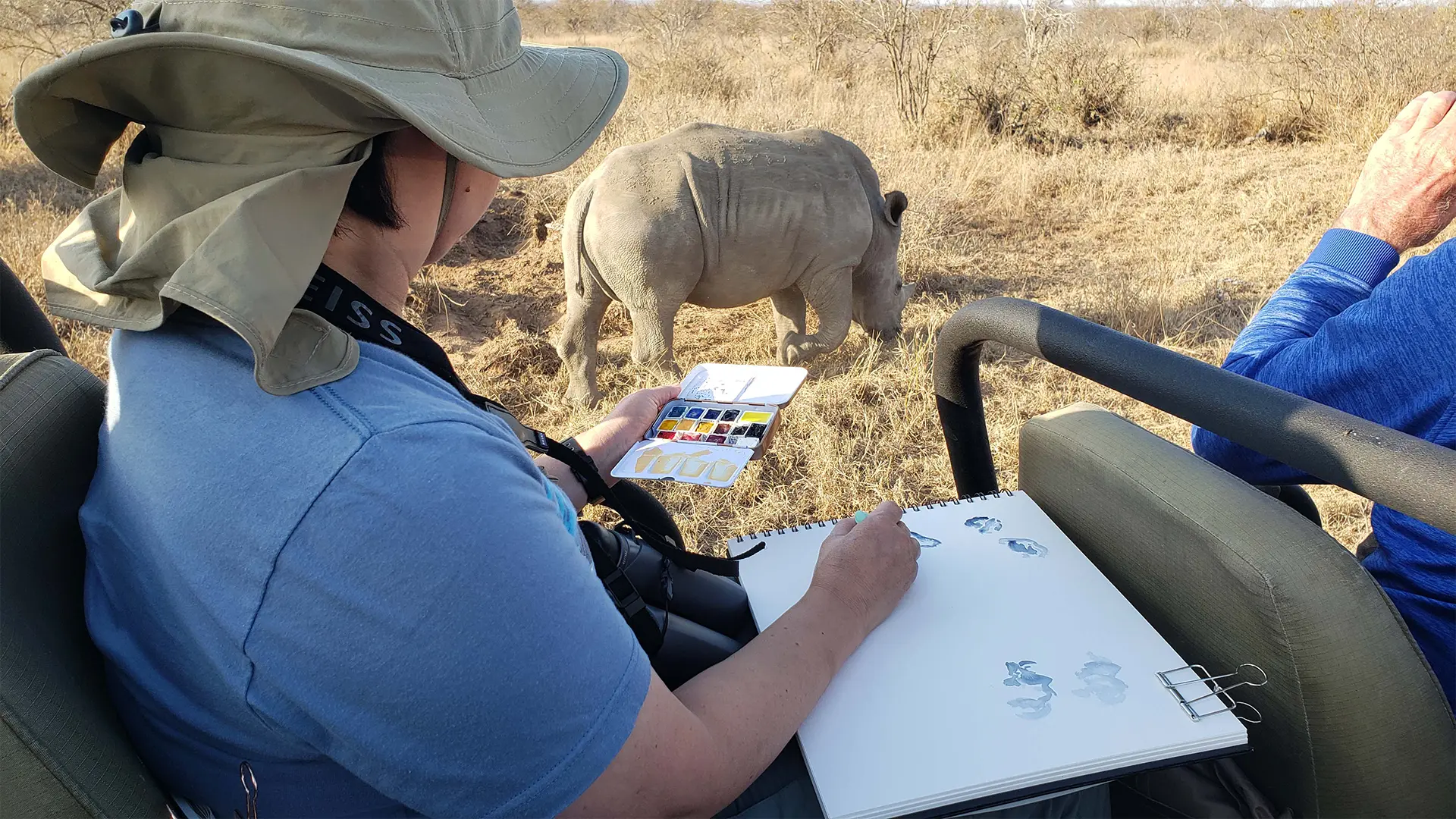
Our art safaris offer one of the most joyful and inspiring experiences you can have in the bushveld. Led by a professional artist for over a decade, these journeys are so popular that most departures are filled by returning guests almost a year in advance.
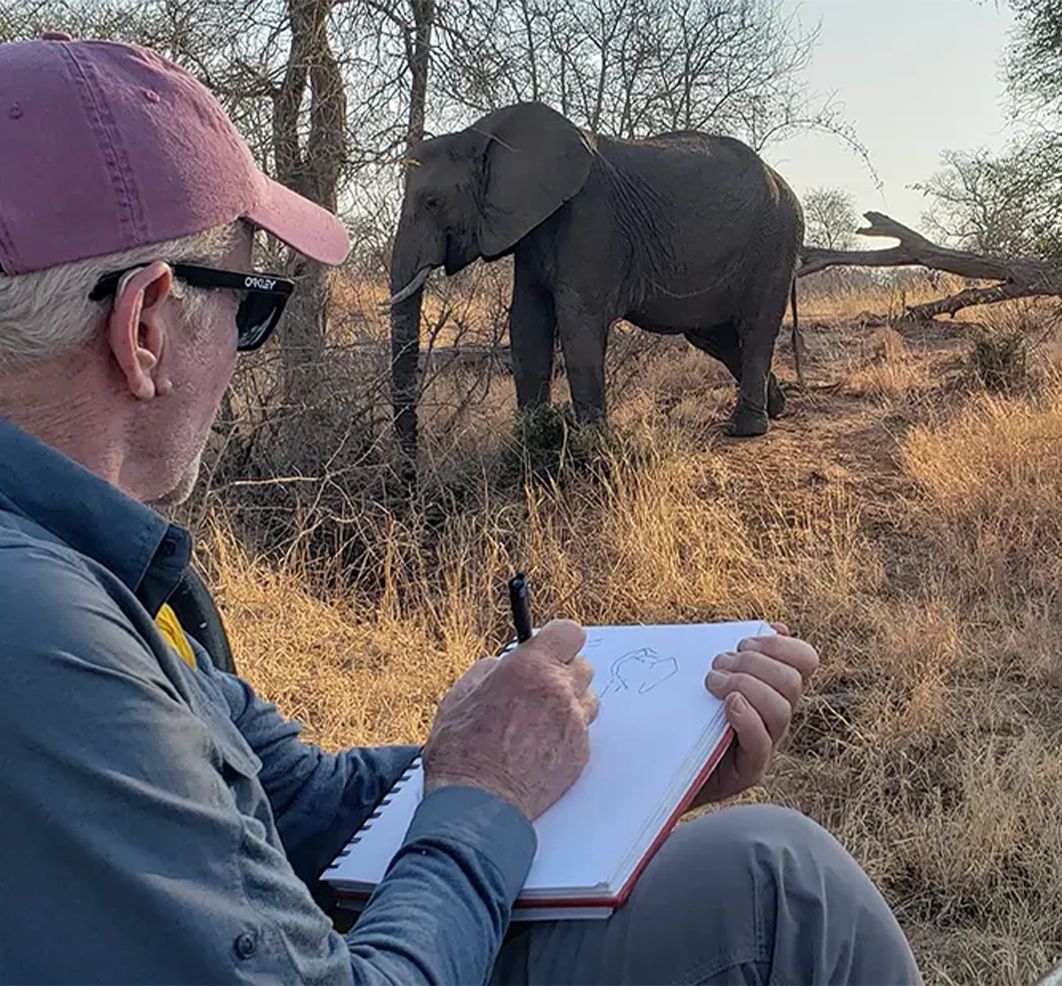
Blending creativity with wilderness, our art sessions unfold during game drives and continue back at the lodge. With personal guidance throughout, you’ll refine your technique, deepen your observation skills, and discover new ways to connect with the wild, enriching not only this safari, but every one that follows.
Designed for all levels of ability and confidence, our art safaris welcome everyone, from complete beginners to seasoned artists.
Our Favourite Art Safari Ideas
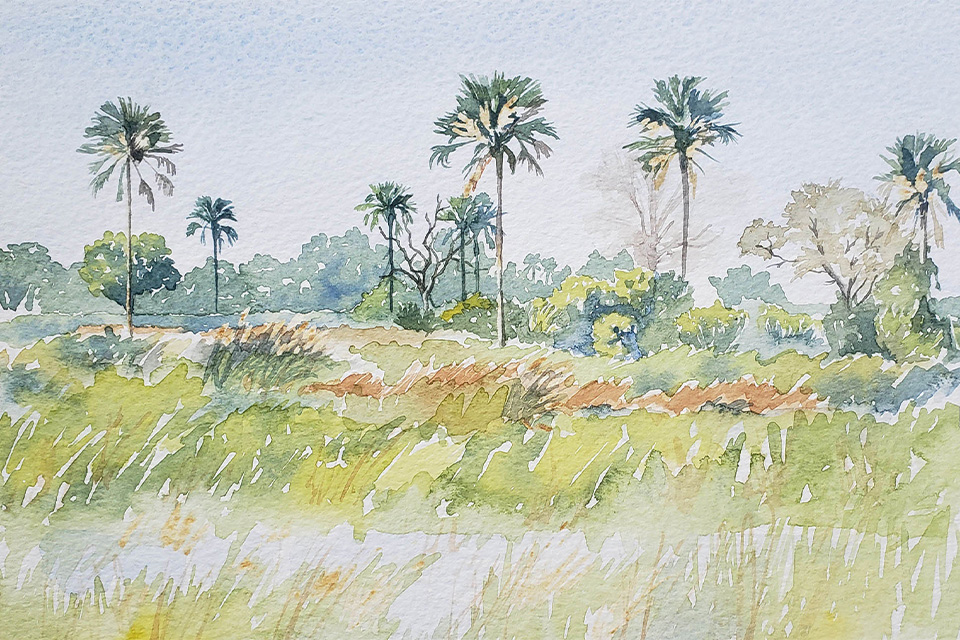
Art in the Okavango Delta, Botswana
14 to 20 September 2026 (6 nights, 7 days) - from US$ 7,685 per person sharing
Ever-popular professional wildlife artist Alison Nicholls will share her art techniques for creating wildlife field sketches. This laid-back safari is suitable for all skill levels, from beginners to seasoned artists. Your studio is the Okavango Delta, offering a unique opportunity to experience the African bush first-hand and add biological detail to your art.
Wildlife viewing in the Delta is spectacular, with excellent encounters of lions, leopards, hyenas, cheetahs and wild dogs. You can also expect large herds of elephants and buffalo, along with a host of other species, including lechwe, giraffe, zebra, hippo, crocodile, and tsetsebe.
Art safari in the Big 5 Timbavati
6 to 12 September 2026 (6 nights, 7 days) - from ZAR79,370 per person sharing
Professional wildlife artist Alison Nicholls will share her art techniques and teach you how to create wildlife field sketches. Whether you’re a beginner or a seasoned artist, Alison will help improve your artwork. This safari includes game drives so that you experience the African bush in a new way, learning creative skills in a beautiful and relaxed environment.
Wildlife viewing in Timbavati is superb - this private reserve within the Greater Kruger boasts regular sightings of the Big 5 (lion, leopard, rhino, elephant, buffalo) and other species such as zebra, hippo and giraffe. Predators such as cheetah, hyena and African wild dogs are regular visitors to the property.
Why book with us?
Tailor-made experiential safaris - with love
"Travel in Africa is about knowing what, when and where to go - a few weeks too early/late or a few kilometres off course, and you could miss the Greatest Show on Earth. And wouldn’t that be a pity?
Our crew of passionate safari experts have lived and worked in Africa for most of their lives. Trust us to find you the rarest animals, the most spectacular wildlife events, the remotest landscapes and deeply meaningful cultural encounters!"
Simon Espley - CEO, Africa Geographic
All you need to know about art safaris
What will I learn on an art safari?
You will learn how to sketch wildlife quickly and confidently. Before you set off on your first game drive, you will be taught how to look at animals, seeing them as a series of simple shapes, which makes sketching them easier. Your art guide will explain why it is better to create several sketches of the same animal in different poses than to try to complete one detailed drawing.
You will learn how to capture movement, use an animal’s coat pattern to your advantage in your art, sketch using negative shapes, and use colour to create atmosphere.
When we stop to look at tracks and vegetation, you will also learn about animal behaviour, which will allow you to add granular detail to your sketches.
What materials do I need for an art safari?
"Having learned some harsh, sandy, dusty lessons about field sketching materials, I recommend pens or pencils for sketching, with some watercolour for use at camp. Sounds simple, right?" - Alison Nicholls, our art safari guide.
Here is Alison's essentials list:
Pencils: 2H, HB, 2B – plus sharpener and pencil case.
Pads of paper with hard covers (ring-bound), and at least 50 sheets in each, 11 x 14″ or 35 x 28cms.
Optional extras:
Watercolour field box set containing a dozen solid half-pan colours.
Small water container with a screw-top lid.
Three types of brushes: 3-round, 7-round, and 14-round.
Art safari lodges
The lodges we select for our art safaris tend to be small, owner-run lodges, or authentic bush camps.
Safari lodges: Some art safaris are based at traditional safari lodges. Typically constructed from stone, wood, canvas, and thatch, these are permanent lodges that offer the usual comforts you would expect from a luxury lodge.
Bush camps: For the ultimate in exclusivity, they offer an authentic safari experience for some of our art safaris. They are usually smaller than lodges and made of canvas, wood and local materials. They are comfortable but not as luxurious as lodges. Bush camps do not usually offer swimming pools, spas and other luxury amenities.
Refer to the accommodation descriptions for each of our walking safaris to understand comfort levels and amenities.
Trusted by thousands of ecstatic travellers
✔️ 5-Star Trustpilot Rating ✔️ Condé Nast Travel Specialist Award Winner
✔️ Accredited by SATSA ✔️ 5,000+ Exceptional Safaris Since 1991
Why choose Africa Geographic to plan your safari?

Alison Nicholls, artist (!) and Africa Geographic created and curated the trip of a lifetime: an art safari with 4 other artists ... Being with Alison Nicholls to focus our artistic abilities with observing and sketching and some painting, well, all I can say is the only way to travel is with artists...and Alison is the best!
The art safari was wonderful, and I have only good things to say about the thought that went into planning this one. Africa Geographic donates a portion of the revenue from each safari to selected conservation projects, and our group got to see firsthand how our donation was put to use ...
I have been travelling to Africa since 2002. I discovered Africa Geographic and the Art Safaris with Alison Nicholls in 2017. I have been using AG to plan my trips ever since. I have now attended 7 Art Safaris with Alison ... I always recommend AG to anyone interested in travelling to Africa.
Frequently asked questions
You will learn how to sketch wildlife quickly and confidently.
Before you set off on your first game drive, you will be shown how to look at animals as a series of simple shapes, which makes sketching them easier.
You will learn why it is better to create several sketches of the same animal in different poses than try to complete one detailed drawing, and to take photos so that you can touch up your art after the game drive.
Definitely. One of the best things about sketching wild animals from life is that they won’t stand still for hours to let you capture a lot of detail, so you will usually have to work quickly.
You will be taught techniques to loosen up in both sketching and painting, and you’ll have time to practice them on drives and back at the lodge.
Yes. We usually sketch in pencil or pen to start, just because dry media are easier when we’re in the vehicle. But if we find some animals that might be stationary for a while, you will be shown how to do some simple gestural sketches in watercolour.
Also, during our daytime workshops back at the lodge, there will be plenty of time to add watercolour to your sketches and learn new techniques.
No, it doesn’t matter. Our art safaris are meant for everyone. We always have a mix of skill levels on the safaris. Whatever your level of experience is, you will always find the safari a fun and friendly learning environment.
For your time at the lodge or bushcamp, we suggest packing as you would for any African safari. Read more here (includes a downloadable packing guide).
While out on game drives and for art lessons back at the lodge, we suggest the following:
Essentials list:
Pencils: 2H, HB, 2B – plus sharpener and pencil case.
Pads of paper with hard covers (ring-bound), and at least 50 sheets in each, 11 x 14″ or 35 x 28cms.
Optional extras:
Watercolour field box set containing a dozen solid half-pan colours.
Small water container with a screw-top lid.
Three types of brushes: 3-round, 7-round, and 14-round.
The "best" time for an art safari in Africa is generally the dry seasons in Southern Africa (May to October) and East Africa (January to March, and June to October). These months offer prime wildlife viewing, as sparse vegetation and animals congregating at water sources make for ideal conditions.
That said, the wet seasons (e.g., green season in Botswana from January to April, or short rains in East Africa from November to December) can be ideal, offering lower prices, fewer crowds, and the delightful spectacle of newborn animals.
Dry-season drama (May to mid-November): The classic safari season when wildlife congregates around permanent water sources, and predators are in action. Vegetation is sparse, making game viewing exceptional, and the weather is most comfortable for extended outdoor activities. The later in the dry season, the better the wildlife encounters will be, but be aware that temperatures can be very high in October and November.
Green-season tranquillity (November to April): Often overlooked by conventional tourism, this period offers dramatic skies, newborn animals, resident predators, and spectacular birdlife, with the landscape transforming into an emerald paradise. Expect lower prices and fewer tourists.
Our safaris typically cost from US$700 per person, per night, depending on the accommodation comfort level and activities. This price usually includes accommodation, all meals, game drives, experienced guides, airport transfers, and 24/7 support from our team, but excludes a private vehicle and other exclusive services.
You only make your first payment when you book your holiday. Your second (last) payment is about 90 days before you travel.
Peak season bookings require 12–18 months of advance planning. Trips outside of peak season can be arranged 6–9 months ahead, with better rates and availability.
Click here to schedule a no-obligation call with one of our Safari Experts or fill in our 2-minute form with your questions. Our team of experts are here to help! Whether you’re curious about the best time to travel, want to hear first-hand about an experience or need help planning your safari.
Explore more African safari experiences
Start planning your dream safari
Our travel experts will craft a no-obligation itinerary just for you. We have crafted over 5,000 safaris since 1991. Your personal details are protected; we only use this information to contact you.

Why choose us to craft your safari?
Handcrafted experiential safaris since 1991.
Travel in Africa is about knowing when and where to go, and with whom. A few weeks too early/late or a few kilometres off course, and you could miss the greatest show on Earth. And wouldn’t that be a pity?

Trust & Safety

Make a difference
We donate a portion of the revenue from every safari sold to carefully selected conservation projects that make a significant difference at ground level.
YOUR safari choice does make a difference - thank you!