

Tailor-made safaris. Since 1991



Trust us to find you the rarest animals, the most spectacular wildlife events, the remotest landscapes and deeply meaningful cultural encounters!
Why visit Kafue National Park?
Kafue National Park - Zambia's best-kept safari secret - is a vast wilderness boasting astonishing safaris with few tourists.
This vast national park was historically subjected to heavy poaching, but is now recovering rapidly under the expert management of African Parks, and we expect Kafue to develop into one of Africa's safari gems, sought out by safari connoisseurs and wilderness-seekers.
Kafue National Park is the country's oldest and largest national park
Kafue is dominated by the Kafue River and its many tributaries, including the Lufupa, Lunga, Luansanza, and Musa Rivers, deciduous woodlands, swampy floodplains, and the man-made Itezhi-tezhi dam.
Kafue transitions from miombo woodland punctuated by granite outcrops in the south to the sweeping plains and wetlands of the north.
In the northernmost corner of the park lies the veritable wildlife haven of the Busanga Plains, surrounded by the Busanga Swamps, dotted with palm groves, papyrus reed beds, lily-covered lagoons, woodlands, open waterways, fig tree islands, and riverine vegetation.
Kafue quick facts
Spanning 22,400km2 (2,24 million hectares), Kafue is larger than South Africa's Kruger National Park.
The 720km² (72,000-hectare) Busanga Plains in the north of the park is arguably Kafue's safari jewel
The park is buffered by several contiguous Game Management Areas (GMAs) that together create a total conservation area of 60,000km2 (six million hectares) of space for wildlife.
Kafue is one of the northernmost components of the vast Kavango-Zambezi Transfrontier Conservation Area (KAZA), encompassing wilderness areas in five countries: Angola, Namibia, Botswana, Zimbabwe, and Zambia.
What wildlife can I expect to see in Kafue National Park?
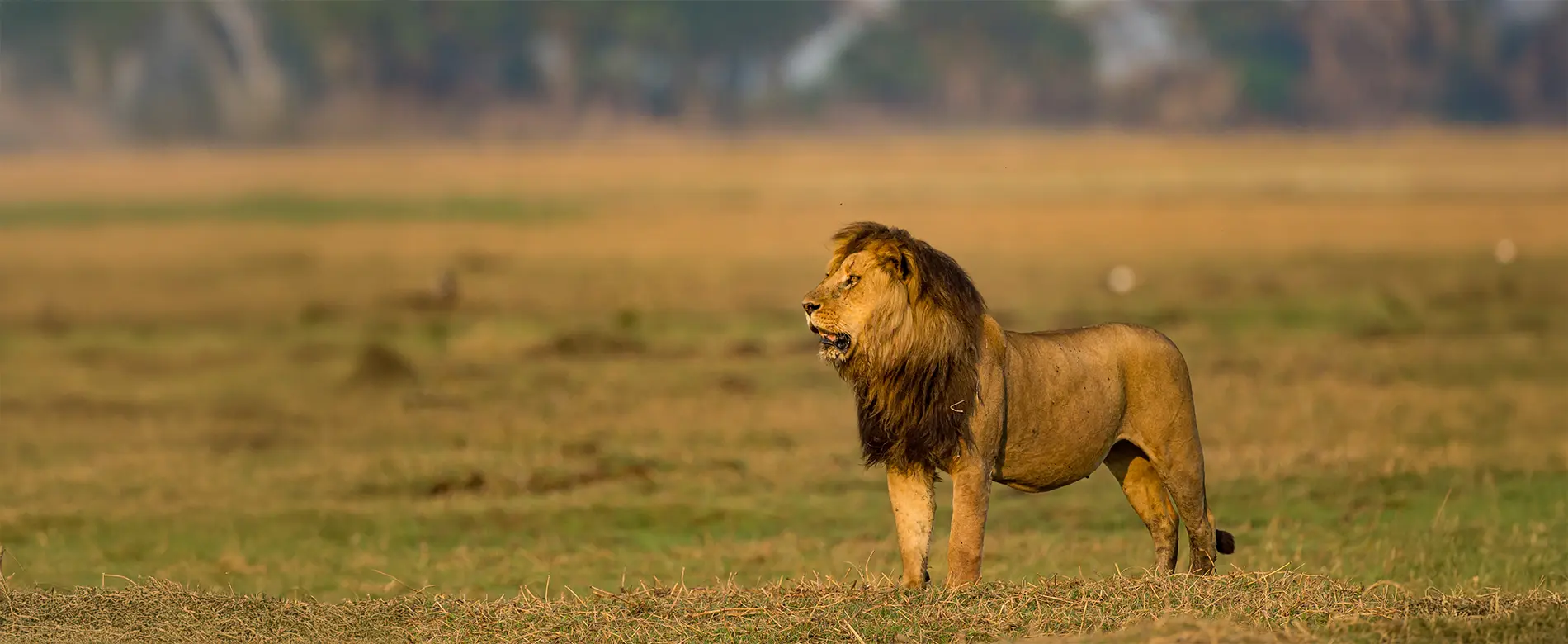
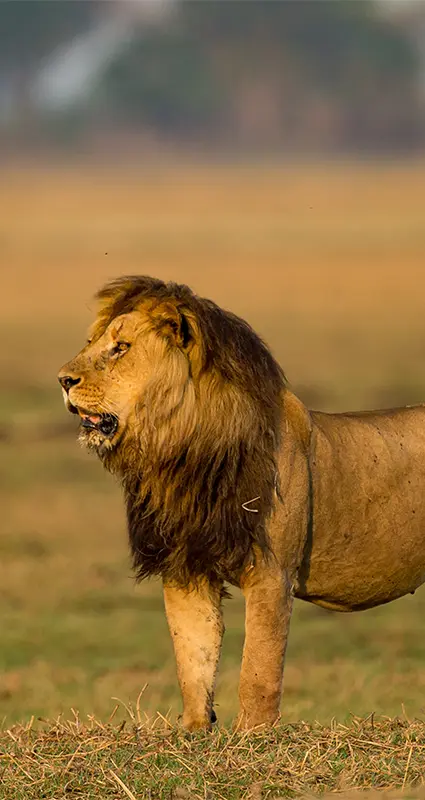
Kafue offers good sightings of leopard, lion, elephant, cheetah, spotted hyena, and wild dog (painted wolf), and you can see herds of buffalo, red lechwe, wildebeest, waterbuck, puku and zebra during the dry season.
Sitatunga can be seen hiding in the floodplain reed beds, while hippo and crocodile are easier to spot in the open water. Roan and sable antelopes prefer the drier miombo forests, and blue and yellow-backed duikers and Sharpe’s grysbok secret themselves in the undergrowth. Smaller predators such as serval, caracal, jackal and civet are regularly seen.
Birdwatchers can choose from about 500 species, including miombo woodland specials such as Souza’s shrike, yellow-bellied hyliota, green-capped eremomela, green-backed woodpecker, and eastern miombo sunbird. Pel’s fishing owls roost in the riverine forests, and Schalow’s and Ross’s turacos display brief flashes of red and green, while the endemic and vulnerable Chaplin’s barbet roosts in fig trees. Open-billed and saddle-billed storks, southern ground-hornbill and wattled and crowned cranes can be seen on the open floodplains.
Trusted by thousands of ecstatic travellers
✔️ 5 Star Trustpilot Rating ✔️ 5,000+ Safari Trips Completed
✔️ 35+ Years of Experience ✔️ 2025 Conde Nast Travel Specialist Award Winner
Start planning your Kafue safari
Our travel experts will craft a no-obligation itinerary just for you. We have crafted over 5,000 safaris since 1991. Your personal details are protected; we only use this information to contact you.
Why book your safari with us?

Deep Experience & Knowledge
Handcrafted experiential safaris since 1991.
Travel in Africa is about knowing when and where to go, and with whom. A few weeks too early/late or a few kilometres off course, and you could miss the greatest show on Earth. And wouldn’t that be a pity?

Trust & Safety

Make A Difference
We donate a portion of the revenue from every safari sold to carefully selected conservation projects that make a significant difference at ground level.
YOUR safari choice does make a difference - thank you!